What channel is Packers vs. Vikings on today? Time, TV schedule for NFL Week 11 game

Can anyone unseat Aaron Rodgers as MVP? Once again the Packers are No. 1 in the NFC, and once again they’re rolling through the NFC North. After their catastrophic Week 1, the Packers rattled off seven straight wins before Rodgers missed a game due to contracting COVID-19. After a speedbump loss to the Chiefs in a 13-7 effort, they beat the Seattle Seahawks last week and spoiled Russell Wilson’s return to the team by pitching a 17-0 shutout defensively.

The Vikings have continued their maddening inconsistency. After a loss to a Dak Prescott-less Cowboys team and an overtime loss to the Ravens, they beat the Chargers 27-20. For yet another year, they feel like the best of the worst, a 4-5 team that seems to be far better than its record. Kirk Cousins was excellent against the Chargers, completing 25 of 37 passes for 294 yards, two touchdowns, and no picks. Dalvin Cook had a heavy workload, getting 24 carries for 94 yards, and Justin Jefferson had a huge game with 143 yards, the third-highest total of his career.

The Vikings have the firepower to keep up with any team in the league, but this Packers team is winning with defense in addition to offense. They’re fourth in the league in turnover differential, fifth against the pass, and third in points allowed. Joe Barry has had no small contribution to the improvement, and the Packers look like a more complete team than they have in a long time.

Of all of the teams in the NFC North, the Vikings generally give the Packers the most trouble. Green Bay may need more out of Rodgers than it did last week in a grindy win over the Seahawks, but ultimately, it could come down to which of these teams has the ball last. That hasn’t always worked out in the Vikings’ favor, but in these divisional matchups, Mike Zimmer tries to bring something different in each showdown.

Here’s what you need to know to watch Packers vs. Vikings this Sunday, including kickoff time, TV channels, and the full Week 11 NFL schedule.

MORE: Watch Packers vs. Vikings live with fuboTV (7-day trial)

What channel is Packers vs. Vikings on today?

  • TV channel (national): Fox
  • TV channel (Green Bay): WLUK-TV
  • TV channel (Carolina): KMSP-TV
  • Live Stream: Fox Sports Go, fuboTV

Packers vs. Vikings will be broadcast regionally on Fox affiliate channels in Week 11. Kevin Burkhardt and Greg Olsen will be calling Packers-Vikings from the booth, and Pam Oliver is on the sidelines.

You can find the Packers’ away broadcast on SiriusXM channel 382, while the Vikings’ home broadcast airs on channel 227.

In Canada, viewers can watch Packers vs. Vikings on DAZN, which includes every NFL game as part of a 30-day free trial.

Packers vs. Vikings start time

  • Date: Sunday, Nov. 21
  • Kickoff: 1 p.m. ET | noon CT

Packers vs. Vikings is scheduled to start at 1 p.m. ET. This game has a wide broadcast, with most of the United States getting it on Fox. Only those with early games in local markets won’t see Packers vs. Vikings.

Packers schedule 2021

Week Date Opponent/Result Kickoff time TV
11 Nov. 21 at Vikings 1 p.m. ET ESPN
12 Nov. 28 vs. L.A. Rams 4:25 p.m. ET Fox
13 Dec. 5 BYE
14 Dec. 12 vs. Bears 8:20 p.m. ET NBC
15 Dec. 19 at Ravens 1 p.m. ET Fox
16 Dec. 25 vs. Browns 3:30 p.m. ET NFL/Fox
17 Jan. 2 vs. Vikings 8:20 p.m. ET NBC
18 Jan. 9 at Lions 1 p.m. ET Fox

Vikings schedule 2021

Week Date Opponent Time (ET) TV Channel
11 Nov. 21 Packers 1:00 p.m. Fox
12 Nov. 28 @49ers 4:25 p.m. Fox
13 Dec. 5 @Lions 1:00 p.m. CBS
14 Dec. 9 Steelers 8:20 p.m. Fox, NFL Network
15 Dec. 20 @Bears 8:15 p.m. ESPN
16 Dec. 26 Rams 1:00 p.m. Fox
17 Jan. 2 @Packers 8:20 p.m. NBC
18 Jan. 9 Bears 1:00 p.m. Fox

CDC recommends Covid-19 boosters for all adults

Walensky made her recommendation just hours after CDC vaccine advisers voted unanimously to recommend booster doses of Pfizer/BioNTech’s and Moderna’s Covid-19 vaccines for all US adults six months after they finish their first two doses.

The recommendations simplify previous, complicated guidance for boosters.

“CDC continues to encourage the 47 million adults who are not yet vaccinated to get vaccinated as soon as possible to protect themselves, their families, loved ones and communities,” the CDC said in a statement.

“We also strongly encourage those who were already eligible — older populations and individuals with underlying medical conditions — to get boosted before the holidays.”

Previously, boosters had been authorized for anyone 65 and older who was vaccinated with the Pfizer or Moderna vaccines at least six months ago and for certain adults at high risk of infection or of severe disease. Friday’s vote streamlines this, making clear every adult should or may get a booster six months after finishing the first two doses.

Some 'frustrated' states don't wait for FDA, expand Covid-19 vaccine booster eligibility to all adults

Recent real-world studies suggested that immunity from Covid-19 vaccines begins to wane and protection against milder and asymptomatic disease, in particular, may drop. Studies have shown that booster doses restore that immunity.

Members of the CDC’s Advisory Committee on Immunization Practices heard safety data from the CDC, from Pfizer and from Moderna that showed the boosters have not caused worrying adverse events. The most common reactions are pain at the injection site, headache and fatigue.

“After critical scientific evaluation, today’s unanimous decision carefully considered the current state of the pandemic, the latest vaccine effectiveness data over time, and review of safety data from people who have already received a COVID-19 primary vaccine series and booster,” Walensky said in a statement.

“Booster shots have demonstrated the ability to safely increase people’s protection against infection and severe outcomes and are an important public health tool to strengthen our defenses against the virus as we enter the winter holidays,” she added.

“Based on the compelling evidence, all adults over 18 should now have equitable access to a COVID-19 booster dose.”

Some 'frustrated' states don't wait for FDA, expand Covid-19 vaccine booster eligibility to all adults

The vote comes just in time for people to get boosters before the holidays, the CDC’s Dr. Sara Oliver told the meeting. Even if the added immunity given by boosters doesn’t last long, she said, it can help.

“Even temporary protection may factor into the benefit risk balance, especially as we approach the winter holidays with increased travel and holiday gatherings,” Oliver said.

Dr. Anthony Fauci, director of the National Institute of Allergy and Infectious Diseases, told CNN this week that recent data from Israel show that, among people age 60 and older, those who received a booster were less likely to become severely ill than vaccinated people who had not received a booster. Rates of severe disease remained highest among those who weren’t vaccinated.

The majority of adults had already been eligible to receive boosters, and several states have already moved to open up boosters to all adults.

‘Everyone is eligible’

Expanding booster eligibility to all adults in the United States may not change the logistics around getting shots into arms.

The vaccine supply for boosters is already established in many places. There are no “extra steps” on the administration side of the booster rollout that need to happen, Adriane Casalotti, chief of government and public affairs at the National Association of County and City Health Officials, told CNN.

“Looking national, we have enough vaccine. There are lots of places that have appointments. Obviously, that varies a little bit depending upon where you live geographically because there’s more demand in some areas than others,” Casalotti told CNN.

Frustrated Biden officials are hoping to simplify the message on Covid-19 with booster decision

“But that being said, I think the main preparation is on the communication side,” Casalotti added. “The communication for the local health care providers and public health departments is that now you don’t have to worry about eligibility if someone asks if they need to get a booster. This is the information — everyone is eligible after six months.”

Around 32 million people in the United States — about 17{cfdf3f5372635aeb15fd3e2aecc7cb5d7150695e02bd72e0a44f1581164ad809} of those who are fully vaccinated — have received a booster dose of Covid-19 vaccine, according to CDC data.

About 18 million seniors have received a booster dose of Covid-19 vaccine, according to CDC data, accounting for more than half of all booster doses administered and increasing the immune response for more than a third of fully vaccinated seniors.

The future of boosters

The US is now averaging 94,943 new Covid-19 cases each day, according to Johns Hopkins University — a 31{cfdf3f5372635aeb15fd3e2aecc7cb5d7150695e02bd72e0a44f1581164ad809} increase over last week and back to levels last seen more than a month ago. Midwestern states account for more than a third (38{cfdf3f5372635aeb15fd3e2aecc7cb5d7150695e02bd72e0a44f1581164ad809}) of new cases.

There’s concern that winter weather that drives people indoors and holiday gatherings could lead to even more cases.

“We certainly want people to be as well protected as they could possibly be going into the season,” said Dr. Marci Drees, chief infection prevention officer and hospital epidemiologist for Delaware-based ChristianaCare.

Drees is a Society for Healthcare Epidemiology of America liaison to the CDC’s vaccine advisory committee.

“I think we’re at the point now where for lots of people who were vaccinated last winter and spring, now would be the time that their protection is waning,” she said.

Once people do receive their Covid-19 vaccine booster shots, it’s not clear when they might need another vaccine dose — if ever.

“That certainly is the million-dollar question. We know that the boosters boost people’s immunity back up to that 90{cfdf3f5372635aeb15fd3e2aecc7cb5d7150695e02bd72e0a44f1581164ad809} to 95{cfdf3f5372635aeb15fd3e2aecc7cb5d7150695e02bd72e0a44f1581164ad809} range in the short term. We don’t know how long that will last,” Drees said.

“In some ways, we’re forging a new path — and a lot of it is driven by can we get enough immunity in the population so that we can really shut down further transmission,” Drees said. “We know that boosters are not going to end the pandemic. They will help and prevent people from getting sick, but we really still need to push on getting first and second doses into people as well.”

CNN’s Deidre McPhillips contributed to this report.

Disney World pauses COVID-19 vaccine mandate

Walt Disney World confirmed to FOX Business Saturday that it has paused its COVID-19 vaccine mandate. 

“We believe that our approach to mandatory vaccines has been the right one as we’ve continued to focus on the safety and well-being of our cast members and guests, and at this point, more than 90{cfdf3f5372635aeb15fd3e2aecc7cb5d7150695e02bd72e0a44f1581164ad809} of active Florida-based cast members have already verified that they are fully vaccinated,” a Disney spokesperson said. “We will address legal developments as appropriate.”

An internal memo from Disney said that the pause will remain in effect as the company “assesses the new state laws protecting workers from vaccine mandates,” according to FOX 35 Orlando. The station said it had obtained a copy of the internal memo sent to Disney cast members.

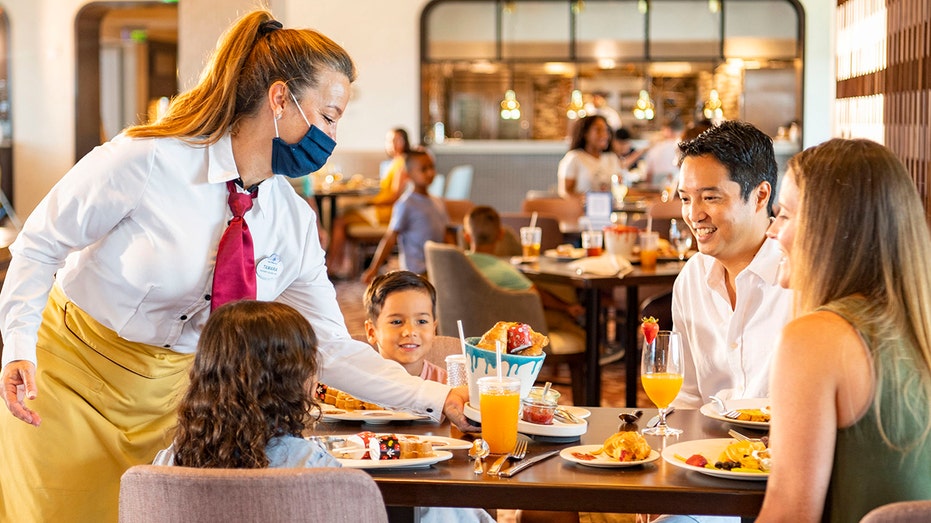
In this June 2020 file photo provided by Walt Disney World Resort, new measures are in place to promote health and well-being in restaurants at Walt Disney World Resort. (Photo by Matt Stroshane/Walt Disney World Resort via Getty Images)

DISNEY CRUISE LINE VACCINE MANDATE: PASSENGERS 5 AND OLDER MUST BE FULLY VACCINATED AGAINST COVID-19

Nick Caturano, a cast member at Disney World for more than 16 years, told FOX Business on Saturday that he had heard managers were leaking e-mails detailing the move two hours before the cast members received them. 

“For me personally, I was trying to reach out to Disney and reason with them when I wrote my open letter on the website. But, the legislation really put it over the edge, and it looks like Disney must have had an emergency meeting, I’m guessing. And, I heard probably around noon that managers were leaking that they were getting these emails that they were going to stop the mandates. And, as regular cast members, we got it [at around] 2 p.m,” Caturano explained. 

Caturano runs the website GoofyVaccine.com, which features an open letter to the company questioning Disney’s vaccine requirements.

In July, Disney said it would make vaccinations mandatory for all on-site salaried and non-union hourly employees in the U.S., giving them a deadline of the end of September. 

In August, Disney said it would require union employees to show proof of vaccination by Oct. 22 to remain employed, with the option to request exemptions for medical or religious reasons.

Caturano said his experience becoming infected with COVID-19 was partially what “got [him] to stand up.” 

“That and a lot of cast members were looking to me because they were really scared. They didn’t want to lose their job, but they were scared to take the shot because everybody … a lot of us felt that it just wasn’t vetted long enough,” he said, “We weren’t against the vaccine. We just didn’t think that there was enough … We just thought it was too soon to totally trust it, and we just wanted to wait … And then, that just led me to take a stand and I just wanted to reason with Disney, then it turned into something else.”

All of this comes after Florida’s Republican Gov. Ron DeSantis signed special session legislation that puts new restrictions on COVID-19 vaccine mandates by employers.

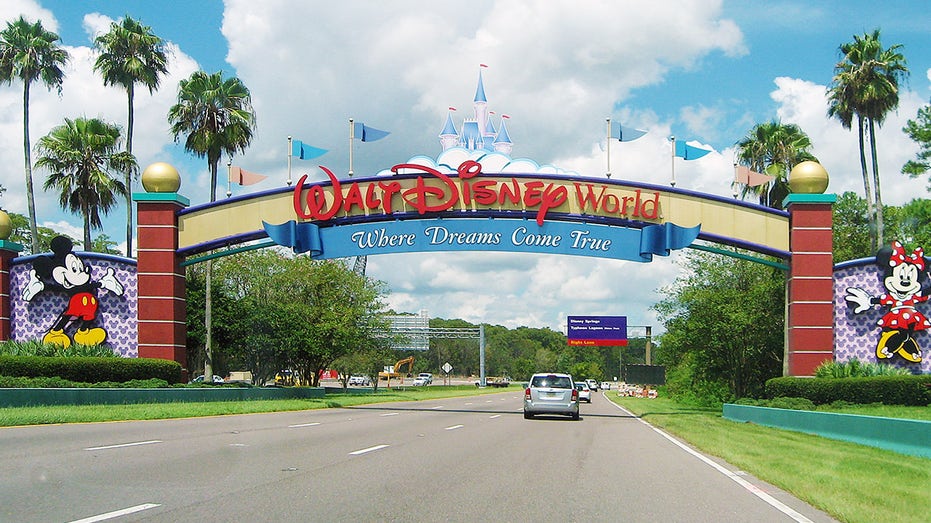
An entrance to Walt Disney World Resort in Lake Buena Vista, Fla., in August 2015.  (iStock / iStock)

“I told Floridians that we would protect their jobs, and today we made that the law,” DeSantis said in a press release this week. “Nobody should lose their job due to heavy-handed COVID mandates, and we had a responsibility to protect the livelihoods of the people of Florida. I’m thankful to the Florida Legislature for joining me in standing up for freedom.”

Effective immediately, private employer COVID-19 vaccine mandates are prohibited. Employers who violate employee health protections will be fined up to $50,000 per violation. Government entities may not require COVID-19 vaccinations of anyone. Educational institutions may not require students to be vaccinated against COVID-19. School districts may not have school face mask policies or quarantine healthy students. Parents and students may sue violating school districts and recover costs and attorney’s fees.

CLICK HERE TO READ MORE ON FOX BUSINESS

Another bill signed by DeSantis prevents the state health officer from mandating vaccines during a public health emergency. He also approved a bill directing the state to begin considering a withdrawal from the federal Occupational Safety and Health Administration, which drafted White House vaccine requirements for private businesses with more than 100 employees.

“We’re making sure that people have a right to earn a living, people have a right to have protections in their place of employment and that parents have protections to be able to direct the upbringing of their kids,” the governor said in a signing ceremony

Democrats have criticized the bills as politically motivated and dangerous to public health.

“As we would expect, Disney has amended its vaccination policy to comply with Florida law. We believe that all companies in Florida will likewise follow the law signed by Governor DeSantis this week,” the governor’s office said in a statement issued to FOX 35. “Nobody should lose his or her job over these mandates. Disney is a major employer in Florida, and we are proud that the ‘happiest place on Earth’ is here in our state. Governor DeSantis’ leadership has saved countless jobs and livelihoods before this holiday season.

“We hope Disney and any other company that has suspended or terminated workers due to vaccine mandates will consider rehiring them.” 

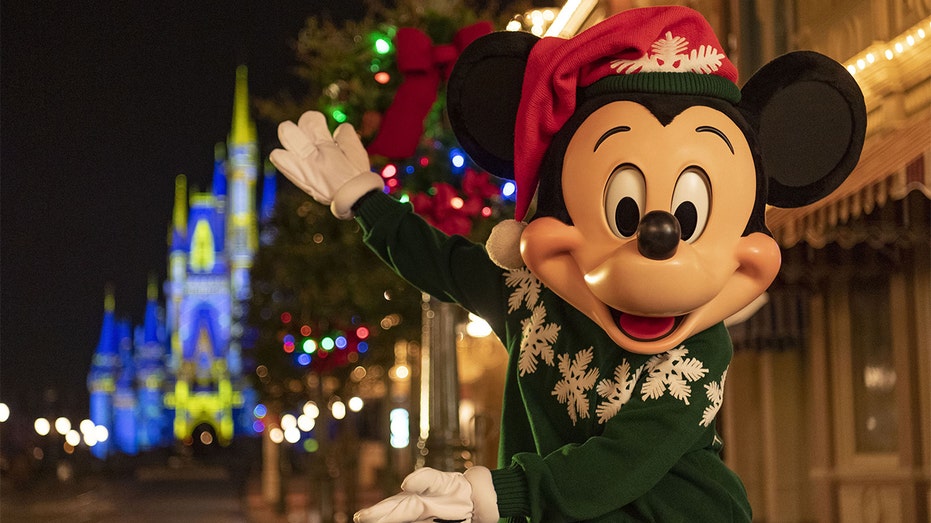
Walt Disney World Resort in Lake Buena Vista, Fla., will reimagine its holiday celebration this year. From Nov. 6 to Dec. 30, the resort’s four theme parks and Disney Springs will be decked with festive décor and offer special merchandise, enchanting

Caturano pointed out to FOX Business that case rates in Florida have dropped since their spike this summer. 

“I love that DeSantis has been pushing it, fighting for all of us. He really has been a voice for us, and I think he’s really standing behind the science,” Caturano said.

Florida, especially Miami-Dade County, still ranks among the states with the highest case rates, according to the John’s Hopkins Coronavirus Resource Center.

COVID-19 cases in the U.S. are rising once again, particularly in cold-weather states like Michigan.

Dr. Anthony Fauci, the director of the National Institute for Allergy and Infectious Diseases (NIAID), said this week that there has been an uptick in hospitalizations among people who have been vaccinated but not boosted. 

GET FOX BUSINESS ON THE GO BY CLICKING HERE

However, he noted, the majority of hospitalizations are still among those who are unvaccinated. 

Data from the U.S. Centers for Disease Control and Prevention (CDC) shows that nearly 196 million Americans are fully vaccinated and 33.5 million people have received a booster dose. 

“We have 62 million Americans eligible for vaccines who are still not vaccinated. The data that I show you do not lie. Vaccines protect you, your family and your community,” Fauci said, speaking alongside CDC Director Dr. Rochelle Walensky. “And importantly, it is not too late, as Dr. Walensky has said. Get vaccinated now.” 

The Associated Press contributed to this report.
Under Honda CEO Toshihiro Mibe’s radical vision, will company be recognizable in 20 years?

Mibe stated the grand approach is nevertheless having shape. But Honda may perhaps announce new particulars, this sort of as product and battery methods for North America, in early 2022, he claimed.

In China, Honda has now furnished a glimpse. In Oct, Mibe declared that Honda will introduce 10 EV products in China in the future five many years underneath a new “e:N Series” brand name. Honda even envisions exporting these types from China. To underscore its intentions, Honda showed three EV concept vehicles with angular styling, slablike sheet metal and sharp boatlike prows.

How significantly will the international EV overhaul charge?

“All I can say is billions and billions,” Mibe said.

Honda’s ramp-up will get off in the late 2020s, subsequent the arrival of solid-condition batteries. That technology will be a “sport-changer,” he reported.

In a feeling, Honda is refraining from massive investments in modern lithium ion battery know-how on the guess that the solid-point out breakthrough is suitable all over the corner.

Honda programs to make a pilot line for good-point out batteries in 2022 as a action towards mass creation, Mibe reported. In the meantime, Honda’s partnership with GM can be observed as a bridge to that period, serving to Honda fill the hole with EVs until its personal up coming-gen tech is all set.

“If we make way too substantial an financial commitment, we sense the production facilities can’t be easily commonized involving lithium ion and stable-point out batteries,” Mibe said. “So we need to have to imagine extensive phrase and assume about what timing is ideal for this financial investment of billions and billions.”

But a single thing Honda very likely will never detail at any time quickly is a prolonged-time period car or truck income goal.

Honda offered 4.55 million automobiles worldwide in the fiscal 12 months ended March 31, 2021, and expects deliveries to fall to 4.2 million in the recent fiscal yr as the worldwide semiconductor lack has an effect on output. The automaker wants 40 per cent of its income in significant marketplaces, these as North The usa, to be both whole-electric or fuel mobile cars in 2030, and the entire world fleet to be zero emissions in 2040.

But Mibe claims worth will hinge on new mobility designs and software, not always volume.

“In typical, the absolute variety of cars may drop because of sharing. I do not feel we can keep the absolute selection of vehicles out there,” Mibe stated of the industry’s course.

“We absolutely have to transform the present-day automobile business design alone,” he claimed. “That is why we are not publishing a numerical target. The profitability structure will change as nicely.”

Biden undergoes colonoscopy, resumes duties after transfer to Harris

First Known Covid Case Was Vendor at Wuhan Market, Scientist Says

A scientist who has pored over public accounts of early Covid-19 cases in China reported on Thursday that an influential World Health Organization inquiry had most likely gotten the early chronology of the pandemic wrong. The new analysis suggests that the first known patient sickened with the coronavirus was a vendor in a large Wuhan animal market, not an accountant who lived many miles from it.

The report, published on Thursday in the prestigious journal Science, will revive, though certainly not settle, the debate over whether the pandemic started with a spillover from wildlife sold at the market, a leak from a Wuhan virology lab or some other way. The search for the origins of the greatest public health catastrophe in a century has fueled geopolitical battles, with few new facts emerging in recent months to resolve the question.

The scientist, Michael Worobey, a leading expert in tracing the evolution of viruses at the University of Arizona, came upon timeline discrepancies by combing through what had already been made public in medical journals, as well as video interviews in a Chinese news outlet with people believed to have the first two documented infections.

Dr. Worobey argues that the vendor’s ties to the Huanan Seafood Wholesale Market, as well as a new analysis of the earliest hospitalized patients’ connections to the market, strongly suggest that the pandemic began there.

“In this city of 11 million people, half of the early cases are linked to a place that’s the size of a soccer field,” Dr. Worobey said. “It becomes very difficult to explain that pattern if the outbreak didn’t start at the market.”

Several experts, including one of the pandemic investigators chosen by the W.H.O., said that Dr. Worobey’s detective work was sound and that the first known case of Covid was most likely a seafood vendor.

But some of them also said the evidence was still insufficient to decisively settle the larger question of how the pandemic began. They suggested that the virus probably infected a “patient zero” sometime before the vendor’s case and then reached critical mass to spread widely at the market. Studies of changes in the virus’s genome — including one done by Dr. Worobey himself — have suggested that the first infection happened in roughly mid-November 2019, weeks before the vendor got sick.

“I don’t disagree with the analysis,” said Jesse Bloom, a virologist at the Fred Hutchinson Cancer Research Center. “But I don’t agree that any of the data are strong enough or complete enough to say anything very confidently, other than that the Huanan Seafood Market was clearly a super-spreading event.”

Dr. Bloom also noted that this was not the first time the W.H.O. report, done in collaboration with Chinese researchers, was found to contain mistakes, including errors involving early patients’ potential links to the market.

“It’s just kind of mind-boggling that in all of these cases, there keep being inconsistencies about when this happened,” he said.

Toward the end of December 2019, doctors at several Wuhan hospitals noticed mysterious cases of pneumonia arising in people who worked at the Huanan Seafood Wholesale Market, a dank and poorly ventilated space where seafood, poultry, meat and wild animals were sold. On Dec. 30, public health officials told hospitals to report any new cases linked to the market.

Fearing a replay of SARS, which emerged from Chinese animal markets in 2002, Chinese officials ordered the Huanan market closed, and Wuhan police officers shut it down on Jan. 1, 2020. Despite those measures, new cases multiplied through Wuhan.

Wuhan authorities said on Jan. 11, 2020, that cases had begun on Dec. 8. In February, they identified the earliest patient as a Wuhan resident with the surname Chen, who fell sick on Dec. 8 and had no link to the market.

Chinese officials and some outside experts suspected that the initially high percentage of cases linked to the market might have been a statistical fluke known as ascertainment bias. They reasoned that the Dec. 30 call from officials to report market-linked illnesses may have led doctors to overlook other cases with no such ties.

“At the beginning, we presumed that the seafood market may have the novel coronavirus,” Gao Fu, director of China’s Center for Disease Control and Prevention, said in May 2020, according to China Global Television Network. “But it now turns out that the market is one of the victims.”

By the spring of 2020, senior members of the Trump administration were promoting another scenario for the origin of the pandemic: that the virus had escaped from the Wuhan Institute of Virology, which has a campus roughly eight miles away from the Huanan market, across the Yangtze River.

In January of this year, researchers chosen by the W.H.O. visited China and interviewed an accountant who had reportedly developed symptoms on Dec. 8. Their influential March 2021 report described him as the first known case.

But Peter Daszak, a disease ecologist at EcoHealth Alliance who was part of the W.H.O. team, said that he was convinced by Dr. Worobey’s analysis that they had been wrong.

“That December the eighth date was a mistake,” Dr. Daszak said.

The W.H.O. team never asked the accountant the date his symptoms began, he said. Instead, they were given the Dec. 8 date by doctors from Hubei Xinhua Hospital, who handled other early cases but did not care for Mr. Chen. “So the mistake lies there,” Dr. Daszak said.

For the W.H.O. experts, Dr. Daszak said, the interview was a dead end: The accountant had no apparent links to an animal market, lab or a mass gathering. He told them he liked spending time on the internet and jogging, and he did not travel much. “He was as vanilla as you could get,” Dr. Daszak said.

Had the team identified the seafood vendor as the first known case, Dr. Daszak said, it would have more aggressively pursued questions like what stall she worked in and where her products came from.

This year, Dr. Daszak has been one of the strongest critics of the lab-leak theory. He and his organization, EcoHealth Alliance, have taken heat for research collaborations with the Wuhan Institute of Virology. Last month, the National Institutes of Health said EcoHealth was in breach of the terms and conditions of its grant for research on coronaviruses in bats.

While the doctors at Hubei Xinhua Hospital said that the onset of the accountant’s illness had been Dec. 8, a senior doctor at Wuhan Central Hospital, where Mr. Chen was treated, had told a Chinese news outlet that he developed symptoms around Dec. 16.

Asked about Mr. Chen’s case, China’s National Health Commission said it stood by comments made by Liang Wannian, the leader of the Chinese side of the W.H.O.-China investigation who led the interview with the Hubei Xinhua Hospital doctors. Mr. Liang told a news conference in February of this year that the earliest Covid case showed symptoms on Dec. 8 and was “not connected” to the Huanan market.

In their report, the W.H.O. experts concluded that the virus most likely spread to people from an animal spillover, but they could not confirm that the Huanan market was the source. By contrast, they said that a lab leak was “extremely unlikely.”

The report has come under fire for several errors and shortcomings. The Washington Post revealed in July that the report listed the wrong viral samples for several early patients — including the first official case — and mistakenly linked the first family cluster of cases to the Huanan market. The W.H.O. promised to fix the errors, but they remain in the report on the organization’s website. (The organization said that it would ask the report’s authors if and how they would correct the mistakes.)

In May, two months after the report by the W.H.O. and China was published, 18 prominent scientists, including Dr. Worobey, responded with a letter in Science complaining that the W.H.O. team had given the lab-leak theory short shrift. Far more research was required, they argued, to determine whether one explanation was more likely than the other.

An expert on the origins of influenza and H.I.V., Dr. Worobey has tried to piece together the early days of the Covid pandemic. Reading a May 2020 study of early cases written by local doctors and health officials in Wuhan, he was puzzled to see a description that seemed like Mr. Chen: a 41-year-old man with no contact with the Huanan market. But the study’s authors dated his symptoms to Dec. 16, not Dec. 8.

Then Dr. Worobey found what appeared to be a second, independent source for the later date: Mr. Chen himself.

“I got a fever on the 16th, during the day,” a man identified as Mr. Chen said in a March 2020 video interview with The Paper, a publication based in Shanghai. The video indicates that Mr. Chen is a 41-year-old who worked in a company’s finance office and never went to the Huanan market. Official reports said that he lived in the Wuchang district in Wuhan, miles from the market.

The New York Times was not able to independently confirm the identity of the man in the video.

Along with his fever on Dec. 16, Mr. Chen said he felt a tightness in his chest and went to the hospital that day. “Even without any strenuous exercise, with just a tiny bit of effort, like the way I’m speaking with you now, I’d feel short of breath,” he said.

Dr. Worobey said that the medical records shown in the video might hold clues to how the W.H.O.-China report wound up with the wrong date. One page described surgery Mr. Chen needed to have teeth removed. Another was a Dec. 9 prescription for antibiotics referring to a fever from the day before — possibly the day of the dental surgery.

On the video, Mr. Chen speculated that he might have gotten Covid “when I went to the hospital” — possibly a reference to his earlier dental surgery.

The Washington Post noted in July that the details provided by the W.H.O. for the Dec. 8 case seemed to fit better with an entry from an online database of viral samples linked to someone who got sick on Dec. 16. In response, the W.H.O. had said it was looking into the discrepancy.

An agency spokesman told The New York Times it would be “difficult to comment” on the first known case because the W.H.O. team had limited access to health data. He said it was important for investigators to keep looking for patients infected even earlier.

In Dr. Worobey’s revised chronology, the earliest case is not Mr. Chen but the seafood vendor, a woman named Wei Guixian, who developed symptoms around Dec. 11. (Ms. Wei said in the same video published by The Paper that her serious symptoms began on Dec. 11, and she told The Wall Street Journal that she began feeling sick on Dec. 10. The W.H.O.-China report listed a Dec. 11 case linked to the market.)

Dr. Worobey found that hospitals reported more than a dozen likely cases before Dec. 30, the day the Wuhan authorities alerted doctors to be on the lookout for ties to the market.

He determined that Wuhan Central Hospital and Hubei Xinhua Hospital each recognized seven cases of unexplained pneumonia before Dec. 30 that would be confirmed as Covid-19. At each hospital, four out of seven cases were linked to the market.

By focusing on just these cases, Dr. Worobey argued, he could rule out the possibility that ascertainment bias skewed the results in favor of the market.

Still, other scientists said it’s far from certain that the pandemic began at the market.

“He has done an excellent job of reconstructing what he can from the available data, and it’s as reasonable a hypothesis as any,” said Dr. W. Ian Lipkin, a virologist at the Mailman School of Public Health at Columbia University. “But I don’t think we’re ever going to know what’s going on, because it’s two years ago and it’s still murky.”

Alina Chan, a postdoctoral fellow at the Broad Institute in Cambridge, Mass., and one of the most vocal proponents of investigating a lab leak, said that only new details about earlier cases — going back to November — would help scientists trace the origin.

“The main issue this points out,” she said, “is that there’s a lack of access to data, and there are errors in the W.H.O.-China report.”

Eleanor Goodman contributed translation and Liu Yi contributed research.