Federal appeals court allows Biden vaccine mandate for large companies to resume

A federal appeals court Friday reinstated the Biden administration’s vaccine mandate for large companies, dissolving a stay by a separate court that had suspended the mandate. 

The decision is the latest skirmish in a continuing battle that will likely soon be decided by the Supreme Court

A coalition of 27 business groups quickly appealed to the nation’s highest court Friday to block the lower court’s mandate, according to Politico. They claimed the mandate would bring “harm” to thousands of businesses.

The Biden vaccine mandate forces companies with 100 employees or more to require that their workers be vaccinated against COVID-19 or submit to weekly testing. The requirement takes effect Jan. 4.

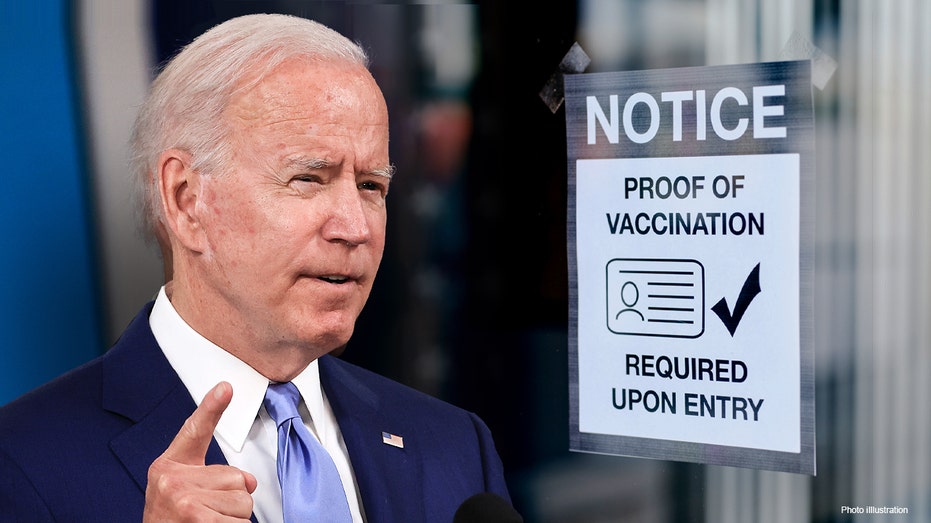
President Joe Biden holds his face mask and waves as he exits Air Force One at Capital Region International Airport, Tuesday, Oct. 5, 2021, in Lansing, Michigan. (Associated Press / AP Newsroom)

In a 2-1 ruling, a panel of the U.S. Appeals Court for the Sixth Circuit ruled that the Biden administration could enforce the policy using the Labor Department’s Occupational Safety and Health Administration (OSHA).

“Recognizing that the ‘old normal’ is not going to return, employers and employees have sought new models for a workplace that will protect the safety and health of employees who earn their living there,” wrote Judge Jane Branstetter Stranch, a Barack Obama appointee, for the majority.In need of guidance on how to protect their employees from COVID-19 transmission while reopening business, employers turned to the Occupational Safety and Health Administration.”

APPEALS COURT RE-AFFIRMS STAY ON BIDEN WORKPLACE VACCINE MANDATE, CITES ‘SEVERE’ RISKS

The rule establishing the mandate had prompted a slate of legal challenges from at least 27 states as well as business and religious groups that argued the mandate is unconstitutional.

The Fifth Circuit Court of Appeals Nov. 12 ordered OSHA to “take no steps to implement or enforce the Mandate until further court order,” reaffirming an earlier decision it had made. The court said the mandate exposes the petitioners “to severe financial risk” and “threatens to decimate their workforces (and business prospects).”

President Biden’s vaccine mandate is scheduled to take effect Jan. 4, pending further legal action. (Fox News photo illustration / Getty Images  | istock / Getty Images)

The Biden administration was forced to halt the mandate following the ruling. But Friday, the Sixth Circuit court ruled that the mandate was needed to limit transmission of the virus.

“The costs of delaying implementation of the [mandate] are comparatively high,” Stranch wrote in her ruling. “Fundamentally, the [mandate] is an important step in curtailing the transmission of a deadly virus.”

Opponents say the policy is a backdoor effort to force the population to get vaccinated.

CLICK HERE TO READ MORE ON FOX BUSINESS

The business-backed Job Creators Network, which is a party to the case, expressed disappointment.

“This mandate adds an incredible burden on small business owners who are still suffering negative effects of the pandemic,” the group said in a statement. “JCN has immediately asked the Supreme Court to save businesses and employees from this government overreach.”

Fox News’ Thomas Barrabi contributed to this story.

CDC recommends Pfizer and Moderna vaccines over Johnson & Johnson due to rare blood clotting issue

The CDC now recommends that Americans take the mRNA vaccines made by Pfizer and Moderna instead of the one-shot Johnson & Johnson vaccine due to rare but serious blood clots.

The agency’s Advisory Committee on Immunization Practices unanimously voted on Thursday to give a preferential recommendation to Moderna and Pfizer’s shots. 

“More than 200 million Americans have completed their primary vaccine series, providing protection against COVID-19, preventing millions of cases and hospitalizations, and saving over a million lives,” CDC Director Rochelle Walensky said in a statement. “Today’s updated recommendation emphasizes CDC’s commitment to provide real-time scientific information to the American public.”

The CDC temporarily halted Johnson & Johnson’s vaccine in April while scientists investigated the blood clots, which are known as “thrombosis with thrombocytopenia syndrome.”

Syringes filled with the Johnson & Johnson vaccine are shown, Thursday, May 13, 2021, at a mobile vaccination site at the Greater Bethel Church in Miami. ((AP Photo/Wilfredo Lee))

Regulators eventually decided that the benefits of the Johnson & Johnson vaccine outweighed the risks, but the FDA released new data this week showing that more cases have occurred in the summer and fall. 

Women between the ages of 30 and 49 are most affected by the blood clotting issue at a rate of about 1 in 100,000 shots. 

Health officials have confirmed 54 cases of the blood clots, nine of which have been fatal, CDC official Dr. Isaac See said Thursday. Two more deaths are suspected to be related to the blood clotting issue. 

SUPPLY CHAIN ISSUES IMPACTING PHARMACIES: WHAT TO KNOW

A CDC official told FOX Business that individuals who received the Johnson & Johnson vaccine should still receive a booster dose two months after their initial vaccine. 

If an individual received a Johnson & Johnson shot for their primary dose and then a booster of any vaccine, then they do not need to be re-vaccinated with an mRNA COVID-19 vaccine, according to the official. 

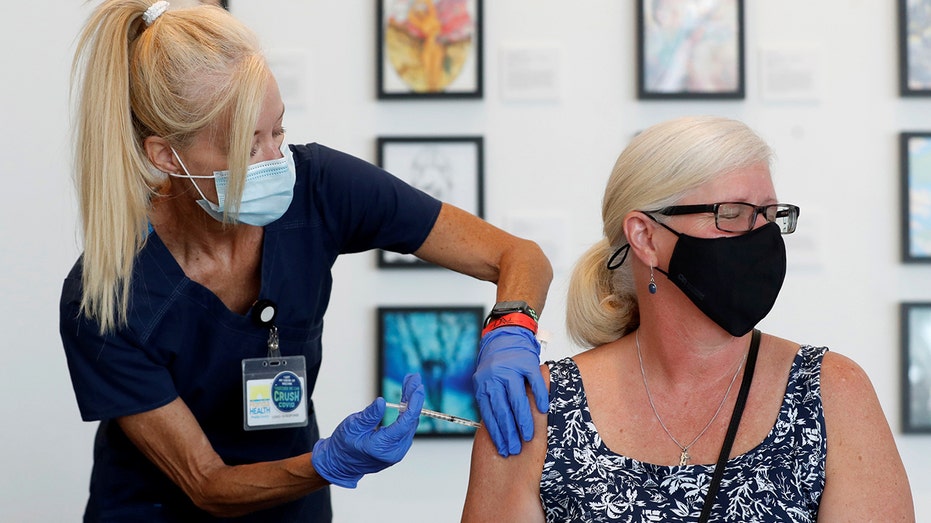
Michelle Falgout, a registered nurse, administers a dose of the Johnson & Johnson COVID-19 vaccine to Kerri Houston at a Florida Department of Health in a Pinellas County vaccination event held at the Salvador Dali Museum in St. Petersburg, Flori

Symptoms of blood clots – including severe headaches, abdominal pain, back pain, and nausea – usually occur 6 to 14 days after receiving the Johnson & Johnson vaccine, according to the American Society of Hematology

Only about 16 million doses of the Johnson & Johnson vaccine have been administered in the United States, compared to about 470 million doses of the vaccines made by Pfizer and Moderna. 

COVID-19 VACCINE EFFECTIVENESS WILL LIKELY DROP AGAINST OMICRON VARIANT, MODERNA CEO SAYS

The Johnson & Johnson vaccine is a viral vector vaccine, meaning that it replaces a small piece of the genetic instructions in a harmless adenovirus with genetic instructions for the SARS-CoV-2 spike protein. When the vaccine is injected, our cells recognize that the spike protein isn’t supposed to be there and produce antibodies to fight it. 

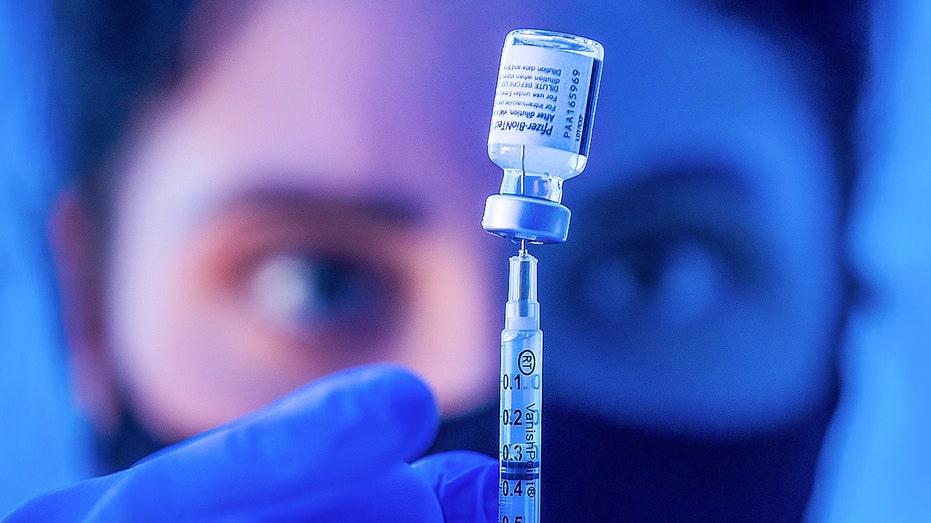
Liesl Eibschutz, a medical student from Dartmouth University, loads a syringe with Pfizer COVID-19 vaccine before giving it to people on the first day that people ages 16 and up can receive the vaccine at Kedren Health on Thursday, April 15, 2021 in

AstraZeneca’s COVID-19 vaccine, which was produced in the United Kingdom, is also a viral vector vaccine and has led to similar blood clotting issues. 

CLICK HERE TO READ MORE ON FOX BUSINESS

Several other countries have already recommended mRNA vaccines over the viral vector vaccines, or set age limits for the Johnson & Johnson and AstraZeneca vaccines. 

COVID-19 itself can also cause blood clots. The risk of developing cerebral venous thrombosis or portal vein thrombosis is “significantly increased after COVID-19,” according to a University of Oxford study in April. 

The Associated Press contributed to this report.  

NFL funding ‘defund the police’ groups through ‘Inspire Change’ program

The National Football League’s “Inspire Change” partners, which receive financial backing from the multibillion-dollar league, include multiple groups that have openly advocated for defunding the police, a Fox News Digital review of the program found. 

Groups who have received funds as part of “Inspire Change,” the NFL’s social justice initiative, include the Vera Institute of Justice, the Oregon Justice Resource Center and the Community Justice Exchange. All three of those groups support defunding or abolishing the police, a review of their public statements shows. 

While the NFL’s general support of social justice causes is widely known, the fact that the league is propping up groups trying to defund police departments has not been previously reported. 

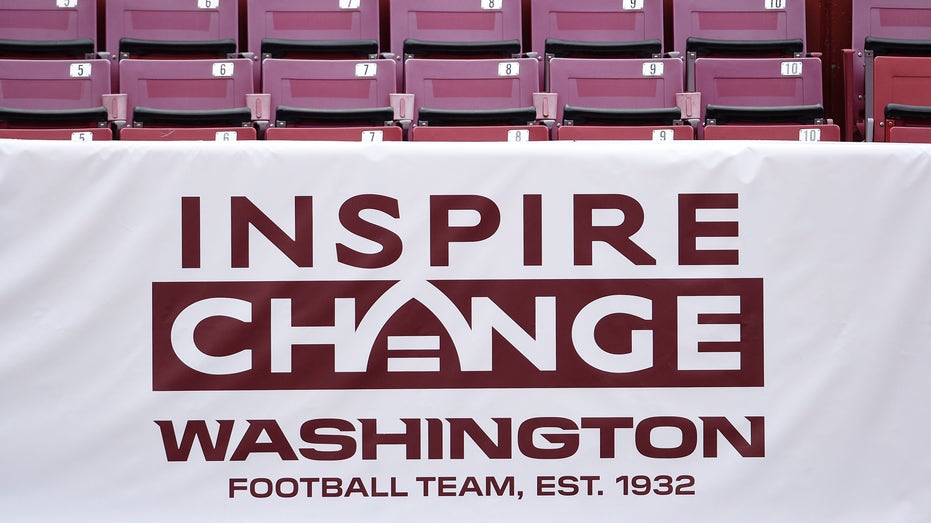
An Inspire Change banner is seen before an NFL football game between the Los Angeles Rams and Washington Football Team at FedExField

The NFL’s “Inspire Change” program includes funding for groups trying to defund or abolish police departments. A banner promoting the “Inspire Change” initiative is seen at an October 2020 game between the Los Angeles Rams and Washington Football Tea (Patrick McDermott/Getty Images / Getty Images)

The NFL gave $300,000 to the Oregon Justice Resource Center (OJRC), the group disclosed to local media. It’s unclear how much the NFL gave to the Vera Institute of Justice and Community Justice Exchange, though the NFL has donated tens of millions of dollars as part of the “Inspire Change” program, according to the league.  

Vera and the Community Justice Exchange have been NFL grantees since 2020, while the OJRC first received funding from the NFL this year, according to the league.  

The Community Justice Exchange, which didn’t provide a comment by press time, aims to get rid of not only policing and prisons, but also immigration enforcement, according to its public statements. 

“The Community Justice Exchange is working towards a world without prisons, policing, prosecution, surveillance or any form of detention or supervision,” the group states on its website. Its work includes publishing a roadmap to “prison abolition.” 

The group also runs the National Bail Fund Network, whose chapters include the Minnesota Freedom Fund, a group that gained notoriety for bailing out rioters and alleged domestic abusers, among others, during the summer 2020 riots. Vice President Kamala Harris was among the high-profile figures who promoted the Minnesota Freedom Fund last year. 

The NFL’s support for the group includes supporting “75+ local community-based bail and bond funds, working to end money bail and pre-trial detention at the local level and immigration detention at the national level,” according to the NFL’s “Inspire Change” website. 

WAUKESHA PARADE MASSACRE MADE POSSIBLE BY LEFT-WING DISTRICT ATTORNEYS’ ATTEMPTS AT BAIL REFORM, CRITICS SAY 

The OJRC is similarly open in its support for defunding the police. 

“The brutality of LE [law enforcement] & cruelty of our prisons are connected by the same malignant tumor: white supremacy,” the OJRC tweeted in June 2020. “We must dismantle/defund it all.” 

In August, when Portland’s mayor called for restoring previously slashed police funding amid a crime spike, the OJRC criticized the move.

“Portland leaders from the Mayor down or anyone else advocating for more $ for police either don’t get it or don’t want to get it,” the group tweeted. It added: “We need to defund the police and build up communities.”

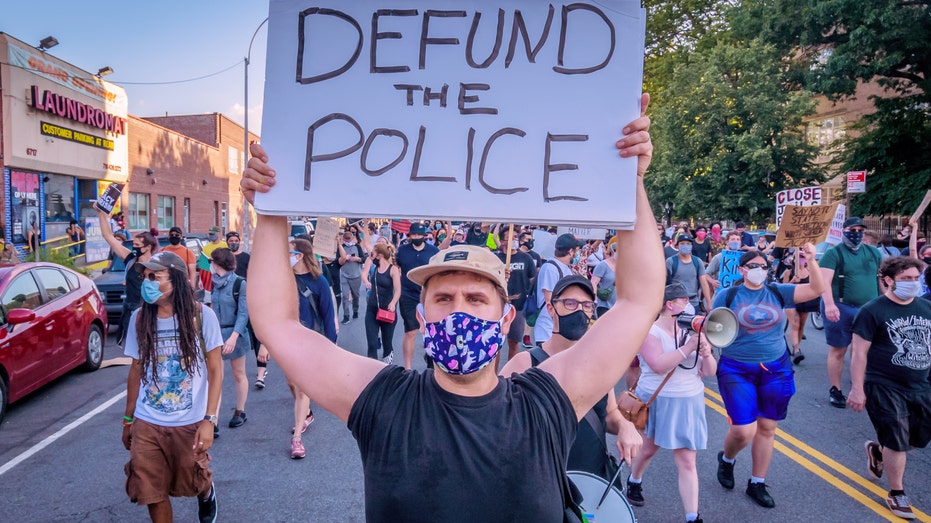
A demonstrator in New York holds a "defund the police" sign

A demonstrator holds a “Defund the police” sign in Brooklyn, New York.  (Erik McGregor/LightRocket via Getty Images / Getty Images)

The NFL’s funding of the OJRC supports its Women’s Justice Project, Youth Justice Project and “[s]ustaining current capacity and enabling the OJRC to expand,” according to the league. The OJRC declined to comment. 

Like the OJRC, the New York-based Vera Institute of Justice is unapologetic in its support for defunding the police. 

“Vera is committed to dismantling the current culture of policing and working toward solutions that defund police and shift power to communities,” the group’s president, Nicholas Turner, wrote in June 2020. He also touted Minneapolis leaders’ pledge to “dismantle” the city’s police department – a move ultimately rejected by voters in a ballot measure last month – as one of several “victories” notched by activists.

Vera’s backing of the defund the police movement came amid nationwide protests – many of which devolved into riots that caused nearly $2 billion in damage – following the death of George Floyd

CLICK HERE FOR MORE SPORTS COVERAGE ON FOXNEWS.COM

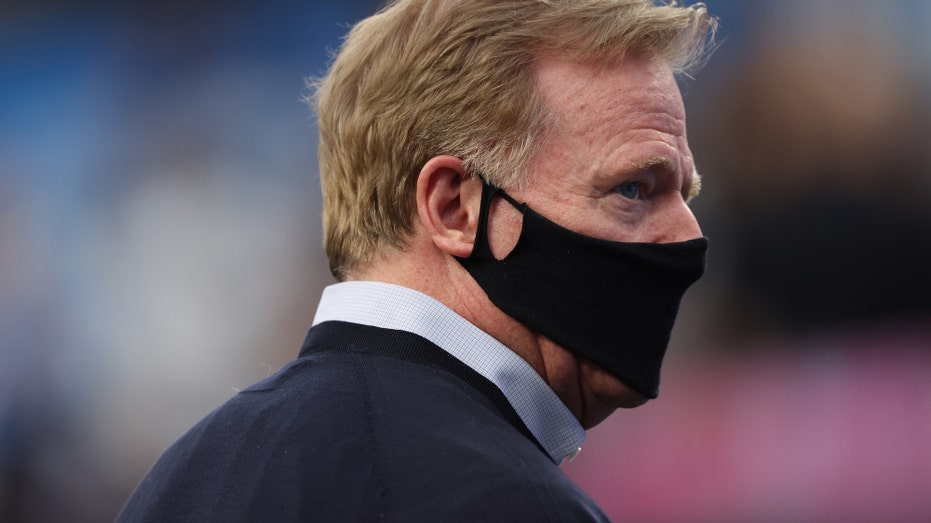
NFL commissioner Roger Goodell wears a protective face covering due to the Covid-19 pandemic before the Las Vegas Raiders play against the Los Angeles Chargers at SoFi Stadium on October 4, 2021 in Inglewood, California. (Photo by Harry How/Getty Images)

NFL Commissioner Roger Goodell before the Las Vegas Raiders-Los Angeles Chargers game at SoFi Stadium on Oct. 4, 2021. (Harry How/Getty Images / Getty Images)

The NFL’s funding of the group supports “Vera’s In Our Backyards initiative and its work to end the catastrophic rise of incarceration in small cities and rural counties, advance racial equity, and reinvest in supports and resources that build truly healthy and vibrant communities through policy advocacy, narrative-changing campaigns and research in partnership with community members and system stakeholders,” according to the league. 

The NFL’s money also supports “Vera’s Policing Program and its work to advance crisis response programs, policies, and resources that connect people experiencing behavioral health crises to community-based services while minimizing involvement with police and the criminal justice system.” 

The NFL declined to specifically answer several questions from Fox News Digital but provided a statement from a spokesperson defending the program. 

GET FOX BUSINESS ON THE GO BY CLICKING HERE

“Our 33 social justice grant partners have been selected based on the critical work that they have done surrounding Inspire Change’s four pillars – education, economic advancement, criminal justice reform, and police & community relations – to break down barriers to opportunity, end systemic racism, and bridge the gap between members of law enforcement and the communities they serve,” the spokesperson said. 

“We stand by the work our grant partners have done and the lasting positive impact made in communities across the country.” 

‘Diet’ soda is disappearing from store shelves

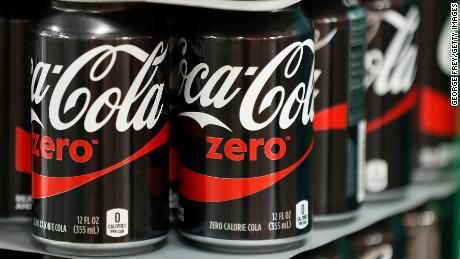
“Zero sugar” has replaced “diet” for many no-calorie soft drinks. Canada Dry and Schweppes ginger ales, 7Up, A&W and Sunkist, made by Keurig Dr Pepper, now label their diet drinks “zero sugar.” (One exception is the namesake Dr Pepper brand, which will still come in “diet” packaging in addition to a different zero sugar version.)

The reason for the overhaul: The word “diet” has fallen out of fashion — especially for Millennials and Gen Z-ers.

“No Gen Z wants to be on a diet these days,” he said, adding that the company is “going to continue to innovate and support that business.”

Diet 7UP is dead. Long live 7UP Zero Sugar.

But distaste for the word diet doesn’t signal an aversion to no-calorie beverages. The diet soda segment, which includes diet and zero-calorie branded drinks, has ballooned since it first hit the mainstream in the 1960s. In 2020, the US retail diet carbonated soft drink market hit $11.2 billion, according to Mintel, a market research company.

The segment is still far smaller than the market for regular carbonated soft drinks, which was $28.2 billion in 2020, but it’s growing much more quickly. Diet soda sales are up about 19.5{cfdf3f5372635aeb15fd3e2aecc7cb5d7150695e02bd72e0a44f1581164ad809} from 2018, compared to just 8.4{cfdf3f5372635aeb15fd3e2aecc7cb5d7150695e02bd72e0a44f1581164ad809} for regular soda in the same period, making it an attractive segment for soda makers seeking growth.

Evolving attitudes toward dieting as a concept mean soda makers have to de-emphasize diet branding as they steam ahead with zero-sugar offerings — even when, as in the case of those brands owned by Keurig Dr Pepper, they’re selling the same exact drink.

The tactic could help soda makers bring more consumers, especially younger ones, into the fold. The industry needs those customers if it wants to grow the soda market.

Diet sodas become popular in the 1960s.

The birth of diet colas

Diet drinks first became popular in the 1960s.

Diet Rite, a no-calorie drink from the soda maker Royal Crown Cola, was launched in 1958 “as an option for diabetics and other consumers who needed to limit their sugar intake,” wrote Emily Contois, author of “Diners, Dudes, and Diets: How Gender and Power Collide in Food Media and Culture,” in a 2020 piece for Jezebel.

“It was first stocked among medicines rather than soft drinks, but focus soon shifted to the growing number of weight loss dieters nationwide,” she wrote. Diet Rite was a hit, prompting Coca-Cola to introduce Tab in 1963, and Pepsi to start selling Diet Pepsi a year later.

The segment gained steam in the following years. Looking to expand beyond Tab, Coca-Cola launched Diet Coke in 1982.

At the time, Coca-Cola was facing many of the same challenges it is fighting today: It needed to reinvigorate the Coca-Cola brand, and thought adding a Coke-branded diet option could help.

Coke is changing the recipe of a popular drink. A lot could go wrong
A company blog post detailing the launch of Diet Coke noted that “colas accounted for 60{cfdf3f5372635aeb15fd3e2aecc7cb5d7150695e02bd72e0a44f1581164ad809} of all soft drink sales in the US back then, but diets were growing three times faster than the rest of the category. Diet Coke was seen as the right product for the right time.”

The company grappled with what to name the product. It considered using the moniker “sugar free” instead of diet, but “many saw it as a slur on Coca-Cola’s main ingredient,” according to the post. Ultimately, the company went with “diet” because it “was the most straightforward articulation of the promise of the brand.”

But a few decades later, Coca-Cola returned to the idea of a sugar-free-branded product. This time, it wanted to attract the demographics that seemed to be avoiding the company’s diet beverages: younger consumers and men.

Zero hits the scene

In 2005, Coca-Cola introduced Coke Zero in the United States. The Baltimore Sun explained at the time that Zero’s “marketing is geared to a demographic, such as young people and the most macho of men, who see a stigma attached to the word diet.”

Other companies also wanted a more neutral way to advertise no-sugar products.

Eliminating the word “diet” creates a “gender-free way to talk about the same topic,” said Jim Watson, senior beverage analyst at Rabobank, who told CNN Business that “diet definitely got taken over as something for women.”

But the arrival of zero-sugar drinks wasn’t just about gender: It marked a turning point for the overall popularity of diet drinks. Alex Beckett, global food and drink analyst at Mintel, said the word diet “started falling out of fashion … with the rise of zero.”

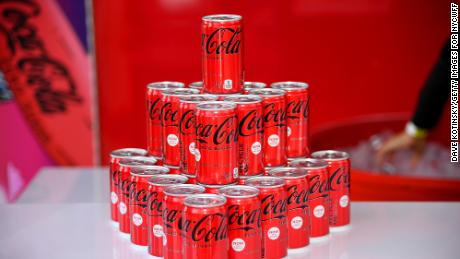
Coke Zero Sugar got a makeover this year, with new cans and an updated recipe.

Billing a drink as free of calories and sugar is also about addressing changing ideas about health, and highlighting the absence of sugar from the drink as a positive attribute in itself.

“While the diet designation may be associated with strict regimes or deprivation, the ‘zero’ designation has fewer negative connotations, corresponding with simply a cleaner profile,” according to a Mintel report from April.

For Keurig, the shift seems to be working. Recent zero sugar launches alone were responsible for one percentage point of market-share gains for the company, according to Derek Hopkins, president of cold beverages at Keurig Dr Pepper (KDP), who detailed the company’s finances during the company’s investor day in October.
Coca-Cola (KO) has also seen success with its Zero offering, which was rebranded to Coca-Cola Zero Sugar in 2017 and got another update this year. “Coca-Cola Zero Sugar’s new recipe has rolled out in more than 50 countries and has had accelerated growth in the last three months,” said Coke CEO James Quincey during an analyst call in October.

The new recipe arrived on shelves in the US this summer, and since then “we have seen that 23{cfdf3f5372635aeb15fd3e2aecc7cb5d7150695e02bd72e0a44f1581164ad809} of current Coke Zero Sugar consumers are new,” said Alex Ebanks, a spokesperson for the company, adding that Coca-Cola will continue to invest in the product next year and beyond.

Competition heats up

While big brands sharpen their focus on their zero-sugar offerings, they face competition from other categories and upstarts with novel ideas.

One major competitor, according to Mintel’s Beckett, is sparkling water.

“Many people are shifting over … from carbonated soft drinks to sparkling waters,” he said, because those drinks often have no sweeteners, no calories, and “have a more of a health healthy image.”

PepsiCo (PEP) and Coca-Cola have offered their own sparkling waters to get in on the trend. Coca-Cola owns Topo Chico and has a line of caffeinated sparkling water called Aha, while PepsiCo sells Bubly.

Beyond sparkling waters, competitors are entering the space with fresh spins on sodas. For example: Sodas that promote gut health.

Olipop, a startup that says it makes “a new kind of soda,” sells throwback flavors like classic root beer, vintage cola and others. The sodas, which range from about 35-50 calories each, are made with a mix of ingredients like Jerusalem artichoke and Cassava root that the company says support digestive health. Poppi, which also sells traditional soda flavors in addition to fruit flavors, makes a similar claim, emblazoning a “for a healthy gut” label on the front of its brightly colored cans.

“​​Consumers are voting with our wallets, and sugar is something that people definitely want less of in our lives,” said Danny Stepper, CEO of LA Libations, a beverage company incubator. “That opens the door for a lot of opportunities and categories,” he said. “Consumers want new things, so that’s opening the door to new ideas.”

Business News for Dec. 9, 2021

WASHINGTON — Lawmakers of both parties came out swinging in a hearing on Wednesday with Adam Mosseri, the head of Instagram, expressing deep skepticism and anger toward the company for not doing enough to protect young users.

In a hearing held by a Senate subcommittee on consumer protection, lawmakers grilled Mr. Mosseri on internal research leaked by a whistle-blower that showed Instagram had a toxic effect on some teenagers. They pressed him to commit to share data with researchers on algorithmic ranking systems and to support legislation for stronger privacy and security protections for children online.

Even Instagram’s announcements this week on new safety tools for children were too little and too late, they said.

“Facebook’s own researchers have been warning management, including yourself, Mr. Mosseri, for years,” said Senator Richard Blumenthal, Democrat of Connecticut and chairman of the subcommittee. “Parents are asking, what is Congress doing to protect our kids and the resounding bipartisan message from this committee is that legislation is coming. We can’t rely on self-policing.”

The hearing is part of a growing effort in Washington to rein in the power of Silicon Valley’s biggest companies. Antitrust regulators are seeking to break up Google and Meta, the parent company of Facebook and Instagram, and lawmakers have introduced dozens of data privacy, speech and competition bills.

Calls for legislative changes have intensified in recent weeks, after a whistle-blower at Facebook leaked internal research that said Instagram led one out of three teenagers to feel worse about their body image and for as many as 16 percent of some teenagers in Britain to have thoughts of suicide. The documents obtained by the whistle-blower, Frances Haugen, often contradicted public statements made by Meta officials, who have long underplayed or rebutted criticism that Instagram harms the mental and emotional well-being of younger users.

“You better tell the truth,” Senator Amy Klobuchar, a Democrat of Minnesota, told Mr. Mosseri. “You’re under oath.”

Mr. Mosseri, 38, was appearing before Congress for the first time. He is a longtime executive at Facebook and is considered a close lieutenant of the company’s chief executive, Mark Zuckerberg. He joined the company in 2008 as a designer and gradually rose in the ranks to run the News Feed, a central feature of the Facebook app. In October 2018, he was named head of Instagram, weeks after the sudden resignations of the app’s founders, Kevin Systrom and Mike Krieger.

He told lawmakers that Instagram often had a positive role in the lives of teenagers, such as by helping them establish connections during difficult times. He tried to direct attention at rivals, noting that more teenagers use TikTok and YouTube. He also acknowledged the skepticism among members of Congress toward Meta.

“I recognize that many in this room have deep reservations about our company,” Mr. Mosseri said. “But I want to assure you that we do have the same goal. We all want teens to be safe online.”

On Tuesday, Instagram announced new safety features for children. Mr. Mosseri mentioned those changes in the hearing, which include tools like a “take a break” function that is meant to help limit time spent online. (TikTok has a similar function that appears when users are spending too much time on the app.)

But Senator Marsha Blackburn of Tennessee, the ranking Republican member of the subcommittee, said even the basic promises of privacy and security from the company had failed users.

This week, her staff set up an experimental account for a fictional 15-year-old and were surprised to find the profile automatically set to public exposure. Instagram says teenage accounts automatically default to the private setting.

Mr. Mosseri acknowledged the error and said Ms. Blackburn’s office exposed a flaw in Instagram’s controls that sets teenage accounts that were created on a web browser — and not on a mobile app — to public. “We will correct that,” Mr. Mosseri said.

Mr. Blumenthal’s office has received hundreds of calls and emails from parents about their negative experiences with Instagram, he has said. One parent recounted how her daughter’s interest in fitness on Instagram led the app to recommend accounts on extreme dieting, eating disorders and self-harm.

Mr. Blumenthal has homed in on the algorithms, which he called “800-pound gorillas in black boxes,” that push such recommendations.

Lawmakers, including Mr. Blumenthal and Ms. Blackburn, have proposed stronger data privacy rules aimed at protecting children and greater enforcement of age restrictions. They have also called for young users to be able to delete information online. Lawmakers have pursued similar legislation before, with little success. Though lawmakers often show bipartisan unity in the hearings, dozens of data privacy bills have been stymied by intense industry lobbying and partisan disagreement over how stringent laws should be.

Senator John Thune, a Republican of South Dakota, has introduced a bill that would force companies to reveal more about their algorithmic ranking system. He asked if Instagram would allow users to rank their content chronologically, instead of through opaque decisions based purely on engagement.

Mr. Mosseri said the company was working on the feature, which could be available next year.

Though Mr. Mosseri repeated his support for regulations, he demurred when asked about specific proposals. He said he hadn’t read a bill introduced by Mr. Blumenthal and other lawmakers that could hold Meta liable for hosting harmful content. He wouldn’t commit to give up completely on the idea of building a version of the Instagram app for users under the age of 13. And he didn’t directly answer questions as to whether victims should be able to sue Meta for hosting sex-trafficking content.

Child advocacy groups said Mr. Mosseri failed to provide any greater assurances that Instagram would prioritize child safety.

“Today’s hearing was just more of the same: evasions, empty promises, and too-little, too-late gestures aimed at forestalling congressional action instead of meaningfully addressing Instagram’s harmful business model and design choices,” said Josh Golin, executive director of Fairplay.

Leaders of the subcommittee said they would hold additional hearings, which may include more executives of Meta. Mr. Blumenthal said Mr. Mosseri’s vague commitment for “directional” support on laws “doesn’t cut it.”

“This industry has said it is in favor of government regulation but they have opposed specific measures with armies of lawyers and lobbyists and tons of money,” Mr. Blumenthal said.

Governor Hochul Announces Major Action to Address Winter Surge and Prevent Business Disruption as COVID-19 Cases and Hospitalizations Rise Statewide

Governor Kathy Hochul today announced masks will be required to be worn in all indoor public places unless businesses or venues implement a vaccine requirement. This a major action to address the winter surge comes as COVID-19 cases and hospitalizations rise statewide to be in alignment with the CDC’s recommendations for communities with substantial and high transmission. The State Health Commissioner issued a determination solidifying the requirement.       

This determination is based on the State’s weekly seven-day case rate as well as increasing hospitalizations. The new business and venue requirements extend to both patrons and staff. This measure is effective Dec. 13, 2021 until Jan. 15, 2022, after which the State will re-evaluate based on current conditions. The new measure brings added layers of mitigation during the holidays when more time is spent indoors shopping, gathering, and visiting holiday-themed destinations.     

“As Governor, my two top priorities are to protect the health of New Yorkers and to protect the health of our economy. The temporary measures I am taking today will help accomplish this through the holiday season. We shouldn’t have reached the point where we are confronted with a winter surge, especially with the vaccine at our disposal, and I share many New Yorkers’ frustration that we are not past this pandemic yet,” Governor Hochul said. “I want to thank the more than 80 percent of adult New Yorkers who have done the right thing to get fully vaccinated. If others will follow suit, these measures will no longer be necessary.”   

“I have warned for weeks that additional steps could be necessary, and now we are at that point based upon three metrics: Increasing cases, reduced hospital capacity, and insufficient vaccination rates in certain areas,” Governor Hochul added. 

Since Thanksgiving, the statewide seven-day average case rate has increased by 43{cfdf3f5372635aeb15fd3e2aecc7cb5d7150695e02bd72e0a44f1581164ad809} and hospitalizations have increased by 29{cfdf3f5372635aeb15fd3e2aecc7cb5d7150695e02bd72e0a44f1581164ad809}. While the percentage of New Yorkers fully vaccinated continues to increase—gaining 2{cfdf3f5372635aeb15fd3e2aecc7cb5d7150695e02bd72e0a44f1581164ad809} from Thanksgiving weekend to now—the uptick is not fast enough to completely curb the spread of the virus, particularly among communities with low vaccination coverage. 

The State Department of Health has produced nation-leading studies, published in the CDC’s MMWR and the New England Journal of Medicine, which demonstrate the COVID-19 vaccines’ effectiveness – particularly in preventing severe disease. The Department continues to urge eligible New Yorkers of all ages to get fully vaccinated and boosted as soon as possible. 

Acting Health Commissioner Dr. Mary T. Bassett said, “Community spread requires a community-minded solution, as the Omicron variant emerges and the overwhelmingly dominant Delta variant continues to circulate. We have the tools we need to protect against the virus – and now we must ensure we use them. There are tools each individual can use, and there are actions we can take as government. Getting vaccinated protects you, and wearing a mask is how we will better protect each other. Both vaccination and mask-wearing are needed to slow this COVID-19 winter surge.”    

A violation of any provision of this measure is subject to a maximum fine of $1,000 for each violation. Local health departments are being asked to enforce these requirements.    

Business/Venue Proof of Vaccination Requirement    

Businesses and venues that implement a proof of vaccination requirement must ensure that anyone 12 years of age or older is fully vaccinated before entering indoors. Businesses/venues can accept Excelsior PassExcelsior Pass Plus, SMART Health Cards issued outside of New York State, full-course vaccination through NYC COVID Safe app, a CDC Vaccination Card, or other official immunization record.

In accordance with CDC’s definition, fully vaccinated is defined as 14 days past an individual’s last vaccination dose in their initial vaccine series (14 days past the second shot of a two-dose Pfizer-BioNTech or Moderna vaccine; 14 days past the one-shot Janssen/Johnson & Johnson vaccine). The State also accepts WHO-approved vaccines for these purposes. Parents and guardians can retrieve and store an Excelsior Pass and/or Excelsior Pass Plus for children or minors under legal guardianship.    

Vaccines for children ages 5 – 11 have only been available since November 2021. Therefore, in order to enter a business or venue that implements a proof of vaccination requirement, children ages 5 – 11 only have to show proof of having had at least one dose of the COVID-19 vaccination. 

Vaccines have been available for 16–17-year-olds since April 2021 and for 12—15-year-olds since May 2021. At the time of the determination, 63{cfdf3f5372635aeb15fd3e2aecc7cb5d7150695e02bd72e0a44f1581164ad809} of the 12 – 17 age group has been fully vaccinated in New York State.

Business/Venue Mask-Wearing Requirement    

Businesses and venues that implement a mask requirement must ensure all patrons past their second birthday and medically able to tolerate a face covering wear a mask at all times while indoors outside of physical eating or drinking.  

Continued Masking Requirements    

Unvaccinated individuals continue to be responsible for wearing masks, in accordance with federal CDC guidance. Further, the State’s masking requirements continue to be in effect for pre-K to grade 12 schools, public transit, homeless shelters, correctional facilities, nursing homes, and health care settings per CDC guidelines.    

New York State and the State’s Department of Health continue to strongly recommend mask-wearing in all public indoor settings as an added layer of protection, even when not required. Children 2 – 5 who remain ineligible for vaccination must wear a proper-fitting mask. 

COVID-19 vaccines and booster doses are free and widely available statewide. New Yorkers can visit vaccines.gov, text their ZIP code to 438829, or call 1-800-232-0233 to find nearby locations. To schedule an appointment at a state-run mass vaccination site, New Yorkers can visit the Am-I-Eligible site. New Yorkers can also contact their health care provider, county health departments, Federally Qualified Health Centers (FQHCs), rural health centers, or pharmacies. 

New Yorkers can retrieve their Excelsior Pass or Excelsior Pass Plus here. Businesses and venues can download the Excelsior Pass Scanner app—free for any business nationwide and available in more than ten languages—here.