Smarter health: How AI is transforming health care

Smarter health: How AI is transforming health care

This is the first episode in our series Smarter health. Read more about the series here.


American health care is complex. Expensive. Hard to access.

Could artificial intelligence change that?

In the first episode in our series Smarter health, we explore the potential of AI in health care — from predicting patient risk, to diagnostics, to just helping physicians make better decisions.

Today, On Point: We consider whether AI’s potential can be realized in our financially-motivated health care system.

Guest

Dr. Ziad Obermeyer, associate professor of health policy and management at the University of California, Berkeley School of Public Health. Emergency medicine physician. (@oziadias)

Also Featured

Richard Sharp, director of the biomedical ethics research program at the Mayo Clinic. (@MayoClinic)

Part I

MEGHNA CHAKRABARTI: I’m Meghna Chakrabarti. Welcome to an On Point special series: Smarter health: Artificial intelligence and the future of American health care.

CHAKRABARTI: Episode one, the digital caduceus. In the not so distant future, artificial intelligence and machine learning technologies could transform the health care you receive, whether you’re aware of it or not. Here are just a couple of examples. Dr. Vindell Washington is chief clinical officer at Verily Life Sciences, which is owned by Google’s parent company, Alphabet. Washington oversees the development of Onduo.

It’s a virtual care model for chronic illness. Technology that weaves together multiple streams of complex, daily medical data in order to guide and personalize health care decisions across entire patient populations.

VINDELL WASHINGTON [Tape]: You might have a blood pressure cuff reading, you may have a blood sugar reading, you may have some logging that you’ve done. So there’s mood logging that you can do with sort of a voice diary, etc., and they would all be sort of analyzed.

And the kind of research and work we do is much more around predicting undesired outcomes and making the right interventions with the right individuals to drive them to their best state of health.

CHAKRABARTI: And what about the diagnostic potential of artificial intelligence? Finale Doshi-Velez, assistant professor of computer science at Harvard University, says, Imagine being able to take out your smartphone and with bio-monitoring and imaging, be able to get an accurate diagnosis wherever you are.

FINALE DOSHI-VELEZ [Tape]: Identification of common pathogens is an application that is really moving forward, especially in resource limited areas.

CHAKRABARTI: Doshi-Velez says that’s a potential game changer in places where the nearest hospital may be hours away.

Americans spend more on health care than any other nation in the world. In 2021, health care costs in this country topped $4.3 trillion, according to the Centers for Medicare and Medicaid Services. Five years from now, that number will balloon to $6 trillion. That’s more than the entire economies of Germany, Great Britain or Canada.

We’re spending 20{cfdf3f5372635aeb15fd3e2aecc7cb5d7150695e02bd72e0a44f1581164ad809} of the nation’s GDP on health care. But we’re not getting healthier in return. Average life expectancy in the United States has dropped down to 77 years, five years shorter than in comparable countries. Dr. Kedar Mate, CEO of the non-profit Institute for Health Care Improvement, says U.S. health care is a system in dire need of reform.

KEDAR MATE [Tape]: I think of sort of three primary ways in which people, the public, think of health care quality today: Is my care accessible? Is it convenient for me to get to? Do I receive what I need? Is my care affordable? Am I going to get hit with a giant medical bill at the end of this care process? And is it effective? And on all of those three, you know, there’s potential for it to improve the quality of care. And there’s also the risk.

CHAKRABARTI: But regardless of those risks, the global AI health market is expected to soar. One industry analysis says the market could top $60 billion, a tenfold increase in the next five years. AI’s advancing, and what might happen if it advances closer to health care’s holy grail? Harnessing the predictive power of artificial intelligence. That horizon is still far off, but the early work is tantalizing.

Dr. Isaac Kohane is director of the informatics program at Boston’s Children’s Hospital. He gave us an example. There’s research showing that AI can detect evidence of abuse.

DR. ISAAC KOHANE [Tape]: It’s crazy. In 2009, for example, we had already published that we could detect domestic abuse just from the discharge diagnosis of patients. With not only high accuracy, but on average, two years before the health care system was aware of it.

CHAKRABARTI: Could AI and machine learning go further still and predict an illness before it happens? Jonathan Berent is founder of Nextsense, a Silicon Valley company developing a specialized earbud to detect anomalous brain activity, including the activity associated with epilepsy.

JONATHAN BERENT [Tape]: You know, the ML and AI is really about seizure prediction. So as we measure the sleep data at night, we can start to give that forecast of, you know, what is my day going to look like? Is this a high risk day ? Should I be driving or not? Should I be taking extra medicine?

CHAKRABARTI: At Cedars-Sinai Medical Center in Los Angeles, Dr. Sumeet Chugh says multiple teams are well on their way to designing AI systems to answer a key question about heart attacks, one of the biggest killers in the United States.

DR. SUMEET CHUGH [Tape]: Can we find better ways of predicting patients who are at higher risk of cardiac arrest?

CHAKRABARTI: And in oncology, Stacy Hurt, patient advocate and cancer survivor herself, says AI’s prodigious capacity for pattern recognition could provide patients a lifeline before they know they need one.

STACY HURT [Tape]: I think it’s really promising. You know, they’re using AI technology to detect disease patterns that could be predictive of colon cancer.

CHAKRABARTI: That’s the hope anyway. Some would call it hype. We spent four months reporting on what the true impact might be between the hope and the hype of AI and machine learning’s rapid expansion into health care.

We spoke on the record with approximately 30 experts across the country, including physicians, computer scientists, patient advocates, bioethicists and federal regulators. So for the next four Fridays in this special series, we’re going to talk about what smarter health really means.

Our episodes will explore AI’s true potential in health care, its ethical implications, the race to create an entirely new body of regulation, and how it might change what it means to be a doctor and a patient in America.

So today we’re going to focus on that potential of AI and machine learning in medicine. Dr. Ziad Obermeyer is an emergency medicine physician and distinguished associate professor of health policy and management at the University of California, Berkeley School of Public Health. And he joins us. Doctor Obermeyer, welcome to On Point.

DR. ZIAD OBERMEYER: Thank you so much for having me.

CHAKRABARTI: I first want to know what it is about the practice of medicine or even your personal experience as an emergency physician that made you think that there’s a place for AI and machine learning in health care.

OBERMEYER: I think my interest in this field came exactly from that practice, because when you’re working in the E.R., there are just so many decisions and the stakes are so high, and those decisions are incredibly difficult. If a patient comes in with a little bit of nausea or trouble breathing, that’s most likely to be something innocent. But it could also be a heart attack. So, you know, what do I do? Do I test them? Well, I often did. And the test came back negative, meaning that I exposed that patient to risks and costs of testing without giving them any benefit.

But should I have just sent them home instead with, like, a prescription? You know, a missed heart attack is a huge problem. It’s not just the most common cause of death in the U.S., but also the most common reason for malpractice in the emergency setting. And so medicine is full of these kinds of terrible choices. And I think AI has huge potential to help because we don’t always make the right choices in those high stakes settings.

CHAKRABARTI: So choices, some mistakes, missed opportunities. I mean, even in your own life, your own personal health care, there was like a misdiagnosis. Can you tell us that story?

OBERMEYER: Oh, sure. Well, I had just come to Berkeley, and it was a couple of days before the first class I was teaching. So I was feeling a little bit off. But I, you know, just chalked it up to butterflies in my stomach. It turned out that it was not butterflies in my stomach. It was appendicitis. And I missed that appendicitis for about four days until it actually ruptured. And when you train in emergency medicine, there’s a couple of things that you’re really never supposed to miss.

One of them is appendicitis. And yet I had missed it in myself for four days before I was able to go to the emergency department and get it diagnosed. So even when you have all the information in the world and, you know, reasonably good training, it’s still hard to make these kinds of diagnostic judgments and decisions.

CHAKRABARTI: Okay. So, you know, over the four months of reporting this series, we learned that while there’s a lot of AI currently in development right now, and the amount of money going into the research is growing, we’re still very far away from the idealized horizon that some people believe is possible with AI. But before we have to take our first break, Dr. Obermeyer, could you just give us, you know, in a nutshell, why you think it’s so important for patients to understand, people to understand, potentially what AI could do to American health care.

OBERMEYER: I think the potential for AI and health care is huge. I think it can improve a lot of decisions, but I think there are also a lot of risks. And I think I’ve studied some of those, the risks are including but not limited to racial biases, and other kinds of problems that can be scaled up by algorithms. So it’s an incredibly difficult area with tradeoffs. And I think we all need to understand them, and be informed so we can make those tradeoffs together.

CHAKRABARTI: Well, this is our first episode of our special series, Smarter health, and we’re talking about the potential, and why so many people see so much potential of AI in health care. So we’ll talk through more some more examples when we come back. And we’ll further discuss those trade-offs that Dr. Obermeyer just talked about.


Part II

CHAKRABARTI: Welcome back. I’m Meghna Chakrabarti. And this is the first episode of On Point’s special series Smarter health. I’m joined today by Dr. Ziad Obermeyer.

He’s a distinguished associate professor of health policy and management at the University of California at Berkeley. He’s also an ER physician and he helped launch Nightingale Open Science, which we’ll talk about a little bit later.

Now, today, we’re examining the realistic potential of AI in American health care. Dr. Steven Lin is at Stanford University. And he says there are already prediction models being used in, say, detecting skin cancer, brain cancer, colorectal cancer and heart arrhythmias, a whole range of specialties that are already able to outperform doctors.

DR. STEVEN LIN [Tape]: For example, in dermatology, in primary care, we have many companies and vendors now with deep learning algorithms powered by AI that can take photos of dermatological lesions on the skin of patients. And generate, with increasingly sophisticated accuracy, comparable or sometimes even more than dermatologists to help primary care providers diagnose skin conditions. And also provide the management recommendations associated with those conditions.

CHAKRABARTI: That’s Dr. Steven Lin at Stanford University. Dr. Obermeyer, I think we need to sort of establish a common set of definitions here. When we’re talking about the health care context, what exactly do we mean when we say AI?

OBERMEYER: It’s a complicated question to answer, because AI is so broad. But in general, what AI does is take in a complex set of data. So it could be images of someone’s skin, as Dr. Lin mentioned, and then outputs a guess as to what is going on in that picture.

And that guess is based on looking at millions and millions of pixels in those pictures and trying to link the patterns that exist in those pixel matrices to the outcomes that we care about, like skin cancer. So it’s all about pattern recognition.

CHAKRABARTI: Pattern recognition. Okay. So then how does that differ from another term we’ve encountered frequently, which is machine learning?

OBERMEYER: I think machine learning is maybe what the purists would call it, at least in its current incarnation. That’s generally the more technical term for the set of algorithms that we use to do that job.

CHAKRABARTI: Okay. So then tell us more about how what you’re specifically developing here. We heard Dr. Lin talk about basically imaging kinds of uses for AI. You’re at work on something quite interesting regarding the potential for cardiac arrest. Can you tell us about that?

OBERMEYER: Yeah. So we’ve got a number of projects that look at cardiovascular risk in general. So as I mentioned, one of the things that we are interested in is, based on my own experience in the E.R., is helping emergency doctors diagnose heart attack better. So that situation, when a patient comes in with some symptom, do I test her or not?

We’re building algorithms that learn from thousands and thousands of prior test results. And tries to deliver that information to a doctor in a usable form, while she’s working in the emergency room in a way that’s going to help her make that decision better.

We wrote a paper on that task, and the paper looks good, but ultimately the proof is in the pudding. So we’re trying to roll that out into a randomized trial in collaboration with a large health care system called Providence, which is all up and down the West Coast.

So I think much like any new technology in the health care system, we need to have a very rigorous standard for what we adopt, and what we don’t. And I think that randomized trials are going to play an important role in helping us do that.

CHAKRABARTI: Okay. I want to understand this in more detail, though. So if, say, I came in to your E.R., with sort of any set of conditions or a set of conditions that might lead a physician to think, Meghna may be having a heart attack. Where would the algorithm be employed?

OBERMEYER: That’s a great question, because part of the problem is that when doctors make that judgment of, Okay, this type of person is more likely to have a heart attack, and this type of person isn’t. That’s the first place that errors can creep in.

And so one of the huge value adds of the algorithm that we developed, as we saw when we looked at the data, is that it could precisely find the kinds of people that doctors dismissed. They didn’t even get an electrocardiogram, or basic laboratory studies on them, because they were under the radar. Those are the kinds of patients where AI can make a huge difference.

We’re not saying we need to test all of those patients, but we can hone in on those needles in that haystack, and help doctors see them better.

CHAKRABARTI: Okay. So sort of better pinpointing who really needs the actual sort of biological or monitoring test to see if there’s a heart attack going on. And what data is the algorithm actually sort of crawling over and looking at?

OBERMEYER: So we basically took data on every single emergency visit over a period of many, many years. And we plugged all of that into the algorithm. The algorithm looks at every test that doctors decided to do and looks at the test results, but it also looks at people that doctors decided not to test and looks in the days and weeks after that visit to see who has a heart attack later, that was missed by the doctor initially.

So we want to learn from both the cases where doctors suspect heart attack, and also the cases where doctors don’t, because those are just as important.

CHAKRABARTI: Okay. So at the end of the day, the vision is this. Someone could come in to an emergency room and the algorithm would assist a physician in saying, Yes, this person probably needs to have follow up testing or not.

OBERMEYER: I think of it more like a little angel sitting on your shoulder that’s nudging you in the right direction. So I think, you know, I’m sure you’ve talked to many people who suggest that we should not be in the process of replacing physicians.

We want to help physicians do their job. And so I think this algorithm is very much in that line of work, which is nudging physicians to just think about heart attack or to say, Well, you might want to test this patient because I know they have chest pain and I know they have high blood pressure.

But look, their blood pressure is really well-controlled over the past three years and they see their primary care doctor regularly. So you might not need to test this person, but ultimately it’s up to you. So the algorithm is just providing this information and helping to focus the doctor on the things that matter, but ultimately letting that doctor make her own decisions about what she wants to do.

CHAKRABARTI: You are an emergency room physician. Walk us through for a second how you would use this very technology. I mean, at what point in your thought process as a human physician do you think, Well, I’m going to need to leave a little bit of room to question the algorithm, or to listen to that angel on your shoulder, as you said.

Because ultimately, you’re right. Everybody we talked to, no matter where they are in this big field, we’re saying that the algorithms aren’t meant to replace the judgment of human physicians, but enhance it. So how would you actually incorporate it in your practice?

OBERMEYER: First, I’ll tell you how we currently do it in medicine, which I think is the wrong way. So when I was working in the E.R. and I would see a patient and think, Oh, I’m worried about a blood clot in this patient. I would walk out of the room and I’d go to my computer and I’d type in the order. Because I’d already decided to do the CT scan to look for blood clots. And then an alert would pop up and it would say, You shouldn’t do this thing, but I’d already decided to do the thing.

So then I just checked whatever boxes I needed to do to make sure I could order the thing I had already decided to do. What we’re trying to do instead is to get the physician very early in her thought process. So, before she ever sees the patient, we want something to nudge her in the right direction. Whether that is to towards thinking about testing, or towards thinking that she should be reassured that the patient is low risk. So before you see the patient, you want to present the information.

… Here is how you might be thinking about this patient. If you wanted to focus on the variables that really mattered or don’t matter, for making your judgment of risk. So shaping that thought process, rather than annoying the doctor or telling her what to do is really where I think these algorithms should be heading. They should be helpful adjuncts to decision making, rather than enforcers or mandates.

CHAKRABARTI: Okay. You know, it’s interesting because the skeptic in me always tends towards, Well, will we produce brand new blind spots, with the the added influence of technology? Could we produce new data blind spots? But we spoke also with Dr. Isaac Kohane, who’s the director of the informatics program at Boston Children’s Hospital.

And he said, Well, you know, that’s a possibility about those data blind spots. But take a take a deeper look at how AI tools should be evaluated in the context of what American health care looks like right now.

DR. ISAAC KOHANE [Tape]: We should always ask how these algorithms will behave, relative to the status quo. And there’s an argument to be made that for a certain class of physician performance, you may be better off with some of these programs, warts and all, just like you may be better off having Tesla switch on autopilot than having a drunken driver.

CHAKRABARTI: Dr. Obermeyer, what do you think about that? Is that realistic or too Pollyannaish?

OBERMEYER: I think it’s a very astute comment, and I think it highlights the importance of doing that rigorous evaluation that we apply to any other new technology and health.

When a pharmaceutical company produces a new drug and wants to market it, we don’t just say, Sure, go ahead. We say, Well, why don’t you test it compared to some acceptable standard that we currently use. And that’s why we have big randomized trials that pharmaceutical companies do before that drug ever makes it to the market.

And I think similarly, when AI is being deployed in very high stake settings, we need to compare it to what we’re currently doing. And I think that can expose some of those data blind spots that you mentioned, which I think is a real concern.

But it can in general just tell us, are these technologies doing more good than harm? And should we be investing in them, or should we be applying a much more cautious approach, and not? It all needs to be judged on the basis of the costs and the benefits that these algorithms produce in the real world.

CHAKRABARTI: Well, you know, obviously, the far horizon of what AI could do in health care captures the mind. Helping better understand if a heart attack is actually happening. Some of the things we heard about a little earlier in the hour about pattern recognition in cancer and things like that. Very, very alluring possibilities.

But reality check, right? Dr. Obermeyer? Because those technologies are actually quite far away. What’s more probable in the near future is AI’S impact in, you know, what seems like a potentially mundane aspect of health care. Mundane, but critically important. Things like tracking when health care workers sanitize their hands before interacting with patients.

DR. ARNOLD MILSTEIN [Tape]: That tends to be about 20 to 30{cfdf3f5372635aeb15fd3e2aecc7cb5d7150695e02bd72e0a44f1581164ad809}, which is on the face of it, indefensible and crazy.

CHAKRABARTI: So that is Dr. Arnold Milstein, who was talking about the failure rate of health care professionals to actually sanitize their hands. It is about 20{cfdf3f5372635aeb15fd3e2aecc7cb5d7150695e02bd72e0a44f1581164ad809} or 30{cfdf3f5372635aeb15fd3e2aecc7cb5d7150695e02bd72e0a44f1581164ad809}. And so Dr. Milstein and his colleagues at Stanford University are developing an AI enabled system that reminds medical workers to sanitize their hands.

So algorithms are also proving to be unrivaled medical assistance, as well. Here’s another area. Natural language processing, which can crawl through patient records. Radiologist Dr. Ryan Lee at the Einstein Health Network told us that logistical AI systems can automatically send notifications to patients for follow up care.

DR. RYAN LEE [Tape]: This is a real opportunity to close the loop, so to speak, in which we’re able to directly notify and know when a patient has actually done the appropriate follow up.

CHAKRABARTI: There’s also another example. Dr. Erich Huang, chief science officer at the company Onduo, says health care has a huge paperwork problem. By some estimates, time doctors spend on clinical documentation can cause anywhere from $90 to $140 billion in lost physician productivity every year.

DR. ERICH HUANG [Tape]: Algorithms can lift some of the sort of grunt work, documentary grunt work of clinical medicine off of the physician’s shoulders. So that he or she can actually spend more time taking care of the patients.

CHAKRABARTI: Dr. Obermeyer in Berkeley, California, tell me a little bit more about these, again, mundane but actually critically important aspects of health care that AI could have a really profound impact on.

OBERMEYER: I love these examples. Because when you look at where AI has had impacts in other fields besides medicine, it’s often these very similar things that are like back office functions or, you know, routing trucks a little bit more efficiently. But those kinds of things stack on top of each other, and make the whole system much more efficient.

So I love these examples because, you know, the health care system does a lot of things besides curing cancer. And I think AI can really help with those simple tasks. I think one of the challenges is trying to make sure that the things we think of as simple tasks are indeed simple tasks. If you think about the task that a physician is doing when she’s documenting, when she’s writing a note.

Part of that is mundane grunt work. Because you have to check a lot of boxes. But part of it is you have to put a lot of thought into summarizing, Okay, what is going on with this patient? What do I think? And those are things that algorithms are going to have a much harder time doing. Because those are things that rely very heavily on human intelligence in ways that we haven’t yet figured out how to automate.

CHAKRABARTI: Okay. So that’s a really, really interesting point. And it links back to this broad range of estimates in the impact that AI could have, even in something as seemingly simple as clinical documentation, right? That $90 to $140 billion annually in lost physician productivity.

Presuming that the truth falls somewhere in that range, I mean, how much of an impact could AI have in the delivery of health care overall, say, if physicians were freed up a little bit from the burdens of clinical documentation?

OBERMEYER: I think it’s a fantastic area of study because I do think that physicians are not only wasting time on doing a lot of mundane tasks, but it’s also almost certainly one of the big causes of burnout. You sign up to be a doctor, but then you get to your job.

And most of your job is doing paperwork, and making phone calls and being on hold with an insurance company trying to make sure that your patient is getting what they want.

And so I think that these kinds of technologies, by freeing up doctors to do the work that we’re trained to do, have huge potential. Just in the same way that the historical example of the ATM machine was very transformative, it freed up the bank teller to engage in much more sophisticated work with clients, rather than just dispensing cash.

CHAKRABARTI: It seems to me that one of the takeaways here is that however we want to judge the potential of AI in health care, that potential is proportional to the problem that any particular algorithm is asked to solve, or analyze. And the risks that come with applying an AI or machine learning tool to that problem. What do you think about that?

OBERMEYER: Absolutely. And I think, you know, clearly, the benefit is going to be proportional to the size of the problem. I do think that the examples you just mentioned also have this nice illustrative feel, that we also need to make sure we’re targeting the problems that machine learning can solve, the data problems.

Many problems in medicine are problems for which we don’t yet have data. And we need to be very careful to only aim AI at those questions where we have data that can help answer them.

CHAKRABARTI: Well, when we come back, we’re going to talk in detail about the tradeoffs. With all that potential that could come with artificial intelligence in American health care, what are the tradeoffs and what are the particular areas of concern?


CHAKRABARTI: Welcome back to the first episode of On Point’s special series ‘Smarter health.’ And today, in episode one, we are taking a look at the potential for artificial intelligence and machine learning to change, even transform medicine. Here’s Dr. Kedar Mate, CEO of the nonprofit Institute for Health Care Improvement.

DR. KEDAR MATE [Tape]: There is tremendous, tremendous potential in AI, machine learning that goes along with that AI, to augment and improve our capacity as clinicians and as humans, frankly, to be able to do the mountain of diagnostic work that we have to do to manage the information flow that’s coming at us at all times as clinicians.

And to be able to provide just in time absolutely critical, precise, personalized care to the people that we’re taking care of. But there’s also, like any technology, considerable risk. Unless we mitigate those risks with deliberate design, we won’t necessarily solve for those problems.

CHAKRABARTI: I’m joined today by Dr. Ziad Obermeyer. He is a distinguished associate professor of health policy and management at the University of California, Berkeley School of Public Health, also an ER physician as well. And Dr. Obermeyer, one of the areas of concern — and there are several which we will be exploring over the course of this four-part series here.

But one of them is, you know, how much do people actually understand right now between accurately regarding the state of AI in health care? Do you think patient perception matches the current reality?

OBERMEYER: I think one of the things that’s probably underappreciated is how widespread these algorithms already are. In some work that we published a couple of years ago, we studied a set of algorithms that are used for what’s called population health management.

So this is the function of health systems where they try to get an overview of all of their patients and figure out which ones need help today so that we can prevent deteriorations in their health tomorrow.

So we studied one commercial product that was being used to make decisions for about 70 million people, every year. If you look at the industry estimates, those algorithms are being used for between 150 and 200 million people per year in the U.S. So essentially most of the population.

CHAKRABARTI: Already?

OBERMEYER: Already. And so the scale of these things already has gotten huge, and I don’t think that’s very well appreciated. Unfortunately, that study that we did also showed that these algorithms suffered from a large degree of racial bias. So I think that’s another thing that’s not very well appreciated. Is that there are both reasons to be incredibly optimistic about AI, as all of the examples you already mentioned convey. But there are also reasons to be very, very careful.

CHAKRABARTI: Can you just describe briefly what kind of decisions the algorithms that you just talked about were making or assisting with?

OBERMEYER: So what health systems have to decide is, well, you’ve got a bunch of patients in your population that you’re responsible for. Some of them are going to get sick tomorrow from things that we could have prevented, had we known about it today. So what algorithms are being used for, which is a very good use of algorithms, is looking into the future and trying to predict, OK which patients are going to get sick?

Which patients are going to have an exacerbation of some chronic condition that I can help them with today? And so the patients that are identified as high priority get a bunch of extra help from the health care system, extra primary care visits, extra visits from a nurse practitioner, a special phone number that they can call for help any time. So it’s very, very helpful. But we can’t do it for everybody. We have to prioritize. And that’s where the algorithms come in.

CHAKRABARTI: And those algorithms already, as you said, are being used on hundreds of millions of people.

OBERMEYER: Yes.

CHAKRABARTI: Amazing. Okay. So I have to tell you that the next episode of our series, really goes in true depth to these ethical considerations. The concern about bias in the data that’s being used to train algorithms in health care. That’s the whole hour next week. So we will examine that closely.

But I wanted to just stick for a moment with, again, patient perception of what’s really going on in health care right now. So we spoke with Dr. Richard Sharp. He’s the director of the bioethics program at the Mayo Clinic. And he and his research team conducted 15 focus groups to try to understand current patient perceptions of AI in health care.

DR. RICHARD SHARP [Tape]: When most people hear about artificial intelligence, things that come to mind for them, are, you know, science fiction movies where computers somehow take on an aspect of our lives. The machines become sentient and rebel against humanity and those sorts of scenarios. In health care, though, those sorts of tools are a lot more mundane.

CHAKRABARTI: So Dr. Sharp says right now he sees a perception gap. The research team found, though, that they could narrow that gap by giving patients real world scenarios, using very neutral language about specific applications of AI in health care. And that did indeed help, but it didn’t completely allay patient concerns.

SHARP: The folks that we talked to mentioned self-driving cars multiple times. And what they told us again and again was that they were uncomfortable with a self-driving car, but they definitely did not want a self-driving clinician. They did not want a self-driving doctor. They wanted to be sure that they had the ability to talk to the real deal and make sure that there were appropriate safety checks in place.

CHAKRABARTI: So what patients really wanted? Transparency. Everything from how algorithms were being deployed, to who had access to the information used by the algorithm, to maintaining the ability to make decisions with their doctors, even if that decision defied an algorithms recommendation.

SHARP: They were worried that an AI algorithm might recommend a particular treatment or drug that would be more expensive than maybe a drug that they’re currently on. That’s really the promise of AI, is to be able to identify early on in the course of the disease, those treatments that are likely to be most effective.

With that capacity, though, it can create a situation where maybe that ideal treatment is simply too expensive for an individual patient, or not covered by a particular insurer. And patients were quick to point out that they saw that as one of the major downsides of these tools.

CHAKRABARTI: So Dr. Sharp says that successful treatment really hinges on patient compliance. But the patients in his focus groups were clearly saying that compliance hinges on having confidence in the new technologies used to treat them. So that leads Dr. Sharp to a clear conclusion. Patient education about AI, and addressing the concerns they have must be rolled out in parallel with the tools themselves.

SHARP: I think it would be a mistake for the future of health care if patients discovered after the fact that the care they were receiving had been influenced by AI algorithms.

CHAKRABARTI: That was Dr. Richard Sharp, director of the bioethics program at the Mayo Clinic. Dr. Obermeyer, what do you think about that? Do you think that what Dr. Sharp said there is actually happening?Concurrent patient education, along with the development of the tools used to treat them?

OBERMEYER: I love the idea that Dr. Sharp proposed a concrete example. So let me try one from a completely different field, which is that I’ve been traveling a lot now that lockdowns are over.

And I was reflecting on the fact that when I get on an airplane, I actually have no idea how the autopilot was trained, evaluated, deployed. And I think that, you know, if I think about everything that happens inside the hospital today, there are algorithms that have been operating for decades that help MRI machines process the image, that help laboratory analyzers process the single cell measurements that they do.

So algorithms are actually being used all around us, and either we have no idea, or we don’t care. But I think that that’s because we have confidence in a set of practices, and procedures and regulations that guide the deployment of all of those algorithms in high stakes settings.

And so I think that a useful complement to the things that Dr. Sharp was proposing is developing that regulatory structure from the government, but also developing the procedures and practices that the health care system uses before it ever deploys an algorithm to test it and make sure that it’s safe.

Algorithms are actually being used all around us, and either we have no idea, or we don’t care.

CHAKRABARTI: Yeah, so the regulatory structure is going to be episode three of our series here. Now, in the last few minutes that I have with you, Dr. Obermeyer, look, we have to acknowledge that one of the screamingly unique things about anything regarding American health care is the fact that we are living in the country that spends the most money on health care than any other nation in the world. I started off the hour by highlighting that.

And the numbers are actually just like jaw dropping, right? That the Centers for Medicaid and Medicare Services says in the next couple of years, next five years, the U.S. is going to be spending $6 trillion on health care. So it’s still going to be 20{cfdf3f5372635aeb15fd3e2aecc7cb5d7150695e02bd72e0a44f1581164ad809} of our economy. And that’s, I think, one of the things where, you know, the technology evangelists are really excited about the possibility of AI because they say it could bring down costs.

You know, bringing in those algorithmically driven efficiencies into health care could bring down costs. But here’s what Dr. Kedar Mate, again, CEO of the nonprofit Institute for Health Care Improvement, says about whether we know anything at all about … AI [reducing] the cost of health care in America.

DR. KEDAR MATE [Tape]: Virtual care, just as an example, virtual care has likely done little to reduce total cost of care. In fact, during the pandemic, you’ll probably recall that we collectively argued for pay parity between virtual care and in-person care. And you can just imagine if we’re arguing for pay parity, then even if we have all of our care being virtual, it’s going to cost exactly the same.

This doesn’t necessarily lower the cost of care. I think a lot of AI enthusiasts, tech enthusiasts, more broadly believe that all of this will reduce the cost of care. But we haven’t seen substitution for in-person care. We haven’t seen reduced frequency. In fact, in some ways, technology enables increasing frequency of interaction with people, and it hasn’t lowered the cost basis necessarily of providing that care. So for all those reasons, I’m not sure yet. I don’t think anyone is sure yet whether or not AI and attending technologies will lower the cost basis of care.

A lot of AI enthusiasts, tech enthusiasts more broadly, believe that all of this will reduce the cost of care. But we haven’t seen substitution for in-person care.

CHAKRABARTI: That’s Dr. Kedar Mate at the Institute for Health Care Improvement. So, Dr. Obermeyer, I mean, even just increasing touch points in health care. Well, you know, it might feel good because you have more information, more access to the health care system. Every touch point is a billable moment. And in overall, the United States in a for profit health care system. Is there any possibility that the end result of AI in health care would be anything other than costs continuing to rise?

OBERMEYER: I think I’m more optimistic about this particular question. Because I think we’re we’re just incredibly early in the curve of AI being applied to health. And so I don’t think we can generalize from anything that we’re seeing today.

Ultimately, you know, if you look at our paper on testing for heart attack, the potential of AI there is to take all of these tests that we do on people who come back negative, who didn’t need the test after all, and eliminate those. And take a portion of those tests and reassign them to people who are genuinely high risk, who should have been tested, but that currently aren’t.

And I think that’s a good general principle for AI, is we do a lot of things that don’t make sense today and that becomes very wasteful. So we can reallocate some of that waste to the people who are losing out today. And everyone does better. We spend less money on testing, and we get tests of people who need them more.

And I think that that’s going to be the playbook for AI in medicine over the next few decades. So I’m very optimistic that we’re going to be reducing costs for all of the things that we are doing today that we shouldn’t be doing.

CHAKRABARTI: But haven’t we heard something similar for other technologies that have been introduced into health care? You know, electronic health records are supposed to make information sharing more efficient. Any other sort of big system that was talked about as a revolution in health care. And yet the costs still keep rising. We still keep spending more and more.

OBERMEYER: I think that’s right. But I think that’s because electronic health records haven’t fundamentally changed anything that anyone is doing in health. In many ways, it’s a lot like how the power plants that were electrified, but that were still fundamentally organized, like steam powered power plants, actually had no productivity gains from electricity.

And it was only the new factories that were reorganized around electric power. So I think medicine’s very similar. Once we have all of this electronic data, it doesn’t actually do as much good if we’re stuck in an old system. But now that we have the tools to build up a new system, I think things are going to get a lot better.

Now that we have the tools to build up a new system, I think things are going to get a lot better.

CHAKRABARTI: Well, Dr. Obermeyer, we have 30 seconds left here and just send our listeners off today with a thought or or a tool that you would add to their toolkit to understanding how AI might have an impact on their health care. What do you want them to know?

OBERMEYER: I would like them to know that AI is not the solution for all problems in medicine, because so much of this in human enterprise, where human doctors are doing really, really good things for patients. But there are some parts of medicine that are incredibly complicated from a data and statistical point of view. And I think for those parts of medicine, AI is going to be transformative.

CHAKRABARTI: Well, Dr. Ziad Obermeyer is an emergency medicine physician and Blue Cross of California, distinguished associate professor of health policy and management at the University of California, Berkeley School of Public Health.

He also helped launch Nightingale Open Science, which is taking a look at how to provide high quality data to AI systems. And again, we’re going to talk about data later on in the series. But Dr. Obermeyer, it’s been a great pleasure to have you on the show. Thank you so very much.

OBERMEYER: Thank you. It was such a pleasure.

DR. STEVEN LIN: As exciting as AI and machine learning are, there are many ethical and also health equity implications of artificial intelligence that we are now beginning to realize.

CHAKRABARTI: That’s Dr. Steven Lin, primary care physician and head of the Stanford Health Care Applied Research Team. So next week, we’re going to talk about AI, health care and ethics. And we’re going to do it through the story of what Lin calls the advance care planning model. But you and I might better understand it as the death predictor.

LIN: AI can actually pretty accurately predict when people are actually going to die. It raises the question of how accurate are these predictions? How do patients react when they are flagged by the model as being high risk of X, Y and Z, or being diagnosed with X, Y and Z?

How do human clinicians handle that? And then very, very importantly, what are the equity implications of data driven tools like artificial intelligence when we know that the data that we have is biased and discriminatory. Because our health care systems are biased and discriminatory.

CHAKRABARTI: That’s next Friday in episode two of our special series ‘Smarter health.’

We want to hear from you

Got a question about how AI will impact how you receive health care? Or maybe you’re a scientist, doctor or patient with an AI story to share? Leave us a voicemail at 617-353-0683.  


This series is supported in part by Vertex, The Science of Possibility.
Save on furniture, mattresses and more

Save on furniture, mattresses and more
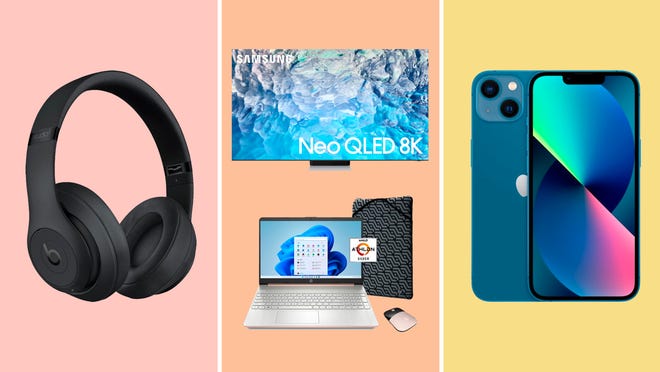
Shop the best Memorial Day 2022 sales right now for huge savings on tech, home, fashion and more.

— Recommendations are independently chosen by Reviewed’s editors. Purchases you make through our links may earn us a commission.

Memorial Day weekend is nearly upon us and the sales are really good. If you want to treat yourself to some retail therapy this Memorial Day 2022, we found Black Friday-level deals on everything from mattresses and furniture to fashion and smart tech. To help give you a head start on the holiday shopping extravaganza, we rounded up all the star-spangled sales you can shop while paying tribute to the red, white and blue.

The best Memorial Day deals you can shop

  1. lululemon InStill High-Rise Tight at lululemon from $59 (Save $29 to $69)
  2. Michael Michael Kors Lita Small Two-Tone Logo and Leather Crossbody Bag at Michael Kors for $129 (Save $169)
  3. Gravity Weighted Blanket Ombre at Gravity Blanket for $180 (Save $25)
  4. Cuisinart Air Fryer Toaster Oven at Bed Bath & Beyond for $179.99 (Save $50)
  5. Solo Stove Bonfire at Solo Stove for $219.99 (Save $180)
  6. Apple 10.2-Inch 2021 iPad at Amazon from $309 (Save $20 to $50)
  7. Samsung DW80N3030US Front Control Built-In Dishwasher at Lowe’s for $649 (Save $150)
  8. LG 70-Inch LED 4K TV at Best Buy for $649.99 (Save $150)
  9. Sol 72 Outdoor Merton Wicker 6-Person Seating Group with Cushions at Wayfair from $709.99 (Save $200 to $600)
  10. Saatva Classic Queen Mattress at Saatva for $1,495 (Save $200)

There’s more where this deal came from. Sign up for Reviewed’s Perks and Rec newsletter and we’ll keep ’em coming every Sunday through Friday.

This year, you can spend the three-day weekend scoring tons of salute-worthy savings from the likes of lululemon, Walmart, Best Buy and more. These already-live doorbuster discounts are some of the best we’ve seen all year, so we suggest shopping ASAP.

Wayfair Memorial Day sale: Save up to 70{cfdf3f5372635aeb15fd3e2aecc7cb5d7150695e02bd72e0a44f1581164ad809} on grills, patio sets, kitchen tools and bedding

Last chance: Snag a $1,000 welcome offer for the Chase Sapphire Preferred

Samsung deal: Save $50 when you preorder the advanced new Samsung Galaxy Neo G8 gaming monitor

Ready to shop? Keep scrolling for all the best Memorial Day 2022 sales. 

Memorial Day 2022: Shopping guide

The best home and kitchen Memorial Day deals 

Furnish your home with serious Memorial Day sales at Ashley Furniture, Wayfair and more.

Appliances Connection: Update your kitchen or laundry room by shopping the Big Memorial Day sale at Appliances Connection. Enjoy savings of upwards of $3,000 on select ranges, refrigerators, washers and dryers, microwaves and more.  

Ashley Furniture: Want to spruce up your home? Shop Ashley Furniture’s massive Memorial Day sale right now. Save thousands on customer-favorite sectionals, dining tables, patio sets and so much more. 

Bed Bath & Beyond: Find everything you need for your home this summer at Bed Bath & Beyond. Shop the Memorial Day Sidewalk sale to save as much as 50{cfdf3f5372635aeb15fd3e2aecc7cb5d7150695e02bd72e0a44f1581164ad809} on already discounted home décor, bathroom must-haves, bedding and kitchen tools and more.

Butcher Box: Subscribe to this popular meat delivery service and get seven pounds of meat for free with your first delivery. 

Frontgate: Planning on doing some outside entertaining this Memorial Day 2022? Head to Frontgate to save up to 50{cfdf3f5372635aeb15fd3e2aecc7cb5d7150695e02bd72e0a44f1581164ad809} off sitewide, including furniture and outdoor entertaining pieces. 

Harry & David: Heading to a Memorial Day party this weekend? Thank your host with a gift basket from Harry & David. Shop the Memorial Day Savings event now to save up to 50{cfdf3f5372635aeb15fd3e2aecc7cb5d7150695e02bd72e0a44f1581164ad809} on gifts and gourmet food. 

HSN: Browse HSN’s weekly deals for steep savings on summer essentials, home goods, kitchen tools and more. Enter coupon code HELLO10 at checkout to enjoy $10 off your very first purchase. 

iRobot: Shop robot vacuums, mops, air purifiers and more and enjoy free ground shipping on all orders over $29.99 for a limited time. 

Lowe’s: Working on a few home improvement projects this Memorial Day weekend? Head to Lowe’s to shop holiday deals on lawn and garden products, storage solutions, appliances, tools and more. 

Macy’s: Macy’s Memorial Day sale lets you save as much as 40{cfdf3f5372635aeb15fd3e2aecc7cb5d7150695e02bd72e0a44f1581164ad809} on fashion, home goods, kitchen appliances and more. 

Overstock: In what it’s calling “the biggest sale of the season,” Overstock is offering savings of up to 70{cfdf3f5372635aeb15fd3e2aecc7cb5d7150695e02bd72e0a44f1581164ad809} during the ongoing Memorial Day sale. Shop now for deep discounts on mattresses, kitchen appliances, rugs and patio furniture. 

QVC: Find everything you need for your home and closet in QVC’s frequently updated sales section. New to QVC? Enter coupon code SURPRISE to save an extra $10 on your first order. 

Sur La Table: For high-quality cookware that will make mealtimes even easier, Sur La Table has you covered. Shop the Sur La Table Memorial Day sale to save up to 50{cfdf3f5372635aeb15fd3e2aecc7cb5d7150695e02bd72e0a44f1581164ad809} on tons of most-wanted kitchen items. 

Target: Jazz up your backyard on budget during Target’s huge summer savings event. You can save 30{cfdf3f5372635aeb15fd3e2aecc7cb5d7150695e02bd72e0a44f1581164ad809} on women’s swim, 40{cfdf3f5372635aeb15fd3e2aecc7cb5d7150695e02bd72e0a44f1581164ad809} on patio furniture and up to 50{cfdf3f5372635aeb15fd3e2aecc7cb5d7150695e02bd72e0a44f1581164ad809} on toys and outdoor play items through Monday, May 30 at Target.

The Home Depot: Refresh your home with markdowns on select storage products, home goods and appliances. 

Wayfair: Shop Wayfair’s Memorial Day sale for patriotic deals on furniture, rugs, home décor, appliances, kitchen tools and more. 

The best mattress and bedding Memorial Day deals

Shop dreamy Memorial Day deals at Tuft & Needle, Avocado, Awara and more.

Amerisleep: Use your Memorial Day weekend to unwind by shopping mattress markdowns today at Amerisleep. Save as much as $450 on beds and get free delivery, too, when you use coupon code AS450 at checkout. 

Avocado: Shop environmentally-friendly sleepers at Avocado and save 10{cfdf3f5372635aeb15fd3e2aecc7cb5d7150695e02bd72e0a44f1581164ad809} sitewide—including as much as $800 off select mattresses—with discount code SAVE10

Awara: Sleep soundly by taking advantage of Awara’s stellar Memorial Day sale. Shop now to save $300 on select hybrid mattresses today. 

Brooklyn Bedding: Brooklyn Bedding’s Memorial Day Preview sale lets you save a whopping 25{cfdf3f5372635aeb15fd3e2aecc7cb5d7150695e02bd72e0a44f1581164ad809} off sitewide. Score deep discounts on mattresses, bedding and more. 

Casper: Shop the Memorial Day sale to save as much as $800 on customer-favorite mattresses right now. Plus, enjoy markdowns of up to 20{cfdf3f5372635aeb15fd3e2aecc7cb5d7150695e02bd72e0a44f1581164ad809} on select sleep bundles. 

DreamCloud: DreamCloud mattresses are Reviewed-approved and they’re on mega sale ahead of Memorial Day 2022. Shop the brand’s Biggest Offer Ever to save $200 on mattresses and get as much as $499 in free sleep accessories. 

Gravity Blanket: Stay cozy this Memorial Day by shopping the brand’s sale section for big discounts on weighted blankets, duvet covers, pillows and more. 

Leesa: Memorial Day is one of the best times of the year to buy a new mattress. For a bed your back and bank account will love, head to Leesa and shop the already-live Memorial Day sale for savings of up to $700 on mattresses and two free pillows, too. 

Nectar: We love Nectar mattresses for their temperature regulation and side support, and, right now, you can take one home for $100 off. Better still, place your order today to snag up to $499 in free accessories with your mattress purchase. 

Purple: Purple makes some of the best mattresses we’ve ever tested and right now, you can save up to $300 on select mattresses ahead of Memorial Day 2022. 

Saatva: For resort-like luxury at home, you can’t go wrong with a Saatva mattress. The brand makes one of our all-time favorite hybrid beds and, right now, you can save up to $450 off select mattress and bedding purchases.

Serta: Find your perfect mattress right now at Serta. Shop the Memorial Day mattress sale to save up to $1,000 on select mattresses and adjustable base sets through Tuesday, June 14

Tuft & Needle: Shop the Memorial Day 2022 sale to save up to $500 on mattresses, including one of the best we’ve ever tested

The best tech Memorial Day deals

Shop the top tech deals this Memorial Day at Best Buy, Samsung and HP.

Amazon: Shop tons of Amazon Memorial Day deals for the best prices on tech, home goods, kitchen essentials, fashion and more.

Apple: Thinking about upgrading your devices? Now’s the time to shop. Apple is offering elevated trade-in credits through Tuesday, May 31 for big savings on iPhones, iPads, Macs and more. 

Best Buy: Shop Memorial Day deals on some of our favorite brands right now at Best Buy. Save big on TVs, household appliances, laptops, cell phones, headphones and so much more. 

eBay: For epic savings on gently-used tech, eBay’s Memorial Day sale is the place to shop. Save as much as 15{cfdf3f5372635aeb15fd3e2aecc7cb5d7150695e02bd72e0a44f1581164ad809} on refurbished headphones, laptops, smartphones and more. 

HP: Score markdowns of up to 70{cfdf3f5372635aeb15fd3e2aecc7cb5d7150695e02bd72e0a44f1581164ad809} on laptops, monitors and more when you shop HP’s Memorial Day sale today. 

Samsung: Shop Memorial Day sales on Samsung smartphones, TVs, wearables, appliances and more for savings of up to $4,000. 

Sennheiser: Save up to $200 on Sennheiser headphones, including the ones we tested, the Sennheiser Momentum True Wireless 2.

Walmart: Looking for affordable summer essentials? Shop Walmart’s Memorial Day sale to scoop stellar rollbacks on must-have tech. Meanwhile, scoop incredible markdowns on patio furniture, pool toys, fashion essentials, home goods, kitchen tools and more. 

The best lifestyle Memorial Day deals

Shop lifestyle deals this Memorial Day at Chewy, Academy Sports & Outdoors and more.

Academy Sports + Outdoors: Ready for some summer fun? Shop markdowns of up to 50{cfdf3f5372635aeb15fd3e2aecc7cb5d7150695e02bd72e0a44f1581164ad809} on clothing, outdoor gear, sports equipment, fitness essentials and more right now. Even better, enjoy free shipping on all orders of $25 or more. 

Chewy: Shop wag-worthy deals for National Pet Month right now at Chewy. Save big on dog and cat toys, treats and so much more. 

Eddie Bauer: Get ready for a summer of adventure by shopping discounts on outdoor gear, footwear and clothing at Eddie Bauer. For a limited time, save up to 50{cfdf3f5372635aeb15fd3e2aecc7cb5d7150695e02bd72e0a44f1581164ad809} during Eddie Bauer’s Memorial Day sale.

Huckberry: Outdoor enthusiasts can shop discounts on clothing, footwear and outside gear perfect for hikes and camping trips. The retailer’s Memorial Day Weekend sale lets you save up to 35{cfdf3f5372635aeb15fd3e2aecc7cb5d7150695e02bd72e0a44f1581164ad809} on tons of most-wanted products right now.

Minted: Through Tuesday, May 31, save 15{cfdf3f5372635aeb15fd3e2aecc7cb5d7150695e02bd72e0a44f1581164ad809} sitewide (excluding fine art) during Minted’s Memorial Day sale with the code MEMORIALDAY22 at checkout. Shop personalized Father’s Day gifts and custom artwork.

Rifle Paper Co.: Shop planners, stationery, accessories and more and save 25{cfdf3f5372635aeb15fd3e2aecc7cb5d7150695e02bd72e0a44f1581164ad809} when you enter coupon code BLOSSOM at checkout. 

Solo Stove: For a limited time, customers can save as much as 45{cfdf3f5372635aeb15fd3e2aecc7cb5d7150695e02bd72e0a44f1581164ad809} on smokeless fire pits, fire pit bundles and accessories. We chose the lightweight and portable Bonfire as one of the best fire pits we’ve ever tested and it is currently marked down from $399.99 to just $219.99.

WeightWatchers: Prioritize your health this Memorial Day 2022 by signing up for a WeightWatchers, or WW, membership today. Join now and get two months free with select WW plans. 

Yeti: Looking for a personalized Father’s Day gift? Head to Yeti and enjoy free customization on durable Rambler tumblers, Rambler bottles and dog bowls through Wednesday, June 1

The best fashion and beauty Memorial Day deals

Shop Memorial Day deals on dresses, jeans, tops, accessories and more right now.

Aerie: Dive into Memorial Day weekend with a new swimsuit. Shop one-pieces, bikini tops and bikini bottoms now to save up to 40{cfdf3f5372635aeb15fd3e2aecc7cb5d7150695e02bd72e0a44f1581164ad809}. To get even more discounts, Aerie is offering markdowns of up to 60{cfdf3f5372635aeb15fd3e2aecc7cb5d7150695e02bd72e0a44f1581164ad809} on topsbottoms and swim coverups.  

Adidas: Shop the sale section for sporty savings on clothing, shoes and accessories. For an even deeper discount, enter coupon code SUMMER at checkout to get 25{cfdf3f5372635aeb15fd3e2aecc7cb5d7150695e02bd72e0a44f1581164ad809} off select full-price and sale items.   

American Eagle: Shop sitewide savings of up to 60{cfdf3f5372635aeb15fd3e2aecc7cb5d7150695e02bd72e0a44f1581164ad809} for deep Memorial Day discounts on shorts, tops, dresses and more.  

Anthropologie: Shop the Anthropologie sale section and snag an extra 40{cfdf3f5372635aeb15fd3e2aecc7cb5d7150695e02bd72e0a44f1581164ad809} off all markdowns for a limited time. Enjoy discounts on wedding guest dresses, summer essentials and more.

Athleta: Shop sporty styles at Athleta and get 20{cfdf3f5372635aeb15fd3e2aecc7cb5d7150695e02bd72e0a44f1581164ad809} off your entire purchase through Monday, May 30. Meanwhile, save up to 50{cfdf3f5372635aeb15fd3e2aecc7cb5d7150695e02bd72e0a44f1581164ad809} on swimwear, sports bras, leggings, tops and more by shopping Athleta’s impressive sale section today. 

Banana Republic Factory: For the best Memorial Day closet refresh, head to Banana Republic Factory and save up to 70{cfdf3f5372635aeb15fd3e2aecc7cb5d7150695e02bd72e0a44f1581164ad809} sitewide, including dresses, shorts, tops and more. 

Betsey Johnson: Make a style statement this summer with eye-catching handbags and accessories from Betsey Johnson. Shop the Memorial Day sale today to save up to 50{cfdf3f5372635aeb15fd3e2aecc7cb5d7150695e02bd72e0a44f1581164ad809} and get free shipping on orders of $50 or more. 

Bombas: Looking for a good Father’s Day gift? Get dad a pair of socks he’ll love and use the coupon code USAT20 at checkout to get 20{cfdf3f5372635aeb15fd3e2aecc7cb5d7150695e02bd72e0a44f1581164ad809} off your first order. 

Carhartt: While summer may be just around the corner, it’s a great time to stock up on winter gear on a budget. Shop Carhartt’s refreshed clearance section for incredible discounts on gloves, hats, vests, jackets and more. 

Coach: Shop Coach’s sale section to save up to 40{cfdf3f5372635aeb15fd3e2aecc7cb5d7150695e02bd72e0a44f1581164ad809} on select handbags, wallets, shoes, accessories and clothing for Memorial Day 2022. 

Coach Outlet: Step into summer in style and save a whopping 70{cfdf3f5372635aeb15fd3e2aecc7cb5d7150695e02bd72e0a44f1581164ad809}, plus an extra 15{cfdf3f5372635aeb15fd3e2aecc7cb5d7150695e02bd72e0a44f1581164ad809}, on tons of totes, crossbodies and purses today at Coach Outlet. Just enter coupon code SUMMER15 at checkout to scoop the savings.

Crocs: Complete your relaxed summer look with a cute pair of Crocs, currently retailing for up to 40{cfdf3f5372635aeb15fd3e2aecc7cb5d7150695e02bd72e0a44f1581164ad809} off for Memorial Day 2022. 

Everlane: Head to the beach in style this Memorial Day with a new swimsuit or warm-weather outfit from Everlane. Shop the Memorial Day sale to save up to 25{cfdf3f5372635aeb15fd3e2aecc7cb5d7150695e02bd72e0a44f1581164ad809} right now. 

EyeBuyDirect: Save 20{cfdf3f5372635aeb15fd3e2aecc7cb5d7150695e02bd72e0a44f1581164ad809} on frames and 30{cfdf3f5372635aeb15fd3e2aecc7cb5d7150695e02bd72e0a44f1581164ad809} on lenses during EyeBuyDirect’s Memorial Day sale when you use code YAYSALE at checkout. 

Gap: Shop Memorial Day markdowns right now at Gap. Use coupon code SUNNY to enjoy 50{cfdf3f5372635aeb15fd3e2aecc7cb5d7150695e02bd72e0a44f1581164ad809} off select tees, tanks and shorts and up to 40{cfdf3f5372635aeb15fd3e2aecc7cb5d7150695e02bd72e0a44f1581164ad809} off everything else.

GlassesUSA: Shop the Memorial Day sale to save 60{cfdf3f5372635aeb15fd3e2aecc7cb5d7150695e02bd72e0a44f1581164ad809} on select frames with code MEMORIAL60 and enjoy buy one, get one free deals on select items with discount code BOGOFREE

Glossier: For the biggest savings on skincare products, makeup and more, Glossier has you covered. Shop the Friends of Glossier Summer sale now through Tuesday, May 31 and save 20{cfdf3f5372635aeb15fd3e2aecc7cb5d7150695e02bd72e0a44f1581164ad809} with discount code FOG22.

Hanna Andersson: Pickup a pair of Hanna Andersson’s cult-favorite kids’ pajamas for less by shopping the sitewide Memorial Day sale today. Save up to 50{cfdf3f5372635aeb15fd3e2aecc7cb5d7150695e02bd72e0a44f1581164ad809} on full-price items and enjoy discounts of up to 75{cfdf3f5372635aeb15fd3e2aecc7cb5d7150695e02bd72e0a44f1581164ad809} on clearance styles. 

JCPenney: Shop the JC Penney Memorial Day sale and save up to 60{cfdf3f5372635aeb15fd3e2aecc7cb5d7150695e02bd72e0a44f1581164ad809} across all categories. Better still, enjoy an extra 25{cfdf3f5372635aeb15fd3e2aecc7cb5d7150695e02bd72e0a44f1581164ad809} off select products with coupon code COOL25.

J.Crew: For preppy fashion finds, J.Crew has tons of on-trend options—best of all, you can score an extra 30{cfdf3f5372635aeb15fd3e2aecc7cb5d7150695e02bd72e0a44f1581164ad809} off your entire purchase and 50{cfdf3f5372635aeb15fd3e2aecc7cb5d7150695e02bd72e0a44f1581164ad809} off sale styles with coupon code SUMMER at checkout.

Kate Spade Surprise: Save up to 75{cfdf3f5372635aeb15fd3e2aecc7cb5d7150695e02bd72e0a44f1581164ad809} on stylish totes, handbags and crossbodies and get free ground shipping on every order. 

Loft: Find the perfect Memorial Day weekend outfit right now at Loft. Shop the limited-time sale to save up to 50{cfdf3f5372635aeb15fd3e2aecc7cb5d7150695e02bd72e0a44f1581164ad809} on select full-price styles with coupon code SUMMER.

lululemon: lululemon’s We Made Too Much section features tons of the brand’s iconic leggings, sports bras, tanks and more. 

Madewell: If a pair of cult-favorite Madewell jeans have been on your wishlist, you’ll love this Memorial Day sale. Save 25{cfdf3f5372635aeb15fd3e2aecc7cb5d7150695e02bd72e0a44f1581164ad809} sitewide with coupon code LONGWEEKEND

Michael Kors: Shop for affordable summer handbags right now at Michael Kors. Browse the recently refreshed sale section for tons of new markdowns on crossbodies, totes and more and use coupon code MDW25 for an extra 25{cfdf3f5372635aeb15fd3e2aecc7cb5d7150695e02bd72e0a44f1581164ad809} off already-discounted styles. 

Nike: Save as much as 40{cfdf3f5372635aeb15fd3e2aecc7cb5d7150695e02bd72e0a44f1581164ad809} on sneakers, sportswear and more by shopping the athletic retailer’s sale section today. 

Nordstrom: Refresh your closet ahead of summer 2022 with up to 60{cfdf3f5372635aeb15fd3e2aecc7cb5d7150695e02bd72e0a44f1581164ad809} off designer clothing, shoes and accessories right now at Nordstrom’s Half-Yearly sale.

Old Navy: Pick up cute summer basics for as much as 60{cfdf3f5372635aeb15fd3e2aecc7cb5d7150695e02bd72e0a44f1581164ad809} off right now, including tees, tanks, shorts and swimsuits. 

Reebok: Take up to 50{cfdf3f5372635aeb15fd3e2aecc7cb5d7150695e02bd72e0a44f1581164ad809} off sneakers for men, women and kids, and shop huge price cuts on athletic clothing, including tees, shorts and joggers. Just enter coupon code MDW at checkout to scoop the savings. 

REI: Shop the best REI sale of the year now through Monday, May 30, for up to 30{cfdf3f5372635aeb15fd3e2aecc7cb5d7150695e02bd72e0a44f1581164ad809} off tons of gear for just about any outdoor excursion, including equipment for camping and hiking, climbing, biking and more. Even better, REI Co-op members can use the coupon code ANNIV22 at checkout to take 20{cfdf3f5372635aeb15fd3e2aecc7cb5d7150695e02bd72e0a44f1581164ad809} off one full-price item or 20{cfdf3f5372635aeb15fd3e2aecc7cb5d7150695e02bd72e0a44f1581164ad809} off one REI Outlet item.

Saks Fifth Avenue: Shop the Designer sale to save up to 50{cfdf3f5372635aeb15fd3e2aecc7cb5d7150695e02bd72e0a44f1581164ad809} on tons of most-wanted styles. Meanwhile, sign up with your email to receive the coupon code ACCOUNTSF to save 10{cfdf3f5372635aeb15fd3e2aecc7cb5d7150695e02bd72e0a44f1581164ad809} on your next order. 

SKIMS: Shop the Bi-Annual SKIMS sale for huge savings on best-selling bras, bodysuits, leggings and more. Plus, give your underwear drawer a refresh and shop five for $35 deals on select panties now. 

Supergoop: Enjoy summer fun while also protecting your skin from harmful UV rays by shopping cult-favorite products at Supergoop. Enter your email to unlock 10{cfdf3f5372635aeb15fd3e2aecc7cb5d7150695e02bd72e0a44f1581164ad809} off your first purchase right now. 

The Beard Club: Pick up some of our favorite Father’s Day gifts for 20{cfdf3f5372635aeb15fd3e2aecc7cb5d7150695e02bd72e0a44f1581164ad809} off right now at The Beard Club. Just enter coupon code DAD at checkout to scoop the savings. 

Tory Burch: Make a splash this Memorial Day with chic savings on handbags, shoes and accessories. Shop the sale section now to save hundreds on tons of best-selling pieces. 

Ulta Beauty: Tame frizz and flyaways this summer by shopping Ulta Beauty’s Gorgeous Hair Event. Check back each day to save 50{cfdf3f5372635aeb15fd3e2aecc7cb5d7150695e02bd72e0a44f1581164ad809} on select hair products through Saturday, May 28

Urban Outfitters: Want to add some new dresses and denim to your wardrobe? Head to Urban Outfitters now to save up to 50{cfdf3f5372635aeb15fd3e2aecc7cb5d7150695e02bd72e0a44f1581164ad809} on select items.

Victoria’s Secret: Whether you’re after a sweet, sporty or sexy summer look, Victoria’s Secret has your back. Shop the 50{cfdf3f5372635aeb15fd3e2aecc7cb5d7150695e02bd72e0a44f1581164ad809} off sale today to save on bras, underwear, sleepwear, swimsuits, accessories and more. 

Seasonal savings: The best summer deals you can shop at Macy’s, Ulta, Saatva and Solo Stove

When do Memorial Day sales start? 

Memorial Day sales are in full swing. While the holiday is still a few days away, you can already shop massive markdowns on home essentials from Bed Bath & Beyond, Macy’s and Sur La Table or snag savings on wardrobe must-haves at Michael Kors, Nordstrom and Saks Fifth Avenue. Meanwhile, some of our favorite mattress retailers, including Tuft & Needle and Awara, are offering unheard of markdowns and Best Buy and Samsung are running incredible discounts on tech and appliances. 

When is Memorial Day 2022? 

Memorial Day 2022 will be observed throughout the country on Monday, May 30. The federal holiday is historically recognized on the last Monday of May and honors fallen U.S. military personnel. 

What are the best Memorial Day 2022 sales? 

Memorial Day is a great time to shop for big ticket items, like mattresses, tech and furniture. The three-day holiday weekend historically sees Black Friday-level markdowns on many of our favorite home essentials and electronics. If you’re looking for sales on more affordable items, don’t worry—you’ll also find plenty of markdowns on fashion, kitchen tools, beauty products, pet essentials and more.

Be sure to check this page frequently ahead of Memorial Day 2022 for the inside scoop on where to shop—we’re hunting all the best sales to help save you time and keep money in your pocket.

Where should I shop this Memorial Day 2022? 

Depending on what you’re looking for, Amazon is a great one-stop shopping spot. You’ll find markdowns on everything from fashion and kitchen essentials to home goods and smart tech ahead of Memorial Day 2022. 

For mattresses, Tuft & Needle and Saatva are some of our favorite places to shop. Both brands sell top-quality sleepers, and the current discounts are nothing short of dreamy.  

Get deals and shopping advice delivered straight to your phone.Sign up for text message alerts from the experts at Reviewed.

The product experts at Reviewed have all your shopping needs covered. Follow Reviewed on Facebook, Twitter, Instagram, TikTok or Flipboard for the latest deals, product reviews and more.

Prices were accurate at the time this article was published but may change over time.

Canned cocktails and bolder seltzers are set to dominate summer

Canned cocktails and bolder seltzers are set to dominate summer
Drinkers will be tempted with a wide wide range of new boozy drinks hitting cabinets, with significant brands growing their portfolios to offset slowing beer product sales. Canned cocktails and spiked seltzers with upgraded flavors (sorry, dull outdated lime!) are expanding in recognition as Us citizens celebrate the warmer temperature.

“This summer is likely to be a reset,” Jamie Wideman, vice president of innovation for Molson Coors, told CNN Business. “Last 12 months, people today had one particular foot exterior and a single foot within. I assume the option to check out and find out new beverages is heading to be a significant issue this summer time.”

To that conclusion, the corporation is fired up for the extremely anticipated nationwide start of Simply Spiked Lemonade on June 6. The alcoholic consume, encouraged by the Simply brand’s fruit juices, is a collaboration among Molson Coors and Coca-Cola (KO). Flavors include things like strawberry lemonade, watermelon lemonade, blueberry lemonade and regular lemonade.

“Buyers are previously utilizing the non-alcoholic Simply manufacturer as portion of their mixology regiment,” Wideman stated. “So, bringing that into the completely ready-to-consume space was a no-brainer.”

Simply Spiked Lemonade is indicative of an over-all development blurring the traces involving non-alcoholic and alcoholic beverages, with organizations seeking to lender on known makes and extend their income. For example, Boston Beer Company (SAM) lately partnered with PepsiCo to transform Mountain Dew into a caffeine-no cost alcoholic beverage and Molson Coors (Tap) is owning achievement with its spiked Topo Chico lineup.

Even really hard liquor corporations are going into the canned cocktail place. In the latest months, Cazadores Tequila rolled out canned margaritas and Jack Daniels introduced flavored whiskeys, together with apple, cola and lemonade types.

Prepared-to-consume cocktail profits have exploded as drinkers seem for comfort and new flavors past wine and beer. That beverage class grew 53{cfdf3f5372635aeb15fd3e2aecc7cb5d7150695e02bd72e0a44f1581164ad809} very last yr and is projected to increase a further 29{cfdf3f5372635aeb15fd3e2aecc7cb5d7150695e02bd72e0a44f1581164ad809} above the up coming a few many years, according to information from IWSR Beverages Investigation.

Spiked seltzers continue being popular way too, even with warning signs that the at the time-novel consume is shedding industry share. The group has grown just about 4{cfdf3f5372635aeb15fd3e2aecc7cb5d7150695e02bd72e0a44f1581164ad809} in the earlier year, slipping very well brief of the gains witnessed with canned cocktails. The marketplace is now saturated with far more than 300 brands on cabinets.
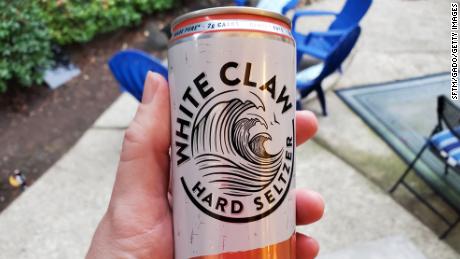
Sales of White Claw have slipped.

That has prompted firms to go back to the drawing board and unveil punchier flavors. White Claw, which remains the best-offering seltzer model, has seasoned a income drop of 7{cfdf3f5372635aeb15fd3e2aecc7cb5d7150695e02bd72e0a44f1581164ad809} in the earlier calendar year in accordance to IRI, a Chicago-centered market place investigate firm. It has not long ago rolled out bolder variations, including White Claw Surf that makes use of unique flavors (i.e. citrus yuzu smash) and an iced tea and lemonade pack referred to as REFRSHR.

“As the category leader and originator, White Claw understands the need for new innovation to preserve our position as the quantity a person tricky seltzer brand name, in which very last calendar year we contributed around $2 billion to the classification,” John Shea, White Claw’s main advertising and marketing officer, advised CNN Organization.

Definitely Hard Seltzer continues to be the 2nd-major brand, with income developing 13{cfdf3f5372635aeb15fd3e2aecc7cb5d7150695e02bd72e0a44f1581164ad809} yr over year. The Boston Beer-owned brand name has included a new Poolside wide variety pack with flavors like pina colada and strawberry melon fizz. It has even expanded into offering vodka.

Anheuser-Busch (BUD) also remains self-assured with its at any time expanding Bud Light Seltzer lineup that now consists of approximately two dozen flavors. “There is advancement listed here and this is now coming from the rise of bolder flavors capturing customer interest in merchandise like Bud Gentle Seltzer Hard Soda,” reported Simon Wuestenberg, the company’s chief sales officer. Anheuser-Busch bolstered its lineup with cocktail-inspired seltzers and sour-flavored possibilities.

Nonetheless, with extra varieties to pick from, Wideman warned that drinkers have the benefit of staying picky.

“Individuals are heading to be significantly less tolerant for points that do not style superior,” she claimed. “We know what is taking place in the environment and in the financial system. Dollars are crucial to them and they want to put their bucks in getting solutions that they know are going to produce on their expectations.”

Scombroid poisoning: Causes, symptoms, and treatment

Scombroid poisoning: Causes, symptoms, and treatment

Scombroid poisoning is a form of meals poisoning. It occurs when a particular person eats fish species that contains significant amounts of a chemical known as histidine.

Histidine is an amino acid that the natural way happens in fish. When individuals do not continue to keep the fish in a fridge, bacteria crack down the histidine and convert it into histamine.

Histamine is accountable for the toxicity that brings about scombroid poisoning, in accordance to the American Academy of Allergy, Asthma & Immunology (AAAAI).

When a individual consumes significant quantities of fish with histamine, they encounter signs that resemble an allergic response, these kinds of as hives. However, it is not a real allergy to a specific fish, in accordance to the Countrywide Cash Poison Center.

The issue typically is not long-expression or critical, according to the Foodstuff and Drug Administration (Fda). Mild scenarios often disappear on their possess with no procedure, but antihistamine medications may well aid some individuals.

A human being going through serious signs, these kinds of as chest pain or breathing issues, should go to an emergency home or simply call nearby emergency solutions.

Preserve reading through to study additional about the results in, indications, cure, avoidance, and outlook of scombroid poisoning.

The bring about of scombroid poisoning is consuming certain kinds of fish that have spoiled. Most commonly, in accordance to the Centers for Illness Handle and Prevention (CDC), the fish species included are:

  • tuna
  • mackerel
  • bluefish
  • mahi mahi, or dolphinfish
  • herring
  • sardine
  • amberjack
  • anchovies
  • marlin

These fish incorporate higher amounts of the chemical histidine, for every the AAAAI.

When men and women do not store the fish in a refrigerator, it outcomes in an overgrowth of microbes. The bacterial strains accountable for the situation develop enzymes that change histidine into histamine.

These strains contain individuals current in the pores and skin and intestines of the fish, for every 2012 investigate, this kind of as:

  • E. coli
  • Morganella morganii
  • Pseudomonas aeruginosa
  • Klebsiella species

When a particular person eats the fish with large amounts of histamine, their symptoms resemble an allergic response. Owing to this connection with histamine, scombroid poisoning is also referred to as histamine toxicity.

According to the AAAI, persons with lower degrees of the enzyme diamine oxidase are more likely to experience scombroid poisoning. This enzyme breaks down histamine from meals. So, a person with reduced concentrations of the enzyme might not split down the histamine as perfectly as a human being with larger ranges.

The poisoning is not owing to an allergy, so it is protected to eat the fish all over again as very long as it has been through refrigeration.

Signs and symptoms normally begin in just a handful of minutes to 2 several hours after consuming the fish, for every the Fda. The original types resemble an allergic response, this kind of as:

  • perspiring
  • facial flushing
  • peppery taste all over the throat and mouth
  • headache
  • dizziness
  • nausea

These original signs and symptoms may possibly progress to:

  • facial rash
  • inflammation
  • hives
  • shorter-phrase stomach pain and diarrhea

The indicators generally linger 4–6 hrs and seldom very last past 1–2 times, according to the Fda.

Medical practitioners often foundation a analysis on the situation, in accordance to the AAAAI. For example, a person’s indicators may possibly coincide with an outbreak that impacted numerous people today who ate fish purchased from the similar position.

Cure is dependent on the severity of scombroid poisoning. Gentle circumstances frequently disappear swiftly without the need of treatment. Antihistamines, these types of as diphenhydramine (Benadryl), might help some folks with the situation.

Serious situations demand a trip to the unexpected emergency space. In this article, remedy may perhaps incorporate the administration of intravenous fluids, oxygen, and other remedies.

Signs of a severe situation include things like:

  • upper body discomfort
  • difficulty breathing
  • inflammation of the tongue and mouth

If a man or woman has severe signs or symptoms that are not life threatening, it is most effective to see an allergist. They can help establish if the person is having an allergic response to the fish or if it is scombroid poisoning.

Because scombroid poisoning is not a accurate allergic reaction, it frequently does not need epinephrine injections or corticosteroids. It is also not an an infection, so antibiotics are not vital.

When a person catches their possess fish, the only reliable way to avoid scombroid poisoning is preserving the fish in a fridge established to 40°F (4°C) or reduce. Cooking or freezing the fish will not get rid of the histamine that triggers the indicators.

If an unique eats fish in a restaurant, there is no way to tell if it is spoiled. It normally does not have a apparent smell or style. Even so, a salty, sharp, or peppery taste could act as red flags that point out spoilage ensuing from histamine, for every the CDC.

On top of that, when another person will get scombroid poisoning from a restaurant or fish marketplace, they ought to report it to the general public wellness authorities for investigation. Elimination of the fish from distribution will avert even more outbreaks from the supply.

Scombroid poisoning outcomes from feeding on sure kinds of fish, these as tuna and mackerel, that have been through spoilage. Early signs or symptoms may perhaps consist of facial flushing and perspiring, whilst afterwards signs and symptoms may well incorporate hives and brief-phrase diarrhea.

Whilst the symptoms resemble an allergy, the condition is not a legitimate allergic response to a specific fish. It is protected to consume the fish yet again as very long as it has not spoiled.

Procedure depends on the severity. Delicate conditions generally solve on their possess. Antihistamines, this kind of as diphenhydramine (Benadryl), might enable some people.

USFL schedule Week 7: What football games are on today? TV channels, times, scores

USFL schedule Week 7: What football games are on today? TV channels, times, scores

The playoff race is beginning to warmth up as the USFL enters Week 7. Two of the league’s groups have clinching eventualities that will ensure a excursion to Canton, Ohio for the USFL playoffs if they can make wins this weekend. 

The New Jersey Generals want only beat the Tampa Bay Bandits and they will clinch one particular of the two North Division playoff berths. The Generals can also guarantee passage to Canton if they reduce and both equally the Michigan Panthers and Pittsburgh Maulers also drop.

Meanwhile, the however-undefeated Birmingham Stallions can clinch 1 of the two South Division playoff berths if they acquire and get some assist. The Stallions have to beat the Maulers, who have the NFL’s worst offense, but they also require the Bandits to get rid of to the Generals. So, the Stallions faithful will be pulling for the Generals when Week 7 kicks off on Saturday afternoon.

There is the moment once again no Friday night match in the USFL this week, so all 4 video games will be played on Saturday and Sunday. This is every little thing you require to know about Week 7 of the USFL time:

THE NEW USFL: Rule adjustments, coaches | Schedule | Uniforms

USFL timetable 7 days 7: What video games are on currently?

This is the entire timetable for the seventh week of the 2022 USFL year, such as how to check out every video game stay.

Saturday, May well 28

Match Kickoff time (ET) Television set channel
New Jersey Generals (5-1) vs. Tampa Bay Bandits (3-3) 12 p.m. United states, fuboTV
New Orleans Breakers (4-2) vs. Michigan Panthers (1-5) 9 p.m. FS1, fuboTV

Sunday, Might 29

Game Kickoff time (ET) Tv channel
Birmingham Stallions (6-) vs. Pittsburgh Maulers (1-5) 2 p.m. Fox, fuboTV
Philadelphia Stars (3-3) vs. Houston Gamblers (1-5)   6:30 p.m. Peacock

Saturday USFL video games Television set channel, reside stream

Here’s how to observe the two USFL games that will be played on Saturday.

Generals vs. Bandits

The Generals are positioned to clinch a playoff berth if all goes properly for them in Week 7. All they will need to do is get — or see the Maulers and Panthers each shed — and they will make the postseason tournament. On the other hand, quarterback De’Andre Johnson exited previous week’s game with a knee damage, so they will be relying on Luis Perez to have them at that situation.

New Jersey has a major-tier protection and has permitted the second-fewest factors in the league this time at 105. The Generals will require to bring their A-match on this facet of the ball, as the Bandits have the 3rd-fewest factors in the USFL at 112. Jordan Ta’amu and Co. have been participating in superior of late, having said that, and Tampa Bay is desperate for a earn to preserve tempo with the Breakers in the South Division playoff race. As these, this could conclude up becoming the marquee fight of the 7 days.

Breakers vs. Panthers

Talking of New Orleans, the Breakers have the league’s No. 1 protection and are enjoying in opposition to a Panthers workforce that has averaged just 17.3 factors for every activity. Which is the second-fewest in the USFL. Even more complicating matters is the reality that Michigan just minimize its starting off quarterback, Shea Patterson, and will have to depend on possibly Josh Adore or Paxton Lynch to lead its passing game.

The Panthers have a powerful managing recreation, but that may well not allow for them to retain up with a New Orleans offense that sales opportunities the league in passing yards. The Breakers have Kyle Sloter and if he is wholesome, he could give the Panthers’ defense fits. If not, it will be the Zach Smith exhibit with Patterson serving as the new backup.

The Breakers are refreshing off a 10-stage acquire over the Maulers that noticed them operate the ball more frequently than they have in months previous. In the meantime, the Panthers are coming off a reduction to the undefeated Stallions. The Panthers have just one particular win on the year, a 24- shutout above the Maulers.

Sunday USFL game titles Tv set channels, reside streams

Here’s how to observe the two USFL game titles that will be played on Sunday.

Stallions vs. Maulers

This might be the most lopsided matchup in the short background of the new USFL. The Stallions are nonetheless undefeated and have ridden two quarterbacks — J’Mar Smith and Alex McGough — to a 6- report. Their protection is strong and Bo Scarbrough played incredibly nicely last 7 days to give the managing video game a improve.

As for the Maulers, they are the lone USFL group that has been shut out and have scored a league-reduced 76 factors. Birmingham, by comparison, has a league-higher 162. Vad Lee has been better for Pittsburgh at quarterback than Josh Adore and Kyle Lauletta, but they most likely don’t have more than enough firepower to keep pace with the Stallions.

Also, the Stallions can clinch a playoff berth with a acquire, so they have every motivation to defeat the Maulers in this just one.

Stars vs. Gamblers

  • Kickoff: 6 p.m. ET
  • Stay stream: Peacock

The Stars and Gamblers possess the two worst scoring defenses in the USFL. That implies this contest need to be a significant-scoring 1, primarily contemplating that the Stars like to sling the ball a good deal with Case Cookus.

Philadelphia will be a move-content assault and that will allow Chris Odom — who potential customers the USFL in sacks with eight — to likely achieve double-digit sacks in this matchup. On the other facet of the ball, the Stars have struggled from the run, so Gamblers working back Mark Thompson will require to complete perfectly in this just one.

The Gamblers have, extremely, blown a second-50 percent direct in five straight games and missing all of them. In 3 consecutive months, they have shed on a walk-off enjoy with 10 or a lot less seconds still left on the clock. Just about every of Houston’s last two losses have arrive on the final play of regulation.

Impact on health and preventive solutions

Impact on health and preventive solutions

Working long hours and dealing with chronic stress can have a long-lasting impact on a person’s health and well-being. In this Special Feature, we look at the scientific evidence that overwork can negatively impact health, and find out what health experts have to say about this link, and how to prevent or address the effects of overwork.

person working surrounded by phone, laptop, and notebooksShare on Pinterest
How dangerous is overworking to health? Image credit: The Good Brigade/Getty Images.

Working hard has been synonymous with success, especially in the workplace. While there is no denying there are benefits to hard work, such as personal development and inspiring others around you, the opposite can be said about overworking.

While the concept of overwork is not new, it reached a pivotal point during the recent COVID-19 pandemic. During this time, the move to work from home and required lockdowns led many people to begin working longer hours due to dissolving boundaries between work and home time.

A survey conducted by staffing firm Robert Half in 2020 found that 55{cfdf3f5372635aeb15fd3e2aecc7cb5d7150695e02bd72e0a44f1581164ad809} of respondents who transitioned to work-from-home arrangements worked on the weekends, while 34{cfdf3f5372635aeb15fd3e2aecc7cb5d7150695e02bd72e0a44f1581164ad809} said they were working more than 8 hours per day on a regular basis.

The National Bureau of Economic Research also reported that the length of the average workday increased by 48.5 minutes during the pandemic.

The overworking burden during the pandemic was profoundly felt by frontline workers, such as healthcare professionals and emergency responders. Studies found that healthcare workers were at high risk for burnout due to their increased workload during the pandemic.

In May 2019, the World Health Organization (WHO) classified burnout as an “occupational phenomenon” where a person’s workplace stress has not been properly managed. It can be characterized by:

  • feeling exhausted
  • feeling negative or cynical toward their job
  • reduced professional efficacy.

In addition to these detrimental feelings and consequences, a variety of research emphasizes the negative impact that overwork can have on health, overall.

As Dr. Adam Perlman — director of integrative health and wellbeing for Mayo Clinic Florida, and chief medical officer at meQuilibrium — told Medical News Today, while a person’s body and brain have an unbelievable capacity to be resilient and adaptable, they have their limits and need to be taken care of in order to be able to function well.

“When we overwork and fail to prioritize self-care, we don’t give the body or the brain what it needs to rest and recuperate,” he added. “Ultimately, that tends to lead to both physical and mental distress.”

One of the greatest concerns regarding overworking and burnout is stress. That is because increased stress has been linked to a variety of health concerns, from depression to diabetes, high blood pressure, and digestive issues.

Clinical social worker Iris Waichler explained for MNT that additional stress from overworking can increase the production of the hormone cortisol.

“This can increase risk for a heart attack or stroke,” she noted. “Increased stress on the body can also cause backache and neck ache and tightening of muscles.”

“Healthy nutrition can suffer if there is no time to eat at work or time to grocery shop or cook healthier meals,” Waichler added. “Additional time at work also means less time for relationships, exercise, and doing other things that can help you relax. Finally, additional stress can cause people to turn to alcohol or drugs to cope. Burnout can be the end result.”

Given that even minor stressors can impact a person’s long-term health, as a study from 2018 suggests, the impact of chronic stress exposure can be dire.

“When you are experiencing stress over a long period of time, your [‘fight or flight‘] mechanism can be constantly switched on,” explained Elizabeth Roddick, a U.K.-based pharmacist, and health advisor for women over 50.

“Ironically this mechanism is useful in times of danger [such as] when getting out of the way of a car. The sudden rush of adrenaline fires up your muscles, heart, and visual awareness, helping you to move at speed,” she said.

“If on the other hand, relentless stress is permeating your working life, maybe coupled with long hours without a break, then both your mental and physical health can be affected.”

– Elizabeth Roddick

Roddick gave MNT a personal example of work-related stress through her own experience running two pharmacies in Glasgow.

When staff members became ill and Roddick was forced to overwork, she contracted a throat infection, resulting in the inability to speak clearly for 2 months.

“This […] illustrates clearly how overwhelming stress can result in the manifestation of physical issues,” Roddick said. “And how, encountering many examples over the years of my patients exhibiting physical symptoms due to stress, it is vital for well-being to make sure stress is managed before it affects health.”

With overwork and burnout causing health concerns, one may well wonder how this may impact a person’s mortality risk.

The WHO reported an increase in working hours contributed to the deaths of 745,000 people via stroke and ischemic heart disease in 2016 — a 29{cfdf3f5372635aeb15fd3e2aecc7cb5d7150695e02bd72e0a44f1581164ad809} increase compared to data from 2000.

The study also showed that those working 55 or more hours a week had a 35{cfdf3f5372635aeb15fd3e2aecc7cb5d7150695e02bd72e0a44f1581164ad809} higher risk for stroke and a 17{cfdf3f5372635aeb15fd3e2aecc7cb5d7150695e02bd72e0a44f1581164ad809} higher risk of dying from ischemic heart disease when compared to people who worked 35 to 40 hours a week.

While overworking is a problem around the world, authorities in Asian countries — especially Japan, South Korea, and Taiwan — have expressed particular concern about this phenomenon. In Japanese, there is even a special term for this, “karoshi,” which means “death from overworking.”

Researchers have linked karoshi to a number of health concerns, including stroke and cardiovascular disease.

Scientists have also associated overworking with other potentially life-threatening conditions, including cerebrovascular and cardiovascular diseases, type 2 diabetes, and other chronic illnesses, such as heart disease, some forms of cancer, arthritis, chronic lung disease, and hypertension.

What can employees and employers do to prevent overworking and burnout?

First and foremost, Dr. Perlman said, employers need to maintain open dialogue and lines of communication with their employees to truly understand the overwork challenges they may be facing.

“Emphasizing that employees should take time to rest and recharge and take their vacation days is a critical role for leadership. Stressing that managers should do their best to minimize excessive meetings and administrative burden is also important. In addition, frequent communication around available resources to support both mental and physical well-being that employees have access to within a company is critical.”

– Dr. Adam Perlman

Waichler also advised employers to address overwork issues and concerns by creating opportunities for mental health days, and family medical leave when health or other crises occurs.

She also suggested employers have someone that female employees, specifically, feel comfortable speaking with if they experience burnout symptoms, such as mood or behavior changes.

Studies show that women in the workplace experience a higher rate of burnout compared with men due to added home life responsibilities.

“Women traditionally balance more than one role in addition to their job,” Waichler explained. “That can include their roles as wives, mothers, sisters, etc. [Around] 65{cfdf3f5372635aeb15fd3e2aecc7cb5d7150695e02bd72e0a44f1581164ad809} of the time women are caregivers in addition to everything else that they do. When you combine their work roles with all of their other life demands and responsibilities it is a recipe for stress and burnout. This scenario leaves little time for women to engage in self-care activities.”

As for employees themselves, Waichler advised paying attention to negative changes to one’s body, mood, and behavior, and to seek help when necessary.

She also suggested that “practic[ing] mindfulness techniques like yoga” might help relieve the stress. “Meditation and deep breathing can have a calming effect, lower heart rate and blood pressure, and alleviate stress in the body. Even taking a short break at work and doing some deep breathing can be useful,” she noted.

And Dr. Perlman advised employees to advocate for their personal mental and physical well-being as much as possible:

“Ideally, psychological safety should exist within a company such that an employee could speak with their supervisor regarding concerns they have around overworking and the impact it is having on their emotional and physical health.”

“Fortunately, administrators are increasingly aware of the toll that overworking is taking on their employees and, although not always the case, are more sensitive to finding creative solutions such as added flexibility around schedules and hybrid models of working from the office as well as virtually,” Dr. Perlman noted.