The ripple effects of Raiders’ decision to fire Mayock

This is setting up to be one of the longest NFL head coach and general manager hiring cycles in recent memory. With each day, the pool of teams in search of new leadership has grown rather than shrunk. Two more jobs opened up Monday. We go through all the news and rumors on Day 9 of the NFL offseason.

NFL News and Rumors Today

The Las Vegas Raiders became the fourth team to need a new GM and the eighth searching for a new coach after firing Mike Mayock Monday and sending out signals that Rich Bisaccia is all but done too. That decision further gummed up the works that was already filled with Juicy Fruit.

Chicago Bears

Fired: Matt Nagy (HC), Ryan Pace (GM)

Scheduled/requested HC interviews:

  • Todd Bowles
    Buccaneers defensive coordinator
  • Jim Caldwell
    Former Colts, Lions head coach
    Saturday, Jan. 15
  • Brian Daboll
    Bills offensive coordinator
    Sunday, Jan. 16
  • Matt Eberflus
    Colts defensive coordinator
    Monday, Jan. 17
  • Brian Flores
    Former Dolphins head coach
    Friday, Jan. 14
  • Leslie Frazier
    Bills defensive coordinator
    Friday, Jan. 21
  • Nathaniel Hackett
    Packers offensive coordinator
    Saturday, Jan. 15
  • Byron Leftwich
    Buccaneers offensive coordinator
  • Doug Pederson
    Former Eagles head coach
    Wednesday, Jan. 12
  • Dan Quinn
    Cowboys defensive coordinator

Scheduled/requested GM interviews:

  • Kwesi Adofo-Mensah
    Browns vice president of football operations
  • Morocco Brown
    Colts director of college scouting
    Tuesday, Jan. 18
  • Ran Carthon
    49ers director of player personnel
  • Glenn Cook
    Browns vice president of player personnel
  • Ed Dodds
    Colts assistant general manager
    Monday, Jan. 17
  • Jeff Ireland
    Saints assistant general manager
    Friday, Jan. 14
  • Champ Kelly
    Bears assistant director of player personnel
    Thursday, Jan. 13
  • Omar Khan
    Steelers vice president of football and business administration
  • Reggie McKenzie
    Dolphins senior personnel executive
  • Monti Ossenfort
    Titans director of player personnel
    Saturday, Jan. 15
  • Joe Schoen
    Bills assistant general manager
    Sunday, Jan. 16
  • Eliot Wolf
    Patriots director of scouting
    Tuesday, Jan. 18

The latest: Brown and Wolf get their face time with the McCaskeys Tuesday, and logic suggests the Bears are nearing some sort of resolution with their GM search. But that’s only Step 1 of a consequential offseason in the Second City.

Featured Story
NFL Wild Card Power Rankings: Packers lead, Bengals secure spot

The Bears won’t be hiring a head coach before this weekend, assuming they still plan on interviewing Frazier.

Denver Broncos

Fired: Vic Fangio (HC)

Scheduled/requested interviews:

  • Eric Bieniemy 
    Chiefs offensive coordinator
  • Brian Callahan
    Bengals offensive coordinator
  • Jonathan Gannon
    Eagles defensive coordinator
    Wednesday, Jan. 19
  • Luke Getsy
    Packers QB coach/passing game coordinator
    Friday, Jan. 14
  • Aaron Glenn
    Lions defensive coordinator
    Thursday, Jan. 13
  • Nathaniel Hackett 
    Packers offensive coordinator
    Thursday, Jan. 13
  • Jerod Mayo
    Patriots LB coach
    Wednesday, Jan. 19
  • Kellen Moore
    Cowboys offensive coordinator
    Tuesday, Jan. 18
  • Kevin O’Connell
    Rams offensive coordinator
  • Dan Quinn
    Cowboys defensive coordinator
    Tuesday, Jan. 18

The latest: It’s a big day for Broncos GM George Paton. He finally gets to sit down with Quinn, who many view as the front-runner for the Denver job. Quinn and Paton have a long history that dates back at least to 2005 when they were on staff together in Miami.

Houston Texans

Fired: David Culley (and offensive coordinator Tim Kelly)

Scheduled/requested interviews:

  • Brian Flores
    Former Dolphins head coach
    Friday, January 14
  • Jonathan Gannon
    Eagles defensive coordinator
    Tuesday, Jan. 18
  • Joe Lombardi
    Chargers offensive coordinator
    Saturday, Jan. 15
  • Hines Ward
    Florida Atlantic special assistant to the head coach
    Saturday, Jan. 15

The latest: Nick Caserio did the easy part. He fired Culley after one season. But he’s not exactly nailing the hard part. His dream of luring Josh McDaniels out of New England seems to be far-fetched. Caserio’s roster of candidates, at least as of now, seems thin to put it kindly.

Jacksonville Jaguars

Fired: Urban Meyer (HC)

Scheduled/requested interviews:

  • Darrell Bevell
    Jaguars interim head coach
    Tuesday, January 11
  • Todd Bowles
    Buccaneers defensive coordinator
    Friday, January 3 (Jan. 7 has also been reported)
  • Jim Caldwell
    Former Colts and Lions head coach
    Tuesday, January 4
  • Matt Eberflus
    Colts defensive coordinator
    Saturday, January 15 (first); Thursday, January 20 (second)
  • Nathaniel Hackett
    Packers offensive coordinator
    Friday, January 14
  • Byron Leftwich
    Buccaneers offensive coordinator
    Friday, January 7
  • Kellen Moore
    Cowboys offensive coordinator
    Friday, January 7
  • Bill O’Brien
    Alabama offensive coordinator
    Thursday, January 13
  • Doug Pederson
    Former Eagles head coach
    Thursday, December 30
  • Dan Quinn
    Cowboys defensive coordinator

The latest: Two significant pieces of news dropped by NFL Network late Tuesday: O’Brien, in the words of Mike Garafolo, will likely not be the hire. But Eberflus certainly could be. The Colts assistant because the first known finalist for the job.

Las Vegas Raiders

Resigned: Jon Gruden (HC)

Scheduled/requested HC interviews:

  • Jerod Mayo
    Patriots LB coach

Scheduled/requested GM interviews:

  • Ed Dodds
    Colts assistant general manager
  • Dave Ziegler
    Patriots director of player personnel

The latest: Jim Harbaugh is the name to watch here. Mark Davis’ decision to move on from Mayock, and presumably Bisaccia, might have been a set piece to lure Harbaugh back to the NFL. The Athletic reported Monday that Michigan is working to do right by Harbaugh this offseason after convincing him to take a pay cut last offseason, but will it be enough?

Miami Dolphins

Fired: Brian Flores (HC)

Scheduled/requested interviews:

  • Thomas Brown
    Rams assistant head coach
  • Brian Daboll
    Bills offensive coordinator
    Sunday, January 16
  • Leslie Frazier
    Bills defensive coordinator
    Sunday, January 16
  • Vance Joseph
    Cardinals defensive coordinator
  • Mike McDaniel
    49ers offensive coordinator
    Wednesday, Jan. 19
  • Kellen Moore
    Cowboys offensive coordinator
  • Dan Quinn
    Cowboys defensive coordinator

The latest: Joseph isn’t getting much attention, but he’s a name to watch in Miami. He might not be the Dolphins’ first choice, but with a so-so quarterback situation and eight other openings they’re competing against, he might look more and more appealing as the process goes on.

Minnesota Vikings

Fired: Mike Zimmer (HC), Rick Spielman (GM)

Scheduled/requested HC interviews:

  • Todd Bowles
    Buccaneers defensive coordinator
  • Nathaniel Hackett
    Packers offensive coordinator
    Sunday, Jan. 16
  • Kellen Moore
    Cowboys offensive coordinator
  • Jonathan Gannon
    Eagles defensive coordinator
    Thursday, Jan. 18
  • Raheem Morris
    Rams defensive coordinator
  • Kevin O’Connell
    Rams offensive coordinator
  • Dan Quinn
    Cowboys defensive coordinator
  • DeMeco Ryans
    49ers defensive coordinator
    Wednesday, Jan. 19

Scheduled/requested GM interviews:

  • Kwesi Adofo-Mensah
    Browns vice president of football operations
    Monday, Jan. 17
  • Brandon Brown
    Eagles director of player personnel
    Tuesday, Jan. 18
  • Glenn Cook
    Browns vice president of player personnel
    Thursday, Jan. 20
  • Monti Ossenfort
    Titans director of player personnel
    Sunday, Jan. 16
  • Ryan Poles
    Chiefs director of player personnel
  • Catherine Raîche
    Eagles vice president of football operations
    Monday, Jan. 17
  • John Spytek
    Buccaneers vice president of player personnel
    This week
  • Eliot Wolf
    Patriots player personnel consultant
    Thursday, Jan. 20

The latest: The Vikings on Tuesday got to better know Brown, who has worked the last five years with the Eagles, most recently as the director of player personnel. In addition to running Philadelphia’s pro scouting operation, he also has a hand in the draft. Brown also has spent time in the Colts’ front office.

New York Giants

Fired/retired: Joe Judge (HC), Dave Gettleman (GM)

Scheduled/requested HC interviews:

Scheduled/requested GM interviews:

  • Ran Carthon
    49ers director of pro personnel
    Monday, January 17
  • Ryan Cowden
    Titans vice president of player personnel
    Friday, January 14
  • Quentin Harris
    Cardinals vice president of player personnel
    Thursday, January 13
  • Joe Hortiz
    Ravens director of player personnel
    Saturday, January 15
  • Monti Ossenfort
    Titans director of player personnel
    Friday, January 14
  • Adam Peters
    49ers assistant general manager
    Monday, January 17
  • Ryan Poles
    Chiefs executive director of player personnel
    Thursday, January 13
  • Joe Schoen
    Bills assistant general manager
    Wednesday, January 12
  • Adrian Wilson
    Cardinals vice president of pro personnel
    Wednesday, January 12

The latest: The Giants might be closing in on making an offer. The New York Post first reported that Schoen was in-town for a second interview with assistant general manager Joe Schoen, who is also considered a top candidate for the Bears’ opening. Ryan Poles will also get a second look, per NFL Network.

Microsoft to acquire Activision Blizzard to bring the joy and community of gaming to everyone, across every device

Legendary games, immersive interactive entertainment and publishing expertise accelerate growth in Microsoft’s Gaming business across mobile, PC, console and cloud.

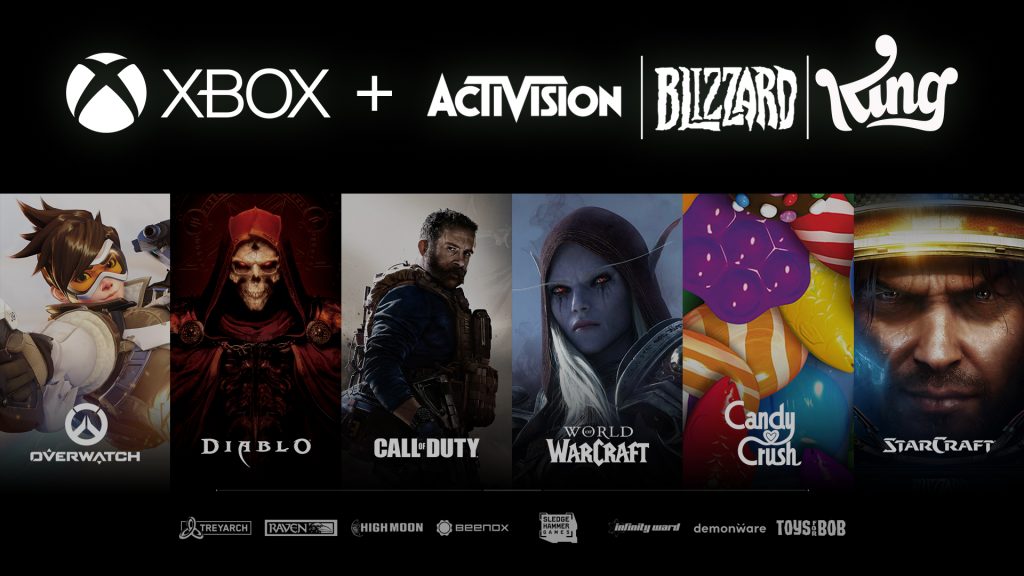
Artwork from game titles
Microsoft announced plans to acquire Activision Blizzard, a leader in game development and an interactive entertainment content publisher. The planned acquisition includes iconic franchises from the Activision, Blizzard and King studios like “Warcraft,” “Diablo,” “Overwatch,” “Call of Duty” and “Candy Crush.”

REDMOND, Wash. and Santa Monica, Calif. – Jan. 18, 2022 With three billion people actively playing games today, and fueled by a new generation steeped in the joys of interactive entertainment, gaming is now the largest and fastest-growing form of entertainment. Today, Microsoft Corp. (Nasdaq: MSFT) announced plans to acquire Activision Blizzard Inc. (Nasdaq: ATVI), a leader in game development and interactive entertainment content publisher. This acquisition will accelerate the growth in Microsoft’s gaming business across mobile, PC, console and cloud and will provide building blocks for the metaverse.

Microsoft will acquire Activision Blizzard for $95.00 per share, in an all-cash transaction valued at $68.7 billion, inclusive of Activision Blizzard’s net cash. When the transaction closes, Microsoft will become the world’s third-largest gaming company by revenue, behind Tencent and Sony. The planned acquisition includes iconic franchises from the Activision, Blizzard and King studios like “Warcraft,” “Diablo,” “Overwatch,” “Call of Duty” and “Candy Crush,” in addition to global eSports activities through Major League Gaming. The company has studios around the world with nearly 10,000 employees.

Bobby Kotick will continue to serve as CEO of Activision Blizzard, and he and his team will maintain their focus on driving efforts to further strengthen the company’s culture and accelerate business growth. Once the deal closes, the Activision Blizzard business will report to Phil Spencer, CEO, Microsoft Gaming.

“Gaming is the most dynamic and exciting category in entertainment across all platforms today and will play a key role in the development of metaverse platforms,” said Satya Nadella, chairman and CEO, Microsoft. “We’re investing deeply in world-class content, community and the cloud to usher in a new era of gaming that puts players and creators first and makes gaming safe, inclusive and accessible to all.”

“Players everywhere love Activision Blizzard games, and we believe the creative teams have their best work in front of them,” said Phil Spencer, CEO, Microsoft Gaming. “Together we will build a future where people can play the games they want, virtually anywhere they want.”

“For more than 30 years our incredibly talented teams have created some of the most successful games,” said Bobby Kotick, CEO, Activision Blizzard. “The combination of Activision Blizzard’s world-class talent and extraordinary franchises with Microsoft’s technology, distribution, access to talent, ambitious vision and shared commitment to gaming and inclusion will help ensure our continued success in an increasingly competitive industry.”

Mobile is the largest segment in gaming, with nearly 95{cfdf3f5372635aeb15fd3e2aecc7cb5d7150695e02bd72e0a44f1581164ad809} of all players globally enjoying games on mobile. Through great teams and great technology, Microsoft and Activision Blizzard will empower players to enjoy the most-immersive franchises, like “Halo” and “Warcraft,” virtually anywhere they want. And with games like “Candy Crush,” Activision Blizzard´s mobile business represents a significant presence and opportunity for Microsoft in this fast-growing segment.

The acquisition also bolsters Microsoft’s Game Pass portfolio with plans to launch Activision Blizzard games into Game Pass, which has reached a new milestone of over 25 million subscribers. With Activision Blizzard’s nearly 400 million monthly active players in 190 countries and three billion-dollar franchises, this acquisition will make Game Pass one of the most compelling and diverse lineups of gaming content in the industry. Upon close, Microsoft will have 30 internal game development studios, along with additional publishing and esports production capabilities.

The transaction is subject to customary closing conditions and completion of regulatory review and Activision Blizzard’s shareholder approval. The deal is expected to close in fiscal year 2023 and will be accretive to non-GAAP earnings per share upon close. The transaction has been approved by the boards of directors of both Microsoft and Activision Blizzard.

Advisors
Goldman Sachs & Co. LLC is serving as financial advisor to Microsoft and Simpson Thacher & Bartlett LLP is serving as legal counsel. Allen & Company LLC is acting as financial advisor to Activision Blizzard and Skadden, Arps, Slate, Meagher & Flom LLP is serving as legal counsel.

Webcast details

Microsoft Chairman and CEO Satya Nadella; Bobby Kotick, CEO, Activision Blizzard; CEO, Microsoft Gaming, Phil Spencer; and Microsoft Chief Financial Officer Amy Hood will host a webcast for investors and media on Jan. 18, 2022, at 6 a.m. Pacific time/9 a.m. Eastern time regarding this transaction.

There will be a recording of the conference call available shortly after the call until Friday, Jan. 28, 2022, at 5 p.m. Pacific time. To access that recording:

  • S.: (877) 660-6853
  • International: +1 (201) 612-7415
  • Conference ID: 13726291

For more information, please visit the blog post from Phil Spencer, CEO, Microsoft Gaming. Related imagery is also available. For broadcast quality b-roll and audio, please contact [email protected]

Fast facts on gaming

  • The $200+ billion gaming industry is the largest and fastest-growing form of entertainment.
  • In 2021 alone, the total number of video game releases was up 64{cfdf3f5372635aeb15fd3e2aecc7cb5d7150695e02bd72e0a44f1581164ad809} compared to 2020 and 51{cfdf3f5372635aeb15fd3e2aecc7cb5d7150695e02bd72e0a44f1581164ad809} of players in the U.S. reported spending more than 7 hours per week playing across console, PC and mobile.
  • 3 billion people globally play games today, which we expect to grow to 4.5 billion by 2030.
  • More than 100 million gamers, including over 25 million Xbox Game Pass members, play Xbox games across console, PC, mobile phones and tablets each month.

*******

About Microsoft
Microsoft (Nasdaq “MSFT” @microsoft) enables digital transformation for the era of an intelligent cloud and an intelligent edge. Its mission is to empower every person and every organization on the planet to achieve more.

About Activision Blizzard

Our mission, to connect and engage the world through epic entertainment has never been more important. Through communities rooted in our video game franchises we enable hundreds of millions of people to experience joy, thrill and achievement. We enable social connections through the lens of fun, and we foster purpose and meaning through competitive gaming. Video games, unlike any other social or entertainment media, have the ability to break down barriers that can inhibit tolerance and understanding. Celebrating differences is at the core of our culture and ensures we can create games for players of diverse backgrounds in the 190 countries our games are played.

As a member of the Fortune 500 and as a component company of the S&P 500, we have an extraordinary track record of delivering superior shareholder returns for over 30 years. Our sustained success has enabled the company to support corporate social responsibility initiatives that are directly tied to our franchises. As an example, our Call of Duty Endowment has helped find employment for over 90,000 veterans.

Learn more information about Activision Blizzard and how we connect and engage the world through epic entertainment on the company´s website, www.activisionblizzard.com

Forward-looking statements

This presentation contains certain forward-looking statements within the meaning of the “safe harbor” provisions of the United States Private Securities Litigation Reform Act of 1995 with respect to the proposed transaction and business combination between Microsoft and Activision Blizzard, including statements regarding the benefits of the transaction, the anticipated timing of the transaction and the products and markets of each company. These forward-looking statements generally are identified by the words “believe,” “project,” “predicts,” “budget,” “forecast,” “continue,” “expect,” “anticipate,” “estimate,” “intend,” “strategy,” “future,” “opportunity,” “plan,” “may,” “could,” “should,” “will,” “would,” “will be,” “will continue,” “will likely result,” and similar expressions (or the negative versions of such words or expressions). Forward-looking statements are predictions, projections and other statements about future events that are based on current expectations and assumptions and, as a result, are subject to risks and uncertainties. Many factors could cause actual future events to differ materially from the forward-looking statements in this presentation, including but not limited to: (i) the risk that the transaction may not be completed in a timely manner or at all, which may adversely affect Activision Blizzard’s business and the price of the common stock of Activision Blizzard, (ii) the failure to satisfy the conditions to the consummation of the transaction, including the adoption of the merger agreement by the stockholders of Activision Blizzard and the receipt of certain governmental and regulatory approvals, (iii) the occurrence of any event, change or other circumstance that could give rise to the termination of the merger agreement, (iv) the effect of the announcement or pendency of the transaction on Activision Blizzard’s business relationships, operating results, and business generally, (v) risks that the proposed transaction disrupts current plans and operations of Activision Blizzard or Microsoft and potential difficulties in Activision Blizzard employee retention as a result of the transaction, (vi) risks related to diverting management’s attention from Activision Blizzard’s ongoing business operations, (vii) the outcome of any legal proceedings that may be instituted against Microsoft or against Activision Blizzard related to the merger agreement or the transaction, (viii) the ability of Microsoft to successfully integrate Activision Blizzard’s operations, product lines, and technology, and (ix) the ability of Microsoft to implement its plans, forecasts, and other expectations with respect to Activision Blizzard’s business after the completion of the proposed merger and realize additional opportunities for growth and innovation. In addition, please refer to the documents that Microsoft and Activision Blizzard file with the SEC on Forms 10-K, 10-Q and 8-K. These filings identify and address other important risks and uncertainties that could cause events and results to differ materially from those contained in the forward-looking statements set forth in this press release. Forward-looking statements speak only as of the date they are made. Readers are cautioned not to put undue reliance on forward-looking statements, and Microsoft and Activision Blizzard assume no obligation and do not intend to update or revise these forward-looking statements, whether as a result of new information, future events, or otherwise.

Additional information and where to find it

In connection with the transaction, Activision Blizzard, Inc. will file relevant materials with the SEC, including a proxy statement on Schedule 14A. Promptly after filing its definitive proxy statement with the SEC, Activision Blizzard will mail the definitive proxy statement and a proxy card to each stockholder entitled to vote at the special meeting relating to the transaction. INVESTORS AND SECURITY HOLDERS OF ACTIVISION BLIZZARD ARE URGED TO READ THESE MATERIALS (INCLUDING ANY AMENDMENTS OR SUPPLEMENTS THERETO) AND ANY OTHER RELEVANT DOCUMENTS IN CONNECTION WITH THE TRANSACTION THAT ACTIVISION BLIZZARD WILL FILE WITH THE SEC WHEN THEY BECOME AVAILABLE BECAUSE THEY WILL CONTAIN IMPORTANT INFORMATION ABOUT ACTIVISION BLIZZARD AND THE TRANSACTION. The definitive proxy statement, the preliminary proxy statement and other relevant materials in connection with the transaction (when they become available), and any other documents filed by Activision Blizzard with the SEC, may be obtained free of charge at the SEC’s website (http://www.sec.gov) or at the Activision Blizzard website (https://investor.activision.com) or by writing to Activision Blizzard, Investor Relations, 3100 Ocean Park Boulevard, Santa Monica, California, 90405.

Activision Blizzard and certain of its directors and executive officers and other members of management and employees may be deemed to be participants in the solicitation of proxies from Activision Blizzard’s stockholders with respect to the transaction. Information about Activision Blizzard’s directors and executive officers and their ownership of Activision Blizzard’s common stock is set forth in Activision Blizzard’s proxy statement on Schedule 14A filed with the SEC on April 30, 2021. To the extent that holdings of Activision Blizzard’s securities have changed since the amounts printed in Activision Blizzard’s proxy statement, such changes have been or will be reflected on Statements of Change in Ownership on Form 4 filed with the SEC. Information regarding the identity of the participants, and their direct or indirect interests in the transaction, by security holdings or otherwise, will be set forth in the proxy statement and other materials to be filed with SEC in connection with the transaction.

For more information, press only:

Microsoft Media Relations, Assembly Media for Microsoft, [email protected]


For more information, financial analysts and investors only:

Brett Iversen, General Manager, Investor Relations, (425) 706-4400

Note to editors: For more information, news and perspectives from Microsoft, please visit the Microsoft News Center at http://www.microsoft.com/news. Web links, telephone numbers and titles were correct at time of publication, but may since have changed. Shareholder and financial information, as well as today’s 6:00 a.m. Pacific time conference call with investors and analysts, is available at http://www.microsoft.com/en-us/investor.


Social media: Benefits vs. negative impact

Over the last 20 years, social media has risen from relative obscurity to become a fully accepted and integrated part of everyday life. However, despite social media’s ubiquity, the research on how it affects mental health remains inconclusive.

Share on Pinterest
What do we really know about social media and mental health? Image credit: Colin Anderson/Stocksy.

So far, most research investigating the effects of social media on mental health has focused on the potential negative aspects.

For instance, a 2019 study involving 6,595 teenagers from the United States concludes that those who spend more than 3 hours per day on social media may have a higher risk of mental health problems than those who do not.

But the degree to which social media actually harms mental health is debatable. A recent review, available as a preprint, found that most studies investigating the link between social media and mental health demonstrate “weak” or “inconsistent” associations.

Another review found that while there may be a small negative association between social media use and mental health, the link is complex and depends on exactly how researchers define mental health and social media use.

Meanwhile, other research suggests that social media may even benefit mental health, especially for people belonging to LGBTQIA+ communities and those living with mental health conditions.

These conflicting findings make it challenging to navigate the research investigating the effects of social media on mental health and how best to use social media. With this in mind, Medical News Today sought the input of seven psychology experts at the intersection of social media and mental health.

“One promising area of research is the role of online peer networks, where it appears that connecting online with others who share similar mental health challenges can offer important benefits for feeling less alone, learning coping skills, and being able to offer/receive emotional or informational support from others,” Dr. John Naslund, Ph.D., an instructor in global health and social medicine at Harvard Medical School, told MNT.

Dr. Niklas Johannes, a postdoctoral researcher in the Adolescent Well-Being in the Digital Age program at the University of Oxford in the United Kingdom, agreed that social media might be linked to some mental health benefits. However, he added that more research is necessary to confirm the direction in which this connection lies.

“There’s a lot of research out there that suggests social media are a useful tool to stay connected to others. In fact, those who use social media more also report feeling more social support. However, all of this comes with a huge caveat: We simply don’t know about cause and effect. It’s just as plausible that heavy social media users make more friends or that those with a lot of friends use more social media. It’s also plausible that both are true,” he explained.

Other research suggests that “how” a person uses social media rather than “how much” may have a stronger association with mental health outcomes.

“There is evidence that routine social media use in the general population is positively associated with mental health and social well-being, as long as one is not ’emotionally invested’ in the media, in which case the outcomes are negative,” Dan-Mircea Mirea, a Ph.D. student in psychology and project coordinator at Mental Health for Romania, told MNT.

Dr. Gonneke Stevens, associate professor of social and behavioral sciences at Utrecht University in the Netherlands, agreed that “emotional investment” in social media use may be more indicative of mental health outcomes than how much a person uses it.

“[O]ur research suggests that not so much the intense use of social media, but social media use problems — that is, addiction-like symptoms such as feeling bad when social media use is restricted, loss of control over and preoccupation with social media, and conflicts with others because of the social media use — are associated with mental health problems.”

– Dr. Gonneke Stevens

“Indeed, we found that social media use problems predicted increases in mental health problems 1 year later — this was true for both depressive symptoms and ADHD [attention deficit hyperactivity disorder] symptoms,” she added.

“For children and teens, I think the most compelling evidence is the research regarding cyberbullying on social media,” said Dr. Kya Barounis, a senior mental health researcher at the University of California, San Diego. “Cyberbullying is associated with symptoms of depression and suicidality. It may be a particular problem for youth who identify as sexual or gender minorities.”

Dr. Barounis also noted that social media use could displace other behaviors, such as sleep and exercise, which are “important for maintaining good mental health.” Researchers study this process through what is known as “displacement theory.”

To give an example, she said:“If a youth is staying up late each night on social media and not getting enough sleep, the lack of sleep can lead to feelings of irritability or depressed mood the next day.”

She cautioned, however, that this does not mean that social media use causes mental health conditions, noting that the relationship between chronic sleep problems and clinical depression in youth is complicated.

Dr. Naslund agreed that social media can perpetuate “targeted hate from others” or cyberbullying, which can have a negative effect.

He added that although research related to social media and mental health is generally mixed, “exposure to hateful content online — such as viewing or being targeted by derogatory content targeting race, ethnicity, or gender — is associated with poorer mental health and feelings of distress.”

Beyond the risk of cyberbullying and exposure to hate content, others say that it is important to interpret with caution any studies related to more generalized social media use because they are often based on unreliable data.

“There are multiple observational studies that find that social media use is negatively associated with mental health,” said Mirea.

“However,” he added, “there are also studies looking at similar datasets, or sometimes the same dataset with different methods, that find no effect. One study found only small negative associations between mental health and using digital/electronic technologies, including social media — about as large as regularly eating potatoes!”

“It seems that the conclusions are very much affected by how researchers analyze their data, which makes it hard to draw a concrete conclusion about to what extent social media has negative effects on mental health. A plausible explanation for these unclear findings is that social media use affects some people more and others less.”

– Dan-Mircea Mirea

To give an example of how difficult it can be to interpret studies on the mental health effects of social media, Dr. Craig Sewall, a postdoctoral fellow at the University of Pittsburgh, told MNT:

“The strongest evidence indicating that social media can have negative effects on mental health — that I am aware of — comes from a randomized experiment that examined the impact of Facebook deactivation on well-being among a large sample of U.S. adults. This study found that, overall, the group that deactivated their Facebook account experienced increased levels of subjective well-being compared with the group that did not.”

“However, there are a couple of important limitations to this study. First, the ‘treatment effect’ — that is, the effect of deactivating Facebook — was very small. Second, the sample of participants was older, so it’s not clear how these results would apply to younger people,” Dr. Sewall noted.

“And, finally, it’s unclear whether the effects observed for deactivating Facebook would be consistent across other social media platforms, as there are many differences between Facebook and TikTok, for example.”

Best to look at the different aspects of social media separately

For some people, it is also difficult to establish whether social media has positive or negative effects on mental health because it is unclear to which platform or platforms the terms “social media” refer.

Dr. Jacob T. Fisher, assistant professor at the Institute of Communications Research and the College of Media at the University of Illinois Urbana-Champaign, told MNT:

“I just don’t really know that we have compelling evidence for ‘social media,’ in a general sense, having adverse effects on mental health. ‘Social media,’ as a descriptor, covers a vast range of platforms and services, each of which is very different from one another, enabling and incentivizing very different sorts of behaviors. To add to this, both social media platforms and how people use social media have changed drastically over the years.”

“In this sense,” he said, “trying to define the ‘effect [of] social media on well-being’ is a lot like trying to determine the ‘effect of food on health’ — the question is so broad so as to be essentially unanswerable.”

“In my opinion,” Dr. Fisher added, “a better approach would be to break apart the different features and design decisions that comprise social media platforms — how information is presented, how the algorithm amplifies or suppresses content, the behavioral engineering involved in how a platform solicits (or even demands) our attention — and start to investigate the influence of those things on well-being.”

“A central issue here is that social media platforms refuse to share data that can begin to answer these questions with researchers like my colleagues and me,” he explained.

“There are two completely different stories being told about the effects of social media on well-being,” said Dr. Sewall. “In the popular media — where the vast majority of people get their information on this subject — the story is often some version of ‘social media is bad, especially for younger people.’”

Yet, he cautioned, “[t]he evidence cited in these popular media pieces is often cherry-picked, oversimplified, and overinterpreted — giving the impression to readers that social media causes harm to well-being.”

“On the other hand, in the scientific literature — which has a much smaller, niche readership — the story is much more complicated. The fundamental complexity of the issue combined with a litany of methodological issues and contradictory findings make it difficult, if not impossible, to conclude anything with confidence,” Dr. Sewall added.

“If anything, our best evidence to date suggests that social media does not have a meaningful impact on well-being. However, this story — that it’s very complicated, and there’s a lot we don’t know — does not generate many clicks,” he explained.

Dr. Barounis added that much research on the topic is based on people having symptoms of mental health issues, as opposed to receiving a formal diagnosis. “It’s really important to distinguish between symptoms of mental health problems versus a diagnosis of a mental health problem,” he explained. “One can have a few symptoms without having a full diagnosis. So far, a lot of researchers have examined the relationship between social media use and symptoms of depression or anxiety (as measured on a survey) in typically developing youth.”

“It is a mistake to interpret a positive relationship in these studies’ results as evidence that social media use causes youth to meet all of the criteria for a diagnosis of clinical anxiety or depression. Also, there is a measurement issue. Self-reports of time spent on social media may not be very accurate,” she explained.

To help navigate through exaggerated claims and confusing literature, Mirea recommended four points to bear in mind when looking into the link between social media and mental health:

  1. Follow trustworthy sources (academic journals or trusted outlets): You shouldn’t have to play the detective every time you see a scientific claim. Fortunately, if your sources are reputable, most of the work is being done for you.
  2. Avoid clickbait-sounding headlines: Good reporting would never trade accuracy for the prospect of attracting your attention. Also, be cautious if an article uses words that a scientist (especially one in the social or clinical sciences) would never use — such as that something is “a fact” or that they “proved” something.
  3. Be wary of ideological content [and] your own biases: Ask yourself: “Do I want this to be true, or the opposite?” If so, then be extra careful when assessing the information.
  4. Ask an expert friend, if you have one: If you’re in doubt about the scientific aspects of a claim and you’re not sure how to assess it, think of someone you know that might be able to help (such as someone that majored in that field in college — e.g., biosciences for COVID-19 studies or psychology for mental health studies).

Dr. Barounis recommended that parents or caregivers of children and adolescents “talk with their children about cyberbullying and take steps to address it if it is occurring.”

She further explained: “Parents can also monitor their child’s use to see if it is displacing healthier behaviors, like sleep and exercise. Simple steps, like limiting use before bedtime and charging mobile devices outside the bedroom, can help prevent social media use from disrupting sleep.”

“In terms of the pandemic, parents should remind youth that a lot of their friends and followers on social media may be feeling slightly anxious or depressed during these uncertain times. Youth can support these friends and followers by refraining from posting content that could be misinterpreted in a negative way (i.e., a joking comment in reaction to someone’s post that might come across as mean-spirited) or content that could increase anxiety.”

– Dr. Kya Barounis

Due to a lack of consensus on whether and how social media relates to mental health, some experts say that it is difficult to make specific recommendations.

“Unfortunately, the scientific evidence isn’t strong enough to make specific recommendations,” said Dr. Johannes. “I’d advise, just like with any other activity, to observe what’s good for the user. If I feel like I’m comparing myself with others and it isn’t good for me, then take more breaks and maybe focus on different functions of social media. If I feel lonely and know that going on social media makes me feel connected, go for it. It’s rather obvious advice, I’m afraid.”

For others, using social media with an intention clearly in mind is key to avoiding getting swept up in any of its potentially harmful effects — from wasting time to damaging mental well-being.

“I’d suggest that the best way for people to use social media is to use it intentionally,” said Dr. Fisher. “Like lots of big businesses, social media platforms frequently incentivize mindlessness on the part of their users because it makes it easier for them to make money (both from showing you advertisements and collecting more data about you).”

“Curate who you follow, how much time you spend on the platform(s), etc., and do your best to cultivate a healthy relationship with the platforms you use,” he added.

“Something that is becoming clear from recent studies is that the effects of social media, or certain aspects of social media use, can differ significantly from person to person,” said Dr. Sewall. “So, there’s no one-size-fits-all approach.”

“However, in general, I’d say the best way to use social media is to make sure you are getting out of it what you are intending. That is, if you are intending to use social media as a way to stay connected with others, or as a form of entertainment, or whatever, try to be mindful about whether the way you are using social media in that instance is helping you meet that intention,” he concluded.

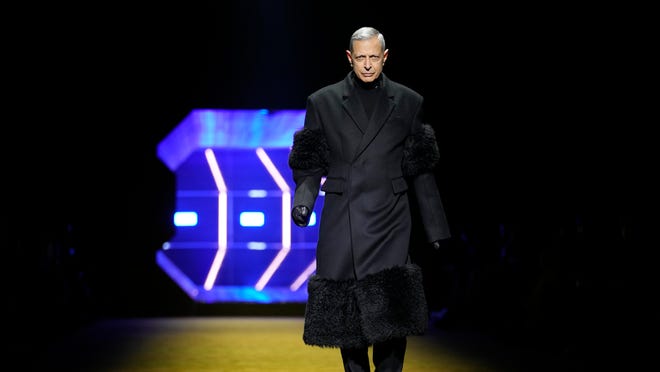
Jeff Goldblum, Kyle MacLachlan model for Prada men

Businesses facing over 50{cfdf3f5372635aeb15fd3e2aecc7cb5d7150695e02bd72e0a44f1581164ad809} losses due to Covid curbs: CAIT

Limitations imposed throughout many states because of to growing Covid-19 situations have straight afflicted a lot of organizations in the state.

The Confederation of All India Traders (CAIT) has claimed that enterprises working with different verticals of merchandise have observed losses of in excess of 50 for every cent around the past 15 days.

CAIT has urged the Centre and condition governments to consider all feasible actions to avert Covid-19 from spreading additional though guaranteeing easy functioning of professional and economic routines. It also urged authorities to take ways immediately after consulting with trade and field bodies as it will enable avoid enterprise disruption.

Read | Covid-19: Omicron surge cripples a number of organizations, to hit economic recovery

The trade overall body mentioned techniques like Odd-Even in Delhi have proved to be futile, incorporating that it has also damage company pursuits. CAIT explained these forms of limits coupled with weekly lockdown instantly impacted a significant number of firms in the nationwide funds. It also spoke about how identical limits hampered income in other states in the state.

An additional critical level that CAIT observed was how several traders from close by states are dependent on Delhi for sourcing tools virtually 5 lakh traders occur to Delhi for sourcing tools, but they have stopped coming owing to latest constraints. The trade human body mentioned this is severely impacting Delhi’s posture as a trade hub.

CAIT Nationwide President BC Bhartia and Secretary Normal Praveen Khandelwal said, “Due to several limits of Covid-19, there has been an common drop of 45 {cfdf3f5372635aeb15fd3e2aecc7cb5d7150695e02bd72e0a44f1581164ad809} in business enterprise in excess of the past seven times across the country.”

“The out-of-town purchaser is not heading out of his town, when shoppers are heading to the marketplaces to acquire items only when it is genuinely significant. So, the enterprise of the place has fallen poorly, to which the central and all the point out governments have to have to pay back interest.”

CAIT Survey Results

The major CAIT associates educated that the study organisation of CAIT, the CAIT Analysis and Trade Development Culture, has done a 2nd survey among the traders from January 1 to January 15, in 36 metropolitan areas of diverse states of the place, (which CAT has specified the position of “distribution centre”), to discover out the effects of the numerous restrictions imposed by the regional administration due to the enhance in the instances of Covid-19.

Also Read | Omicron surge: How terrible will it damage India’s economic system?

The survey conclusions have disclosed that the country’s domestic trade has declined by an common of additional than 50 for every cent in the very last 7 days. The main cause for this drop is the panic amid persons thanks to the third wave of Covid and restrictions that have harm the overall trade cycle.

COVID DERAILS Economic Action

Although sectors like FMCG, jewellery, apparel, cosmetics and kitchen area appliances have witnessed losses to the tune of 35 for every cent, other individuals corporations like electronics , furniture, watches and stationary items have found losses up to 50 per cent.

The highest decline of 70 per cent has been found in organizations engaged in providing footwear, gift products and baggage.

CAIT added that the marriage market has been influenced due to the fresh new Covid limits. In the coming 2-3 months, the wedding ceremony market predicted earnings worth Rs 4 lakh crore, but could dip because of to constraints imposed by states. If the limitations final above the future several months, the market could finish up dealing with a decline of Rs 2.5 lakh crore.

What’s ahead for the auto industry in 2022?

From shortages of essential semiconductor chips to shutdowns at significant assembly vegetation, as very well as skyrocketing motor vehicle costs and vacant dealerships, 2021 was a 12 months to remember for vehicle brands and shoppers alike. But there had been also a surge in gross sales of electrical cars and an expanding shift from sedans to SUVs and pickup trucks.

So what is ahead for 2022? By some accounts, it may well be more of the identical, as shortages carry on to go away dealers having difficulties for stock and buyers dealing with at any time increased price ranges. But purchasers will also uncover a lot a lot more choices if they’re seeking for electrical vehicles.

In this article are the storylines we expect will dominate this year:

Ongoing product shortages

As Covid-19 struck, automakers slashed production and pieces orders. But when product sales started to rebound, they uncovered they could not get all the semiconductors they essential, foremost to big creation cuts. The sector lost all over $210 billion in earnings in 2021, according to AlixPartners, a business management consultancy. While chip supplies are loosening up, they are considerably from back again to regular, and creation slice be damage very well into 2022. Even worse, the field faces other shortages impacting goods like tires and interior plastics and seat foams.

All advised, automakers globally made about 8 million less autos than planned past yr for the reason that of item shortages. Even if creation rebounds, sellers will not be capable to build back again inventories until finally nicely into 2022, J.D. Electrical power analyst Tyson Jominy reported. As a consequence, prospective buyers really should hope constrained alternatives — while prices will proceed to increase at a file charge. At the stop of 2021, a usual new vehicle price tag $45,000, up about $8,000 from December 2020, in accordance to industry info.

Normalization of online car acquiring

When the U.S. went into lockdown, the sector hit upon a novel notion. For the reason that shoppers could not go to sellers, sellers went to them — more than the online. Even soon after the place opened back up, far more and more buyers are browsing for their vehicles on line, and several merchants schedule take a look at drives and supply new motor vehicles to buyers’ homes or workplaces. Meanwhile, with showroom heaps almost bare, normally impulse-pushed motorists have started buying their automobiles and ready — occasionally for months — to choose supply.

EVs begin their shift into pole situation

They account for a modest fraction of U.S. new motor vehicle gross sales, but desire for battery-electrical automobiles doubled all through just the 1st half of 2021. This year could deliver the “tipping stage,” GM CEO Mary Barra mentioned, with the EV industry exploding. A number of factors will perform a function, setting up with a plethora of new choices: Analysts anticipate the variety of long-array styles will quadruple this year.

The effects of Make Back again Far better

President Joe Biden has set a great deal of emphasis on the vehicle field. In December, the White Residence declared its most aggressive gasoline financial system standards, and Biden has claimed he wants to see EVs account for up to 50 percent of U.S. revenue by 2030. His infrastructure bill provides resources for a nationwide charging community. But other resources, such as dollars to boost EV gross sales incentives, are currently stalled in Congress. 

Startups will go on to shake issues up

The automotive field was a mainly closed club given that Earth War II, but Tesla showed it’s possible to crack the code. Now, other get started-ups want to share in its good results. Wall Street has rewarded various of the most promising gamers. Rivian now has a market cap of in excess of $90 billion, more than possibly Ford or Typical Motors. But other folks, like Byton, Lordstown Motors and Faraday Future are having difficulties and could tumble aside in 2022.

Tesla requires some heat

At initially glance, 2022 should be a very good calendar year for Tesla just after placing product sales and earnings documents in 2021. The California-centered electric car or truck manufacturer has two new crops, just one in Austin, Texas and the other in Berlin. But numerous vital products, like the Cybertruck, are well behind plan, as are the following-gen batteries Tesla is counting on. Tesla is beneath strain from the Chinese government and experiencing a lot more safety probes by U.S. regulators.

Autonomous cars could stall

Automakers as soon as promised to have a completely self-driving automobile prepared by 2020. Even so, 2022 could see some breakthroughs. GM and Mercedes-Benz are set to roll out the 1st true fingers-free — Stage 3 in business-discuss — driving technological know-how for consumers. Some others, like Waymo and Cruise, are focusing on journey-sharing solutions and cargo haulers. But protection probes involving Tesla’s Autopilot provide as a cautionary take note about just how challenging a challenge it is to develop a thoroughly autonomous car or truck.

China edges nearer

China is the world’s premier car marketplace, but domestic brands like Geely and Excellent Wall want to reach beyond its borders. Initiatives to enter the U.S., the No. 2 world-wide market, have continuously been delayed, however. Trade frictions throughout the Trump administration have nonetheless to be settled under President Joe Biden. So even though a handful of Chinese-produced goods are obtainable in U.S. showrooms, together with the Buick Visualize and the Polestar 2, a genuine automotive invasion could be a long time off.