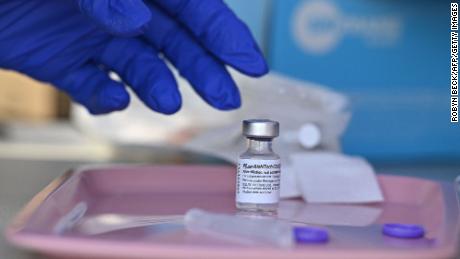

The Centers for Disease Control and Prevention on Friday provided new information on the omicron coronavirus variant and the dozens of early cases in the U.S. The initial data shows most detected cases have been in fully vaccinated people and led to mild symptoms.
CDC Director Dr. Rochelle Walensky said during a White House health briefing Friday afternoon that data on the first 43 omicron variant cases in the U.S. shows nearly 80{cfdf3f5372635aeb15fd3e2aecc7cb5d7150695e02bd72e0a44f1581164ad809} of the cases were in fully vaccinated people. Nearly everyone who has been found to be infected by the variant has experienced mild symptoms, she said, noting that was to be expected in vaccinated people who have some resistance to the disease.
Only one person was hospitalized with omicron and no deaths have been recorded, she added. The variant has been detected in 25 states as of Friday.
About half of those infected by the omicron variant were between the ages of 18 to 39 and one-third had traveled internationally before testing positive.
The CDC says a booster shot of the vaccine appears to offer protection against the variant — and especially severe disease. While 14 known US cases include people who were boosted, Walensky said some had only recently received their third shot and my not have yet reached peak protection.
“Although we don’t have all the answers on the omicron variant, initial data suggests that COVID-19 boosters help to bolster protection against omicron,” Walensky said, adding that to date, almost 99{cfdf3f5372635aeb15fd3e2aecc7cb5d7150695e02bd72e0a44f1581164ad809} of current cases in the U.S. are being caused by the delta variant.
Also in the news:
► Japanese scientists have created face masks that use ostrich antibodies to glow under an ultraviolet light if they detect COVID-19, a discovery that could help with at-home testing, according to Reuters.
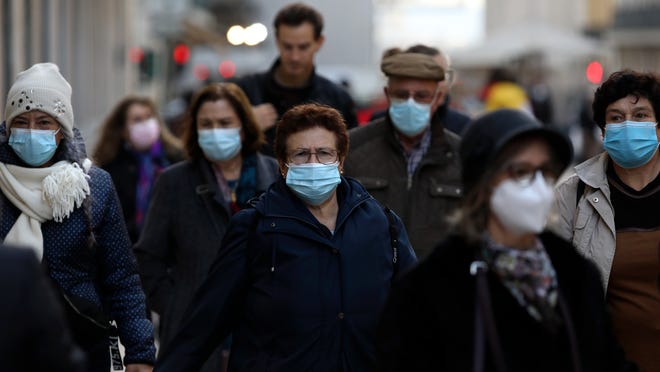
► New COVID-19 restrictions came into effect Friday in the U.K., including once again requiring face masks indoors, as the country tries to prevent the omicron variant from taking hold and delta from spreading further.
►Wisconsin hospitals are facing staffing shortages and a severe lack of beds in intensive care units as COVID-19 infections rise. Less than 3{cfdf3f5372635aeb15fd3e2aecc7cb5d7150695e02bd72e0a44f1581164ad809} of ICU beds were available in the state as of Thursday.
►The FDA on Thursday authorized booster shots of Pfizer-BioNTech’s COVID-19 vaccine for 16- and 17-year-olds at least six months after their initial doses.
►Finland Prime Minister Sanna Marin, one of the world’s youngest elected leaders, apologized this week after facing backlash for spending a night out in Helsinki after she was exposed to COVID-19.
📈Today’s numbers: The U.S. has recorded more than 49.6 million confirmed COVID-19 cases and more than 794,000 deaths, according to Johns Hopkins University data. Global totals: More than 268.4 million cases and 5.2 million deaths. More than 200 million Americans — 60{cfdf3f5372635aeb15fd3e2aecc7cb5d7150695e02bd72e0a44f1581164ad809} of the population — are fully vaccinated, according to the CDC.
📘What we’re reading: Researchers say the U.S. has been undercounting COVID deaths. Now we have a new tool to figure out why. Read more here.
Keep refreshing this page for the latest news. Want more? Sign up for USA TODAY’s Coronavirus Watch free newsletter to receive updates directly to your inbox and join our Facebook group.
Some Missouri health departments halt public COVID-19 work after letter from GOP politician
Multiple local health departments in rural Missouri have halted most or all of their COVID-19 tracking and prevention work after the state’s Republican attorney general ordered agencies to comply with a recent court ruling.
The Laclede County Health Department, located northeast of Springfield, said it received a letter from Missouri Attorney General Eric Schmitt that demanded it halt some COVID measures after a court ruling last month.
The ruling by a Cole County circuit judge said local health authorities did not have the power to impose COVID-19 public health orders. It rendered certain Missouri regulations, including language on notifying people exposed to the virus and providing information for residents to respond, null and void.
Schmitt, a Republican running for U.S. Senate who has been vocally opposed to COVID-19 mandates and health orders, responded with letters to local departments and school districts. Several districts, including Springfield Public Schools, rejected Schmitt’s order, saying they would not immediately repeal their mask mandates.
“You should stop enforcing and publicizing any such orders immediately,” the attorney general said in the letter to the Laclede County Health Department.
The health department, in a Facebook post, said while this was a “huge concern” for the agency, workers felt they had “no other option” to halt its COVID-19 related work. That included: investigating cases, contact tracing, quarantine orders and even public accounting accountments of cases and deaths
“This is to inform you that the Laclede County Health Department has been forced to cease all COVID-19 related work at the current time,” the post said, noting the ruling could set a dangerous precedent: “While our agency remains determined to protect the health of our county residents, it should be understood that this ruling greatly affects how we will be able to proceed with ALL highly communicable diseases in the future.”
The department noted, though, that its staff will “continue to track positive cases, deaths and statistical data for our county” and while it will impact its work in the public, their work internally will change “very little.”
In the aftermath of Schmitt’s letters, several other local health departments in Missouri stopped offering COVID-19 services, such as contact tracing and tracking case numbers. That included agencies in Dunklin, Stoddard, Pemiscott and New Madrid counties.
Rural Missouri has been hit hard by COVID-19 throughout the pandemic, and saw some of the most significant surges during the Delta variant last summer that was most prominently first seen in southwest Missouri. Positive case rates and hospitalizations throughout the state are ticking upward with cold weather and flu season underway.
– Christal Hayes, USA TODAY and Galen Bacharier, Springfield News-Leader
New York to require masks indoors for places without vaccine mandates
New Yorkers will soon be required to wear masks in all indoor public places that don’t have a vaccine requirement for entry, Gov. Kathy Hochul announced Friday.
The new mask requirement, which applies to staff and patrons, will begin Monday and last until Jan. 15 when officials will reevaluate the measure. The mandate is intended to curb COVID-19 outbreaks that may emerge during the holiday season as people spend more time indoors shopping, gathering and visiting holiday attractions, Hochul said.
Local health departments are being asked to enforce these requirements. Failure to comply with the measure could result in a maximum fine of $1,000 for each violation.
New York state is experiencing a surge in coronavirus cases and hospitalizations, which strains a health care system also dealing with staffing shortages. More than 80{cfdf3f5372635aeb15fd3e2aecc7cb5d7150695e02bd72e0a44f1581164ad809} of adult New Yorkers are vaccinated, according to the governor.
“As governor, my two top priorities are to protect the health of New Yorkers and to protect the health of our economy,” Hochul said. “We shouldn’t have reached the point where we are confronted with a winter surge, especially with the vaccine at our disposal, and I share many New Yorkers’ frustration that we are not past this pandemic yet,” she said.
— David Robinson, New York State Team
UK data says booster likely protects against omicron variant
The omicron variant of COVID-19 is spreading rapidly throughout the United Kingdom and is likely to become the dominant strain of the virus there by the middle of this month, the U.K. Health Security Agency said Friday.
Early data and estimates released by the agency found omicron is more easily transmissible than other variants, the agency said in its latest variant technical briefing.
Other studies suggest that both the AstraZeneca and Pfizer vaccines are less effective in preventing symptomatic infections in people exposed to omicron, though preliminary data released by the agency showed that effectiveness appears to rise to between 70{cfdf3f5372635aeb15fd3e2aecc7cb5d7150695e02bd72e0a44f1581164ad809} and 75{cfdf3f5372635aeb15fd3e2aecc7cb5d7150695e02bd72e0a44f1581164ad809} after a third booster dose.
The latest data show 568 confirmed or probable omicron infections as of Dec. 8, up from just two one week earlier. If current trends continue, the U.K. will exceed 1 million omicron infections by the end of December, the health security agency said.
“Once again, we urge everyone who is able to get a booster jab to come forward and do so,” Dr. Jenny Harries, the agency’s chief executive, said in the briefing paper.
While underscoring earlier warnings about the risks posed by the omicron variant, the agency said the data should be treated with caution because the findings are based on early analysis of a small number of cases.
Amtrak riders can expect reduced services in January due to federal vaccine mandate
Amtrak expects to cut back service in the new year, with roughly 5{cfdf3f5372635aeb15fd3e2aecc7cb5d7150695e02bd72e0a44f1581164ad809} of its workforce running out of time to comply with the federal contractor vaccine mandate.
About 94{cfdf3f5372635aeb15fd3e2aecc7cb5d7150695e02bd72e0a44f1581164ad809} of Amtrak’s workforce was fully vaccinated at the beginning of the week and 96{cfdf3f5372635aeb15fd3e2aecc7cb5d7150695e02bd72e0a44f1581164ad809} have received at least one dose, according to president Stephen Gardner. But with a significant number still unvaccinated, Gardner said the railway company may have to cut the railway’s frequency of service in January to avoid staffing-related cancelations.
Amtrak employees have until Jan. 4 to comply with the federal mandate requiring full vaccination among government contract workers.
Gardner told a House of Representatives committee Thursday the changes will primarily affect long-distance services, and the company plans to restore all frequencies by March “or as soon as we have qualified employees available.” Amtrak aims to have “as few impacts to service as possible.”
-Bailey Schulz
Flu took a break in 2020, but it’s officially back
The U.S. may have dodged a ‘twindemic’ last year, but health experts say the country may not be so lucky this season.
While the U.S. continues to report more than 800,000 coronavirus cases per week, flu cases and hospitalizations are also steadily increasing.
As of Dec. 4, the Walgreens Flu Index reports flu activity is 335{cfdf3f5372635aeb15fd3e2aecc7cb5d7150695e02bd72e0a44f1581164ad809} higher nationwide this season compared with last season during the same period. Weekly hospitalizations for the flu increased from 288 in the week ending Oct. 30 to nearly 500 in the week ending Nov. 27, according to the Centers for Disease Control and Prevention’s weekly flu surveillance report.
Flu hospitalizations pale in comparison to the 90,000 COVID-19 hospitalizations reported in the last week, but health experts say hospital systems can’t handle any extra stress.
Hospitals in 39 states reported more COVID-19 patients than a week earlier, while hospitals in 36 states had more COVID-19 patients in intensive-care beds, according to a USA TODAY analysis of U.S. Health and Human Services data.
-Adrianna Rodriguez
Should you put vaccination status on your resume? More people are.
As a near-record number of Americans switch jobs each month, they’re wrestling with a dilemma that has nothing to do with the employment gap created by a pandemic-related layoff.
The question, borne of our unprecedented COVID-19 era: Should you include your vaccination status on your resume?
The short answer: It probably won’t hurt and could help you land a position.
As a result, a growing number of vaccinated job candidates are acknowledging that status on their resumes, career and resume advisors say. The question is a thorny one because vaccinations themselves have become somewhat controversial.
“It could be a dangerous precedent – you’re putting health information on a resume,” says Lisa Rangel, CEO of Chameleon Resumes, a resume and job search consulting service.
Then there’s the question of whether the move will be a boost or hindrance to your chances of getting hired.
About 63{cfdf3f5372635aeb15fd3e2aecc7cb5d7150695e02bd72e0a44f1581164ad809} of companies are requiring COVID-19 vaccinations for staffers, according to a survey of 1,250 hiring managers in August by ResumeBuilder.com. About 84{cfdf3f5372635aeb15fd3e2aecc7cb5d7150695e02bd72e0a44f1581164ad809} of adults 18 and over are fully vaccinated, according to the Centers for Disease Control and Prevention.
At the same time, the public has been divided. In August, 49{cfdf3f5372635aeb15fd3e2aecc7cb5d7150695e02bd72e0a44f1581164ad809} of Americans favored vaccination mandates and 46{cfdf3f5372635aeb15fd3e2aecc7cb5d7150695e02bd72e0a44f1581164ad809} were opposed, a CNBC survey shows.
– Paul Davidson
Contributing: The Associated Press