Will the Covid Vaccines Stop Omicron? Scientists Are Racing to Find Out.

As nations severed air links from southern Africa amid fears of another global surge of the coronavirus, scientists scrambled on Sunday to gather data on the new Omicron variant, its capabilities and — perhaps most important — how effectively the current vaccines will protect against it.

The early findings are a mixed picture. The variant may be more transmissible and better able to evade the body’s immune responses, both to vaccination and to natural infection, than prior versions of the virus, experts said in interviews.

The vaccines may well continue to ward off severe illness and death, although booster doses may be needed to protect most people. Still, the makers of the two most effective vaccines, Pfizer-BioNTech and Moderna, are preparing to reformulate their shots if necessary.

“We really need to be vigilant about this new variant and preparing for it,” said Jesse Bloom, an evolutionary biologist at the Fred Hutchinson Cancer Research Center in Seattle.

“Probably in a few weeks, we’ll have a better sense of how much this variant is spreading and how necessary it might be to push forward with a variant vaccine,” Dr. Bloom said.

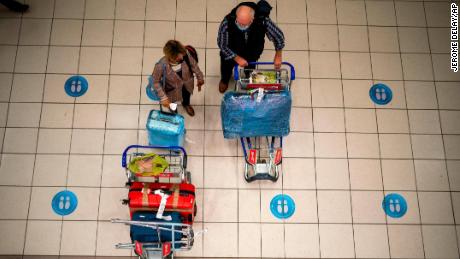
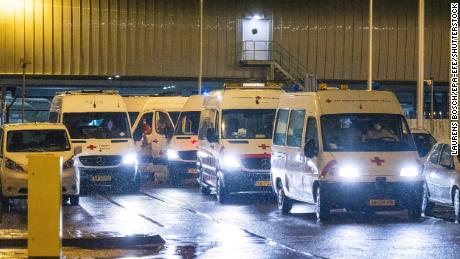
Even as scientists began vigorous scrutiny of the new variant, countries around the world curtailed travel to and from nations in southern Africa, where Omicron was first identified. Despite the restrictions, the virus has been found in a half-dozen European countries, including the United Kingdom, as well as Australia, Israel and Hong Kong.

Already, Omicron accounts for most of the 2,300 new daily cases in the province of Gauteng, South Africa, President Cyril Ramaphosa announced on Sunday. Nationally, new infections have more than tripled in the past week, and test positivity has increased to 9 percent from 2 percent.

Scientists have reacted more quickly to Omicron than to any other variant. In just 36 hours from the first signs of trouble in South Africa on Tuesday, researchers analyzed samples from 100 infected patients, collated the data and alerted the world, said Tulio de Oliveira, a geneticist at the Nelson R. Mandela School of Medicine in Durban.

Within an hour of the first alarm, scientists in South Africa also rushed to test coronavirus vaccines against the new variant. Now, dozens of teams worldwide — including researchers at Pfizer-BioNTech and Moderna — have joined the chase.

They won’t know the results for two weeks, at the earliest. But the mutations that Omicron carries suggest that the vaccines most likely will be less effective, to some unknown degree, than they were against any previous variant.

“Based on lots of work people have done on other variants and other mutations, we can be pretty confident these mutations are going to cause an appreciable drop in antibody neutralization,” Dr. Bloom said, referring to the body’s ability to attack an invading virus.

South African doctors are seeing an increase in reinfections in people who already had a bout of Covid-19, suggesting that the variant can overcome natural immunity, said Dr. Richard Lessells, an infectious diseases physician at the University of KwaZulu-Natal.

Omicron has about 50 mutations, including more than 30 in the spike, a viral protein on its surface that the vaccines train the body to recognize and attack.

Some of these mutations have been seen before. Some were thought to have powered the Beta variant’s ability to sidestep vaccines, while others most likely turbocharged Delta’s extreme contagiousness.

“My best guess is that this combines both of those elements,” Penny Moore, a virologist at the National Institute for Communicable Diseases in South Africa, said of the new variant.

But Omicron also has 26 unique spike mutations, compared with 10 in Delta and six in Beta. Many of them seem likely to render the variant more difficult for the immune system to recognize and thwart.

“There are many we’ve never studied before, but just looking at the location on the spike, they are in regions that we know are immuno-dominant,” Dr. Moore said, referring to parts of the spike protein that interact with the body’s immune defenses.

Dr. Moore’s team is perhaps the furthest along in testing how well the vaccines hold up against Omicron. She and her colleagues are preparing to test blood from fully immunized people against a synthetic version of the Omicron variant.

Creating such a “pseudovirus” — a viral stand-in that contains all of the mutations — takes time, but results may be available in about 10 days.

To more closely mimic what people are likely to encounter, another team led by Alex Sigal, a virologist at the Africa Health Research Institute, is growing live Omicron, which will be tested against the blood of fully immunized people, as well as those who were previously infected.

Those results may take longer but should provide a fuller picture of the vaccines’ performance, Dr. Sigal said.

If the vaccines prove to be much less potent against Omicron, they may need to be tweaked to enhance their effectiveness. Preparing for the worst, Moderna, Pfizer-BioNTech and Johnson & Johnson are planning to test an artificial version of Omicron against their vaccines.

The mRNA vaccines in particular — Moderna’s and Pfizer-BioNTech’s — were built with technology that should permit rapid modification. Pfizer’s scientists “can adapt the current vaccine within six weeks and ship initial batches within 100 days in the event of an escape variant” that eludes the immune system, said Jerica Pitts, a spokeswoman for Pfizer.

Moderna’s work began on Tuesday, immediately after its scientists learned of Omicron — the fastest the company has ever responded to a variant, said Dr. Stephen Hoge, Moderna’s president.

Even without data on Omicron’s spread, it was obvious the variant would be a formidable threat to vaccines, he said.

“This thing is a Frankenstein mix of all of the greatest hits,” Dr. Hoge said, referring to the variant’s many concerning mutations. “It just triggered every one of our alarm bells.”

Moderna could update its current vaccine in about two months and have clinical results in about three months if necessary, he said.

Both companies also plan to test whether booster shots will bolster the immune system enough to fend off the new variant. Boosters of the Pfizer-BioNTech and Moderna vaccines have been shown to raise antibody levels significantly.

But those antibodies may not be broadly effective against every iteration of the virus, and may not be enough to neutralize Omicron entirely, said Michel Nussenzweig, an immunologist at Rockefeller University in New York.

People who recover from Covid and then receive even one dose of a vaccine tend to produce a broader range of antibodies, capable of recognizing more versions of the virus, than do people who are only vaccinated.

“It’s clear that hybrid immunity, the kind that people get when they are both infected and vaccinated, is superior, and that is very, very likely to take care of this thing, too,” Dr. Nussenzweig said.

“After two doses of vaccine, we did not see that. But we’re hoping that after three doses, maybe there’ll be some catching up,” he said.

Dr. Nussenzweig and his colleagues are preparing to test Omicron against the mRNA vaccines, as well as the vaccines made by Johnson & Johnson and AstraZeneca. They hope to have results within a month.

Omicron-specific vaccines created in just weeks would be a miraculous feat. But the prospect of producing and distributing them raises daunting questions.

If new versions are required to protect people everywhere, companies should make them available to the African countries that most need them and can least afford them, Dr. de Oliveira said.

“South Africa at least has managed to procure their own vaccines,” he said. But poorer countries like Sudan, Mozambique, Eswatini and Lesotho will need low-cost options.

Pfizer did not respond to a question about low-cost vaccines for African nations. Dr. Hoge, of Moderna, said the company already had an agreement with the African Union to deliver 110 million doses at $3.50 per half dose of vaccine.

Dr. Hoge said he recognized that 110 million was less than 10 percent of Africa’s population. But, he noted, “we’re also the smallest of all manufacturers out there, and so 10 percent hopefully is useful.”

Despite the frustration that South African scientists have expressed about vaccine inequity and punishing travel restrictions, they have been inundated with requests for genetic sequences of Omicron from Italy, Germany, Australia and New Zealand, as well as labs in North America.

The more teams involved, the better, said Dr. Moore, who received about 50 requests just on Saturday. As the virus moves across the globe, it is likely to keep changing. “Getting the right combination of mutations in itself is a moving target,” she said.

Researchers everywhere want to avoid drawing conclusions prematurely, a mistake they made when the Beta variant surfaced. Preliminary tests of that variant took only one known mutation into account and underestimated its ability to evade the immune system, Dr. Moore recalled. (Fortunately, the variant also turned out to be less contagious.)

To get a full picture of the effectiveness of the vaccines against Omicron, scientists must look not just at antibody levels but also at immune cells that can recognize and destroy infected cells. Immune cells called T cells are crucial for preventing an infection from progressing to serious illness and death.

Some of Omicron’s mutations occur in parts of the virus targeted by T cells, meaning the variant may be more difficult for T cells to recognize.

Already, a computer simulation has predicted that those mutations may alter about six of the hundreds of regions that T cells can recognize, said Wendy Burgers, an immunologist at the University of Cape Town.

That may not seem like much. But people make varying sets of T cells, so depending on which targets the mutations knock out, some people may barely be affected by Omicron — and others may be left vulnerable.

Dr. Burgers is hoping to obtain blood from 50 people infected with the variant to gauge how the mutations will play out across a population. Once the samples are in hand, results will be available after “probably a week of very late nights and analysis,” she said.

Even if the vaccines hold up against Omicron, new versions will probably be needed at some point, and perhaps soon. The virus is acquiring mutations much faster than expected, Dr. Bloom said.

Seasonal influenza is the often cited example of a virus that mutates quickly, requiring regular updates to vaccines. But the coronavirus is “at least comparable and possibly even faster than that,” Dr. Bloom said. “There’s always going to be new variants arising.”

Lynsey Chutel contributed reporting from South Africa.

US Covid-19: Omicron variant is a reminder that coronavirus ‘is still in control,’ medical professor says

“But it’s fairly likely we’ll see cases,” said Dr. Francis Collins, director of the National Institutes of Health.

“It ought to redouble our efforts to use the tools that we have, which are vaccinations and boosters — and to be sure we’re getting those to the rest of the world, too,” Collins told CNN on Sunday.

“It also means we need to pay attention to those mitigation strategies that people are just really sick of, like wearing masks when you’re indoors with other people who might not be vaccinated, and keeping that social distance,” he said.

“I know, America — you’re really tired of hearing those things. But the virus is not tired of us. And it’s shapeshifting itself.”

Why Omicron ‘looks different’ from other variants

As coronavirus keeps spreading, new mutations — and new variants — are expected.

“We have seen a lot of variants pop up over the last five, six months, and most of them have not amounted to much. This looks different,” said Dr. Ashish Jha, dean of the Brown University School of Public Health.

Vaccine inequity and hesitancy made the Omicron variant more likely, scientists say
The Omicron variant has an unusually high number of mutations, with more than 30 mutations in the spike protein alone, South African genomic scientists said last week.
Spike proteins are the structures used by a virus to get into the cells it attacks.

And “10 or more” of the mutations are on the receptor binding domain, which “binds to the cells in your nasal pharynx and in your lung,” Dr. Anthony Fauci told NBC on Sunday.

“In other words, the profile of the mutations strongly suggest that it’s going to have an advantage in transmissibility,” the director of the National Institute of Allergy and Infectious Diseases said.

When experts looked at other variants, Jha said, it usually took several months for those strains to be dominant — in other words, the most common strain of the virus spreading in one area.

“This one has become dominant very quickly in South Africa in the regions where it’s been found — within a matter of days to weeks, as opposed to months,” Jha said.

“Now, the number of cases in South Africa is quite low, so it can be for other reasons as well — not just because it’s more transmissible. But the speed with which it has taken off is really unlike anything we’ve seen before.”

The new Omicron variant is a pandemic gut check

Collins said it’s not yet clear whether the Omicron variant is more contagious than the Delta variant.

“It certainly shows the signs of being able to spread quickly,” he said. “What we don’t know is whether it can compete with Delta.”

It’s also too early to tell whether the Omicron variant causes more severe illness, Collins said.

In short: “There’s still much we do not know about Omicron,” epidemiologist and infectious disease expert Dr. Celine Gounder said.

“We’re still learning,” Gounder said Sunday. “As we were saying very early in the pandemic, pandemics are not about panicking. They’re about policies, protocols and practice. And in this case, that means doing the work of characterizing the virus.”

Don’t be surprised by renewed Covid-19 restrictions, expert says

A growing number of countries have confirmed cases of the Omicron variant. Canada joined that list Sunday, when health officials confirmed two cases in Ottawa, Ontario.
The Omicron variant is spreading across Europe
Both people had recently traveled from Nigeria and are isolating, Canadian health officials said.

If the Omicron variant isn’t already in the US, it’s bound to be “soon,” said Dr. William Schaffner, a professor at Vanderbilt University Medical Center.

“It’s going to make its way around the world. It looks like that way,” Schaffner said Saturday.

And that could prompt a return to stricter Covid-19 mitigation efforts.

“I think we may, indeed, be in for a phase of many more masks, much more social distancing, and more restrictions and obligations for vaccination going forward,” Schaffner said.

News of the variant spread as Americans packed airports at almost pre-pandemic levels for Thanksgiving and at the start of the holiday season: The Transportation Security Administration said it screened about 2.3 million people at airports across the country Wednesday, making it the busiest day at security checkpoints since March 2020.

More reason to get vaccinated or boosted

About 59{cfdf3f5372635aeb15fd3e2aecc7cb5d7150695e02bd72e0a44f1581164ad809} of Americans are fully vaccinated against Covid-19, and about 19{cfdf3f5372635aeb15fd3e2aecc7cb5d7150695e02bd72e0a44f1581164ad809} of those fully vaccinated have received a booster dose, according to CDC data.
NIH director: New variant 'ought to redouble' vaccination and mitigation efforts

While vaccine makers test their shots against the new Omicron variant, health experts said it’s important for anyone eligible to get a Covid-19 vaccine or booster to do so now.

“The main things people can do to protect themselves right now is if you’re not vaccinated, get vaccinated,” Gounder said. “If this does turn out to be an immune-evading variant, there may also well be benefit in getting an extra dose or booster dose of vaccine.”

Fauci offered similar advice: “If ever there was a reason for the people who were vaccinated to get boosted, and for those who were unvaccinated to get vaccinated, it’s now,” he told NBC.

“If you’re six months or more from the second dose of an mRNA (vaccine) — either the Pfizer or the Moderna — get boosted. If you’re two months or more following the single dose of J&J, get boosted.”

Fauci said he believes the current vaccines — and especially booster doses — will help at least somewhat against the Omicron variant.

“When you get boosted, the level of your antibody goes way, way above what the level at its peak was after the second dose,” Fauci told NBC.

“And that’s the reason why we feel even with variants like Omicron that if you get boosted, you’re going to get a level of antibody that’s high enough that it is likely you’ll be able to get at least some degree — and maybe a lot — of protection against this.”

Moderna said it’s testing the ability of its Covid-19 vaccine to neutralize Omicron, and data is expected in the coming weeks.

The company said it’s also testing a larger-dose booster and an Omicron-specific booster in case the current vaccine and booster don’t sufficiently work against the new variant.

If scientists determine an Omicron-specific vaccine dose is needed, “we think within weeks to maybe two to three months, we would be able to have a Omicron-specific vaccine booster available for testing,” Moderna Chief Medical Officer Dr. Paul Burton said Sunday.

BioNTech, the German company that partnered with Pfizer to make a Covid-19 vaccine, is also investigating Omicron’s impact on their vaccine, with data expected in the coming weeks.

Johnson & Johnson said it’s also testing the effectiveness of its vaccine against Omicron.

Moderna said the Omicron variant could be a challenge.

“The combination of mutations represents a significant potential risk to accelerate the waning of natural and vaccine-induced immunity,” the company said Friday.

But Jha said he doesn’t think the new variant means “vaccines will be rendered useless.”

“I think that’s exceedingly unlikely,” he said. “The question is, is there a tiny hit to vaccine efficacy, or is there a large hit?”

‘A couple of weeks of uncertainty’

The world is in a 'race against time' with the Omicron variant, European Commission president says

Before scientists can say how much the current vaccines might work against Omicron, “we have to go through a couple of weeks yet of uncertainty,” Burton said.

“There are three questions we really need answers to: How transmissible is this variant? How severe is it? And will the antibodies produced in response to the current vaccines (be) effective? And we won’t know that (answer to the) last question for a couple of weeks,” Burton told CNN on Sunday.

“But what we do know is that the best protection is to get vaccinated. If you’re on the fence, if you haven’t been vaccinated, get vaccinated. And now everybody over 18 in this country is at least eligible for boosting. So if you’re now eligible for boosting, get boosted as well,” he said.

“By doing that, we at least know that you’ll get that first line of critical protection. And then of course, there are additional, simpler things you can do — hand washing, some social distancing, mask wearing as appropriate. These two together, right now — until we know exactly what’s going on — are going to be critical in our line of defense.”

‘The virus is still in control … tighten your seat belts’

With or without the Omicron strain, the US is still struggling with the Delta variant.

Covid-19 hospitalizations in 16 states increased by more than 50{cfdf3f5372635aeb15fd3e2aecc7cb5d7150695e02bd72e0a44f1581164ad809} in the past week compared to the previous week, according to the US Health and Human Services Department.

“I think we need to just get our mind set that the virus is still in control. I don’t care about your Covid fatigue,” Schaffner said.

“We’re going to have to deal with this in an ongoing way very, very seriously. … Tighten your seat belts.”

CNN’s Dakin Andone, John Bonifield, Jacqueline Howard, Virginia Langmaid, Michael Nedelman, Christina Maxouris and Kaitlan Collins contributed to this report.

New Covid variant triggers urgent moment for Biden health team

There is plenty still unknown about Omicron, including where and when it first emerged and whether it causes severe illness. But the variant already has the potential to upend the global pandemic response and undo progress that’s been made containing Covid-19.

While no cases have been found in the U.S., Biden health officials from the Centers for Disease Control and Prevention, the Department of Health and Human Services and the White House held a series of meetings over the past two days to plan for U.S. cases of the variant and possible spikes in disease spread across the country. Officials have debated how long to shut down travel from southern Africa, whether to allow for U.S. citizens to return and whether to change domestic public health guidelines to safeguard Americans from potential infection, the three senior Biden officials said. The administration is set to impose restrictions on Monday but isn’t applying them to U.S. citizens.

“There’s no evidence that it is here but I would be surprised if it doesn’t ultimately land here,” Anthony Fauci, the president’s chief medical officer, told POLITICO. For the time being, health officials are pushing Americans to adhere to existing public health guidelines issued by the CDC and to sign up for Covid-19 booster shots in the coming weeks. There are currently no other plans to implement other safeguards.

Fauci and other top Biden health officials have reviewed a limited set of data on Omicron in coordination with international officials in South Africa and Israel, focusing on the degree to which the variant can spread. Fauci, along with top officials from the CDC briefed President Joe Biden Friday morning, advocating that he shut down travel from seven countries in southern Africa, including South Africa.

“One thing is clear is that [Omicron] is very transmissible,” Fauci said. “The reason you close the borders is to buy you time so you can better prepare and learn more about the variant, its transmissibility, its potential evasion of immune responses, and its seriousness of disease it causes.”

Scientists in South Africa have said it could take up to two weeks to study the variant and learn how well it evades immunity from vaccines. Omicron’s many mutations already are prompting increased surveillance and genetic testing but it is unclear exactly how well it adapts or what kind of threat it poses to the global population.

“It is conceivable that it is just a very highly transmissible virus that might not have a major impact on the seriousness of infection,” Fauci said, suggesting that even if individuals contracted the variant, they may not require hospitalization.

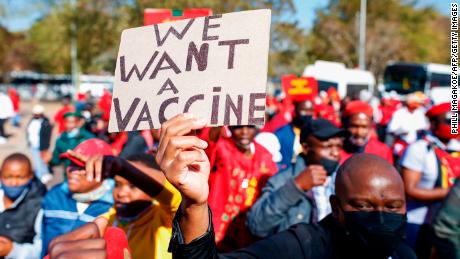
The emergence of Omicron has also raised new concerns among international officials and health representatives about the need to get shots in arms quickly in low-income countries, such as those in Africa, in the next several weeks.

“This is a worst fear coming true,” said Lily Caprani, head of advocacy for health and pandemic response at UNICEF.

“The stakes are super high because [southern Africa] has many countries with really fragile health systems,” she said. “Not only do they have really low access to vaccines … the consequences for their health systems if a surge takes a hold are going to be really catastrophic. And that means children and families are at really high risk.”

To date, the world has only administered about 7.89 billion shots, according to data collected by Bloomberg. Health experts have said 11 billion doses are needed to crush the Covid-19 pandemic.

Advocates argue that more transmissible variants like Omicron will continue to develop as long as the majority of the world’s population remains unvaccinated. But COVAX, the world’s vaccine distributor, is still trying to overcome lingering roadblocks with procuring supply. And many developing nations lack the infrastructure on the ground to administer doses. Others cite increasingly high levels of vaccine hesitancy.

South Africa recently delayed a shipment of the Johnson & Johnson vaccine, saying the country had too many doses in stock.

Biden officials have pushed back on the idea that the U.S. needs to do more to help the low-income countries, pointing to the nearly 250 million doses it has delivered to the world — more than all other countries combined, according to data compiled by UNICEF.

Biden noted that metric in a statement on Friday, adding,”It is time for other countries to match America’s speed and generosity,” he said.

New COVID variant dubbed ‘omicron’ by WHO; vaccine makers already have contingency plans: Latest updates

A COVID-19 variant first discovered in South Africa was dubbed “omicron” and classified a “variant of concern” by the World Health Organization on Friday, as the U.S. and other nations reacted to the newly discovered variant with travel restrictions.

Experts with the World Health Organization met Friday to assess the variant, which appears to have a high number of mutations in the virus’ spike protein, prompting worries about how easily it will spread. While good data on the risks of omicron is likely weeks away, the organization cited early evidence suggesting an increased risk of reinfection.

The U.S. said it will restrict travel from South Africa, as well as Botswana, Zimbabwe, Namibia, Lesotho, Eswatini, Mozambique and Malawi, according to a statement from senior officials from the Biden administration.

The policy will take effect Monday, and President Joe Biden said the new rules mean “no travel” to or from the designated countries, except for returning U.S. citizens and permanent residents who test negative.

Travel restrictions: US to restrict travel from South Africa, seven other countries due to new COVID-19 variant omicron

Infection rates in South Africa have “increased steeply,” coinciding with the detection of the variant, according to a Friday statement from the WHO. The first omicron case was reported to the agency from South Africa on Nov. 24, and the number of cases of the variant are increasing in almost all South African provinces, the WHO said.

While omicron is now in the same category as the delta variant, the extent of the public health threat the new variant will pose is unclear. The beta variant was classified a variant of concern but did not spread as far as initially expected.

The WHO urged countries to increase surveillance of omicron cases and genome sequencing efforts to better understand its potential impact.

Biden said the emergence of omicron emphasizes the importance of vaccinations and urged Americans to get their booster shots as soon as possible.

The new variant has also been found in Botswana and Hong Kong in travelers from South Africa, according to Joe Phaahla, the nation’s health minister. Phaahla said the variant has seen rapid spread in Gauteng, the country’s most populous province.

A baby cries as her mother receives her Pfizer vaccine against COVID-19, in Diepsloot Township near Johannesburg Thursday, Oct. 21, 2021. A new COVID-19 variant has been detected in South Africa that scientists say is a concern because of its high number of mutations and rapid spread among young people in Gauteng, the country's most populous province, Minister of Health Joe Phaahla announced Thursday, Nov. 25, 2021.

A baby cries as her mother receives her Pfizer vaccine against COVID-19, in Diepsloot Township near Johannesburg Thursday, Oct. 21, 2021. A new COVID-19 variant has been detected in South Africa that scientists say is a concern because of its high number of mutations and rapid spread among young people in Gauteng, the country’s most populous province, Minister of Health Joe Phaahla announced Thursday, Nov. 25, 2021.

Several nations, including Germany, Italy, the United Kingdom, the Netherlands, the Czech Republic and Japan, have responded to news of the variant by moving Friday to restrict air travel from several southern African countries. The European Union, which is made up of 27 nations, is also recommending a ban on flights from southern African countries, despite WHO officials warning against rash decisions.

More about the newly discovered variant: What to know about the new COVID-19 variant in South Africa

Also in the news:

►Israel announced Friday it detected the country’s first case of the newly discovered omicron variant in a traveler returning from Malawi. The traveler and two other people who are suspected to be infected with the variant have been placed in isolation.

Stocks sank Friday, with the Dow Jones Industrial Average briefly falling more than 1,000 points, as a new coronavirus variant first detected in South Africa appeared to be spreading across the globe. Investors were uncertain whether the variant could potentially reverse months of progress at getting the COVID-19 pandemic under control.

►Czech President Milos Zeman was admitted to a hospital late Thursday after testing positive for COVID-19.

►The number of air travelers this week is expected to approach or even exceed pre-pandemic levels, and auto club AAA predicts 48.3 million people will travel at least 50 miles from home over the holiday period.

📈Today’s numbers: The U.S. has recorded more than 48 million confirmed COVID-19 cases and more than 776,000 deaths, according to Johns Hopkins University data. Global totals: More than 260 million cases and more than 5.1 million deaths. More than 196 million Americans — roughly 59.1{cfdf3f5372635aeb15fd3e2aecc7cb5d7150695e02bd72e0a44f1581164ad809} of the population — are fully vaccinated, according to the CDC.

Keep refreshing this page for the latest news. Want more? Sign up for USA TODAY’s Coronavirus Watch free newsletter to receive updates directly to your inbox and join our Facebook group.

Omicron’s impact on vaccines unclear, but contingency plans already rolling out

Health experts have said it will likely be weeks before the world has good data about how omicron may reduce the effectiveness of current vaccines, but Moderna has already announced a three-point strategy to combat the new variant.

Omicron’s mutations could possibly reduce current vaccines’ effectiveness, but are unlikely to eliminate their benefit, according to Dr. Ashish Jha, dean of Brown University’s School of Public Health.

“There are a series of mutations in key regions that may impact effectiveness of our vaccines,” tweeted Jha on Friday. “Render vaccines useless? No. Super unlikely.”

Moderna’s strategy involves three options for boosting COVID-19 vaccination, should omicron prove problematic for current vaccines.

The three options, according to a Friday release from the company: A higher dose booster, shots currently being studied that are designed to “anticipate mutations such as those that have emerged in the Omicron variant” and an omicron-specific booster — which is already in the works.

Andy Slavitt, who previously served as President Joe Biden’s White House senior adviser for COVID response, said in a tweet that both Moderna and Pfizer-BioNTech have estimated a vaccine to combat a new variant could be developed in about 3 months, with regulatory and logistical hurtles to follow.

“If we start in early December, new vaccines could be available by summer in much of the world,” Slavitt tweeted.

Multiple media organizations on Friday reported Pfizer-BioNTech is studying the new variant and expects data within weeks. If warranted, a targeted vaccine could be developed within 6 weeks and ship within 100 days, the reports say.

Johnson & Johnson is also testing its current vaccine against omicron, according to CNBC.

‘It’s coming’: New York braces for omicron; hospitals already strained

New York Gov. Kathy Hochul on Friday announced an executive order intended to boost hospital capacity and address staffing shortages, a move that comes amid growing concerns about hospital beds and staffing.

Hospitalizations have already risen sharply recently in much of the state and could soar higher if omicron proves to be as highly transmissible as some fear. The variant has not yet been detected in New York.

“It’s coming,” Hochul said in a statement Friday.

Her order allows the state health department to limit non-essential surgeries, if needed, to ensure capacity. The governor said the order also will allow the state to acquire critical supplies more quickly.

Hospitals in other areas of the country are already stretched thin amid a spike in cases.

On Wednesday, the federal government said it would send 44 military medical staffers to Michigan to help beleaguered hospitals treat COVID-19 patients amid a fourth surge that is the worst in the country.

Facing hospitals filling up with COVID patients needing lengthy stays, Massachusetts Gov. Charlie Baker said Tuesday any hospital or hospital system facing limited capacity to care for patients will be required to reduce non-essential, non-urgent scheduled procedures beginning Monday.

— The Associated Press

FDA: Merck COVID pill effective, experts will review safety

Federal health regulators say an experimental COVID-19 pill from Merck is effective against the virus, but they will seek input from outside experts on risks of birth defects and other potential problems during pregnancy.

The Food and Drug Administration posted its analysis of the pill ahead of a public meeting next week where academic and other experts will weigh in on its safety and effectiveness. The agency isn’t required to follow the group’s advice.

The FDA scientists said their review identified several potential risks, including possible toxicity and birth defects. Given those risks the FDA will ask its advisers whether the drug should never be given during pregnancy or whether it could be made available in certain cases. Under that scenario, the FDA said the drug would carry warnings about risks during pregnancy, but doctors would still have the option to prescribe it in certain cases where its benefits could outweigh its risks for patients.

Given the safety concerns, FDA said Merck agreed the drug would not be used in children.

Additionally, the FDA flagged a concern that Merck’s drug led to small changes in the coronavirus’ signature spike protein, which it uses to penetrate human cells. Theoretically, FDA cautioned, those changes could lead to dangerous new variants. Regulators also noted that Merck collected far less safety data overall on its drug than was gathered for other COVID-19 therapies.

FDA will ask its independent advisers to discuss all those issues and then vote on whether the drug’s overall benefits outweigh its risks.

— The Associated Press

The Tough Guy balloon is driven down Sixth Avenue on a bicycle during the Macy's Thanksgiving Day Parade, Thursday, Nov. 25, 2021, in New York. The Macy's Thanksgiving Day Parade is returning in full, after being crimped by the coronavirus pandemic last year.

The Tough Guy balloon is driven down Sixth Avenue on a bicycle during the Macy’s Thanksgiving Day Parade, Thursday, Nov. 25, 2021, in New York. The Macy’s Thanksgiving Day Parade is returning in full, after being crimped by the coronavirus pandemic last year.

COVID-19 cases are rising again this holiday season

Despite early signs that suggested the U.S. may have avoided another winter surge, COVID-19 cases are on the way up.

The country reported 665,420 cases in the week ending Monday, more than a 30{cfdf3f5372635aeb15fd3e2aecc7cb5d7150695e02bd72e0a44f1581164ad809} increase from the pace of cases reported about a month ago, according to a USA TODAY analysis of Johns Hopkins data.

As cases rise in 39 states, U.S. Health and Human Services data show hospitals in 32 states admitted more patients in the latest week than the week before.

“Quite frankly, I’m really concerned,” said Danielle Ompad, associate professor of epidemiology at New York University’s School of Global Public Health. “I would say we are better off than we were last year, but cases are starting to tick up and that is something that we really need to keep an eye on.” Read more here.

— Adrianna Rodriguez

Will pandemic-weary shoppers turn out in full force for the holidays?

Buoyed by solid hiring, healthy pay gains and substantial savings, shoppers are returning to stores and splurging on all types of items.

But the big question is: How much will supply shortages, higher prices and staffing issues dampen their mood this holiday season?

Americans, already fatigued with pandemic-induced social distancing policies, may get grumpy if they can’t check off items on their holiday wish lists, or they may feel disappointed by the skimpy holiday discounts. Exacerbating their foul moods is the fact that many frustrated workers called it quits ahead of the holidays, leaving businesses short-handed during their busiest time of the year.

Shoppers are expected to pay on average of between 5{cfdf3f5372635aeb15fd3e2aecc7cb5d7150695e02bd72e0a44f1581164ad809} to 17{cfdf3f5372635aeb15fd3e2aecc7cb5d7150695e02bd72e0a44f1581164ad809} more for toys, clothing, appliances, TVs and others purchases on Black Friday this year compared with last year, according to Aurelien Duthoit, senior sector advisor at Allianz Research. TVs will see the highest price spikes on average, up 17{cfdf3f5372635aeb15fd3e2aecc7cb5d7150695e02bd72e0a44f1581164ad809} from a year ago, according to the research firm. That’s because whatever discounts available will be applied to goods that are already expensive.

Such frustrations could mute sales for the holiday season that are supposed to break records.

— Associated Press

Contributing: Associated Press

This article originally appeared on USA TODAY: Omicron classified ‘variant of concern’ by WHO: COVID updates

CDC warns about rising flu cases in children, young adults

The Centers for Disease Control and Prevention issued a health advisory Wednesday that cases of influenza have been rising among young adults in recent weeks.

While flu cases are still low nationally, more than 90 percent are among children and young adults ages 5 to 24, according to the CDC.

Most cases are of the H3N2 lineage — a strain that health experts say is particularly troublesome, as it tends to mutate faster than other variants of influenza. The last time H3N2 was the dominant strain was during the 2017-18 flu season, when the U.S. had 710,000 flu-related hospitalizations and 52,000 flu-related deaths, the most since the 2009 H1N1 flu pandemic

A CDC map shows influenza rates.CDC

The CDC has been investigating a flu outbreak at the University of Michigan, where hundreds of students have tested positive. Flu outbreaks have been reported at other college campuses in the past month.

Experts are concerned that college students and other young people who may have been exposed to flu could spread it around the country as they travel home for the holidays.

“This is the time of the year when many people are going to be gathering together for the holidays for either Thanksgiving, Christmas or New Year’s, and there’s just the potential to amplify it,” said Dr. Isaac Bogoch, an infectious disease specialist at the University of Toronto.

He said people, especially those most at risk for severe disease, should get vaccinated, because the virus doesn’t stay within a particular age group for long.

“It’s coming. It’s not quite clear how large a flu season we’re going to have, but we are going to have a flu season,” he said.

Full coverage of the Covid-19 pandemic

The flu season typically runs from October to as late as May, with activity tending to peak from December to February, according to the CDC.

Influenza experts had previously said they were concerned that the country could be at risk for a severe flu season this year after seasonal flu cases reached an all-time low last year, when large parts of the country were shut down because of the coronavirus pandemic.

Experts urge people to get both Covid and flu vaccinations, saying an increase in flu infections this winter could put more burden on the country’s health care system, which is already dealing with a surge in coronavirus cases.

Download the NBC News app for full coverage of the Covid-19 pandemic

As part of the health advisory, the CDC recommended that people with flulike symptoms be tested for both influenza and Covid.

Follow NBC HEALTH on Twitter & Facebook.

Kaitlin Sullivan contributed.

COVID cases overwhelm hospitals going into Thanksgiving holiday