Kim Kardashian West thanked Kanye West for his role in her journey to becoming a fashion icon during the 2021 People’s Choice Awards Tuesday night.
The show, which hands out countless awards in different categories such as film, television, animation, music and social media, honored the “Keeping Up With the Kardashians” star by making her the fashion icon of 2021.
Before she took the stage at the award ceremony, Kardashian West was introduced by Tracee Ellis Ross, the previous fashion icon recipient, who narrated a tribute video showcasing some of the entrepreneur’s most unforgettable looks.
Then, Kardashian West walked onto the stage wearing an all-black ensemble, complete with a skin-tight dress, stilettos, tights and matching sunglasses.
Kim Kardashian West on stage accepting her fashion icon award.Christopher Polk/E! Entertainment / NBCUniversal
“Oh my gosh to be receiving this award from a fashion icon herself, Tracee, I am so honored,” the reality television star gushed before continuing her speech.
“I am honestly so humbled to be here,” she shared. “I started off as a closet organizer and a stylist, so the fact that I am winning a fashion icon award — it’s like a pinch-me moment. I have those every single day that designers are willing to work with me.”
Prior to Kardashian West becoming a household name, the entrepreneur got her start as Paris Hilton’s stylist. During her speech, she recalled a time when designers were not willing to collaborate with her. She specifically thanked designer Zac Posen for inviting her to her first Council of Fashion Designers of America Awards years ago.
She joked that some designers started to support her after they were probably “talked into it by getting a call from Kanye (West).”
“Thank you to Kanye, even, for really introducing me to the fashion world,” she added as the crowd cheered.
Kardashian West filed for divorce from West in February. They share four children together: North, 8, Saint, 6, Chicago, 3, and Psalm 2.
Toward the end of her speech, she explained, “I fell in love with fashion and I’m so inspired by so many people. This is like a dream that I get to wake up and wear these amazing clothes and try new things.”
After saying she was humbled by the recognition, Kardashian West encouraged her fans to “take a risk.”
In the introduction package, Ross perfectly summed up Kardashian West’s style by calling it risky, bold and sometimes risqué.
The Skims founder typically makes her most daring fashion statements at the Met Gala each year.
When she attended the event for the first time in 2013, she walked hand-in-hand with her then-boyfriend, West, down the Metropolitan Museum of Art steps wearing a floral Givenchy dress.
Kim Kardashian West and Kanye attend the 2013 Met Gala. Dimitrios Kambouris / Getty Images
To showcase the theme of “Heavenly Bodies: Fashion & The Catholic Imagination” at Met Gala in 2018, Kardashian West rocked a skin-hugging, slinky gold gown that featured crosses.
Kim Kardashian West at the “Heavenly Bodies: Fashion & The Catholic Imagination Costume Institute Gala” at The Metropolitan Museum of Art on May 7, 2018. Neilson Barnard / Getty Images
To the 2019 Met Gala, the reality star donned a wet look by Thierry Mugler in honor of the theme “Celebrating Camp: Notes on Fashion.”
Kanye West and Kim Kardashian West at the 2019 Met Gala on May 6, 2019 in New York City.James Devaney / GC Images
Most recently, Kardashian West took her unique Met Gala looks a step further by attending the September event wearing a Balenciaga ensemble that completely covered her body in black fabric, from head to toe.
Kim Kardashian West made headlines for this all-black look from Balenciaga at the 2021 Met Gala.Taylor Hill / WireImage
There’s no denying that Kardashian West definitely listens to her own advice and “takes a risk” when it comes to fashion.
Ariana Brockington
Ariana Brockington is a digital reporter for TODAY based in Los Angeles. She is a Northwestern University graduate who reports on entertainment news, pop culture and more.
Fox News congressional correspondent Chad Pergram reports the latest developments of the ‘Build Back Better’ plan.
The Senate voted Wednesday to repeal a President Biden-backed federal COVID-19 vaccine mandate for private businesses.
The final vote was 52-48. Moderate Democratic Sens. Joe Manchin of West Virginia and Jon Tester of Montana joined Republicans to vote in favor of the repeal.
Even with Senate approval, the GOP-backed resolution is unlikely to overturn the mandate. The Democrat-controlled House is not expected to take up the measure and President Biden would likely veto the bill if it cleared Congress.
Republicans brought the repeal to the Senate floor under the “Congressional Review Act,” which allows Congress to review presidential executive orders. Sen. Mike Braun, R-Ind., who sponsored the resolution, said the mandate was an example of the “heavy hand of government” hurting businesses.
Night falls at the the Capitol in Washington, Thursday, Dec. 2, 2021, with the deadline to fund the government approaching. Republicans in the Senate are poised to stall a must-pass funding bill as they force a debate on rolling back the Biden admini (AP Newsroom)
“It’s got Main Street America scared,” Braun said prior to the vote. “They’re worried about, well, what does this mean on other issues? Anybody who thinks this is a good idea, imagine the next time it happens when you’re on the wrong side on whatever the merits of the case would be.”
The Biden administration’s mandate requires private companies with 100 or more employees to ensure their employees are vaccinated against COVID-19 or undergo regular testing. Firms that do not comply face steep fines.
GOP lawmakers argue the mandate is too broad and constitutes federal overreach. Business groups who oppose the mandate say it is too burdensome given strained economic conditions.
“It’s daunting to families as they’re facing higher bills for their gas and their heating,” Sen. Shelley Moore Capito, R-W.Va., said ahead of the vote. “They are very concerned about what this would do to their long-term ability to get a job, keep a job. I think they realize that this is an invasion into their own abilities to make decisions about themselves in their health care.”
Sen. Mike Braun, R-Ind., arrives to vote on an appropriations bill that funds the government through Feb. 18 and avoids a short-term shutdown after midnight Friday, at the Capitol in Washington, Thursday, Dec. 2, 2021. (AP Photo/J. Scott Applewhite) (AP Newsroom)
The mandate prompted immediate legal challenges from several states as well as business and religious groups. Last month, a federal appeals court enacted a temporary hold on enforcement of the mandate pending the outcome of litigation.
Senate Majority Leader Chuck Schumer, D-NY., slammed the Republican effort to repeal the mandate.
“Some of the anti-vaxxers here in this chamber remind me of what happened 400 years ago when people were clinging to the fact that the sun revolved around the Earth. They just didn’t believe science. Or 500 years ago when they were sure the Earth was flat,” Schumer said earlier in the day.
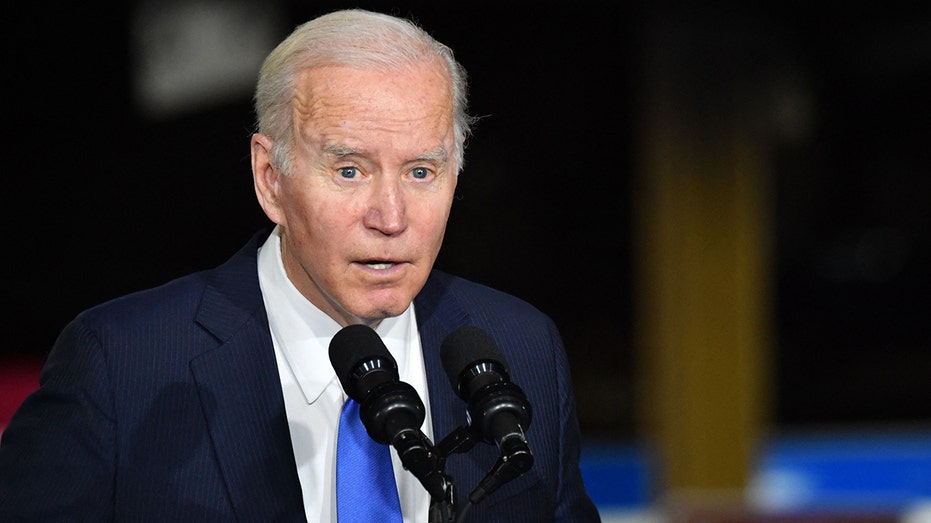
US President Joe Biden speaks about the Infrastructure Law while visiting the Kansas City Area Transportation Authority in Missouri on December 8, 2021. (Photo by Nicholas Kamm / AFP) (Photo by NICHOLAS KAMM/AFP via Getty Images) ((Photo by Nicholas Kamm / AFP) (Photo by NICHOLAS KAMM/AFP via Getty Images))
A fight over the mandate nearly derailed efforts to fund the government prior to a key deadline last week.
GET FOX BUSINESS ON THE GO BY CLICKING HERE
The Senate approved a continuing resolution to fund the government with just hours to spare but rejected a Republican-backed amendment to strip funding from Occupational Safety and Health Administration, the entity responsible for implementing the mandate.
As long as inventory shortages persist, dealers can’t rely on a steady stream of new vehicle customers in the service department. This means that focusing on service retention is more critical than ever. Providing customers with new ways to build trust and long-term loyalty through online digital tools and pricing transparency can mean the difference in keeping or losing your customer.
Online service scheduling. If you are still making customers call you and put them on hold, they are likely defecting to another service provider. Use a tool that allows customers to keep track of their vehicle maintenance and history, and to choose which services they want for their vehicle. Making prices available online and using a scheduling system that automatically sends out confirmation details and reminder texts provides the customer with a sense of security knowing their dealer has their best interest in hand.
Mobile write-up process. This process allows service advisors to greet customers in the service lane. The advisor can conduct a thorough walk around inspection of their vehicle, provide recommended maintenance through menu selling and deliver on the spot pricing for recommended repairs. You will also be able to capture the customer’s signatures for approval of any needed maintenance or repairs on the service drive.
Connected technology. Eliminate service technician downtime and improve the overall repair process with a system that allows them to digitally punch in and out, perform digital multipoint inspections, send images of needed repairs to customers, and communicate needed parts and repairs to parts counter people and service advisors.
Online payment options should be at your customers fingertips at any time day or night If your service department closes at 6:00 p.m., don’t make your customers wait another day to pick up their vehicle. Provide remote payment options so your customers can pick up their vehicles at their convenience, not yours.
When implementing new processes and technology, don’t skimp on the training. Train your staff and hold them accountable for using the new technologies. Use reporting tools in your DMS and CRM to track and monitor progress.
The more you can digitize your processes, the faster you will be able to scale and grow your dealership.
Find lasting success with Solera | DealerSocket
Connecting your systems is a win for your teams, customers, and business objectives. With integration capabilities, you can:
• Eliminate double entry • Reduce data entry errors • Input a faster, smoother sales process • Save time correcting inaccuracies • Improve employee productivity • Increase customer satisfaction
Save your dealership ample time, ensure accuracy, and reduce manual errors throughout your dealership with Solera | DealerSocket. Visit dealersocket.com or give us a call at 855-928-2151 to get started today!
Share on PinterestWind speed may play a role in outdoor transmission rates. crisserbug/Getty Images
A recent study investigated the role of wind speed in SARS-CoV-2 transmission in outdoor spaces.
Reduced wind speed had associations with transmission rates during warmer spells.
However, above a certain temperature, wind speed made little difference to transmission rates, possibly because people were more likely to socialize indoors.
New research, which appears in BMC Infectious Diseases, suggests certain weather conditions may pose less risk of transmission than others.
To investigate, researchers analyzed 96,057 cases of SARS-CoV-2 infection in Suffolk County, NY, that occurred between March and December in 2020.
Combining data from the Suffolk County Department of Health with daily weather reports by the National Oceanic and Atmospheric Administration, the authors “[h]ypothesized that slower outdoor wind speed is associated with increased risk of transmission when individuals socialize outside.”
Higher outdoor wind speeds on warmer days were associated with up to a 45{cfdf3f5372635aeb15fd3e2aecc7cb5d7150695e02bd72e0a44f1581164ad809} lower risk of SARS-CoV-2 transmission in social gatherings.
Wind speeds of less than 5.5 miles per hour (mph) seemed to be associated with greater transmission than faster speeds. As SARS-CoV-2 is airborne, scientists believe that higher wind speeds disperse viral particles and reduce infection risk.
Since cooler outdoor temperatures are less conducive to social gatherings, they may have indirectly increased infection rates — people may have been more inclined to move inside.
Evidence now shows that transmission rates are highest indoors, which means airflow and quality will also help mitigate the risk of infection.
Infection rates were highest in March through May but significantly dropped when officials implemented stay-at-home orders.
New infections in Suffolk County were very low throughout the summer months of 2020 but started to rise again after October.
While low wind speeds under 5 mph may reduce the protective effect of warmer temperatures, the study authors noted that this does not prove that higher wind speeds protected any individuals in outdoor social gatherings from infection.
Medical News Today spoke with Sean Clouston, Ph.D., associate professor in the Department of Family, Population, and Preventive Medicine at the Renaissance School of Medicine at Stony Brook University, NY.
He pointed out that while temperature and wind speed appear to play a role, they are not the only factors, and protection against COVID-19 involves personal responsibility. This includes mask wearing and vaccinations.
“It is generally safer to be outside than inside,” he told MNT. “The danger with outside gatherings, of course, is that if the weather turns, people often shelter indoors. I think the science on mask wearing is improving a lot, and it looks like mask usage drastically cuts transmission even indoors.”
“The problem is that when people relax gathering limits,” he continued, “they often do not provide guidelines and many people do not adhere to them. In general, I would agree that it’s okay to have gatherings outdoors where masks were required for any indoor spaces, including bathrooms.”
“But mask wearing has to be done appropriately, and vaccinations should be required. Also, any larger gatherings should probably not include dining unless adequate measures are taken to ensure that it’s done safely.”
Study co-author Jaymie R. Meliker, Ph.D., a professor in the Program in Public Health and Faculty Member in Consortium for Inter-Disciplinary Environmental Research at Stony Brook University, echoed his colleague.
He reiterated that transmission is multifactorial and that proactive efforts are necessary to curtail the spread of the virus. He told MNT:
“We know that many cases of COVID-19 transmission remain unexplained. The analysis presented in this article suggests that some of those cases may be transmitted in outdoor settings when wind speed is low — in other words, when air is more stagnant.”
“Transmission is higher outdoors when wind speed is low and people are spending time outdoors,” Prof. Meliker continued, “When temperatures get too cold or too hot, people are spending less time outdoors, and we no longer see an association between low wind speed and COVID-19 incidence.”
“These data are consistent with current guidance for reducing transmission: adopt a multifaceted approach that includes vaccinations, mask wearing, and increased air turnover (indoors or outdoors),” he concluded.
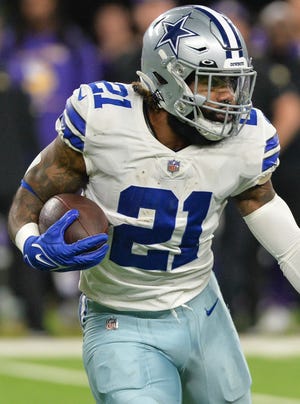
FRISCO, Texas — To Ezekiel Elliott, the diagnosis is not important.
Yes, the Dallas Cowboys running back injured his knee more than two months ago in an Oct. 3 win over the Carolina Panthers. Yes, he has battled stiffness ever since that limits his effectiveness, including his explosive ability. His recovery is gradual, Elliott said Wednesday after practice, adding that he is “getting some strength back.”
The Cowboys running back has declined, and continues to decline, to reveal the nature of his injury. He says a report that he suffered a bone bruise is not accurate. Regardless of medical nomenclature, Elliott sees one outcome as certain.
“All I can tell you is I’m going to be out there,” Elliott said. “You’re going to have to drag me off the field.”
It’s an atypical injury approach for a 2021 Cowboys team that has otherwise handled injuries cautiously, holding out players including quarterback Dak Prescott (calf) and Randy Gregory (calf) for what some in the building consider extra time in hopes of maximizing team health and availability for what Dallas (8-4) hopes is a deep playoff run.
Elliott, meanwhile, has yet to miss a game this season even as his — and the Cowboys’ run game — productivity has declined sharply since their September and early October success.
How drastically has Elliott’s knee limited him? And what else contributes to the Cowboys’ decreased run efficiency? USA TODAY Sports examined.
During the Cowboys’ first six games this season, Elliott averaged 86.8 rushing yards per game and 5.11 yards per attempt. He scored five rushing touchdowns. In tandem with fellow running back Tony Pollard, the Cowboys carried a punishing ground attack averaging 164.3 rushing yards per game, second best in the league.
The Cowboys mounted leads that further boosted their ability to run, leaning heavily on their run game with the second most attempts in the league. But production didn’t only stem from an investment of snaps: The Cowboys were also efficient, averaging 5.08 yards per carry (fourth best) and scoring 10 rushing touchdowns (sixth).
After their Week 7 bye, that run game plummeted.
Since their Halloween visit to Minnesota, the Cowboys have fell to 4.1 yards per carry (and far fewer if you take out the rare 58- and 33-yard runs featured vs. the Saints), which ranks 22nd during that stretch. Their 93.7 rushing yards ranks 21st and their early down struggles have yielded third-and-longs the Cowboys too often fail to convert. In Thursday night’s win at New Orleans, the Cowboys defense bailed its offense out on a night where they converted just 2-of-13 on third-down attempts.
“We got to do a better job of finding some more consistency,” offensive coordinator Kellen Moore said. “We’re not going to run the triple-option all of a sudden or anything like that, but you find what kind of little tweaks and adjustments we can make. They may be subtle, but I think they can be very effective if we find the right pieces and make our adjustments necessary to progress.”
Elliott has averaged fewer than half as many yards per game as he did during his first six games (down from 86.8 to 40.6) and says coaches are limiting his touches as he manages the knee injury. His pass protection has still been crucial to Prescott’s success, but his rushing efficiency has been cut a third, his average yards per carry now 3.44. Cowboys head coach Mike McCarthy said Friday that Elliott is “fighting to get back in there every time” but “I am concerned.”
“He’s a warrior,” McCarthy said. “Zeke’s running style is ferocious. He gives a pounding and he takes some hits. We need to evaluate that and this week we’ll see what the preparation looks like for him.”
On Wednesday, preparation for Elliott meant full practice participation, according to the Cowboys’ official pregame injury report. Elliott engaged in an extended “prehab” warmup, as he and fellow sixth-year player Prescott often do, warming up his knee on a stationary bike before joining fundamental drills.
Elliott said the Cowboys’ extended break — with 10 days between their Thursday night game in New Orleans and a Sunday visit to Washington, McCarthy gave the players a full three-day weekend — enabled him to rest and visit physical therapy. Friday MRI results revealing improvement and a prognosis of a more full recovery in three to four weeks, Elliott said.
“Hopefully perfect timing, close to as good as it can be when playoffs are rolling around,” Elliott said. “Just got to do everything we can to make sure we’re continuing to progress that way.
“Playing on it is not making it worse.”
The bigger picture
No doubt, Elliott’s health is a major factor to the Cowboys’ run-games woes. But the lack of offensive rhythm goes beyond him. Time clocks in the passing game, dissonance in offensive line blocking patterns and receiver injuries (for a game and half, the Cowboys were simultaneously down both Amari Cooper and CeeDee Lamb) also contribute. The Cowboys must rediscover the offense that earlier this fall they described as “pick your poison” and “aggressively take what the defense gives us.”
And to some fans’ dismay, increasing Pollard’s touches further is not a sole answer to restoring run stability. There is the difference in their running styles, the 228-pound Elliott is more primed to wear down the interior of a line grinding for runs while the 209-pound Pollard leverages his cutting ability and balance to elude tacklers as he did on a 58-yard rushing touchdown around the perimeter in the fourth quarter vs. the Saints. There are also health implications leading into a division game at Washington: Elliott fully participated in practice and said his injury has not needed and will not need surgery. Pollard was relegated to rehabilitation Wednesday while battling a foot injury. The Cowboys signed an extra running back to the practice squad in case Pollard’s injury lingers.
Immediate availability doesn’t erase the credit Pollard deserves for his career-best 259 rushing yards and 861 total yards from scrimmage. Dallas’ 2019 fourth-round draft selection’s efficiency is elite: Only two running backs with 50-plus carries have averaged more than his 5.6 rushing yards per attempt. At 5.6, Pollard’s mark ties Colts running back Jonathan Taylor, a legitimate MVP candidate.
“His vertical cut run style has been extremely productive, both on offense and in special teams,” McCarthy said of Pollard, who ripped off a 100-yard kick return touchdown on Thanksgiving. “He’s playing with unbelievable confidence. He’s obviously very comfortable schematically.”
So the Cowboys will continue to play Elliott and Pollard as healthy, optimistic that the return of their receiving trio in Cooper, Lamb and Michael Gallup will open up the run game. The running backs are eager to make their mark as the Cowboys face a key stretch to securing their division title and chasing deep postseason hopes. Teammates are optimistic the run game will right its course.
Elliott is “playing through some problems, but I mean that doesn’t really stop him,” Lamb said. “He’s still out there punishing guys on third down, getting the first and just playing bruiser football.”
That’s Elliott’s goal, beginning this week against Washington’s third-ranked (91.3 yards per game) run defense.
“It’s football, you’re never going to be 100{cfdf3f5372635aeb15fd3e2aecc7cb5d7150695e02bd72e0a44f1581164ad809},” he said. “Late in the season, we’re getting a little nicked up but you just got to fight through, push through and figure it out.
“It’s a tough game. I take a lot of pride in being out there.”
Follow USA TODAY Sports’ Jori Epstein on Twitter @JoriEpstein.
Samples from people who had two doses of the Covid-19 vaccine saw, on average, a more than 25-fold reduction in neutralization ability against the Omicron variant than the earlier virus, “indicating that two doses of BNT162b2 may not be sufficient to protect against infection with the Omicron variant,” the companies said.
The companies said two doses may still provide protection against severe disease.
“Although two doses of the vaccine may still offer protection against severe disease caused by the Omicron strain, it’s clear from these preliminary data that protection is improved with a third dose of our vaccine,” Pfizer Chairman and CEO Albert Bourla said in a statement. “Ensuring as many people as possible are fully vaccinated with the first two dose series and a booster remains the best course of action to prevent the spread of COVID-19.”
The initial lab studies used serum from blood from individuals who received two or three doses of the Pfizer/BioNTech Covid-19 vaccine. The sera was collected from subjects three weeks after their second dose, or one month after a third dose. The data released Wednesday has not been peer-reviewed or published.
“We believe that with the two doses, you still have relevant protection for severe disease, but clearly the drop is antibodies is substantial,” Dr. Mikael Dolsten, chief scientific officer at Pfizer, told CNN Chief Medical Correspondent Dr. Sanjay Gupta on Wednesday. “However, the good news this morning is that our data show convincingly when you get your boost — the third boost — the antibody levels rise 25 fold and are now similar to the originally two dose boost that protected well against ancestral strains as well as Delta.
“Go and get your third boost and you have a robust, quite impressive antibody response as well as a strengthening of the other arm of the immune system, the T cells,” Dolsten said. “That’s really the takeaway … two doses is on the weak end against this new variant, T cells may help you to be protected against severe disease, hospitalization — but it’s really time to get the third boost.”
President Joe Biden called the preliminary results “very, very encouraging.”
“I have some good news this morning that Pfizer’s lab report came back saying that the expectation is that the existing vaccines protect against Omicron but if you get the booster you’re really in good shape. So that’s very encouraging news,” Biden told reporters on the South Lawn Wednesday.
“That’s the lab report. There’s more studies going on but that’s very, very encouraging.”
Another study, released Tuesday by researchers in South Africa, showed the Omicron coronavirus variant partly escapes the protection offered by the Pfizer vaccine. The preprint study showed people who have been previously infected and then vaccinated are likely to be well protected, and Alex Sigal of the Africa Health Research Institute in Durban, who led the study team, told CNN that boosters are also likely to protect people.
“My impression is if you get a booster you are protected, especially against severe disease,” Sigal said.
Since reports of the Omicron variant emerged in late November, US health officials have urged people to get vaccinated and boosted. Last week, the US Centers for Disease Control and Prevention began recommending all adults get a Covid-19 vaccine booster.
Adults who have had the Pfizer or Moderna Covid-19 vaccines are eligible to get a booster six months after their second shot. Those who got the Johnson & Johnson one-shot vaccine are eligible for a booster of any authorized vaccine two months after their first dose.
About a quarter of adults who are vaccinated against Covid-19 have also received a booster dose, according to CDC data. More than 144 million adults should get a booster, based on CDC guidance, but only about 48 million adults have received one.
Pfizer and BioNTech also said Wednesday they are continuing to develop a variant-specific vaccine for Omicron and it will be available by March, if it’s needed.
“I’m not sure that we’ll need it because it’s one very likely scenario that the current booster will be enough to maintain protection, but if we need one, I’m sure we can make one and the good news is that we will have it by March,” Bourla said on NBC’s “Today” show on Wednesday.
CNN’s Deidre McPhillips, Naomi Thomas and Amanda Sealy contributed to this report.