What’s the ideal amount of clothing in a sustainable wardrobe?

What’s the ideal amount of clothing in a sustainable wardrobe?

Our planet is changing. So is our journalism. This weekly newsletter is part of a CBC News initiative entitled “Our Changing Planet” to show and explain the effects of climate change. Keep up with the latest news on our Climate and Environment page.

Sign up here to get this newsletter in your inbox every Thursday.


This week:

  • A sustainable wardrobe contains this much clothing, report says
  • Speedy construction with mass timber
  • Why there’s been a drought of hydropower in Alberta

Why this group thinks you can — and should — only have 85 items of clothing

(Paula Duhatschek/CBC)

How many pieces of clothing do you think you have in your wardrobe? In today’s world of fast fashion, easy online shopping and ever-changing trends, chances are it’s way too many.

Now, a new report from a Berlin sustainability think-tank, the Hot or Cool Institute, lays out how many items of clothing the average person in a four-season G20 country such as ours really needs: 85 (keep in mind that includes coats and shoes, but not underwear and accessories). 

Going by the institute’s math, that works out to about 23 outfits total, which they say can include one to four pieces of clothing.

The report notes we need to drastically reduce our clothing consumption if we’re going to meet the 1.5 C target of the Paris Agreement.

“Current trends in fashion consumption, in particular fast fashion, cannot be maintained if we aim to achieve a fair and just transition to climate neutrality,” the authors say.

That number 85 falls within what the institute calls a “fair consumption space,” defined as “a space where consumption levels stay below environmentally unsustainable levels yet above sufficiency levels that allow individuals to fulfil their basic needs.” 

It assumes the average person needs workwear, home wear, sports and activewear, festive occasion outfits and outdoor clothing, and all 85 items are actually in use. It also requires a reduced carbon footprint — such as avoiding excessive laundry and impulse shopping, extending the life of your garments through mending and buying second-hand or swapping.

When you consider that the average person in North America purchases 37 kilograms of clothing per year, according to Katherine White, a professor of marketing and behavioural science at the University of British Columbia, it’s safe to say many of our wardrobes far exceed the recommendations.

“The average North American buys way too much clothing,” White told CBC News.

“Part of this is driven by the fact that we are constantly bombarded with advertising messages to buy more stuff. The system is set up to remind, reinforce and reward us for making repeated consumption choices with short-term hedonic payoffs.”

Advocates have been saying this needs to change for years. A recent study found that Ontarians generate 500 million kilograms of textile waste a year — and that 86 per cent of those materials have reuse or recycling potential.

The textile and clothing industry is also responsible for two to eight per cent of the world’s greenhouse gas emissions, according to the United Nations Alliance for Sustainable Fashion,  and textiles account for about nine per cent of annual microplastic losses to the oceans. 

So, with that in mind, how can you cut down on your own clothing consumption?

First, think of it in terms of pieces, not outfits, said Erin Polowy, the founder and editor of Canadian clothing sustainability website My Green Closet. With careful planning, you can have a diverse and fashionable wardrobe with very few pieces in it, she said — even fewer than the 85 suggested in the report.

“I can make 40 or 50 outfits from my roughly 33-item wardrobe that I do every season,” she told CBC News.

“There’s a lot of creativity that comes with constraint.”

In a recent YouTube video, for instance, Polowy shows viewers her winter capsule wardrobe — a curated collection of a limited amount of clothing that she mixes and matches — which contains just 28 items to get her through an Edmonton winter.

Pay careful attention to what you actually wear day-to-day, Polowy suggests, and build a wardrobe around a few quality, staple pieces that you love. When you are looking to add new pieces, shop second-hand, try to avoid impulse purchases and choose more sustainable clothing brands.

Natalie Stechyson

Reader feedback

Helen Prolas:

“Glad to see that someone is finally talking about the environmental cost of this war. Thank you for your wonderful reporting!”

Onni Milne:

“I send this message to respond to your article about Ukraine wanting to charge Russia for environmental damages as a result of their war destruction in Ukraine. There is a growing movement to create a new international ecocide law to be administered by the International Criminal Court in The Hague. My understanding is that ecocide is being discussed at high levels at the United Nations [General] Assembly. Many thought genocide would never be codified as an international crime. It is now. Ecocide is next on the list to ensure that perpetrators are held to account for the destruction they create.”

Old issues of What on Earth? are right here

CBC News has a dedicated climate page, which can be found here.

Also, check out our radio show and podcast. Solar radiation modification sounds like science fiction: speculative technology to reflect sunlight and cool the Earth. This week, find out why the United Nations says the world needs more research and regulations before it becomes a reality.  What On Earth airs on Sundays at 11 a.m. ET, 11:30 a.m. in Newfoundland and Labrador. Subscribe on your favourite podcast app or hear it on demand at CBC Listen.


The Big Picture: Speedy construction with mass timber

We’ve written before about the trend of building multi-storey buildings with mass timber. The wood stores carbon in the building and reduces the need for carbon-intensive steel and concrete. But another benefit touted by proponents is how fast you can build with mass timber – something many of them have demonstrated with time-lapse videos like this one. This shows part of the construction of YW Kitchener-Waterloo’s 41-unit supportive housing building for women. It was fully assembled in just 20 days, and residents were able move in last spring. You can learn more about the building and its construction in this video from Element5, the Ontario-based company that produced the prefabricated mass timber.

Emily Chung

An animated GIF shows a four-storey mass timber building being constructed.
(Element5 Limited Partnership/CBC)

Hot and bothered: Provocative ideas from around the web

Hydro used to generate half of Alberta’s power. Why is there so little now?

A dam in Kananaskis Alta. runs with the Rocky Mountains in the background.
The Kananaskis Hydro Facility was TransAlta’s second power plant built in 1913. (TransAlta)

More than half of Canada’s electricity is generated from hydro sources, with 632.2 terawatt hours produced as of 2019. That makes it the fourth-largest installed capacity of hydro power in the world. 

But in Alberta, it’s a different story.

Currently, hydro power contributes between three and five per cent of Alberta’s generation capacity, while fossil fuels make up about 89 per cent.

So why is it that a province so rich in mountains and rivers has so little hydro power?

Hydro power didn’t always make up such a small sliver of Alberta’s electricity generation. Hydro installations began in the early 20th century as the province’s population exploded. 

Grant Berg looks after engineering for hydro for TransAlta, Alberta’s largest producer of hydro power, with 17 facilities across the province.

“Our first plant was Horseshoe, which started in 1911 that we formed as Calgary Power,” he said. 

“It was really in response to the city of Calgary growing and having some power needs.”

By the 1950s, around half of the province’s installed capacity was hydro power.

“Definitely Calgary power was all hydro until the 1950s,” said Berg. 

Despite the current low numbers in hydroelectricity, Alberta does have potential. 

According to a 2010 study, there are approximately 42,000 gigawatt hours per year of remaining developable hydroelectric energy potential at identified sites. 

An average home in Alberta uses around 7,200 kilowatt hours of electricity per year, meaning that the hydro potential could power 5.8 million homes annually. 

“This volume of energy could be sufficient to serve a significant amount of Alberta’s load and therefore play a meaningful role in the decarbonization of the province’s electric system,” the Alberta Electric System Operator said in its 2022 Pathways to Net-Zero Emissions report.

Much of that potential lies in northern Alberta, in the Athabasca, Peace and Slave river basins.

The AESO report says that despite the large resource potential, Alberta’s energy-only market framework has attracted limited investment in hydroelectric generation. 

So why does Alberta leave out such a large resource potential on the path to net zero?

The government of Alberta responded to that question in a statement. 

“Hydro facilities, particularly large scale ones involving dams, are associated with high costs and logistical demands,” said the Ministry of Affordability and Utilities. 

“Downstream water rights for other uses, such as irrigation, further complicate the development of hydro projects.”

The ministry went on to say that wind and solar projects have increased far more rapidly because they can be developed at relatively lower cost and shorter timelines, and with fewer logistical demands.

Braden said hydro power still has a part to play in Alberta, even with its smaller contributions to the future grid. 

“It’s one of those things that, you know, the wind doesn’t blow or the sun doesn’t shine, this is here. The way we manage it, we can really support that supply and demand,” he said.

Christy Climenhaga

Stay in touch!

Are there issues you’d like us to cover? Questions you want answered? Do you just want to share a kind word? We’d love to hear from you. Email us at whatonearth@cbc.ca.

Sign up here to get What on Earth? in your inbox every Thursday.

Guest editors: Emily Chung and Janet Davison | Logo design: Sködt McNalty

Fashion expert reflects on how Black designers, models and musicians have influenced the way the world sees and wears clothing – VCU News

Fashion expert reflects on how Black designers, models and musicians have influenced the way the world sees and wears clothing – VCU News

The Black neighborhood has experienced a constant and enduring influence on the style sector, but even though some tendencies have been attributed to Black designers, often the origins are left mostly uncredited. Hoop earrings, lettuce hems, acrylic nails and flapper dresses are only some of the numerous and sustained contributions that Black communities have produced to vogue.

All through Black Record Month, Holly Alford, director of inclusion and equity for the Virginia Commonwealth University University of the Arts, shared her insights on the background of Black vogue in the United States and how that impact can even now be observed right now. Alford has authored content articles on Black culture’s affect on style and is the creator of the seventh edition of “Who’s Who in Trend.” She has taught in the Section of Fashion Layout and Merchandising given that 1999 and serves as senior director of design and style in the School of the Arts.

A record of influence

Alford stated the Black community’s influence on trend in the U.S. can be traced as far back as slavery. When reflecting on the compelled labor that enslaved persons did, a lot of consider of cotton and other crops, but fewer often do they look at the get the job done enslaved individuals did weaving materials and the taking care of the dyeing processes these types of as the use of indigo, which have been big markets in Virginia, she mentioned.

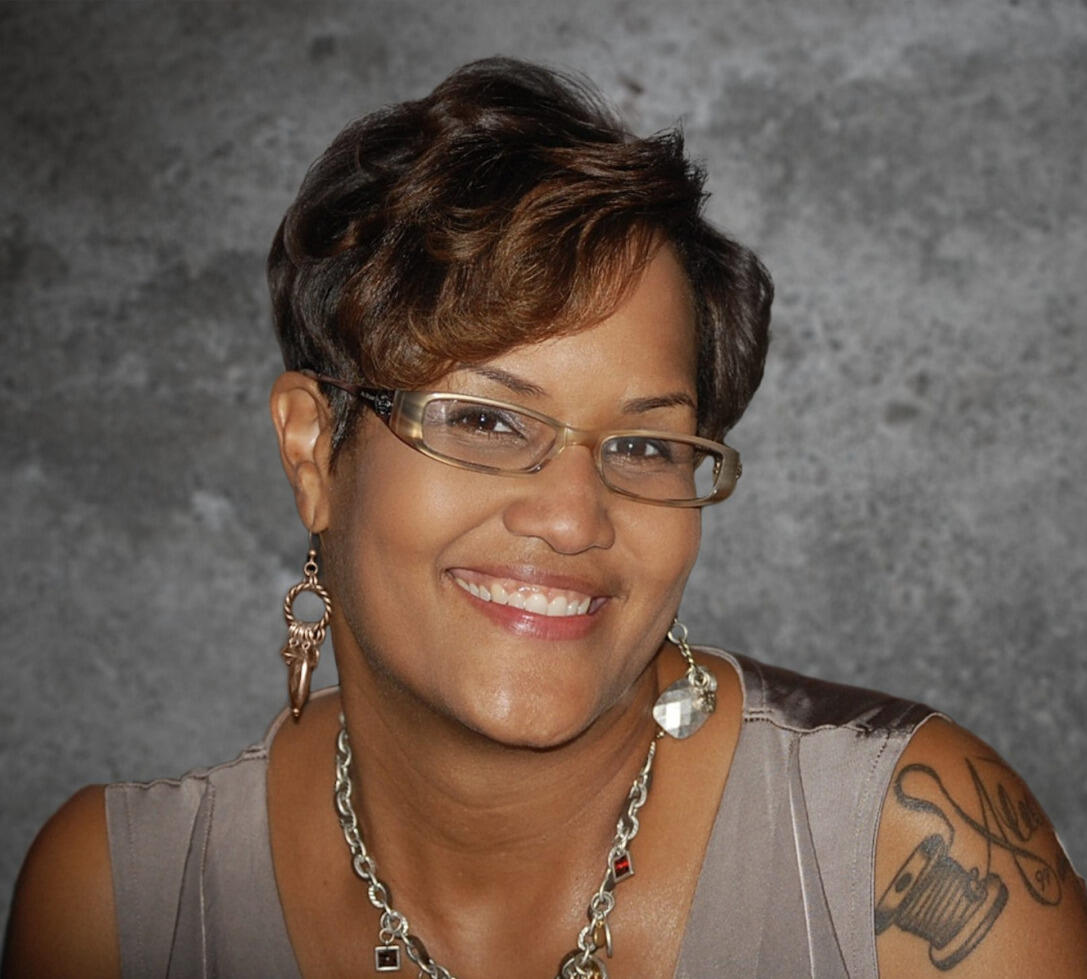
A woman wearing glasses, earrings and a necklace smiling
Holly Alford, director of inclusion and equity and senior director of layout in the VCU University of the Arts. (University of the Arts)

“If I am from Africa, I’m heading to weave and make quilts from my lifestyle,” Alford claimed. “And that has a massive impact on the textile industry in the United States.”

More generally understood is the common outcome of the Harlem Renaissance on fashion in the 1920s, according to Alford. She mentioned that Vogue magazine was between the critical tastemakers using their cues from Black fashion trends at the time. Alford explained one Vogue editor of the period reported all the major designers were heading to Harlem to knock off the things they uncovered at the fashion displays held in the streets.

Flapper dresses and zoot suits are two of the most notable and influential clothing to originate in the Black community all through the 1920s. Alford’s analysis publications include things like an write-up, “The Zoot Match: Its Heritage and Affect,” which appeared in Manner Idea. She claimed the zoot fit was a prime case in point of “how the black group also utilizes garments as a way of creating statements and a way to be noticed.”

“Because outfits does make statements,” she claimed.

Alford stated lots of Black designers from the 1920s into the 1960s are now identified these days for the do the job they did and its impression – nevertheless that recognition typically eluded them at the time. For instance, Alford pointed to Zelda Barbour Wynn Valdes, who went mostly uncredited as the designer who designed the Playboy bunny outfit, amongst other patterns.

However, she claimed Black designers, such as Ann Lowe, who developed Jackie Kennedy’s wedding costume, commenced to get a small extra recognition commencing in the 1960s. Lowe’s achievements fell in a lengthy line of designers that dated back again to Elizabeth Keckley, a perfectly-recognized 19th-century designer who developed Mary Todd Lincoln’s dresses.  

The 1960s also introduced the social movement of the Civil Legal rights Period, such as the emergence of the Black Panthers. Alford stated the Black Panthers affected trend with all-black and all-leather outfits, the dashiki and afros. This glance not only motivated Black vogue, but higher fashion as effectively, she explained.

“As Black is attractive will become really well known, it transcends into trend and into how people today want to dress and how folks want to glance,” Alford reported. “We really see that staying evident, particularly in the late ‘60s and the ‘70s.” 

“I will by no means ignore viewing ‘The Brady Bunch’ one particular time and viewing Mike Brady with an afro,” she stated. “I was like, ‘This is funny.’”  

The Black community’s affect on luxury vogue

Alford said the Black local community started to make its mark on the luxurious current market commencing in the ‘60’s and ‘70’s.

A person of the biggest influences in style for people of colour was Ebony Magazine and The Ebony Trend Truthful Display, Alford said. The magazine and fashion display performed a big role in how the Black local community found out about luxury manner and helped to inspire Black folks to embrace luxury styles, she stated.

Whilst the journal was geared toward a Black audience, it showcased several non-Black designers this sort of as Yves Saint Laurent and Emilio Pucci. The journal, also, produced designs these as hoop earrings a manner assertion. Quite a few of the Black types who were on the go over of magazines these kinds of as Ebony and Jet and highlighted in the style reveals would design for outstanding designers these as Yves Saint Laurent and grow in fame to a wider audience.

Alford mentioned 1 memorable moment that put Black styles on the most important phase was an occasion identified as the Battle of Versailles, which took spot in 1973. American and French designers competed in opposition to each and every other at the event, which featured main designers such as Yves Saint Laurent, Anne Klein, Monthly bill Blass and Black designer Stephen Burrows.

Lots of of the designers picked versions who danced at Studio 54 to design at the celebration, and Alford mentioned “many of them ended up Black versions.”

The event bundled extravagant sets and singing but no catwalk. At the time, designs would stand and pose in one location through fashion displays. When the American designers arrived, they realized they experienced designed the measurements for the sets in inches, not centimeters. Not figuring out what to do, they resolved to let the women wander to clearly show off the natural beauty of the clothes in movement. 1 of the versions, Bethann Hardison, reported the group liked it.

“She claimed the crowd went mad. When they wore Stephen Burrows knit outfits, the fabric moved alongside the entire body, truly showcasing the dresses,” Alford explained. “Pat Cleveland [another of the American models there] mentioned, ‘We did the initially vogue at the leading of the stage.’”

The ladies were being ultimately identified and honored for their contributions by the Council of Manner Designers of America. However, even nevertheless it was Black women who walked the very first runway and created the framework for fashionable displays, the style sector continue to excluded girls of colour.

“And this is why for decades, you have Bethann Hardison and Naomi Campbell complaining about women of all ages of color not remaining on the runway,” Alford stated. “How dare you not place any individual of colour on the runway when we started the runway in the initial spot?”

A person Black designer who transformed the facial area of luxury vogue forever was Dapper Dan. Alford said Dapper Dan is cited with utilizing monogram print excessively, also regarded as logomania. This is where an item has the brand of a brand all around it.

A portrait of a man wearing large sunglasses, a cravat, and a dress shirt.
Dapper Dan through an job interview in December 2019. (Wikipedia)

She explained in the 1980s and ‘90s, Dapper Dan would position luxurious logos or other brand name symbols on fabric. He created a “sensation,” Alford said, and the design and style turned widely preferred with rappers.

Dapper Dan did not have the authorization of the manufacturers he employed in the layouts, and he was sooner or later raided in the late 1990s for using Louis Vuitton and Gucci logos without the need of their authorization. The person who led the raid of his Harlem studio was the legal professional symbolizing New York, Sonia Sotomayor, now a Supreme Court justice, Alford mentioned.

Alford stated she remembers looking at that Sotommayor looked at Dapper Dan’s clothing and claimed, “You will need to be uptown since this stuff is excellent.’”

In 2017, Gucci produced a jacket that appeared equivalent to just one Dapper Dan did in the ‘90’s. Gucci was identified as out on social media for thieving Dapper Dan’s idea, Alford mentioned. Right after being known as out, Gucci at some point attained out to Dapper Dan, who started creating custom made Gucci layouts and now has his own Gucci keep in Harlem. 

Rap and hip hop’s influence

Alford claimed the Black community’s premier impact on modern vogue arrived in the 1990s with the emergence of the hip hop era.

“There’s no ifs, ands or buts about it,” Alford stated.

Just as the punk movement experienced been widely influential commencing in the mid-1970s, these types of as by popularizing Dr. Martens boots, she mentioned, hip hop also had a significantly-reaching influence on trend. Hip hop’s emphasis on dancing led to athletic don and baggy apparel escalating really popular. She claimed coming out of the 1980s no just one desired to use limited pants. It was all over this time Alford stated a lot of little ones, especially in New York, started out buying their pants two and 3 sizes greater than their in good shape.

“It grew to become an incredibly preferred motion which truly just commenced since Black kids ended up like, ‘They’re too restricted. The trousers are far too limited,’” she said.

These larger sized measurements have been straightforward to dance and pop and lock in and eventually led to the popularity of sagging pants. Alford claimed people will frequently say sagging begun in the jail method, but which is not where by the craze originated.

“Many give credit to the godfather of Urban Road use, Karl Kani, who upped the waistline dimensions when building his line,” Alford claimed. “Black males really do not like limited pants. If you purchased a 34, it fit like a 36. This would be a staple in avenue wear brands.”

For the duration of her travels all-around the environment, Alford has witnessed variations of this style selection, which includes observing cases of kids sewing their boxers to their pants so they really do not sag down also much. Originally Alford reported the hip hop craze was to dress in significant T-shirts, which hid the sagging. Even so, sooner or later persons preferred to exhibit off their colourful boxers.

“What finishes up happening is much more and more of the neighborhood receives to a issue in which it can be like, ‘I want individuals to know I’m sagging due to the fact I want people today to know what I’m wearing’ because underwear turns into a manner statement,” she said.

It became crucial to use trendy underwear. She claimed males would often coordinate the colour of their boxers with their outfits and when the boxer brief was invented it was a sport changer.

In the ‘90s, Calvin Klein was on the verge of personal bankruptcy, Alford said. He would be the first to showcase what is now the boxer transient with his identify on the waistline band. Klein put rapper Marky Mark – Mark Wahlberg – with supermodel Kate Moss in an advertisement with him sagging his trousers with the brand names title on the waist band. This triggered lots of models to have their names placed on their underwear including luxury models.

By the 2000’s, the development could be witnessed on the luxury runways. For example, style designer Thom Browne introduced the fad to the runway with a selection of sagging highwater trousers that types wore down the runway.

“Then you commence observing what comes about when hip hop manner starts off to impact mainstream,” Alford said. “It was a fringe in fashion. It is no for a longer period a fringe, specially in menswear.”

She attributes just one of the factors that it is no more time fringe to the impact of Virgil Abloh, Matthew Williams and Jerry Lorenzo. All a few went on to get started their possess models or work for important style residences and all 3 at one particular issue labored for Kanye West.

“Virgil Abloh just passed, but he was the artistic director for Louis Vuitton Guys. He introduced that entire hip hop glimpse to Louis Vuitton,” she mentioned. “Matthew Williams is now the imaginative director for Givenchy. Jerry Lorenzo developed the line Dread of God, which is an extremely well-known menswear line proper now that pays homage to Black baseball gamers.”

Alford reported hip hop manner designers who moved into luxury menswear have altered the experience of what menswear appears to be like. Nowadays, this can be seen in the attractiveness of additional peaceful healthy pants and hoodie sporting activities coat combos.

Appropriation vs . appreciation

In new a long time, the debate has sharpened around the variance in between appreciation and appropriation as it relates to Black culture and trend.

Alford traveled the globe widely from about 2007 to 2015. For the duration of that time, there was a resurgence of hip hop style in Japan, with gentlemen putting on afros and picks in their hair, she claimed. In 2007, Nissan ran an advert with Japanese people in a barber shop, some with dreads and one particular particular person obtaining their hair braided. The ad mentioned, “The Black Working experience is Everywhere you go.”

“Black Us residents went off. That’s not the Black experience, proper? It is Black appropriation. It truly is not the expertise,” Alford reported. “You have no clue what it is to be Black.”

She acquired funding to go to Japan to discover developments there associated to Black manner and tradition, such as investigating wherever individuals had been buying, how they were having their hair braided, and how they were even putting on make-up to darken their face. She went in with the problem, “Is it cosplay or is it appropriation?”

In Takashima Dori, a person of the fashion centers of Tokyo, she observed suppliers for each substyle from Exquisite Lolita Vogue to hip hop. In one of the back locations of Takashima Dori was a retail outlet referred to as “Black Annie.” The shop marketed objects that experienced to do with Black culture. They experienced Michael Jackson T-shirts, sneakers, Black television paraphernalia and African mementos.

When Alford asked why the store was in the again of the street, she was explained to it was since Black culture was not acknowledged in quite a few Japanese family members, so young children sneak there.

“Their mindset was like, ‘This is what I love. I adore hip hop lifestyle. I adore Black culture and Black fashion, so why not be a section of the lifestyle?,’” Alford stated.

She stated there is a fantastic line among appropriation and appreciation and seeking to wear black model. For case in point, sporting sagging pants. “I’ve observed that even golfers sag their trousers even though actively playing,” Alford reported. She stated the key issue is though men and women really like the models and developments established by the Black group, there is no recognition of the culture’s pain and struggles or that it is Black style they are adopting.

“Another issue is when some thing you dress in is popular, but you’re not recognizing where by historically it comes from and how it may possibly or may perhaps not be culturally proper for one to put on,” Alford explained.

Though in Japan, a person approached her and said, “I enjoy your Black fashion.” Alford said her partner was taken aback by the comment, and it took her a instant to digest it as effectively.

“I experienced to assume about it and I stated, ‘You know, at least they acknowledge it truly is Black fashion,’” Alford explained. “How typically in the United States do they go, ‘Oh yeah, that will come from the Black neighborhood, and I enjoy putting on Black style.’

“There was a recognition in some international locations of Black fashion, and that folks desired to put on the ‘Black style’ to pay out homage to a cultural way of dressing that they needed to put on and emulate (appreciation),” Alford reported. “However, when you get to the United States and some European nations, persons of coloration uncover them selves screaming this is cultural appropriation, due to the fact you will find no recognition culturally of the place the structure or print comes from or no matter whether or not it is culturally suitable to wear.”