CDC confirms first U.S. case of omicron Covid variant, in California

The CDC said Wednesday it has confirmed the first U.S. case of the new, heavily mutated coronavirus variant called omicron, which was detected in Northern California.

White House chief medical advisor Dr. Anthony Fauci said the patient, who was fully vaccinated, had just returned to the San Francisco area Nov. 22 after traveling in South Africa and tested positive Nov. 29.

“The individual is self-quarantining, and all close contacts have been contacted and … thus far, have tested negative,” he announced at a White House press briefing providing more details of the case. “We feel good that this patient not only had mild symptoms, but actually the symptoms appear to be improving.”

The Centers for Disease Control and Prevention said genomic sequencing was initially conducted at the University of California, San Francisco, and the CDC confirmed the omicron variant.

The Dow Jones Industrial Average swung from a 520-point gain for the day to a loss of more than 461 points after the CDC confirmed the case.

California Gov. Gavin Newsom cautioned residents on Twitter, saying, “There’s no reason to panic — but we should remain vigilant. That means get vaccinated. Get boosted. Wear a mask indoors.”

At a press briefing Wednesday afternoon, Newsom said the patient is between 18 and 49 and had not received a booster shot because they were not six months out from their original vaccination course.

Newsom and local officials in San Francisco said they didn’t anticipate imposing new restrictions on residents in light of omicron.

“There’s more panic than information around this new variant,” Newsom said, adding that everyone needs to be more vigilant but that lockdowns are not under consideration. “I think we can communicate so we can avoid any shutdowns, we can avoid shutting down our schools or businesses. None of us want to see that happen.”

Since South Africa first reported the variant to the World Health Organization a week ago, it’s been found in Canada, the U.K., Israel, Belgium, the Netherlands, Germany, Italy and Hong Kong, among other places. World leaders are on high alert, worried the virus is already widely seeded across the globe.

The World Health Organization said Wednesday that omicron has been reported in at least 23 countries.

Fauci said over the weekend that the variant would inevitably arrive in the U.S. On Sunday, two cases were identified in Ontario, Canada. The variant, initially known as B.1.1.529, was first detected in Botswana and South Africa’s Gauteng province, where Johannesburg is located.

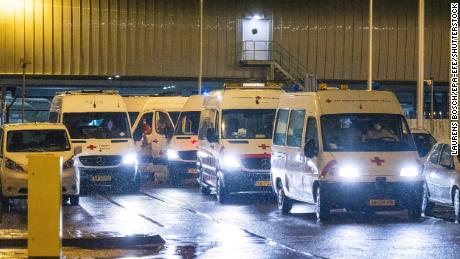
Moderna CEO Stephane Bancel warned Monday that omicron has already spread across the planet. He pointed to flights that arrived in Amsterdam from South Africa on Friday in which 61 of 624 passengers tested positive for Covid. Dutch health authorities said 14 of them are infected with the omicron strain.

Portuguese health authorities said Monday that 13 members and staff of a professional soccer team in Lisbon were infected with the variant after one of its players returned from a trip to South Africa.

“We also believe it is already present in most countries,” Bancel said. “I believe most countries that have direct flights from South Africa in the last seven to 10 days already have cases in their country that they may not be aware of.”

The U.S. imposed a travel ban starting Monday for noncitizens who have traveled in South Africa and seven other nearby nations in the past 14 days. The U.K. and the European Union have implemented similar travel restrictions.

President Joe Biden said Monday he is directing the Food and Drug Administration and the CDC to use the “fastest process available without cutting any corners” to approve potential vaccines that target omicron and get them on the market.

The current Covid vaccines are believed to provide at least some protection from the heavily mutated omicron strain, and booster shots “strengthen that protection significantly,” Biden said in a speech at the White House.

The WHO on Friday classified omicron as a “variant of concern,” meaning it is more contagious, more virulent or more skilled at evading public health measures, vaccines and therapeutics. The variant contains more than 30 mutations to the spike protein that allows the virus to enter the body. The new strain has roughly 50 mutations in total, including 10 alone to the receptor binding domain, the part of the virus that first comes in contact with cells.

Officials have warned that many of these mutations could lead to increased antibody resistance and transmissibility, which could limit the effectiveness of Covid vaccines.

“The molecular profile of the kinds of mutations that you see [in omicron] would suggest that it might be more transmissible and that it might elude some of the protection of vaccines,” Fauci said Wednesday. “But we don’t know that now.”

He said we have to prepare for the possibility that immune protection from vaccines and recovery from Covid may be diminished against omicron, emphasizing the need for boosters.

Dr. Angelique Coetzee, chair of the South African Medical Association, described the symptoms linked to omicron as “extremely mild” so far. However, Bancel warned that the symptoms reported in South Africa may not be a good predictor of the variant’s virulence since less than 5{cfdf3f5372635aeb15fd3e2aecc7cb5d7150695e02bd72e0a44f1581164ad809} of the population is over 60 and there are far fewer comorbidities than in the U.S. and Europe, where people tend to be older and sicker.

“I think today, it’s really impossible to know … I don’t believe that what’s going to happen in the coming week or two in South Africa will be predicting to be full virulence of a virus,” Bancel said.

Drugmakers have responded quickly to the new variant. Pfizer and BioNTech said they are investigating omicron and could adapt their vaccine if needed. Johnson & Johnson said it was already testing its vaccine against the variant. Moderna said it will test three booster candidates against omicron, including a higher dosage of its original Covid booster. The company also said it will develop a booster dose specific to the variant.

Fauci said Americans heading into the holidays should still feel safe celebrating indoors with vaccinated family and friends.

“You can feel safe with not wearing a mask and having a dinner or having a reception,” he said. “But when you are in a public congregate setting in which you do not know the status of the vaccination of the people involved, it is very prudent to wear a mask.”

— CNBC’s Robert Towey and Kevin Breuninger contributed to this report.

Will the Covid Vaccines Stop Omicron? Scientists Are Racing to Find Out.

As nations severed air links from southern Africa amid fears of another global surge of the coronavirus, scientists scrambled on Sunday to gather data on the new Omicron variant, its capabilities and — perhaps most important — how effectively the current vaccines will protect against it.

The early findings are a mixed picture. The variant may be more transmissible and better able to evade the body’s immune responses, both to vaccination and to natural infection, than prior versions of the virus, experts said in interviews.

The vaccines may well continue to ward off severe illness and death, although booster doses may be needed to protect most people. Still, the makers of the two most effective vaccines, Pfizer-BioNTech and Moderna, are preparing to reformulate their shots if necessary.

“We really need to be vigilant about this new variant and preparing for it,” said Jesse Bloom, an evolutionary biologist at the Fred Hutchinson Cancer Research Center in Seattle.

“Probably in a few weeks, we’ll have a better sense of how much this variant is spreading and how necessary it might be to push forward with a variant vaccine,” Dr. Bloom said.

Even as scientists began vigorous scrutiny of the new variant, countries around the world curtailed travel to and from nations in southern Africa, where Omicron was first identified. Despite the restrictions, the virus has been found in a half-dozen European countries, including the United Kingdom, as well as Australia, Israel and Hong Kong.

Already, Omicron accounts for most of the 2,300 new daily cases in the province of Gauteng, South Africa, President Cyril Ramaphosa announced on Sunday. Nationally, new infections have more than tripled in the past week, and test positivity has increased to 9 percent from 2 percent.

Scientists have reacted more quickly to Omicron than to any other variant. In just 36 hours from the first signs of trouble in South Africa on Tuesday, researchers analyzed samples from 100 infected patients, collated the data and alerted the world, said Tulio de Oliveira, a geneticist at the Nelson R. Mandela School of Medicine in Durban.

Within an hour of the first alarm, scientists in South Africa also rushed to test coronavirus vaccines against the new variant. Now, dozens of teams worldwide — including researchers at Pfizer-BioNTech and Moderna — have joined the chase.

They won’t know the results for two weeks, at the earliest. But the mutations that Omicron carries suggest that the vaccines most likely will be less effective, to some unknown degree, than they were against any previous variant.

“Based on lots of work people have done on other variants and other mutations, we can be pretty confident these mutations are going to cause an appreciable drop in antibody neutralization,” Dr. Bloom said, referring to the body’s ability to attack an invading virus.

South African doctors are seeing an increase in reinfections in people who already had a bout of Covid-19, suggesting that the variant can overcome natural immunity, said Dr. Richard Lessells, an infectious diseases physician at the University of KwaZulu-Natal.

Omicron has about 50 mutations, including more than 30 in the spike, a viral protein on its surface that the vaccines train the body to recognize and attack.

Some of these mutations have been seen before. Some were thought to have powered the Beta variant’s ability to sidestep vaccines, while others most likely turbocharged Delta’s extreme contagiousness.

“My best guess is that this combines both of those elements,” Penny Moore, a virologist at the National Institute for Communicable Diseases in South Africa, said of the new variant.

But Omicron also has 26 unique spike mutations, compared with 10 in Delta and six in Beta. Many of them seem likely to render the variant more difficult for the immune system to recognize and thwart.

“There are many we’ve never studied before, but just looking at the location on the spike, they are in regions that we know are immuno-dominant,” Dr. Moore said, referring to parts of the spike protein that interact with the body’s immune defenses.

Dr. Moore’s team is perhaps the furthest along in testing how well the vaccines hold up against Omicron. She and her colleagues are preparing to test blood from fully immunized people against a synthetic version of the Omicron variant.

Creating such a “pseudovirus” — a viral stand-in that contains all of the mutations — takes time, but results may be available in about 10 days.

To more closely mimic what people are likely to encounter, another team led by Alex Sigal, a virologist at the Africa Health Research Institute, is growing live Omicron, which will be tested against the blood of fully immunized people, as well as those who were previously infected.

Those results may take longer but should provide a fuller picture of the vaccines’ performance, Dr. Sigal said.

If the vaccines prove to be much less potent against Omicron, they may need to be tweaked to enhance their effectiveness. Preparing for the worst, Moderna, Pfizer-BioNTech and Johnson & Johnson are planning to test an artificial version of Omicron against their vaccines.

The mRNA vaccines in particular — Moderna’s and Pfizer-BioNTech’s — were built with technology that should permit rapid modification. Pfizer’s scientists “can adapt the current vaccine within six weeks and ship initial batches within 100 days in the event of an escape variant” that eludes the immune system, said Jerica Pitts, a spokeswoman for Pfizer.

Moderna’s work began on Tuesday, immediately after its scientists learned of Omicron — the fastest the company has ever responded to a variant, said Dr. Stephen Hoge, Moderna’s president.

Even without data on Omicron’s spread, it was obvious the variant would be a formidable threat to vaccines, he said.

“This thing is a Frankenstein mix of all of the greatest hits,” Dr. Hoge said, referring to the variant’s many concerning mutations. “It just triggered every one of our alarm bells.”

Moderna could update its current vaccine in about two months and have clinical results in about three months if necessary, he said.

Both companies also plan to test whether booster shots will bolster the immune system enough to fend off the new variant. Boosters of the Pfizer-BioNTech and Moderna vaccines have been shown to raise antibody levels significantly.

But those antibodies may not be broadly effective against every iteration of the virus, and may not be enough to neutralize Omicron entirely, said Michel Nussenzweig, an immunologist at Rockefeller University in New York.

People who recover from Covid and then receive even one dose of a vaccine tend to produce a broader range of antibodies, capable of recognizing more versions of the virus, than do people who are only vaccinated.

“It’s clear that hybrid immunity, the kind that people get when they are both infected and vaccinated, is superior, and that is very, very likely to take care of this thing, too,” Dr. Nussenzweig said.

“After two doses of vaccine, we did not see that. But we’re hoping that after three doses, maybe there’ll be some catching up,” he said.

Dr. Nussenzweig and his colleagues are preparing to test Omicron against the mRNA vaccines, as well as the vaccines made by Johnson & Johnson and AstraZeneca. They hope to have results within a month.

Omicron-specific vaccines created in just weeks would be a miraculous feat. But the prospect of producing and distributing them raises daunting questions.

If new versions are required to protect people everywhere, companies should make them available to the African countries that most need them and can least afford them, Dr. de Oliveira said.

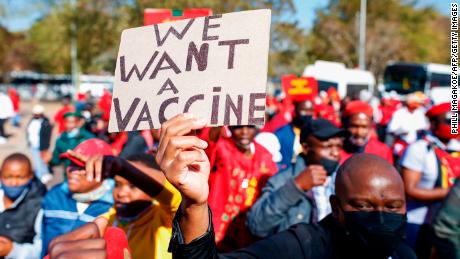
“South Africa at least has managed to procure their own vaccines,” he said. But poorer countries like Sudan, Mozambique, Eswatini and Lesotho will need low-cost options.

Pfizer did not respond to a question about low-cost vaccines for African nations. Dr. Hoge, of Moderna, said the company already had an agreement with the African Union to deliver 110 million doses at $3.50 per half dose of vaccine.

Dr. Hoge said he recognized that 110 million was less than 10 percent of Africa’s population. But, he noted, “we’re also the smallest of all manufacturers out there, and so 10 percent hopefully is useful.”

Despite the frustration that South African scientists have expressed about vaccine inequity and punishing travel restrictions, they have been inundated with requests for genetic sequences of Omicron from Italy, Germany, Australia and New Zealand, as well as labs in North America.

The more teams involved, the better, said Dr. Moore, who received about 50 requests just on Saturday. As the virus moves across the globe, it is likely to keep changing. “Getting the right combination of mutations in itself is a moving target,” she said.

Researchers everywhere want to avoid drawing conclusions prematurely, a mistake they made when the Beta variant surfaced. Preliminary tests of that variant took only one known mutation into account and underestimated its ability to evade the immune system, Dr. Moore recalled. (Fortunately, the variant also turned out to be less contagious.)

To get a full picture of the effectiveness of the vaccines against Omicron, scientists must look not just at antibody levels but also at immune cells that can recognize and destroy infected cells. Immune cells called T cells are crucial for preventing an infection from progressing to serious illness and death.

Some of Omicron’s mutations occur in parts of the virus targeted by T cells, meaning the variant may be more difficult for T cells to recognize.

Already, a computer simulation has predicted that those mutations may alter about six of the hundreds of regions that T cells can recognize, said Wendy Burgers, an immunologist at the University of Cape Town.

That may not seem like much. But people make varying sets of T cells, so depending on which targets the mutations knock out, some people may barely be affected by Omicron — and others may be left vulnerable.

Dr. Burgers is hoping to obtain blood from 50 people infected with the variant to gauge how the mutations will play out across a population. Once the samples are in hand, results will be available after “probably a week of very late nights and analysis,” she said.

Even if the vaccines hold up against Omicron, new versions will probably be needed at some point, and perhaps soon. The virus is acquiring mutations much faster than expected, Dr. Bloom said.

Seasonal influenza is the often cited example of a virus that mutates quickly, requiring regular updates to vaccines. But the coronavirus is “at least comparable and possibly even faster than that,” Dr. Bloom said. “There’s always going to be new variants arising.”

Lynsey Chutel contributed reporting from South Africa.

Moderna chief predicts existing vaccines will struggle with Omicron

The chief executive of Moderna has predicted that existing vaccines will be much less effective at tackling Omicron than earlier strains of coronavirus and warned it would take months before pharmaceutical companies could manufacture new variant-specific jabs at scale.

Stéphane Bancel said the high number of Omicron mutations on the spike protein, which the virus uses to infect human cells, and the rapid spread of the variant in South Africa suggested that the current crop of vaccines may need to be modified next year.

“There is no world, I think, where [the effectiveness] is the same level . . . we had with [the] Delta [variant],” Bancel told the Financial Times in an interview at the company’s headquarters in Cambridge, Massachusetts.

He added: “I think it’s going to be a material drop. I just don’t know how much because we need to wait for the data. But all the scientists I’ve talked to . . . are like, ‘This is not going to be good’.”

The Moderna chief executive’s comments come as public health experts and politicians have tried to strike a more upbeat tone about existing vaccines’ capacity to confer protection against Omicron.

On Monday, Scott Gottlieb, a director of Pfizer and former commissioner of the US Food and Drug Administration, told CNBC: “There’s a reasonable degree of confidence in vaccine circles that [with] at least three doses . . . the patient is going to have fairly good protection against this variant.”

Joe Biden, US president, subsequently said Omicron was “a cause for concern, not a cause for panic,” adding that the government’s medical experts “believe that the vaccines will continue to provide a degree of protection against severe disease”.

However, Bancel said scientists were worried because 32 of the 50 mutations in the Omicron variant are on the spike protein, which current vaccines focus on to boost the human body’s immune system to combat Covid.

Most experts thought such a highly mutated variant would not emerge for another year or two, Bancel added.

The Moderna chief’s predictions rattled investors in Europe and Asia on Tuesday, with equities and crude prices dropping. The European Stoxx 600 share index fell around 1.3 per cent with the UK’s FTSE 100, Germany’s Dax and France’s Cac 40 all down by around the same margin. Hong Kong’s Hang Seng index was 2.3 per cent lower.

Mansoor Mohi-uddin, chief economist at the Bank of Singapore, said that while investors were not pricing in a more serious disruption to the global economy from Omicron, it could take weeks for a clearer picture to emerge. “The view is still that it’s going to be a temporary hit, rather like [the Delta variant] turned out to be.”

Moderna and Pfizer have become the vaccine suppliers of choice for most of the developed world due to the high effectiveness of their jabs, which are based on messenger RNA (mRNA) technology.

In August, Moderna announced that people vaccinated with two doses of its jab “maintained antibodies through six months, including against variants of concern such as the Delta variant”.

But studies suggested that the company’s vaccine was less effective at preventing outbreaks of Delta than earlier strains of the virus.

A Stanford University study of a Delta outbreak at a California prison published last month found that Moderna’s jab was 56.6 per cent effective against infection — substantially lower than the level in studies conducted before the emergence of the variant, the researchers said.

Moderna and Pfizer are now working on new vaccines to target the Omicron variant, which the World Health Organization has said poses a “very high risk”.

Bancel said data indicating how existing vaccines performed against the Omicron variant, and whether it caused severe disease, should become available within two weeks.

But he said it would take several months before an Omicron-specific vaccine could be produced at scale, and suggested there might be a case for giving more potent boosters to the elderly or people with compromised immune systems in the meantime.

“[Moderna] and Pfizer cannot get a billion doses next week. The maths doesn’t work. But could we get the billion doses out by the summer? Sure,” said Bancel, who predicted Moderna could make a total of 2bn-3bn doses in 2022.

But he said it would be risky to shift Moderna’s entire production capacity to an Omicron-targeted jab at a time when other variants were still in circulation.

Bancel also hit out at critics who have accused vaccine makers of not doing enough to support rollouts in developing countries such as South Africa, where only a quarter of the population is fully inoculated, according to Johns Hopkins University.

“This was mostly a policy decision by the rich countries. In the US, we were told we had no choice but to give 60 per cent of our output to the US government. That was not a Moderna decision, that was a US government decision,” he said.

Bancel also said there was a surplus of jabs earmarked for Africa and that 70m Moderna vaccines were sitting in warehouses because Covax, an international body tasked with supplying low-income nations, or individual governments had not taken delivery of them.

“We are running out of space,” he said. “It’s because either they don’t have customs documents, or they don’t have fridge space, or because the ability to get doses in arms is a challenge.”

Additional reporting by Hudson Lockett in Hong Kong

US Covid-19: Omicron variant is a reminder that coronavirus ‘is still in control,’ medical professor says

“But it’s fairly likely we’ll see cases,” said Dr. Francis Collins, director of the National Institutes of Health.

“It ought to redouble our efforts to use the tools that we have, which are vaccinations and boosters — and to be sure we’re getting those to the rest of the world, too,” Collins told CNN on Sunday.

“It also means we need to pay attention to those mitigation strategies that people are just really sick of, like wearing masks when you’re indoors with other people who might not be vaccinated, and keeping that social distance,” he said.

“I know, America — you’re really tired of hearing those things. But the virus is not tired of us. And it’s shapeshifting itself.”

Why Omicron ‘looks different’ from other variants

As coronavirus keeps spreading, new mutations — and new variants — are expected.

“We have seen a lot of variants pop up over the last five, six months, and most of them have not amounted to much. This looks different,” said Dr. Ashish Jha, dean of the Brown University School of Public Health.

Vaccine inequity and hesitancy made the Omicron variant more likely, scientists say
The Omicron variant has an unusually high number of mutations, with more than 30 mutations in the spike protein alone, South African genomic scientists said last week.
Spike proteins are the structures used by a virus to get into the cells it attacks.

And “10 or more” of the mutations are on the receptor binding domain, which “binds to the cells in your nasal pharynx and in your lung,” Dr. Anthony Fauci told NBC on Sunday.

“In other words, the profile of the mutations strongly suggest that it’s going to have an advantage in transmissibility,” the director of the National Institute of Allergy and Infectious Diseases said.

When experts looked at other variants, Jha said, it usually took several months for those strains to be dominant — in other words, the most common strain of the virus spreading in one area.

“This one has become dominant very quickly in South Africa in the regions where it’s been found — within a matter of days to weeks, as opposed to months,” Jha said.

“Now, the number of cases in South Africa is quite low, so it can be for other reasons as well — not just because it’s more transmissible. But the speed with which it has taken off is really unlike anything we’ve seen before.”

The new Omicron variant is a pandemic gut check

Collins said it’s not yet clear whether the Omicron variant is more contagious than the Delta variant.

“It certainly shows the signs of being able to spread quickly,” he said. “What we don’t know is whether it can compete with Delta.”

It’s also too early to tell whether the Omicron variant causes more severe illness, Collins said.

In short: “There’s still much we do not know about Omicron,” epidemiologist and infectious disease expert Dr. Celine Gounder said.

“We’re still learning,” Gounder said Sunday. “As we were saying very early in the pandemic, pandemics are not about panicking. They’re about policies, protocols and practice. And in this case, that means doing the work of characterizing the virus.”

Don’t be surprised by renewed Covid-19 restrictions, expert says

A growing number of countries have confirmed cases of the Omicron variant. Canada joined that list Sunday, when health officials confirmed two cases in Ottawa, Ontario.
The Omicron variant is spreading across Europe
Both people had recently traveled from Nigeria and are isolating, Canadian health officials said.

If the Omicron variant isn’t already in the US, it’s bound to be “soon,” said Dr. William Schaffner, a professor at Vanderbilt University Medical Center.

“It’s going to make its way around the world. It looks like that way,” Schaffner said Saturday.

And that could prompt a return to stricter Covid-19 mitigation efforts.

“I think we may, indeed, be in for a phase of many more masks, much more social distancing, and more restrictions and obligations for vaccination going forward,” Schaffner said.

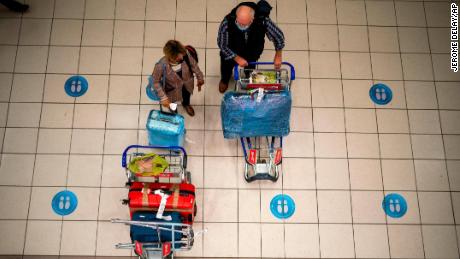
News of the variant spread as Americans packed airports at almost pre-pandemic levels for Thanksgiving and at the start of the holiday season: The Transportation Security Administration said it screened about 2.3 million people at airports across the country Wednesday, making it the busiest day at security checkpoints since March 2020.

More reason to get vaccinated or boosted

About 59{cfdf3f5372635aeb15fd3e2aecc7cb5d7150695e02bd72e0a44f1581164ad809} of Americans are fully vaccinated against Covid-19, and about 19{cfdf3f5372635aeb15fd3e2aecc7cb5d7150695e02bd72e0a44f1581164ad809} of those fully vaccinated have received a booster dose, according to CDC data.
NIH director: New variant 'ought to redouble' vaccination and mitigation efforts

While vaccine makers test their shots against the new Omicron variant, health experts said it’s important for anyone eligible to get a Covid-19 vaccine or booster to do so now.

“The main things people can do to protect themselves right now is if you’re not vaccinated, get vaccinated,” Gounder said. “If this does turn out to be an immune-evading variant, there may also well be benefit in getting an extra dose or booster dose of vaccine.”

Fauci offered similar advice: “If ever there was a reason for the people who were vaccinated to get boosted, and for those who were unvaccinated to get vaccinated, it’s now,” he told NBC.

“If you’re six months or more from the second dose of an mRNA (vaccine) — either the Pfizer or the Moderna — get boosted. If you’re two months or more following the single dose of J&J, get boosted.”

Fauci said he believes the current vaccines — and especially booster doses — will help at least somewhat against the Omicron variant.

“When you get boosted, the level of your antibody goes way, way above what the level at its peak was after the second dose,” Fauci told NBC.

“And that’s the reason why we feel even with variants like Omicron that if you get boosted, you’re going to get a level of antibody that’s high enough that it is likely you’ll be able to get at least some degree — and maybe a lot — of protection against this.”

Moderna said it’s testing the ability of its Covid-19 vaccine to neutralize Omicron, and data is expected in the coming weeks.

The company said it’s also testing a larger-dose booster and an Omicron-specific booster in case the current vaccine and booster don’t sufficiently work against the new variant.

If scientists determine an Omicron-specific vaccine dose is needed, “we think within weeks to maybe two to three months, we would be able to have a Omicron-specific vaccine booster available for testing,” Moderna Chief Medical Officer Dr. Paul Burton said Sunday.

BioNTech, the German company that partnered with Pfizer to make a Covid-19 vaccine, is also investigating Omicron’s impact on their vaccine, with data expected in the coming weeks.

Johnson & Johnson said it’s also testing the effectiveness of its vaccine against Omicron.

Moderna said the Omicron variant could be a challenge.

“The combination of mutations represents a significant potential risk to accelerate the waning of natural and vaccine-induced immunity,” the company said Friday.

But Jha said he doesn’t think the new variant means “vaccines will be rendered useless.”

“I think that’s exceedingly unlikely,” he said. “The question is, is there a tiny hit to vaccine efficacy, or is there a large hit?”

‘A couple of weeks of uncertainty’

The world is in a 'race against time' with the Omicron variant, European Commission president says

Before scientists can say how much the current vaccines might work against Omicron, “we have to go through a couple of weeks yet of uncertainty,” Burton said.

“There are three questions we really need answers to: How transmissible is this variant? How severe is it? And will the antibodies produced in response to the current vaccines (be) effective? And we won’t know that (answer to the) last question for a couple of weeks,” Burton told CNN on Sunday.

“But what we do know is that the best protection is to get vaccinated. If you’re on the fence, if you haven’t been vaccinated, get vaccinated. And now everybody over 18 in this country is at least eligible for boosting. So if you’re now eligible for boosting, get boosted as well,” he said.

“By doing that, we at least know that you’ll get that first line of critical protection. And then of course, there are additional, simpler things you can do — hand washing, some social distancing, mask wearing as appropriate. These two together, right now — until we know exactly what’s going on — are going to be critical in our line of defense.”

‘The virus is still in control … tighten your seat belts’

With or without the Omicron strain, the US is still struggling with the Delta variant.

Covid-19 hospitalizations in 16 states increased by more than 50{cfdf3f5372635aeb15fd3e2aecc7cb5d7150695e02bd72e0a44f1581164ad809} in the past week compared to the previous week, according to the US Health and Human Services Department.

“I think we need to just get our mind set that the virus is still in control. I don’t care about your Covid fatigue,” Schaffner said.

“We’re going to have to deal with this in an ongoing way very, very seriously. … Tighten your seat belts.”

CNN’s Dakin Andone, John Bonifield, Jacqueline Howard, Virginia Langmaid, Michael Nedelman, Christina Maxouris and Kaitlan Collins contributed to this report.

China says zero-Covid policy will protect it against Omicron variant

One of China’s top pandemic advisers has said Beijing’s strict Covid-zero strategy would prevent the new Omicron variant posing a serious threat, vindicating the tough policy at a time when the rest of the world has been trying to ease restrictions.

The comments, reported in Chinese media, came as authorities published a study by local academics warning that any attempt by China to deviate from the elimination strategy by following western herd immunity models would be “disastrous”.

“China’s current rapid response . . . strategy can cope with various types of Covid variants,” Zhang Wenhong, an infectious disease expert and director of the Huashan Hospital’s department of infectious diseases in Shanghai, said on Weibo: “I don’t think it will have a big impact on China at the moment.”

Beijing has adopted a tough Covid-zero strategy that involves subjecting vast numbers of people to compulsory government quarantine, with wide definitions of those considered a close contact.

While effective at preventing deaths, it has left the nation isolated from the rest of the world. Most other countries in the region that had also pursued elimination strategies are moving towards an acceptance of the disease as endemic.

But Zhang said the strategy had won China a “strategic opportunity” as the arrival of the new variant forced other countries to begin reimposing restrictions.

Zhong Nanshan, another top Chinese pandemic expert, said authorities would need to pay attention to visitor arrivals from Africa, but did not suggest any further government measures to tackle the new variant.

“How harmful it is, how fast it will spread, whether it will make the disease more serious . . . it is too early to draw a conclusion,” Zhong said at the weekend, according to Chinese media reports.

In the study, Chinese mathematicians warned that moving away from China’s strict Covid-zero approach to one similar to the US could lead to as many as 637,155 new cases daily, which would have a “devastating impact on the medical system of China and cause a great disaster within the nation”.

“The estimates revealed the real possibility of a colossal outbreak which would almost certainly induce an unaffordable burden to the medical system,” the authors wrote.

The warning was contained in a study by Yuan Zhang, Chong You, Xin Gai and Xiaohua Zhou published on November 24 by China’s Centre for Disease Control and Prevention.

“Our findings have raised a clear warning that, for the time being, we are not ready to embrace ‘open-up’ strategies resting solely on the hypothesis of herd immunity induced by vaccination advocated by certain western countries,” the authors said.

But they said they did not account for any difference in effectiveness of the vaccines between those offered in the west and China.

China’s population has mostly been inoculated with more traditional “inactivated” vaccines made by the state-owned Sinopharm and domestic pharmaceutical company, Sinovac Biotech. Some experts say there are doubts as to whether these more traditional type of vaccines offer as long-lasting protection as those based on newer mRNA technology.

Zhong said that about 76.8 per cent of the nation’s population was vaccinated, with 80 per cent targeted by year end.

Sinovac, which has developed and delivered millions of its shots worldwide, said it was working to obtain samples of the new variant to test the effectiveness of its shot against the strain. China is also developing its own homegrown mRNA shots.

Dow Jones Futures Loom As Market Rally Awaits Omicron Covid Variant News; What To Do Now

Dow Jones futures will open Sunday evening, along with S&P 500 futures and Nasdaq futures, with all eyes on the newly discovered omicron Covid variant following Friday’s sell-off.


X


The stock market rally was hit from all directions last week, with the major indexes tumbling below key levels Friday on the new omicron Covid variant, with crude oil prices and Treasury yields plunging. Coronavirus vaccine makers such as Moderna (MRNA), BioNTech (BNTX) and Pfizer (PFE) were big winners.

Is this the start of a significant market slide, the continuation of recent whipsaw action or will stocks quickly rebound? The current uncertainty makes it difficult to navigate the stock market rally. Investors should be playing more defense than offense until conditions clearly improve. More clarity on the new omicron variant is needed.

Li Auto earnings are due before Monday’s open. Later this coming week, Li Auto (LI) and Chinese EV startups Nio (NIO) and Xpeng (XPEV) are likely to release November delivery figures. China EV giant BYD Co. (BYDDF) may come slightly later, with Tesla (TSLA) China sales figures eventually following.

Tesla stock is on IBD Leaderboard and the IBD 50. Pfizer stock was Friday’s IBD Stock Of The Day.

The video embedded in this article analyzed a pivotal market week and discussed PFE stock, Ovintiv (OVV) and Li Auto.

Dow Jones Futures Today

Dow Jones futures will open at 6 p.m. ET, along with S&P 500 futures and Nasdaq 100 futures.

Dow futures could be volatile Sunday night, with investors making best on the market rally’s direction without a clear picture of just how serious, or not, the omicron variant is.

Bitcoin rose modestly, trading above $56,500 and at weekend highs, suggesting a vague “risk on” sentiment after Friday’s sharp sell-off in cryptocurrencies.

After U.S. crude oil prices plunged 13{cfdf3f5372635aeb15fd3e2aecc7cb5d7150695e02bd72e0a44f1581164ad809} on Friday, OPEC+ is delaying some technical meetings set for Monday-Tuesday to Wednesday-Thursday so the market can digest the impact of the new Covid variant.

Remember that overnight action in Dow futures and elsewhere doesn’t necessarily translate into actual trading in the next regular stock market session.


Join IBD experts as they analyze actionable stocks in the stock market rally on IBD Live


Omicron Coronavirus: Covid Variant Of Concern

A new coronavirus variant with a large number of mutations, first detected in South Africa, is raising concerns. It’s unclear if the B.1.1529 Covid variant, dubbed the omicron variant on Friday, is more deadly or infectious than prior strains, or whether vaccinations or prior Covid infection provide substantial protection.

The World Health Organization noted that the omicron variant appears to have a higher risk of reinfection for people who have already had Covid-19. The WHO declared it a “variant of concern,” the first such designation since the delta variant a year ago.

However, a coronavirus adviser to the South Africa government as well as the Pretoria doctor who sounded the alarm about the Omicron variant said that cases generally seem to be “mild.”

There are reasons to believe that anti-viral pills, such as those made by Pfizer and Merck (MRK), would retain effectiveness vs. the latest Covid strain.

The U.S., U.K., European Union, Australia, Israel and Singapore have suspended flights or entry from southern Africa.

Dutch officials on Sunday reported 13 omicron Covid cases among travelers from South Africa to the Netherlands.

The U.K., Belgium, Australia, Italy, Hong Kong and Israel are among countries that have identified a handful of omicron Covid cases.

Coronavirus Vaccine Stocks

Pfizer partner BioNTech said it will take two weeks to see how effective its vaccine is vs. the omicron Covid variant. Moderna said it could have a Covid vaccine designed for the omicron variant by early 2022. MRNA technology speeds up vaccine development, though FDA approval could take several months.

On Nov. 19, the FDA approved Moderna or Pfizer booster shots for all adults. That came soon after the FDA approved the Pfizer/BioNTech vaccine for children aged 5-11, after already approving the Covid vaccine for adolescents aged 12-15.

Pfizer and partner BioNTech, along with rival mRNA coronavirus vaccine maker Moderna, jumped Friday on the omicron Covid variant, also called Nu Covid. Pfizer also is benefitting from Merck reporting even-lower efficacy from its antiviral Covid pill. A Pfizer Covid oral drug is much more effective.

PFE stock jumped 6.1{cfdf3f5372635aeb15fd3e2aecc7cb5d7150695e02bd72e0a44f1581164ad809} on Friday to 54, gapping above a 51.96 buy point, according to MarketSmith analysis. However, Pfizer stock has surged for six straight weeks off the bottom of its cup base. A pullback wouldn’t be a surprise.

MRNA stock gapped above its 50-day line, breaking a trend line with a 21{cfdf3f5372635aeb15fd3e2aecc7cb5d7150695e02bd72e0a44f1581164ad809} gain. BNTX stock, which cleared its 50-day line earlier in the week, soared 14{cfdf3f5372635aeb15fd3e2aecc7cb5d7150695e02bd72e0a44f1581164ad809}. Both Moderna stock and BioNTech could be deemed early entries. But investors might want to see more strength from Moderna and a post-gap up consolidation from BNTX stock.

Meanwhile, other coronavirus medical plays such as Quest Diagnostics (DGX) and PerkinElmer (PKI) showed positive action as well.

Covid Cases Rising

Coronavirus cases had already been ramping up worldwide for the past several weeks, notably in Europe. Austria began a lockdown in the past week.

Coronavirus cases worldwide reached 261.72 million. Covid-19 deaths topped 5.21 million.

Coronavirus cases in the U.S. have hit 49.09 million, with deaths above 799,000. U.S. cases, after picking up for a couple of weeks, appeared to be leveling off shortly before Thanksgiving. Will the holiday travel spur another upsurge in cases next week? Coronavirus deaths in the U.S. have continued to fall.


These Sectors Lead Sell-Off As New Covid Variant Emerges


Stock Market Rally

The stock market rally had a rough holiday-shortened week, with broad-based losses.

The Dow Jones Industrial Average gave up 2{cfdf3f5372635aeb15fd3e2aecc7cb5d7150695e02bd72e0a44f1581164ad809} in last week’s stock market trading, all driven by Friday’s 2.5{cfdf3f5372635aeb15fd3e2aecc7cb5d7150695e02bd72e0a44f1581164ad809} decline. The S&P 500 index shed 2.2{cfdf3f5372635aeb15fd3e2aecc7cb5d7150695e02bd72e0a44f1581164ad809}. The Nasdaq composite skidded 3.5{cfdf3f5372635aeb15fd3e2aecc7cb5d7150695e02bd72e0a44f1581164ad809}. The small-cap Russell 2000 tumbled 4.6{cfdf3f5372635aeb15fd3e2aecc7cb5d7150695e02bd72e0a44f1581164ad809}.

Crude oil futures plunged 13{cfdf3f5372635aeb15fd3e2aecc7cb5d7150695e02bd72e0a44f1581164ad809} on Friday. The 10-year Treasury yield lost 4 basis points to 1.49{cfdf3f5372635aeb15fd3e2aecc7cb5d7150695e02bd72e0a44f1581164ad809} for the week. But the benchmark yield dived 15 basis points Friday after nearly hitting a six-month high Wednesday intraday.

Among the best ETFs, the Innovator IBD 50 ETF (FFTY) plunged 5.9{cfdf3f5372635aeb15fd3e2aecc7cb5d7150695e02bd72e0a44f1581164ad809}, while the Innovator IBD Breakout Opportunities ETF (BOUT) gave up 3.5{cfdf3f5372635aeb15fd3e2aecc7cb5d7150695e02bd72e0a44f1581164ad809}. The iShares Expanded Tech-Software Sector ETF (IGV) slumped 5{cfdf3f5372635aeb15fd3e2aecc7cb5d7150695e02bd72e0a44f1581164ad809}. The VanEck Vectors Semiconductor ETF (SMH) retreated 4.1{cfdf3f5372635aeb15fd3e2aecc7cb5d7150695e02bd72e0a44f1581164ad809}.

Reflecting more-speculative story stocks, ARK Innovation ETF (ARKK) dived 5.3{cfdf3f5372635aeb15fd3e2aecc7cb5d7150695e02bd72e0a44f1581164ad809} and ARK Genomics ETF (ARKG) 5.7{cfdf3f5372635aeb15fd3e2aecc7cb5d7150695e02bd72e0a44f1581164ad809}. Tesla stock remains the No. 1 holding across ARK Invest’s ETFs.

SPDR S&P Metals & Mining ETF (XME) fell 3.2{cfdf3f5372635aeb15fd3e2aecc7cb5d7150695e02bd72e0a44f1581164ad809} and Global X U.S. Infrastructure Development ETF (PAVE) declined 2.1{cfdf3f5372635aeb15fd3e2aecc7cb5d7150695e02bd72e0a44f1581164ad809}. U.S. Global Jets ETF (JETS) tumbled 7{cfdf3f5372635aeb15fd3e2aecc7cb5d7150695e02bd72e0a44f1581164ad809}. SPDR S&P Homebuilders ETF (XHB) slid 2{cfdf3f5372635aeb15fd3e2aecc7cb5d7150695e02bd72e0a44f1581164ad809}. The Energy Select SPDR ETF (XLE) rose 1.3{cfdf3f5372635aeb15fd3e2aecc7cb5d7150695e02bd72e0a44f1581164ad809}, but tumbled 4.3{cfdf3f5372635aeb15fd3e2aecc7cb5d7150695e02bd72e0a44f1581164ad809} on Friday with many shale plays faring far worse. The Financial Select SPDR ETF (XLF) lost 1{cfdf3f5372635aeb15fd3e2aecc7cb5d7150695e02bd72e0a44f1581164ad809}, skidding 3.7{cfdf3f5372635aeb15fd3e2aecc7cb5d7150695e02bd72e0a44f1581164ad809} on Friday.


Five Best Chinese Stocks To Watch Now


Li Auto Stock

Li Auto is expected to narrow its per-share loss with Q3 revenue tripling. Last week Li Auto stock rose 5.9{cfdf3f5372635aeb15fd3e2aecc7cb5d7150695e02bd72e0a44f1581164ad809} to 32.40. That’s near possible entries, including an official 34.93 handle buy point.

Xpeng stock is holding above a 48.08 buy point and 50.50 alternative entry after surging on earnings in the past week. Tesla and BYD stock could be working on new consolidations, both closing Friday near their 21-day lines. Nio stock has fallen back below its 200-day line.

Tesla CEO Elon Musk, in a “leaked” email to employees, suggested the EV giant may push some Q4 deliveries from the typical end-of-quarter crush into early 2022, in a bid to lower shipping costs. “Leaked” Musk emails often spur analysts to lower quarterly delivery targets. The upcoming Austin and Berlin plants should eventually ease some of the Tesla delivery crush in the U.S., Europe and China.

Tesla Berlin will begin production in December, Automobilwoche reported Sunday. Regulators are expected to give final approval to the plant with days. Production is seen picking up in January, but it at a relatively slow ramp in early 2022.

Market Rally Analysis

In the past week, the stock market rally started a major sell-off in highly valued growth stocks, especially software, while energy stocks and banks rebounded. The new Covid variant sent stocks sharply lower on Friday, especially oil and financials, as crude prices and Treasury yields tumbled. Travel stocks also were hard hit, while retailers extended a recent retreat. Coronavirus plays bounced, while software names held up relatively well.

The Nasdaq composite and S&P 500 gapped below their 21-day lines after both found support at that key level earlier in the week. The Dow Jones, which was up modestly through Wednesday, gapped below its 50-day line on Friday.

The Russell 2000 tumbled below its 50-day and 200-day moving averages. The small-cap index is a decent proxy for market breadth, which has weakened considerably. Losers trounced winners 4-to-1 on the Nasdaq Friday, and by 5-to-1 on the NYSE. The advance/decline lines have deteriorated in the past few weeks.

The CBOE Volatility Index, or VIX, spiked 54{cfdf3f5372635aeb15fd3e2aecc7cb5d7150695e02bd72e0a44f1581164ad809} to 28.62, hitting a 10-month high. Extreme moves in the so-called market fear gauge could raise the odds of at least a short-term market bottom. But it doesn’t have to happen right away and it doesn’t have to last.

There’s a lot of uncertainty right now regarding the market rally and which sectors will lead and lag. Market action is likely to be headline driven. How dangerous is the omicron Covid variant?. That will inform governments’ decisions on travel bans and restrictions and whether or not people adjust their behavior once again. A major outbreak could trigger new government and business shutdowns, roiling supply chains once again and sending commodity prices on a longer slide.

Perhaps all these fears are overdone. Goldman Sachs, in a Friday night note, said “this mutation is unlikely to be more malicious and that the existing vaccines will most likely continue to be effective in preventing hospitalizations and deaths.” Goldman added, “we do not think that the new variant is sufficient reason to make major portfolio changes.”


Time The Market With IBD’s ETF Market Strategy


What To Do Now

The whipsaw, downside action in the major indexes, various sectors and leading stocks is not conducive to new buys. Sure, if the overall stock market rally or specific sectors rebound, buying now will likely turn out well. But with so much uncertainty regarding the new omicron Covid variant, inflation, supply chains and more, the odds are not especially favorable.

It’s quite possible the oil, bank or travel stocks will try to rebound early next week, much as software stocks did on Wednesday. But that doesn’t mean the bounce will continue.

Investors should review their holdings and ditch losers. If you got caught out in Friday’s gap-down losses and didn’t act, don’t continue to freeze.

Take more of a defensive posture with all of your holdings and portfolio. Don’t necessarily be in a rush to sell everything, unless all your stocks are triggering losses.

When market conditions do shore up, whether it’s next week or next year, you want to be ready financially and mentally to take advantage.

Read The Big Picture every day to stay in sync with the market direction and leading stocks and sectors.

Please follow Ed Carson on Twitter at @IBD_ECarson for stock market updates and more.

YOU MAY ALSO LIKE:

Why This IBD Tool Simplifies The Search For Top Stocks

Want To Get Quick Profits And Avoid Big Losses? Try SwingTrader

Best Growth Stocks To Buy And Watch

IBD Digital: Unlock IBD’s Premium Stock Lists, Tools And Analysis Today

Five Diverse Stocks Near Buy Points