How will it affect medical diagnosis, doctors?

How will it affect medical diagnosis, doctors?

Health department struggles to manage medical marijuana

Health department struggles to manage medical marijuana

Behind closed doors, Mississippi’s eight-person medical cannabis office is struggling against its workload.

The Health Department office charged by the Legislature with running Mississippi’s new medical marijuana program is steeped in disorganization: agents rarely visit cultivation sites, application  backlogs reach hundreds deep, and lags in communication with licensees often stretch on for weeks, a Mississippi Today investigation found. 

Business owners feel frustrated, unheard and worried that the millions of dollars they invested — and the tens of thousands they paid in fees to the state — could go up in smoke.

“The state threw them to the wolves,” cultivator Joel Harper said of the fledgling marijuana office. “They should have paid the money to bring in professionals, even a third-party consultant. Instead, they’re sending people out into the cannabis world who have no idea about anything cannabis.” 

At the center is a handful of workers, tasked with unrolling a massive program without enough staffing to operate efficiently. Cultivators say when they do hear back from the office, the messages are incomplete or inconsistent – especially when it comes to how they construct their farming facilities. 


And that’s if they hear back at all. The office already has mountains of unprocessed paperwork.

As of the second week of January, 277 work permit applications sat in a queue waiting to be processed, according to copies of the office’s records obtained by Mississippi Today. Could-be cannabis workers can’t start their jobs without permits. Another 995 patients had yet to to be told whether or not they’ve been approved for their dispensary cards. 

Three dozen businesses had their own applications stuck, along with almost 40 other medical practitioners, the records show. 

In a statement to Mississippi Today, department of health spokesperson Liz Sharlot acknowledged the backlogs.

“We are working with the MMCP (Mississippi Medical Cannabis Program) Licensing Director and the team on how to put more efficient processes in place,” she said. 

Even when the office hired new workers – growing from four to eight in recent months – little was done to train them on the law and the industry, an employee of the health department told Mississippi Today. The employee spoke on the condition of anonymity out of fear of repercussions.

The health department said in October, when Mississippi Today first reported the backlogs, it was working to fill 25 more positions. That has yet to happen. 

The health department worker said much of the disorganization stems from the office’s former director Kris Jones Adcock.

The Department of Health did not answer questions related to plans to increase staffing levels or what medical marijuana-related training their current staffers received. 

“The people of Mississippi deserve better,” the worker said. 

A Mockingbird Cannabis employee sorts through medical marijuana at the facility in Raymond, Miss., January 20, 2023. Credit: Eric Shelton/Mississippi Today

During one five-week period, Adcock held three jobs simultaneously within the health department: the cannabis role, the head of a domestic violence office, and a promotion to a department-wide role as assistant senior deputy.

The health department didn’t respond to questions about the effects managing three positions may have had on her ability to run the cannabis office. Adcock now holds only one department-wide role: Assistant Senior Deputy to the Senior Deputy.

Adcock announced two weeks ago that the office’s attorney, Laura Goodson, would be the acting director. 

The health department employee also said Adcock set a tone of rushed processes and absentee leadership that has left the marijuana office in clean-up mode.

“There was no due diligence on some of the applications,” the worker said. “Some of it was her knee-jerk reaction to get stuff out the door after it (the backlog) built up. Instead of an orderly process, it was just rushed.”

Emails obtained by Mississippi Today show that it wasn’t just cultivators struggling to hear back. The head of a lab testing facility also expressed frustration.

“The complete lack of communication is just not feasible any longer,” Rapid Analytics director Jeff Keller wrote to Adcock on Dec. 16. “I am begging you to please just name the time on Monday and I will make it work.” 

A month later, one of Keller’s employees sent his own desperate plea to the office. 

“I’m trying to find out when I’ll be able to start working there,” he wrote about his job at the lab. “My background check was cleared on December 15th … I’ve left multiple messages but have not received a response.” 

The CEO of test facility Steep Hill, Cliff Osbon, sent his own email on Jan. 13 on behalf of four employees who still needed their work permits so they could begin work and the lab could start testing marijuana. 

Neither testing lab responded to Mississippi Today’s request for a comment. 

Zack Wilson, a micro-grower in Potts Camp, said he had a worker waiting more than two weeks on a work permit. 

“You send an email. Wait two weeks. Email again,” Wilson said. “You just sit and wait. I know they’re short staffed, but come on guys.” 

Joel Harper, owner and founder of Pharm Grown, inspects marijuana plants at his facility in Como, Miss., Monday, January 23, 2023. Credit: Eric Shelton/Mississippi Today

Cultivators say unanswered questions have led to a murky-at-best understanding of how some of the regulations are being interpreted and enforced.

That’s bubbled up with the use of so-called “adapted greenhouses,” putting already competitive cultivators more at odds. The regulations call for no outdoor growing, a solid roof, permanent walls and slab foundations. 

In the early days after the law was passed, Harper, the head of Como-based Pharm Grown Canna Company, said officials made it clear to industry hopefuls that greenhouses would not be approved as growing facilities. So he, like many others, invested money in renovating a large warehouse that would rely on artificial lights. 

In the last few months, he’s noticed much cheaper greenhouse-style structures popping up with the health department’s approval. 

Harper and others who followed the bill’s creation closely say greenhouses go against the spirit of what legislators intended.

The debate comes down to word definitions that aren’t spelled out in the law itself. If the bill doesn’t allow any “outdoor” growing, that should mean the structure can’t utilize the sun, some argue. The greenhouses have clear-plastic roofs to use a mix of sun and artificial light. If the facility needs to have a solid and secure roof, clear plastic shouldn’t be permitted, according to some interpretations.

Cultivators like Wilson don’t see it that way. 

“The roof certainly isn’t made of liquid or gas,” he said. “Plastic is a solid.” 

Wilson said his site plan, including the materials he was using, were all approved by the health department when he handed in his application. He was given his cultivation license in August, according to public records.

Another cultivator, Jason McDonald, is building his own greenhouse under the company name SADUJA. He received his license on Dec. 22. He said his roof is two layers of clear plastic. He has screened-in shutter windows, a cement foundation and plumbing. McDonald runs a tea farm. He’s used to meeting regulations and dealing with bureaucracy and hopes to start growing marijuana by the end of the month.

Mississippi Today also obtained documents Adcock signed off on the site plan, including a hand-drawing where the facility was labeled “greenhouse.” 

“I emailed them and asked: ‘Will this greenhouse we’re planning to build meet regs?” McDonald recalled. “They came back and said: ‘you need to read the regulations’ so, I quoted the regulations and said ‘what’s the ruling on this?’ and they said ‘you need to read the regulations.’ I added the specific subsection, and then never got an answer back.” 

The word greenhouse, he said, can summon something different depending on the cultivator. He, like others, agrees Mockingbird Cannabis should have been cited for its greenhouse that was under scrutiny in the fall because it had roll-up sides, not permanent walls.

Mockingbird also built a massive state-of-the-art warehouse as its main cultivation site. 

“I will tell you we haven’t done anything we didn’t disclose to the Department of Health and in our application,” Mockingbird CEO Clint Patterson told Mississippi Today in October. 

Harper and other warehouse operators don’t blame the small businesses for building greenhouses — they’re cheaper to construct and run, leading to significantly higher profit margins. They blame the state for approving them. 

“We want them to succeed,” Harper said of greenhouse growers. “We just want them to do it in the way everybody else had to.” 

The leading authors behind the bill that created the medical marijuana program could not be reached by Mississippi Today after repeated requests for comment. Rep. Lee Yancey said in the fall that it was the health department’s job to interpret the rules, and if the statutes were not clear enough, it would be addressed in the Legislature. 

Sharlot, the health department spokesperson, said it did not approve a model for greenhouses and pointed to the “regulations that specify the physical requirements for a cultivation facility.” 

“The MSDH met and continues to meet its statutory requirements as it did with the aggressive timelines in creating the MMCP,” she said. 

A Mockingbird Cannabis tends to the “mother” medical marijuana plants at Mockingbird Cannabis in Raymond, Miss., January 20, 2023. These plants are used for create clones, which are cut from the “mother” plant and grow into plants themselves. Credit: Eric Shelton/Mississippi Today

On Jan. 11, Adcock brought her recommended changes to cannabis regulations before the board of health hoping for the members’ swift approval.

Public commenting regarding updates to the regulations were open for less than a week, ending the day before Christmas Eve. It got about 150 comments, Adcock told the board.

The end result was a thick stack of paper delivered to each board member fewer than two days before the meeting.

“To get 1,000 pages, less than 48 hours before our meeting, it’s almost impossible to review to know what we’re really doing,” said Jim Perry, the head of the board’s cannabis committee.

Adcock’s proposed changes covered everything from batch sizes for testing to whether a cultivation license could cover more than one growing space under a single license. 

During the meeting, Perry said he wasn’t comfortable with passing changes without time to review them and ask questions. State Health Officer Dr. Daniel Edney apologized to the board for the ream of paper and the lack of notice. He promised it wouldn’t happen again.

“Cannabis is special and unique and needs to be heavily vetted,” Edney said at the meeting.

Adcock went over some of the regulation changes she said were the most “emergent,” but ultimately the board chose not to act.

Following the meeting, Perry told a Mississippi Today reporter the committee process was created so “we can hear from people and be able to make well-informed and not rushed decisions.”

A committee meeting about the regulations has been scheduled for Jan. 26 at 3 p.m.

Marijuana plants are in place at Pharm Grown in Como, Miss., Monday, January 23, 2023. Credit: Eric Shelton/Mississippi Today

With the constant flood of applicants, strapped-for-time staffers aren’t making regular site visits, according to cultivators and those with inside knowledge of the office. That means growers can get their provisional four-month licenses extended, begin growing, finish batches and have them tested and sent to market without having ever met an agent in person. 

Onsite visits are required for a renewal of a license, but not for moving a provisional license to a permanent one, according to the health department. When asked about the frequency of agent visits, Sharlot emphasized that the office is remotely monitoring all cultivators with the seed-to-sale tracking program.

Meanwhile, the 163 licensed dispensaries are eying the number of patients – Sharlot said 1,732 as of Monday – who have licenses to purchase medical cannabis. They’re worried it won’t be enough to sustain a business after months paying rent without revenue.

The department of health worker who spoke to Mississippi Today said whenever they make a dent in the patient queue, it doesn’t take long to climb back over 1,000.

The health department says it has licensed a total of 73 cultivators; 12 processors; four waste disposal companies; nine transportation companies; three testing labs; 151 medical practitioners; and 975 workers with permits. 

It’s a constant battle to keep up. 


Creative Commons License

Republish our articles for free, online or in print, under a Creative Commons license.

Medical student-led multicultural fundraiser Oct. 10 to celebrate diversity through fashion, dance and music – School of Medicine News

Medical student-led multicultural fundraiser Oct. 10 to celebrate diversity through fashion, dance and music – School of Medicine News
Chinese people dancer Thomas Davis is among the the performers.

Tunes, dance, manner, food and enjoyable are all on the agenda for a student-led fundraiser at Wayne State University that will elevate cash for 482Ahead, a community corporation advocating for education and learning justice for the diverse youth of Detroit.

The WSU School of Medicine’s Globe Overall health Pupil Business will host its first Multicultural Fundraiser at 6 p.m. Oct. 10 in the College student Centre Ballroom. The party will showcase quite a few cultures via a manner clearly show, stay performances and extra.

WHSO Treasurer and Co-Fundraising Chair Mariam Samir, a to start with-12 months professional medical pupil, hopes to make it once-a-year celebration.

“We are hoping to elevate awareness of the issues lots of Detroit youth confront, a section of which stems from a absence of knowing and appreciation of the unique cultures existing. Folks panic what they do not know,” Samir said. “By delivering a platform for folks to depict their society, we are hoping to strengthen cultural appreciation and enhance curiosity and open-mindedness. Additionally, we are aiming to increase money to guide 482Forward in its goals of campaigning for training justice.”

Samir recruited additional university student businesses from the Faculty of Medication to collaborate in the celebration. They consist of the Black Health care Association, Latino Health care Scholar Affiliation, Asian Pacific American Professional medical Scholar Affiliation, Islamic Clinical University student Association, American Affiliation of Medical professionals of Indian Origin and the Nationwide Arab American Healthcare Affiliation.

“When we started searching for a charity, we wanted to select a thing that people today of many cultures can relate to, so we concentrated our consideration regionally,” Samira mentioned. “Detroit is acknowledged for its broad range, and the citizens of Detroit face many systemic troubles. 482Forward makes use of its campaigns to make transform at that degree. One particular of their campaigns, for instance, was changing laws to put extra money toward psychological well being in universities. Aside from mental health and fitness, they also target on trauma, social determinants of wellness and adverse childhood activities, trauma-knowledgeable treatment, immigration justice in schools and language in colleges.”

The celebration is open up to all and will include remarks from Faculty of Drugs Dean Wael Sakr, M.D., a 50-50 raffle, raffles for henna tattoos by nearby artists, and Center Eastern-impressed meals.

Performers consist of Kpop, Chinese folk and Latino dance teams based at WSU guitarist and second-12 months professional medical student Hassan Ahmad, who will engage in Bollywood and South Asian-encouraged music and a spoken phrase overall performance by Assistant Professor of Interior Medicine-Pediatrics Ijeoma Nnodim-Opara, M.D. ’08, Res. ’12.

The fashion clearly show will spotlight outfits from 5 areas, like Pacific Asian, South Asian, Middle-Jap, African/African American/Diaspora and South American/Latino.

Students exciting in modeling in the fashion display may indication up at https://varieties.gle/7jixmPdaftU5Z8s36.

Hospitals often reap profits in places where many patients carry medical debt : Shots

Hospitals often reap profits in places where many patients carry medical debt : Shots

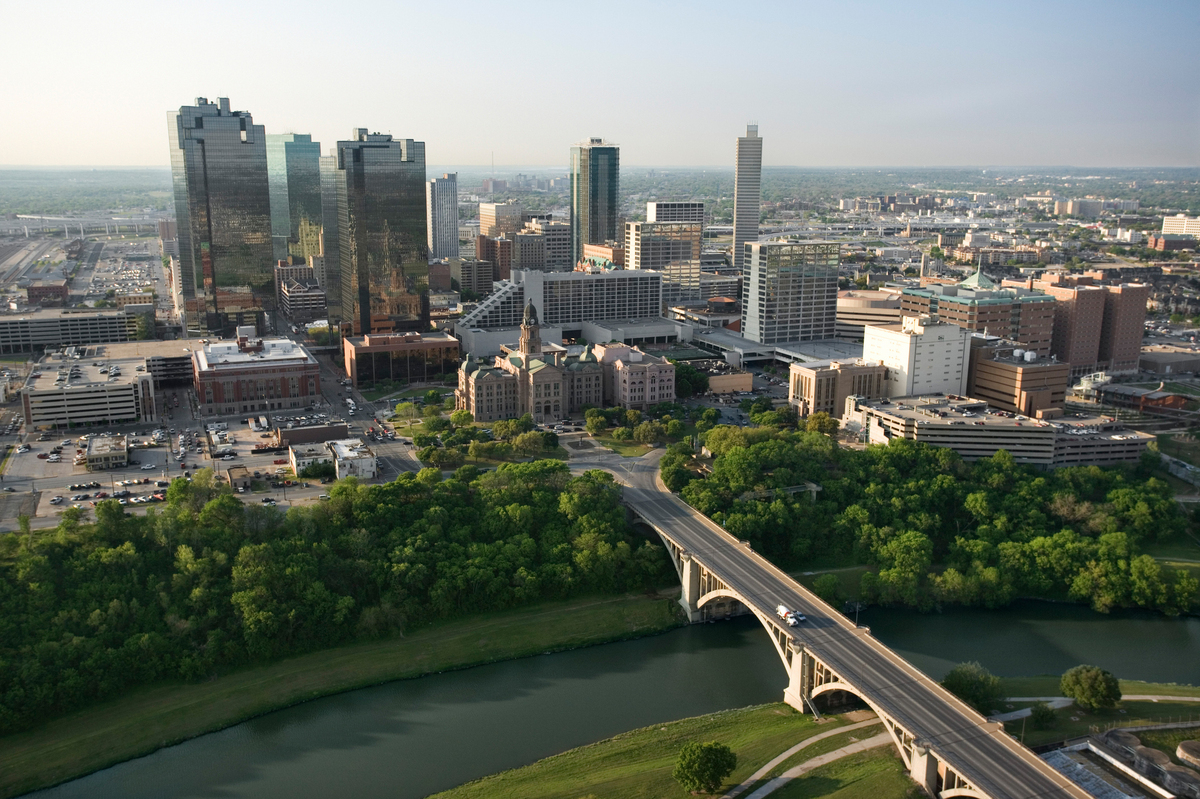
Aerial view of downtown Fort Worth, Texas. Some hospitals in Texas and around the U.S. are seeing high profits, even as their bills force patients into debt. Of the nation’s 20 most populous counties, none has a higher concentration of medical debt than Tarrant County, home to Fort Worth.

Jupiterimages/Getty Images


hide caption

toggle caption

Jupiterimages/Getty Images


Aerial view of downtown Fort Worth, Texas. Some hospitals in Texas and around the U.S. are seeing high profits, even as their bills force patients into debt. Of the nation’s 20 most populous counties, none has a higher concentration of medical debt than Tarrant County, home to Fort Worth.

Jupiterimages/Getty Images

PROSPER, Texas — Almost everything about the opening of the 2019 Prosper High School Eagles’ football season was big.

The game in this Dallas-Fort Worth suburb began with fireworks and a four-airplane flyover. A trained eagle soared over the field. And some 12,000 fans filled the team’s new stadium, a $53 million colossus with the largest video screen of any high school venue in Texas. Atop the stadium was also a big name: Children’s Health.

Business has been good for the billion-dollar pediatric hospital system, which agreed to pay $2.5 million to put its name on the Prosper stadium. Other Dallas-Fort Worth medical systems have also thrived. Though exempt from taxes as nonprofit institutions, several, including Children’s, notched double-digit margins in recent years, outperforming many of the area’s Fortune 500 companies.

But patients aren’t sharing in the good times. Of the nation’s 20 most populous counties, none has a higher concentration of medical debt than Tarrant County, home to Fort Worth. Second is Dallas County, credit bureau data show.

The mismatched fortunes of hospitals and their patients reach well beyond this corner of Texas. Nationwide, many hospitals have grown wealthy, spending lavishly on advertising, team sponsorships, and even spas, while patients are squeezed by skyrocketing medical prices and rising deductibles.

A KHN review of hospital finances in the country’s 306 hospital markets found that several of the most profitable markets also have some of the highest levels of patient debt.

Overall, about a third of the 100 million adults in the U.S. with health care debt owe money for a hospitalization, according to a poll conducted by KFF for this project. Close to half of those owe at least $5,000. About a quarter owe $10,000 or more.

Many are pursued by collectors when they can’t pay their bills or hospitals sell the debt.

“The fact is, if you walk into a hospital today, chances are you are going to walk out with debt, even if you have insurance,” said Allison Sesso, chief executive of RIP Medical Debt, a nonprofit that buys debt from hospitals and debt collectors so patients won’t have to pay it.

A community shadowed by debt

Across the Dallas-Fort Worth metro area — the nation’s fourth-largest — the impact has been devastating.

“Medical debt is forcing people here to make incredibly agonizing choices,” said Toby Savitz, programs director at Pathfinders, a Fort Worth nonprofit that assists people with credit problems. Savitz estimated that at least half their clients have medical debt. Many are scrimping on food, neglecting rent, even ending up homeless, she said, “and this is not just low-income people.”

David Zipprich, a Fort Worth businessman and grandfather, was forced out of retirement after hospitalizations left him owing more than $200,000.

Zipprich, 64, had spent a career in financial consulting. He owned a small bungalow in a historical neighborhood near the Fort Worth rail yards. His daughters, both teachers, and his four grandchildren lived nearby. He had health insurance and some savings, and he’d paid off his mortgage.

Then in early 2020, Zipprich landed in the hospital. While driving, his blood sugar dropped precipitously, causing him to black out and crash his car.

Three months later, after he was diagnosed with diabetes, another complication led to another hospitalization. In December 2020, covid-19 put him there yet again. “I look back at that year and feel lucky I even survived,” Zipprich said.

David Zipprich, a Fort Worth financial consultant and grandfather, was forced out of retirement after hospitalizations left him owing more than $200,000.

Laura Buckman for KHN and NPR


hide caption

toggle caption

Laura Buckman for KHN and NPR


David Zipprich, a Fort Worth financial consultant and grandfather, was forced out of retirement after hospitalizations left him owing more than $200,000.

Laura Buckman for KHN and NPR

But even with insurance, Zipprich was inundated with debt notices and calls from collectors. His credit score plummeted below 600, and he had to refinance his home. “My stress was off the charts,” he said, sitting in his neatly kept living room with his Shih Tzu, Murphy.

Overall in Tarrant County, 27{cfdf3f5372635aeb15fd3e2aecc7cb5d7150695e02bd72e0a44f1581164ad809} of residents with credit reports have medical debt on their records, credit bureau data analyzed by KHN and the nonprofit Urban Institute shows. In Dallas County, it’s 22{cfdf3f5372635aeb15fd3e2aecc7cb5d7150695e02bd72e0a44f1581164ad809}.

That’s more than five times the rate in the largest counties in New York, data shows. The Texans also owe a lot more — the median amount of medical debt on credit records in Tarrant and Dallas counties is nearly $1,000, compared with $400 or less in New York.

Last year, Zipprich returned to work, taking a job in New Jersey that required he commute back and forth to Texas. He recently quit, citing the strain of so much travel. He’s now job hunting again. “I never thought this would happen to me,” he said.

Who is responsible?

Even small debts can have potentially dangerous consequences, discouraging patients from seeking needed care. Angie Johnson, a 28-year-old schoolteacher, cut short her honeymoon so she and her husband could pay off more than $1,100 she owed a physical therapy center owned by Baylor Scott & White, a mammoth Dallas-based hospital system.

Johnson said the center, where she’d gone after a knee injury, initially said her visits would cost $60. “Then they billed me hundreds,” she said. “I don’t go to the doctor unless I absolutely have to because it’s so expensive.”

Angie Johnson of Waxahachie, Texas, says the physical therapy center she went to after a knee injury initially told her visits would cost $60. “Then they billed me hundreds,” she says.

Laura Buckman for KHN and NPR


hide caption

toggle caption

Laura Buckman for KHN and NPR


Angie Johnson of Waxahachie, Texas, says the physical therapy center she went to after a knee injury initially told her visits would cost $60. “Then they billed me hundreds,” she says.

Laura Buckman for KHN and NPR

Hospital industry leaders blame the patient debt on health insurers, citing the rise of high-deductible plans and other efforts that limit coverage. “The last thing that hospitals want is for their patients to face financial barriers,” said Molly Smith who leads public policy at the American Hospital Association. “Hospitals are in there trying to work on behalf of patients.”

Despite repeated requests from KHN, none of the medical systems around Dallas-Fort Worth would discuss their finances or the debt carried by patients.

But Smith and other hospital leaders point to billions of dollars of free or discounted care that hospitals nationwide provide every year. “Hospitals have been pretty darn generous,” said Stephen Love, president of the Dallas-Fort Worth Hospital Council. “If other parts of the community did as much as hospitals, we wouldn’t be in this problem.”

Unlike drug companies, device makers, and many physician practices, most U.S. hospitals are nonprofit and must provide charity care as a condition of their tax-exempt status.

Regardless of tax status, medical centers in markets with high medical debt do provide more charity care, according to an analysis by KHN and the Urban Institute, a Washington think tank. That’s important, said Dr. Vikas Saini, president of the Lown Institute, a nonprofit that grades hospitals on their quality and community benefits.

But Saini asked: “Is a hospital truly serving its community if it’s pushing so many into debt?”

Around Dallas-Fort Worth, major medical systems frequently tout their commitment to the region and its patients.

When Texas Health Resources, a Dallas-based nonprofit system with more than $5 billion in annual revenue, opened a new hospital tower in Fort Worth earlier this year, Barclay Berdan, the system’s chief executive, said the building “reinforces Texas Health’s long-standing commitment to the Fort Worth community.” The nine-story, $300 million tower is one of more than a half-dozen new hospitals and major expansions around the Dallas-Fort Worth area since 2018.

The big building spree has been accompanied by big bottom lines.

From 2018 to 2021, Texas Health, which owns hospitals in North Texas, had an average operating margin of almost 6{cfdf3f5372635aeb15fd3e2aecc7cb5d7150695e02bd72e0a44f1581164ad809}, according to a KHN analysis of publicly available financial reports.

Other major systems in the area, including Baylor, Children’s Health, and HCA, the nation’s largest for-profit hospital company, did even better, KHN found. Cook Children’s, the region’s second major pediatric system, had an average operating margin of nearly 12{cfdf3f5372635aeb15fd3e2aecc7cb5d7150695e02bd72e0a44f1581164ad809}.

By comparison, profits at most of the 25 Fortune 500 companies based around Dallas-Fort Worth, such as ExxonMobil, were less than 6{cfdf3f5372635aeb15fd3e2aecc7cb5d7150695e02bd72e0a44f1581164ad809} in 2019, according to Fortune data.

Approaching a tipping point

Hospitals have thrived in other markets with high patient debt, KHN found.

In Charlotte, N.C., where a quarter of residents have medical debt on their credit reports, hospitals recorded an average operating margin of 13.6{cfdf3f5372635aeb15fd3e2aecc7cb5d7150695e02bd72e0a44f1581164ad809} from 2017 to 2019.

The average margin at hospitals in and around Gainesville and Lakeland, two central Florida markets where a quarter of residents also carry medical debt, topped 9{cfdf3f5372635aeb15fd3e2aecc7cb5d7150695e02bd72e0a44f1581164ad809}. In Tulsa, Okla., which has the same level of debt, margins have averaged 8.5{cfdf3f5372635aeb15fd3e2aecc7cb5d7150695e02bd72e0a44f1581164ad809}.

Overall, U.S. hospitals recorded their most profitable year on record in 2019, with an aggregate operating margin of 6.5{cfdf3f5372635aeb15fd3e2aecc7cb5d7150695e02bd72e0a44f1581164ad809}, according to the federal Medicare Payment Advisory Commission. Total margins, which include income from investments, were even higher.

“You might think that hospitals in communities where patients have a lot of debt would be less profitable, but that doesn’t seem to be the case,” said Anuj Gangopadhyaya, a senior Urban Institute researcher who worked with KHN on an analysis of hospital finance and consumer debt data in U.S. hospital markets.

In fact, the analysis found, there is no apparent relationship between the profits of hospitals in a market and how much medical debt residents have. So while hospitals in places like Charlotte and Tulsa may be comfortably in the black, in other places with high patient debt such as Amarillo, Texas, and Columbia, S.C., hospitals are struggling, data shows.

Industry experts say the most profitable medical centers — like those around Dallas-Fort Worth — have developed business models that allow them to prosper even if their patients can’t pay.

One key is prices. These hospitals maximize what they charge for everything from a complex surgery to a dose of aspirin. Most of those charges are picked up by health insurers, which still pay a much larger share of hospital bills than patients do, even those with the highest deductibles.

Across the country, many medical systems have strengthened their market power in recent years by consolidating, buying up smaller hospitals and physician practices, which enable the hospital systems to charge even more.

Dallas-Fort Worth has the highest medical prices in Texas, according to the Health Care Cost Institute, a nonprofit that tracks costs nationwide. And in a state where most markets have relatively low medical prices, in-patient care at Dallas-Fort Worth hospitals was 13{cfdf3f5372635aeb15fd3e2aecc7cb5d7150695e02bd72e0a44f1581164ad809} more expensive than the national median in 2020.

In addition to charging more, the most profitable hospitals frequently squeeze more savings from their operations, holding down what they pay workers, for example, and securing better contracts from suppliers. “Hospitals have had to get leaner and meaner,” said Kevin Holloran, a senior director at Fitch Ratings who tracks nonprofit health systems for the bond rating firm.

It’s unclear how much longer this business model can endure.

Across the country, many small and rural hospitals have closed in recent years. Even some larger systems are now losing money, as inflation and rising labor costs put new pressure on bottom lines.

As bills rise, hospitals are having a harder time collecting. Last year, nearly 1 in 5 patient bills generated by hospitals for people with insurance topped $7,500, according to an analysis of hospital billing records by Crowe LLP, a Chicago-based accounting and consulting firm. That was more than triple the rate in 2018.

“These are bills that fewer and fewer patients out there can afford,” said Brian Sanderson, a senior Crowe health care consultant and former hospital executive. Indeed, hospitals manage to collect less than 17{cfdf3f5372635aeb15fd3e2aecc7cb5d7150695e02bd72e0a44f1581164ad809} of patient balances that exceed $7,500, according to Crowe’s analysis.

“The rates at which patient balances are growing is just unsustainable for our health systems,” Sanderson said, predicting that most will never be able to collect bills of this size. “It’s trending to the ridiculous.”

Robert Earley, a former Texas state legislator who used to head Fort Worth’s public health system, compared today’s hospitals to shrimpers in the Gulf Coast district he once represented.

“They wanted to pull so much shrimp out of the bay that they didn’t think about whether there’d be any there long term,” Earley said, recalling his constituents’ struggles. “I worry that those of us in health care aren’t asking ourselves enough if this system is sustainable.”

Diagnosis: Debt is a reporting partnership between KHN and NPR exploring the scale, impact, and causes of medical debt in America.

KHN (Kaiser Health News) is a national newsroom that produces in-depth journalism about health issues. It is an editorially independent operating program of KFF (Kaiser Family Foundation).

Jayland Walker was shot 46 times by Ohio police, medical examiner says

Jayland Walker was shot 46 times by Ohio police, medical examiner says

Jayland Walker, the Black motorist killed by Ohio police final month, experienced 46 gunshot wounds in the hail of officer gunfire, the professional medical examiner’s office environment uncovered Friday. 

The 46 pictures were being from entrance and graze wounds, Summit County Health-related Examiner Lisa Kohler mentioned at a news conference asserting a summary of the autopsy results.

Walker, 25, died of blood decline from internal accidents and the induce was gunshot wounds. His death was ruled a murder, Kohler reported. 

She broke down where by he was hit: 15 gunshot wounds to his torso, 17 gunshots to his pelvis and upper legs, a person bullet to his encounter, eight to his arms and correct hand, and five to his knees, decrease ideal leg and appropriate foot.

“There are 46 entrance wounds. There are 15 exit wounds, and 5 of the wounds that would be in with the entrances are graze wounds,” Kohler mentioned. 

Five wounds entered on the back of Walker’s entire body, but it could not be determined if that was when he was running from officers or only transferring his body, she extra.

Walker analyzed destructive for medicine and alcohol, in accordance to the toxicology screening, Kohler stated.

Image: Jayland Walker
Cortez Beasley retains a photograph of Jayland Walker as protesters occupy the intersection of Trade Street and Broadway on July 3 in Akron, Ohio.

Phil Masturzo / United states of america Right now Community

She explained he suffered “devastating accidents,” and the professional medical examiner’s office environment are unable to figure out if 1 certain bullet killed him.

“He’s acquired an harm to his heart he has personal injury to equally lungs, which also bleed thoroughly and he has an injuries to the correct iliac artery, so we’ve bought numerous destinations that are likely to bleed considerably and would contribute to his loss of life,” Kohler mentioned.

The outcomes have been discussed with Walker’s relatives, who gathered just days in the past for his funeral. Representatives of the spouse and children reviewed the report, in accordance to Kohler.

The Walker family’s authorized workforce known as the report effects “horrific” and condemned law enforcement actions as a display screen of “violent and needless use of power.”

“The simple fact that right after remaining hit almost 4 dozen occasions, officers still handcuffed him whilst he lay motionless and bleeding on the floor is totally inhumane,” the DiCello Levitt Gutzler law business claimed in a statement unveiled immediately after the news convention.

“The relatives is devastated by the results of the report and nonetheless await a community apology from the police office.”

Walker was killed June 27 just after an tried visitors stop in Akron. 

Police officers experimented with to pull him above on an unspecified targeted traffic violation, and a auto chase ensued. Through that pursuit, they “reported a firearm currently being discharged from the suspect auto,” the Akron Law enforcement Division mentioned.

When Walker jumped out of his moving car or truck, officers pursued him on foot and sooner or later opened fireplace.

Harrowing online video footage unveiled by the law enforcement division exhibits the instant officers unleash a barrage of bullets toward Walker. 

Syndication: Akron Beacon Journal
A mourner leaves the funeral of Jayland Walker on Wednesday in Akron, Ohio.Phil Masturzo / United states Nowadays Community

He was pronounced dead on the scene, and no gun was uncovered on Walker’s body. A gun was discovered in Walker’s motor vehicle, law enforcement mentioned.

8 officers included in the shooting were positioned on administrative leave. The Ohio legal professional general’s Bureau of Prison Investigation is foremost the probe of police use of force.

The NAACP on Thursday pleaded with Legal professional Common Merrick Garland to open a federal civil rights investigation into Walker’s loss of life, stating he was “executed by Akron, Ohio, police officers for a site visitors violation.”

“We are urging you and your Office of Justice to conduct a complete investigation into the murder of Jayland Walker, and — if what we all noticed with our have eyes is genuine — federally demand the officers liable for his grotesque assassination,” Derrick Johnson, the NAACP president, wrote in a letter to Garland.

Akron police claimed Walker’s steps “caused the officers to perceive he posed a deadly menace to them,” which prompted them to discharge their firearms.

The Akron chapter of the Fraternal Get of Police beforehand mentioned it thinks investigators will uncover that the officers’ steps and the amount of pictures had been justified. NBC Information is achieving out to associates for the group for comment on Friday’s results.

Following President Biden’s Executive Order to Protect Access to Reproductive Health Care, HHS Announces Guidance to Clarify that Emergency Medical Care Includes Abortion Services

Following President Biden’s Executive Order to Protect Access to Reproductive Health Care, HHS Announces Guidance to Clarify that Emergency Medical Care Includes Abortion Services

Nowadays, the U.S. Office of Wellbeing and Human Companies (HHS) introduced new direction and communication to make sure all patients — together with expecting ladies and other individuals going through pregnancy reduction — have obtain to the entire legal rights and protections for emergency healthcare care afforded less than the regulation. This announcement follows President Biden’s govt buy on reproductive wellness issued Friday.

HHS, as a result of the Facilities for Medicare & Medicaid Providers (CMS), issued clarifying steerage on the Crisis Medical Therapy and Lively Labor Act (EMTALA) and reaffirmed that it shields companies when offering lawfully-mandated, lifestyle- or health-conserving abortion products and services in unexpected emergency conditions. In addition to the guidance, Secretary Xavier Becerra, in a letter to providers, created very clear that this federal law preempts state regulation restricting accessibility to abortion in unexpected emergency circumstances.

“Under the legislation, no matter the place you live, women of all ages have the proper to unexpected emergency care — which includes abortion treatment,” explained HHS Secretary Xavier Becerra. “Today, in no unsure terms, we are reinforcing that we count on vendors to keep on giving these products and services, and that federal legislation preempts condition abortion bans when necessary for crisis treatment. Preserving equally people and vendors is a top rated priority, notably in this moment. Wellness treatment must be among a patient and their health practitioner, not a politician. We will carry on to leverage all offered methods at HHS to make certain women of all ages can access the daily life-saving care they require.”

“Everyone must have obtain to the wellness treatment they have to have — in particular in an unexpected emergency,” explained CMS Administrator Chiquita Brooks-LaSure. “Under federal legislation, companies in crisis situations are demanded to supply stabilizing treatment to an individual with an unexpected emergency medical ailment, including abortion care if required, regardless of the point out where by they live. CMS will do every thing inside our authority to assure that patients get the treatment they have to have.”

The EMTALA statute calls for that Medicare hospitals offer all individuals an appropriate health care screening, evaluation, stabilizing remedy, and transfer, if important, irrespective of any point out guidelines or mandates that apply to unique processes. Stabilizing treatment could consist of health-related and/or surgical interventions, together with abortion. If a state law prohibits abortion and does not contain an exception for the wellbeing or everyday living of the expecting person — or attracts the exception much more narrowly than EMTALA’s unexpected emergency health care condition definition — that point out regulation is preempted.

Go through the Secretary’s letter to overall health care vendors.

Study the EMTALA assistance issued.

Adhering to the Supreme Court’s determination in Dobbs v. Jackson Women’s Overall health Corporation, Secretary Becerra introduced HHS’s motion system to defend access to reproductive wellbeing care, like abortion treatment, which features 5 priorities:

  1. expanding accessibility to treatment abortion
  2. defending people and suppliers from discrimination, and making sure privacy for clients and suppliers
  3. shielding emergency abortion treatment
  4. ensuring suppliers have relatives planning instruction and methods and
  5. strengthening loved ones setting up treatment, which include unexpected emergency contraception.

Since the program was declared, HHS has taken the subsequent steps:

  • Released the ReproductiveRights.gov public consciousness web page, which consists of a know-your-legal rights affected individual point sheet
  • Convened a conference with health and fitness insurers, and despatched them a letter, contacting on the industry to dedicate to conference their obligations to offer coverage for contraceptive solutions at no price as necessary by the Affordable Treatment Act 
  • Issued guidance to people and vendors that addresses the extent to which federal legislation and restrictions secure individuals’ private health care information and facts when it arrives to in search of abortion and other kinds of reproductive wellbeing treatment, as effectively as when it will come to working with well being facts applications on smartphones
  • Announced nearly $3 million in new funding to bolster teaching and specialized aid for the nationwide community of Title X family preparing companies and
  • Satisfied with Michigan Governor Gretchen Whitmer, Oregon Governor Kate Brown, and Maine Governor Janet Mills and point out lawyers typical to explore state-specific concerns.

HHS will consider further actions in the coming days.

HHS is dedicated to offering precise and up-to-day info about access to and coverage of reproductive wellbeing care and methods. The Department’s objective is to make positive sufferers and vendors have correct details and support.

Visit ReproductiveRights.gov to master more about the treatment available to individuals, and their appropriate to that care.