AstraZeneca, Pfizer, and rare blood clots

AstraZeneca, Pfizer, and rare blood clots

Someone wearing rubber gloves pulling a bottle of AstraZeneca vaccine from its boxShare on Pinterest
Do COVID-19 vaccines increase blood clot risk? HANNIBAL HANSCHKE/Getty Images
  • Two large studies have found a small increase in the absolute risk of rare types of blood clot in the head following a first dose of the AstraZeneca COVID-19 vaccine.
  • An increased risk of a type called intracranial venous thrombosis only applied to individuals under 70 years of age.
  • The benefits of vaccination to protect against severe COVID-19 far outweigh the risks that the researchers identified.
  • They found no evidence of increased risks following a first dose of the Pfizer-BioNTech COVID-19 vaccine.

In late February 2021, several reports emerged of rare types of “thromboses” — blood clots that block veins or arteries — after the AstraZeneca (ChAdOx1-S) COVID-19 vaccine.

The clots were in unusual locations, such as the veins in the head, and often accompanied by low platelet levels in the blood.

However, because the number of reported cases was so small, it has been difficult to estimate the increased risk for populations as a whole.

Scientists were also unsure whether the risk of common types of thrombosis also increases.

Part of the problem was that when COVID-19 vaccines became widely available, governments prioritized clinically vulnerable and older people, who are already more prone to thromboses.

In addition, publicity about the risk of blood clots after vaccination may have made doctors more likely to diagnose thromboses. This would give a false impression that they had become more common.

Two studies that pooled data for millions of patients in the United Kingdom have now found a small increase in the absolute risk of rare types of blood clot in the head. There was no evidence of any increased risk of more common types of blood clot.

“We were worried that there might be more thromboses diagnosed in people after the complications of the AstraZeneca vaccine had been reported,” explained Dr. William Whiteley, Ph.D., of the Centre for Clinical Brain Sciences at the University of Edinburgh in the U.K., and the lead author of one of the studies.

“This was the reason we did the study using data from before the date the thrombotic complications of the AstraZeneca vaccine were widely reported,” he told Medical News Today.

“But our estimates [of the frequency of blood clots], and those done afterward are similar, so this may not be such a concern,” he added.

In the U.K., a vaccination program that employed the Pfizer-BioNTech vaccine began on December 8, 2020, with the AstraZeneca vaccine added on January 4, 2021.

The program prioritized extremely clinically vulnerable individuals and those over 70 years, followed by people with chronic illnesses, such as diabetes and high blood pressure, and those over 65 years.

In the first study, researchers led by Dr. Whiteley analyzed the electronic health records of 46 million adults in England, 21 million of whom had their first vaccine dose between December 2020 and March 2021.

Overall, 79{cfdf3f5372635aeb15fd3e2aecc7cb5d7150695e02bd72e0a44f1581164ad809} of the participants were white, 51{cfdf3f5372635aeb15fd3e2aecc7cb5d7150695e02bd72e0a44f1581164ad809} female, and 84{cfdf3f5372635aeb15fd3e2aecc7cb5d7150695e02bd72e0a44f1581164ad809} under 70 years.

The researchers compared the incidence of thromboses before and after the first dose of vaccine. They then adjusted the figures to account for other factors that might affect the incidence of blood clots, including age, sex, ethnicity, socioeconomic status, existing medical conditions, and medications.

After adjustments, the overall risk of thromboses was lower in the 28 days after the first dose of either the AstraZeneca or Pfizer-BioNTech vaccine, compared with before vaccination.

For AstraZeneca, the risk of thromboses in veins was 3{cfdf3f5372635aeb15fd3e2aecc7cb5d7150695e02bd72e0a44f1581164ad809} and 42{cfdf3f5372635aeb15fd3e2aecc7cb5d7150695e02bd72e0a44f1581164ad809} lower in those under 70 and those 70 years or older, respectively. The risk of thromboses in arteries was 10{cfdf3f5372635aeb15fd3e2aecc7cb5d7150695e02bd72e0a44f1581164ad809} and 24{cfdf3f5372635aeb15fd3e2aecc7cb5d7150695e02bd72e0a44f1581164ad809} lower, respectively, in these age groups.

The corresponding figures for the Pfizer vaccine were 19{cfdf3f5372635aeb15fd3e2aecc7cb5d7150695e02bd72e0a44f1581164ad809} and 43{cfdf3f5372635aeb15fd3e2aecc7cb5d7150695e02bd72e0a44f1581164ad809} lower for thromboses in veins, and 6{cfdf3f5372635aeb15fd3e2aecc7cb5d7150695e02bd72e0a44f1581164ad809} and 28{cfdf3f5372635aeb15fd3e2aecc7cb5d7150695e02bd72e0a44f1581164ad809} lower for thromboses in arteries.

The researchers believe that the most likely explanation for these improvements is that vaccination substantially reduced the likelihood of COVID-19, which can itself cause thromboses, especially in the lungs.

In people under 70 years of age, the rates of intracranial venous thromboses — blood clots in a vein in the head — or hospitalization with low platelet levels were roughly twice as high in the 28 days after a first dose of the AstraZeneca vaccine.

However, because these events are extremely rare, the absolute increase in the number of events was very small.

The scientists estimate that after adjustments for other risk factors, the AstraZeneca vaccine may cause between 0.9 and 3 extra cases, depending on age and sex, for every million people vaccinated.

This small increase in risk is easily offset by the reduced risk of becoming sick or dying from COVID-19 that the vaccine provides.

“Most people want accurate information about the pros and cons of the treatments that they take, and we are providing information for them,” said Dr. Whiteley.

“The overwhelming majority of people in the U.K. decide to be vaccinated against COVID-19 when offered a vaccine, and because of this COVID-19 is less of a threat to us all,” he added.

After a first dose of the AstraZeneca vaccine, the study found no increase in the risk of intracranial thromboses among people 70 years or older.

Following a first dose of the Pfizer vaccine, there was no increased risk either for people older or younger than 70.

The results of the study appear in PLOS Medicine.

The authors concluded:

“For older populations, who are most vulnerable to COVID-19, we found no evidence of increased risk of any event with ChAdOx1-S. In younger populations, who have a lower morbidity and mortality due to COVID-19, other available vaccines might be prioritized, especially when the risk of COVID-19 is otherwise low.”

The scientists plan to publish results of their analyses of blood clots after second vaccine doses, and after COVID-19 infections, in future papers.

In the second study, scientists led by the University of Edinburgh in the U.K. investigated the incidence of a rare type of blood clot in the brain called cerebral venous sinus thrombosis (CVST).

In 2021, several countries withdrew the AstraZeneca vaccine or restricted its use to older people following initial reports of a possible link between the vaccine and CVST.

The background incidence of CVST is only 3 to 4 per million person-years in adults, but the chances of dying for someone with a CVST is around 4{cfdf3f5372635aeb15fd3e2aecc7cb5d7150695e02bd72e0a44f1581164ad809}.

Dr. Steven Kerr, Ph.D., a senior data scientist at the University of Edinburgh, and his colleagues linked electronic medical information from primary care and secondary care, plus mortality and virological test data.

The study encompassed data from more than 11 million people in England, Scotland, and Wales who received their first dose of a COVID-19 vaccine from December 2020 through June 2021.

The researchers compared the rate of CVST events for individuals during a 90-day period before their vaccination with the 4 weeks afterward.

This is known as a self-controlled case series, where individuals act as their own control to account for other possible risk factors that they might have that are unchanging over time.

There were 201 CVSTs in total. Out of these, 81 CVSTs occurred in the follow-up period after the first dose of the AstraZeneca vaccine, or 16.34 events per million doses.

This represents a doubling of the very low initial incidence of CVST, which equates to one extra event for every 4 million people vaccinated.

There were 40 CVSTs among those who received a first dose of the Pfizer vaccine, or 12.6 events per million doses.

This suggests that there is no link between the Pfizer vaccine and CVST.

The study appears in PLOS Medicine.

“It is important to understand that CVST is an extremely rare event, which typically only occurs a handful of times per million people per year,” Dr. Kerr told MNT.

“This should be weighed up against the risk associated with contracting COVID and the level and duration of protection that vaccines offer,” he said.

He added that the relative increase in the risk of CVST following a first dose of the AstraZeneca vaccine may be higher in young people than in older people.

“This is something we may be able to study in the future as we amass data that covers a longer time period,” he added.

The authors say they will use the same methodology to investigate any possible risks of CVST with the Moderna vaccine, which is now also in use in the U.K., and the second and booster doses of all three vaccines.

Pfizer and BioNTech seeking emergency use authorization from FDA for Covid-19 vaccine for children younger than 5

Pfizer and BioNTech explained they have initiated a rolling submission of knowledge to the US Foodstuff and Drug Administration immediately after a ask for from the agency. They expect to complete the EUA submission in the coming days and say they will also post medical trial information to the European Medications Agency and other businesses about the world.

Safety and usefulness are essential, explained Dr. Paul Offit, a member of the committee and director of the Vaccine Instruction Centre at Children’s Clinic of Philadelphia.

“The self-assurance of the American general public is dependent on that, that you you might be recommending a little something that you would give to your own little ones,” Offit instructed CNN. “It all relies upon on the knowledge. The facts will tell us just how very good these are. There should be a strong basic safety profile and a sturdy efficacy profile and immunogenicity profile. And if that is genuine, velocity doesn’t really issue, as prolonged as they have those people data.”

The Pfizer/BioNTech vaccine is now authorized for use in men and women as youthful as 5 and would be the initially Covid-19 vaccine offered for the youngest young children.

The go arrives “in response to the urgent general public wellness want in this populace,” the organizations claimed in a news launch.

Since the start out of the pandemic, at the very least 11.4 million little ones have tested constructive for Covid-19, the American Academy of Pediatrics described Monday, with in excess of 3.5 million situations reported in January alone. Small children made up 22.8{cfdf3f5372635aeb15fd3e2aecc7cb5d7150695e02bd72e0a44f1581164ad809} of the whole documented weekly circumstances for the week ending January 27.

“Pediatricians have viewed firsthand the concern, strain and hardship that so many family members of young youngsters have endured as they await a vaccine,” Dr. Moira Szilagyi, president of the American Academy of Pediatrics, claimed in a assertion. “We urge a clear and facts-driven method to consider this vaccine for this age group and look ahead to offering its protection to our youngest little ones.”

The corporations are continuing to take a look at a 3-dose edition of the vaccine in the youngest children.

In December, Pfizer prolonged its vaccine trial in young kids just after two child-sized doses of the vaccine did not generate the expected immunity in 2- to 5-yr-olds, even though it did so for the infants up to age 2.

The organizations explained details on a third dose given at minimum eight months following the second dose is anticipated in the coming months, which will also be submitted to the Fda.

Pfizer's child-sized vaccine fails to produce expected immunity in younger kids; company adds third dose to trials

“As hospitalizations of small children underneath 5 due to COVID-19 have soared, our mutual purpose with the Fda is to get ready for long run variant surges and supply moms and dads with an possibility to aid defend their small children from this virus,” Pfizer Chairman and CEO Albert Bourla mentioned. “Ultimately, we consider that 3 doses of the vaccine will be required for small children 6 months by 4 several years of age to reach high concentrations of security from recent and opportunity upcoming variants.

“If two doses are authorized, mother and father will have the prospect to get started a COVID-19 vaccination sequence for their little ones when awaiting likely authorization of a third dose.”

For people today 12 and more mature, the Pfizer/BioNTech vaccine dose is 30 micrograms of vaccine, and for little ones ages 5 to 11, it was stepped down to 10 micrograms. The dose for the youngest small children is even lessen: 3 micrograms.

CNN reported previously Tuesday that Pfizer was inspired to seek authorization for the two-dose vaccine by federal regulators, who hope the EUA can be granted by late February. Waiting around on data for a few doses could extend the hold out until March.

“If the intention of the vaccine is to get baseline immunity in the young ones — to reduce seriously undesirable results and you are seriously not using the vaccine as a resource to avert an infection in the 1st position — two doses could do that,” Dr. Scott Gottlieb, a previous Food and drug administration commissioner and existing Pfizer board member, stated on CBS on Sunday. “I feel that may possibly be why federal overall health officials are rethinking this.”

CNN’s Katherine Dillinger, John Bonifield, Jen Christensen and Brenda Goodman contributed to this report.

Study compares the Moderna and Pfizer vaccines

Vaccine vials hanging at the Cruise Center Steinwerder vaccination center in GermanyShare on Pinterest
Vaccine vials hanging at the Cruise Centre Steinwerder vaccination centre in Hamburg. Daniel Bockwoldt/photograph alliance through Getty
  • The Moderna and Pfizer vaccines have been really effective at protecting against COVID-19.
  • In a new research, researchers seemed at the dissimilarities in performance in between the two vaccines.
  • They uncovered that persons who experienced gained two doses of the Moderna vaccine ended up fewer likely to create COVID-19 or turn into hospitalized with the illness than men and women who experienced obtained the Pfizer vaccine.

Both the Moderna and Pfizer COVID-19 vaccines are messenger ribonucleic acid (mRNA) vaccines — a rather new sort of vaccine engineering.

These COVID-19 vaccines function by supplying our cells with directions for producing a SARS-CoV-2 protein. Our immune program then reacts to these proteins and develops the resources to respond to any infection with the virus in the upcoming.

Experts from the Facilities for Disorder Manage and Prevention (CDC) have observed that both the Moderna and Pfizer vaccines are pretty helpful at shielding folks from COVID-19.

CDC Director Dr. Rochelle P. Walensky factors to “accumulating proof that mRNA COVID-19 vaccines are effective and must stop most bacterial infections.” She provides that “Fully vaccinated people today who continue to get COVID-19 are most likely to have milder, shorter sickness and appear to be considerably less most likely to distribute the virus to some others.”

“These benefits are a further essential reason to get vaccinated.”

In the hottest research, scientists investigated the distinctions in fees of “breakthrough” conditions of COVID-19 between individuals who acquired the Moderna or Pfizer vaccines. A breakthrough situation is when the ailment develops in an individual who has been fully vaccinated against it.

The team was also intrigued in any variances between costs of hospitalization and demise owing to COVID-19 between people today who obtained either vaccine.

For their analysis, the researchers drew on health documents from 89 million men and women in the United States. The data incorporated people with a broad selection of demographic attributes.

The crew appeared at knowledge taken concerning July and November 2021, when the Delta variant of COVID-19 was the main variant of the virus.

The final results seem as a investigate letter in JAMA.

The researchers observed that in November 2021, there had been 2.8 breakthrough circumstances of COVID-19 in people absolutely vaccinated with the Pfizer vaccine for each 1,000 men and women. They involved breakthrough situations if the folks experienced not gained the booster vaccination or experienced not experienced a prior recorded infection with SARS-CoV-2.

For the Moderna vaccine, the monthly figure was substantially lessen, at 1.6 breakthrough situations for each 1,000 people who received these pictures.

The hazard of hospitalization in the 60 days following an infection was also reduce for folks thoroughly vaccinated with the Moderna vaccine: 12.7{cfdf3f5372635aeb15fd3e2aecc7cb5d7150695e02bd72e0a44f1581164ad809} for Moderna as opposed to 13.3{cfdf3f5372635aeb15fd3e2aecc7cb5d7150695e02bd72e0a44f1581164ad809} for Pfizer.

The researchers did not see a important variance in mortality costs concerning the two vaccine teams.

Healthcare News These days spoke with Dr. Rong Xu, a professor of biomedical informatics at Situation Western Reserve University’s College of Drugs and the corresponding writer of the new research.

Dr. Xu pointed out, “We in comparison recipients of these two vaccines although accounting for individual hazard elements, distinct approval time, and varying time from vaccination.”

“I believe that inherent change in these two vaccines may perhaps have partially accounted for the noticed big difference in equally breakthrough infection and hospitalization.”

Dr. Xu thought that both vaccines would carry on to be productive from the Omicron variant of SARS-CoV-2.

“My speculation is that we can hope that vaccines are helpful against extreme clinical results linked with Omicron variant bacterial infections, as research showed that vaccines can elicit T cell immunity, which might give safety towards Omicron. We will carry out a identical analyze for [SARS-CoV-2] an infection with Omicron,” Dr. Xu claimed.

Dr. Pamela B. Davis, the Arline and Curtis Garvin investigation professor at the Heart for Local community Wellbeing Integration and a co-creator of the study, highlights that “Although there is a big difference in breakthrough infections, each vaccines are really protecting versus SARS-CoV-2 an infection and primarily in opposition to the most intense penalties of infection.”

“Further scientific studies are essential to assess the effects of booster doses and also the protection afforded particularly vulnerable populations by vaccines.”

For dwell updates on the newest developments regarding COVID-19, click on below.

Albert Bourla of Pfizer is the CNN Business CEO of the Year

But Bourla was our preference for all that Pfizer has finished in a year in which Covid vaccines went mainstream (vaccine was even named term of the year by Merriam-Webster) and helped stabilize America’s economic system — and the world’s for that make a difference.

“Pfizer did a great deal of great [for] humanity and we are quite, pretty happy of it,” Bourla mentioned in an job interview with CNN Enterprise. “Not only have been we able to save so numerous life … but we are experiencing superior ranges of corporate track record appropriate now. Folks like us.”

Hoping to get Covid capsule authorised in early 2022

Pfizer is just not the only company that has created a vaccine. But the Massive Pharma chief, even far more so than its European partner BioNTech (BNTX) or rival vaccine developer Moderna (MRNA), has come to be synonymous with the battle from Covid.
The Pfizer/BioNTech vaccine was the first authorized in the United States for 5- to 11-year previous young children. But numerous mother and father of even young youngsters are now ready to hear about when a vaccine may well be accredited for toddlers, toddlers and pre-schoolers.
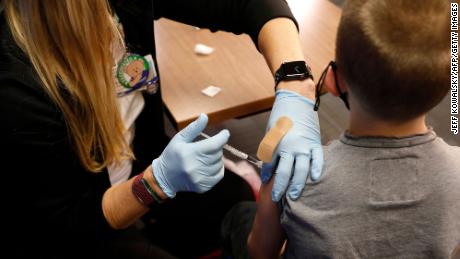
A 8 year-old child receives their first dose of the Pfizer Covid-19 vaccine at the Beaumont Health offices in Southfield, Michigan on November 5, 2021.

Bourla said he understands the disappointment of mothers and fathers who are fully vaccinated but are not able to get their youngest young ones guarded.

“We are working pretty intensively on that to make absolutely sure we can provide a answer for that,” Bourla stated.

Final data on pills to treat Covid-19 holds strong against hospitalization and death, Pfizer says

“We are searching at different doses, perfectly down below the doses that have been utilized [for adults and older kids.] We know that it will be risk-free. What we are on the lookout to see is if that will guard them by offering the decrease dose,” he added.

But Pfizer announced following the interview with CNN Business took spot that it is nonetheless assessing no matter if a few lesser doses of its vaccine will be productive for kids below 5 after obtaining two boy or girl-sized doses ended up not manufacturing the anticipated immunity in 2- to 5-calendar year-olds.
In addition, Pfizer has developed a pill that could greatly minimize the threat of significant complications, hospitalization and dying for people who contract the virus. The Food items and Drug Administration announced adhering to the job interview with Bourla that it experienced accepted Pfizer’s Paxlovid oral therapy.

But Bourla pressured to CNN Business enterprise that the pill is not meant to be a substitute for the vaccine.

Completely ready to start an Omicron-particular vaccine if required

The the latest rise of the Omicron variant has created fears all-around the world about the efficacy of the current vaccines. But Bourla instructed CNN Enterprise that he thinks its and BioNTech’s vaccine will management Omicron “pretty nicely,” specially if folks have gained two doses and the booster.

He conceded, having said that, that it is possible Pfizer will have to have to launch a new vaccine to especially target Omicron or any other foreseeable future variants. Bourla explained Pfizer is previously creating a shot aimed at Omicron, and that he thinks it could be tested and submitted to regulators for acceptance by March.

If Pfizer demands to develop Omicron-precise shots, that will not slow the production of the current vaccine, Bourla explained.

A freezer farm for Covid-19 vaccines at the Pfizer Kalamazoo Manufacturing site on February 19, 2021, in Portage, Michigan.

“We are aiming for a four billion [dose] annual production capability of our latest vaccine. And if we have to switch concerning the two, the old and the new, we nevertheless will make 4 billion. We you should not count on that we will eliminate any volume,” he reported.

Bourla also acknowledged that there are cynics who issue whether Pfizer is just making an attempt to make as a lot income as achievable from the vaccine.

Immediately after all, Pfizer explained in its newest earnings launch in November that it produced $13 billion in income from the vaccine in the third quarter and that it now expects $36 billion in earnings from it for the comprehensive calendar year.

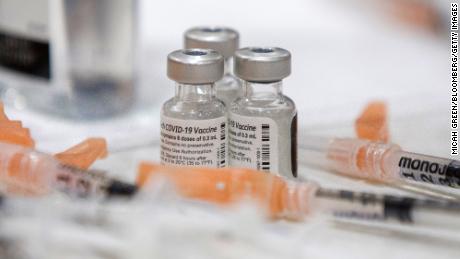
Vials of the Pfizer-BioNTech Covid-19 vaccine during a vaccination event at Manning High School in Manning, South Carolina, on Friday, March 12, 2021.

Bourla informed CNN Business enterprise that it is charging poorer, developing nations a lot less for the vaccine than it does to wealthier international locations. But price tag isn’t the only obstacle. He mentioned some international locations, these kinds of as those in remote components of Africa, are “missing primary infrastructure.”

“They never have facilities to vaccinate men and women, particularly in distant spots. They do not have ample nurses,” he claimed. “Sometimes they are lacking syringes, in some cases they are lacking refrigerators so that they can retail store the vaccine. So this is regretably the situation.”

Bourla is hopeful the Earth Wellness Organization and the public-personal vaccine alliance Gavi will be in a position to help solve some of these concerns. He also explained the company is on the lookout into drone shipping far more to be certain that people get the vaccine much more rapidly.

“We are carrying out every thing we can to locate ourselves on the right [side] of record,” he mentioned.

Bourla also continued to anxiety that the vaccine is harmless and that the only way for lifestyle to return to typical is for folks to get the shots.

“I you should not see any motive why up coming year will not be a ordinary year if we do the simple things that are out there for us,” Bourla explained. “If we have extremely massive figures of men and women that really don’t want to do a third dose or you should not want to vaccinate at all, which is a trouble.”

Extra to Pfizer than the Covid vaccine

Pfizer and Bourla aren’t resting on their laurels.

The company has also been at the forefront of creating lots of other promising blockbuster medication this kind of as blood thinner Eliquis, breast cancer treatment method Ibrance and rheumatoid arthritis capsule Xeljanz, as nicely as the Prevnar loved ones of pneumonia vaccines.

Bourla is thoroughly aware that for a drug enterprise to keep on being prosperous, it has to have even a lot more promising medications in the pipeline.

A number of of Pfizer’s recent major sellers are owing to drop patent protection in the next handful of a long time. When they expire, that opens the door for more affordable generic prescription drugs to contend with them.

That’s a major reason why Pfizer introduced plans for a practically $7 billion deal earlier in December to receive Arena Prescription drugs (ARNA), a firm acquiring prescription drugs to address immuno-inflammatory diseases. The acquisition came just one particular thirty day period soon after Pfizer done a extra than $2 billion purchase of cancer drug maker Trillium Therapeutics.

“It’s challenging to multitask,” Bourla mentioned. “But let’s not overlook what else we are operating on. There are so a lot of medicines for most cancers, for other infectious health conditions, for cardiovascular conditions, for other ailments.”

“We are heavily invested suitable now in most cancers,” Bourla included. “The most significant proportion of our R&D investment goes into oncology correct now.”

Traders have rewarded Pfizer, which ironically plenty of was booted from the venerable Dow Jones Industrial Typical in 2020 just a few months prior to its vaccine was approved. Shares are up virtually 65{cfdf3f5372635aeb15fd3e2aecc7cb5d7150695e02bd72e0a44f1581164ad809} in 2021 — much more than any Dow inventory — and are not much from a history significant.

Pfizer Covid pill: FDA authorizes first oral antiviral Paxlovid to treat coronavirus infection

This is the 1st antiviral Covid-19 tablet approved for sick persons to just take at property, ahead of they get sick sufficient to be hospitalized.

High-hazard persons age 12 and more mature who weigh at minimum 88 lbs . and have a positive SARS-CoV-2 test are suitable for this treatment and will want to have it approved by a doctor.

The pill “should really be initiated as soon as doable right after analysis of Covid-19 and within just five times of symptom onset,” in accordance to an Food and drug administration statement.

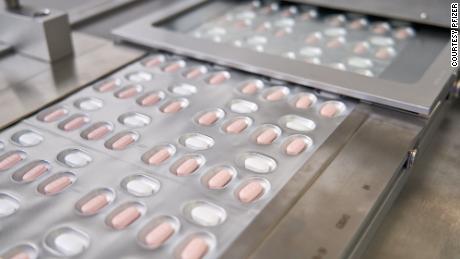
Paxlovid combines a new antiviral drug named nirmatrelvir and an older just one known as ritonavir and is administered as three tablets specified 2 times a working day for five days.

Last week, Pfizer launched updated final results that confirmed the cure slice the chance of hospitalization or dying by 89{cfdf3f5372635aeb15fd3e2aecc7cb5d7150695e02bd72e0a44f1581164ad809} if provided to high-chance adults in a couple days of their very first signs. If presented within just the initial five days of signs, the efficacy was comparable: 88{cfdf3f5372635aeb15fd3e2aecc7cb5d7150695e02bd72e0a44f1581164ad809}.

Finding a Covid-19 test is a struggle right now in the US as Omicron and holiday plans collide

“Modern authorization of PAXLOVID represents an additional incredible case in point of how science will enable us finally defeat this pandemic, which, even two a long time in, carries on to disrupt and devastate life throughout the planet. This breakthrough treatment, which has been demonstrated to considerably lessen hospitalizations and fatalities and can be taken at home, will alter the way we treat COVID-19, and hopefully support lessen some of the important pressures facing our health care and hospital techniques,” Pfizer Chairman and CEO Albert Bourla explained in a statement. “Pfizer stands ready to start out shipping and delivery in the U.S. instantly to assistance get PAXLOVID into the arms of correct sufferers as immediately as doable.”

In November, the Biden administration announced that it would order 10 million treatment method programs for $5.295 billion. President Biden stated he was inspired by the “promising info” from Pfizer and reported the drug would “mark a considerable move forward in our route out of the pandemic.”

He called Paxlovid a “potentially impressive instrument in our combat in opposition to the virus, which includes the Omicron variant,” but pressured that acquiring vaccinated and getting a booster shot remained “the most significant resources we have to conserve lives.”

The Fda emphasized in a statement that Paxlovid is not for pre- or post-exposure avoidance of Covid-19 and “is not a substitute for vaccination in men and women for whom COVID-19 vaccination and a booster dose are proposed.”

Separately, Merck has asked for crisis use authorization for its antiviral capsule, molnupiravir. It was narrowly advisable by FDA’s advisers in a 13-10 vote at the end of November following details showed it reduce the risk of hospitalization or demise by 30{cfdf3f5372635aeb15fd3e2aecc7cb5d7150695e02bd72e0a44f1581164ad809} amid high-hazard grownups. This was lessen than an previously investigation suggesting that selection could be about 50{cfdf3f5372635aeb15fd3e2aecc7cb5d7150695e02bd72e0a44f1581164ad809}. The Food and drug administration has not introduced irrespective of whether it will authorize the treatment.

Remdesivir, offered beneath the manufacturer name Veklury, is the only antiviral accredited by Fda for treatment of Covid-19. It really is specified intravenously, not as a pill that can be taken at house.

CDC recommends Pfizer and Moderna vaccines over Johnson & Johnson due to rare blood clotting issue

The CDC now recommends that Americans take the mRNA vaccines made by Pfizer and Moderna instead of the one-shot Johnson & Johnson vaccine due to rare but serious blood clots.

The agency’s Advisory Committee on Immunization Practices unanimously voted on Thursday to give a preferential recommendation to Moderna and Pfizer’s shots. 

“More than 200 million Americans have completed their primary vaccine series, providing protection against COVID-19, preventing millions of cases and hospitalizations, and saving over a million lives,” CDC Director Rochelle Walensky said in a statement. “Today’s updated recommendation emphasizes CDC’s commitment to provide real-time scientific information to the American public.”

The CDC temporarily halted Johnson & Johnson’s vaccine in April while scientists investigated the blood clots, which are known as “thrombosis with thrombocytopenia syndrome.”

Syringes filled with the Johnson & Johnson vaccine are shown, Thursday, May 13, 2021, at a mobile vaccination site at the Greater Bethel Church in Miami. ((AP Photo/Wilfredo Lee))

Regulators eventually decided that the benefits of the Johnson & Johnson vaccine outweighed the risks, but the FDA released new data this week showing that more cases have occurred in the summer and fall. 

Women between the ages of 30 and 49 are most affected by the blood clotting issue at a rate of about 1 in 100,000 shots. 

Health officials have confirmed 54 cases of the blood clots, nine of which have been fatal, CDC official Dr. Isaac See said Thursday. Two more deaths are suspected to be related to the blood clotting issue. 

SUPPLY CHAIN ISSUES IMPACTING PHARMACIES: WHAT TO KNOW

A CDC official told FOX Business that individuals who received the Johnson & Johnson vaccine should still receive a booster dose two months after their initial vaccine. 

If an individual received a Johnson & Johnson shot for their primary dose and then a booster of any vaccine, then they do not need to be re-vaccinated with an mRNA COVID-19 vaccine, according to the official. 

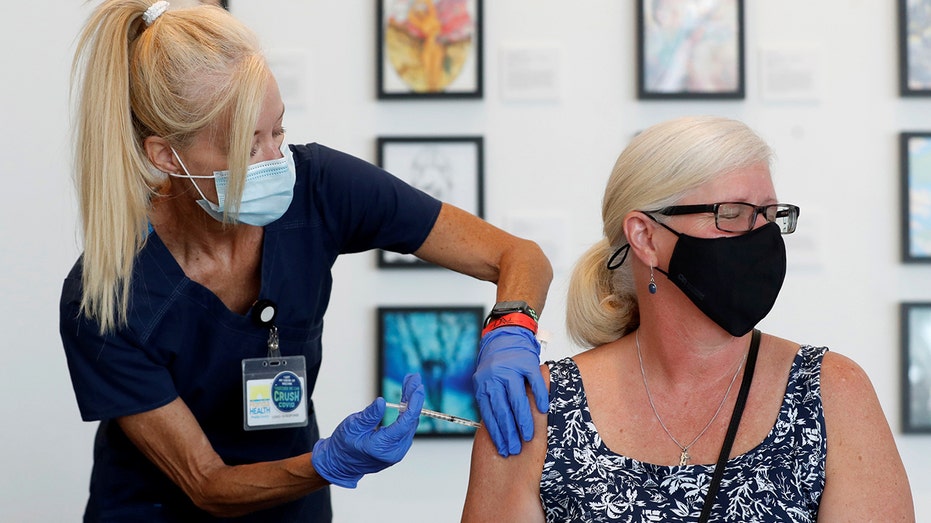
Michelle Falgout, a registered nurse, administers a dose of the Johnson & Johnson COVID-19 vaccine to Kerri Houston at a Florida Department of Health in a Pinellas County vaccination event held at the Salvador Dali Museum in St. Petersburg, Flori

Symptoms of blood clots – including severe headaches, abdominal pain, back pain, and nausea – usually occur 6 to 14 days after receiving the Johnson & Johnson vaccine, according to the American Society of Hematology

Only about 16 million doses of the Johnson & Johnson vaccine have been administered in the United States, compared to about 470 million doses of the vaccines made by Pfizer and Moderna. 

COVID-19 VACCINE EFFECTIVENESS WILL LIKELY DROP AGAINST OMICRON VARIANT, MODERNA CEO SAYS

The Johnson & Johnson vaccine is a viral vector vaccine, meaning that it replaces a small piece of the genetic instructions in a harmless adenovirus with genetic instructions for the SARS-CoV-2 spike protein. When the vaccine is injected, our cells recognize that the spike protein isn’t supposed to be there and produce antibodies to fight it. 

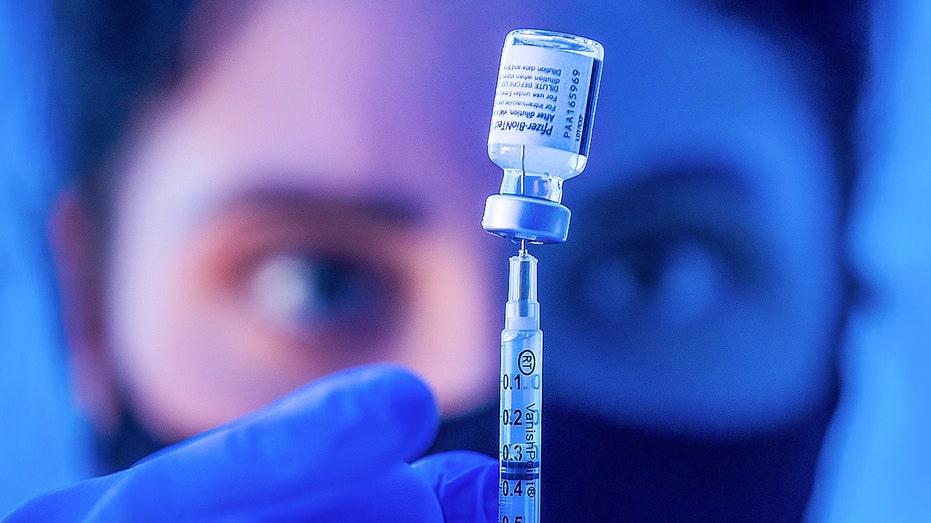
Liesl Eibschutz, a medical student from Dartmouth University, loads a syringe with Pfizer COVID-19 vaccine before giving it to people on the first day that people ages 16 and up can receive the vaccine at Kedren Health on Thursday, April 15, 2021 in

AstraZeneca’s COVID-19 vaccine, which was produced in the United Kingdom, is also a viral vector vaccine and has led to similar blood clotting issues. 

CLICK HERE TO READ MORE ON FOX BUSINESS

Several other countries have already recommended mRNA vaccines over the viral vector vaccines, or set age limits for the Johnson & Johnson and AstraZeneca vaccines. 

COVID-19 itself can also cause blood clots. The risk of developing cerebral venous thrombosis or portal vein thrombosis is “significantly increased after COVID-19,” according to a University of Oxford study in April. 

The Associated Press contributed to this report.