
Year in Review (Part 4) December 31, 2021

Looking Back:

Cars.comAlex Vetter, CEO of Cars.com discusses strong earnings report for Q1
Last Thursday, Cars.com, a leading digital marketplace and solutions provider for the automotive industry, released its financial results for Q1 2021. From the beginning of January to the end of March, Cars.com reported revenue earnings of $153.3 million, up $5.2 million, or 4{cfdf3f5372635aeb15fd3e2aecc7cb5d7150695e02bd72e0a44f1581164ad809} year-over-year, from this time last year, when the threat of COVID-19 was at one of its highest points. To further discuss Cars.com’s Q1 results, is the CEO Alex Vetter. Watch the complete segment here.

KerriganErin Kerrigan on what’s happening in the buy-sell market today
What does the incredible year of buy/sell activity we’ve seen mean for the OEMs? On today’s show, we’re joined by Erin Kerrigan, Founder and Managing Director of Kerrigan Advisors to walk us through what’s happening in the buy-sell market today. They expected 2021 to be the year of the megadeal and Kerrigan thinks 2022 will continue that trend. The Larry H. Miller transaction with Asbury valued at $3.2 billion is a new record. She says what’s interesting about that deal is how strong the evaluation it is. It’s the sense of confidence that the industry will be able to continue at this level of profitability. Watch the complete segment here.

Asbury CEO David Hult and George Karolis of The Presidio Group discuss the company’s exceptional M&A activity
Mergers and acquisitions in retail automotive reached astounding levels in 2020, and the market shows no signs of slowing down. One of the biggest acquisitions in recent memory, was by Asbury Automotive Group which acquired several luxury Park Place dealerships. This deal added 12 franchises and a reported 1.7 billion dollars in annual revenue for Asbury. On today’s show, we’re pleased to welcome David Hult, president and CEO of Asbury Automotive Group and George Karolis, president of The Presidio Group to discuss this unprecedented activity in the M&A market. Watch the complete segment here.

Gole

How to improve your car dealership’s online retailing strategy – Lissette Gole, Head of Auto Retail at Google
Despite the industry’s inventory and chip uncertainty, retail automotive has continued to shift and evolve online. Today’s successful dealerships are offering the entire vehicle purchase process through your mobile device. On today’s show, we’re pleased to welcome back Lissette Gole who is the Head of Automotive Retail at Google. Her nearly 20-year career has been dedicated to the automotive industry, so on today’s show, she’ll take us through today’s top trends and ways you can improve your online retailing. Watch the complete segment here.
Allyson WitherspoonAllyson Witherspoon, CMO of Nissan USA, on launching 10 new models and marketing in 2021
Today on CBT News, host Jim Fitzpatrick is joined by Allyson Witherspoon. Vice President and Chief Marketing Officer of Nissan USA. Witherspoon joins the show to discuss the latest automotive marketing trends, as well as future plans for Nissan. Witherspoon begins the interview by looking back at the lessons learned from 2020. She says that 2020 brought “huge and unprecedented changes.” Nissan is a corporate sponsor of the NCAA March Madness Basketball Tournament, which was unfortunately canceled as the virus began to spread throughout the country. Watch the complete segment here.
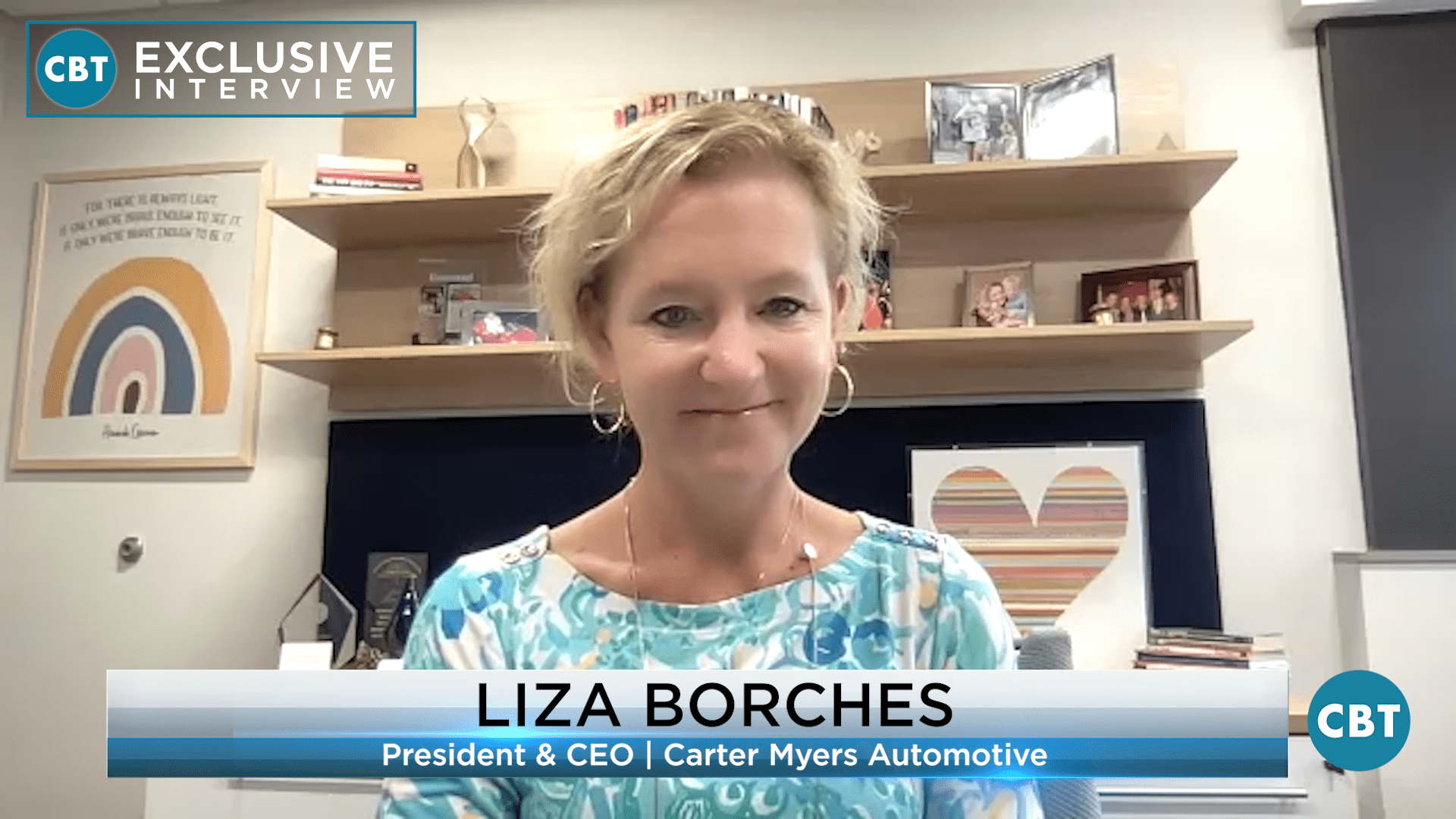
CMA’s Liza Borches explains the value of a top-notch customer experience
Carter Myers Automotive has roots dating back to 1902 as a hardware, machinery, and mill supply business that built and sold horseless carriages. Today, more than a century later, the family business has evolved and expanded to what we know today, including 17 franchises in 15 dealerships across Virginia. President and CEO, Liza Borches is the fourth generation of the Myers family and she joins us today to take a deeper dive into the CMA customer experience. Watch the complete segment here.

Mike JacksonMike Jackson talks about AutoNation’s record-breaking quarter and how AN sources used cars
On this special edition of CBT News, Jim Fitzpatrick sits down with Mike Jackson, CEO of AutoNation to discuss the company’s six straight record-breaking quarters and his proudest moments at the helm of AutoNation.This past September, AutoNation announced that former FCA CEO Mike Manley will be joining the country’s number one dealer group as Director and CEO, upon Jackson’s official retirement on November 1. Jackson has held the CEO role for more than two decades, aside from two short instances where Carl Liebert (March 2019—July 2019) and Cheryl Miller (July 2019—April 2020) occupied the position. Watch the complete segment here.

AIADAAIADA Pres. Cody Lusk on keeping the auto industry a level playing field and free of excessive Gov. influence
More than half of all U.S. dealership jobs are created by international nameplate automobile dealers, according to the American International Automobile Dealers Association. The Association recently released their 2021 Economic Impact Report and joining today to discuss its findings, is Cody Lusk, President of AIADA. We’ll also get into what’s making headlines today and what the association has planned for the remainder of the year. Watch the complete segment here.

WalserNADA Chairman Paul Walser on inventory shortages and what to expect at the 2022 NADA Show
In the first quarter of 2021, automotive dealers dealt with several looming challenges, but as Paul Walser became Chairman of NADA he revealed his top priorities aimed at improving the franchise system. We now stand in the final quarter of 2021 and want to take a look at the past year of retail automotive from Paul’s lens. He joins us now to discuss the current state of retail automotive, where NADA stands on the priorities today, and we’ll also get into the NADA show happening in March. Watch the complete segment here.

diamondsIs your car dealership utilizing its ‘acres of diamonds?’
On the latest episode of Mind Your Own Business, host Jonathan Dawson, founder of Sellchology Sales Training, discusses “acres of diamonds.” The concept of acres of diamonds is the idea that everything you need, is often right below the surface in your own backyard. Many of the challenges or growth opportunities you are faced with are usually beneath the surface. Dawson encourages you to think about the areas of the dealership that need to grow, and think about how that expansion can be made possible? These areas could be systems, processes, or creative resources. Ask yourself, what are some areas you can improve in? Watch the complete segment here.

News & Opinion:

warrantyBest practices when submitting warranty claims
In 2019, automakers across the world had to spend about 2.5{cfdf3f5372635aeb15fd3e2aecc7cb5d7150695e02bd72e0a44f1581164ad809} of the product revenue, totaling more than $49 billion, covering warranty expenses. This cost only shows the warranty that was covered with the understanding that many more were denied. In your dealership, it’s essential that you take proper steps to ensure a good workflow when turning in a claim. To help you, we put together four of the best practices when submitting warranty claims. Read more

loyalty programsHow to use loyalty programs effectively
In selling products, dealerships have an incredible opportunity to acquire new customers and retain existing ones. But, according to Polk, the sad truth is that less than 30{cfdf3f5372635aeb15fd3e2aecc7cb5d7150695e02bd72e0a44f1581164ad809} of owners are loyal to a dealership. For a dealership, an average defection rate of 70{cfdf3f5372635aeb15fd3e2aecc7cb5d7150695e02bd72e0a44f1581164ad809} should be a great motivator to improve loyalty. And in such a competitive market, dealerships often need to use ad campaigns, loyalty programs, promotions, and various other marketing techniques to generate more revenue. Read more


Did you enjoy today’s automotive newscast? Please share your thoughts, comments, or questions regarding this topic by submitting a letter to the editor here, or connect with us at newsroom@cbtnews.com.


Be sure to follow us on Facebook and Twitter to stay up to date or catch-up on all of our podcasts on demand.

While you’re here, don’t forget to subscribe to our email newsletter for all the latest auto industry news from CBT News.

dealers

Albert Bourla of Pfizer is the CNN Business CEO of the Year

But Bourla was our preference for all that Pfizer has finished in a year in which Covid vaccines went mainstream (vaccine was even named term of the year by Merriam-Webster) and helped stabilize America’s economic system — and the world’s for that make a difference.

“Pfizer did a great deal of great [for] humanity and we are quite, pretty happy of it,” Bourla mentioned in an job interview with CNN Enterprise. “Not only have been we able to save so numerous life … but we are experiencing superior ranges of corporate track record appropriate now. Folks like us.”

Hoping to get Covid capsule authorised in early 2022

Pfizer is just not the only company that has created a vaccine. But the Massive Pharma chief, even far more so than its European partner BioNTech (BNTX) or rival vaccine developer Moderna (MRNA), has come to be synonymous with the battle from Covid.
The Pfizer/BioNTech vaccine was the first authorized in the United States for 5- to 11-year previous young children. But numerous mother and father of even young youngsters are now ready to hear about when a vaccine may well be accredited for toddlers, toddlers and pre-schoolers.
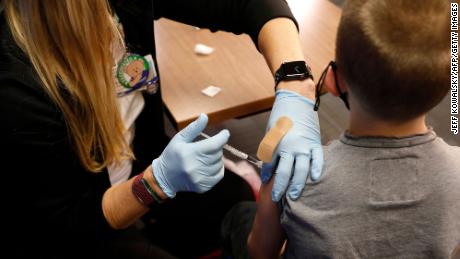
A 8 year-old child receives their first dose of the Pfizer Covid-19 vaccine at the Beaumont Health offices in Southfield, Michigan on November 5, 2021.

Bourla said he understands the disappointment of mothers and fathers who are fully vaccinated but are not able to get their youngest young ones guarded.

“We are working pretty intensively on that to make absolutely sure we can provide a answer for that,” Bourla stated.

Final data on pills to treat Covid-19 holds strong against hospitalization and death, Pfizer says

“We are searching at different doses, perfectly down below the doses that have been utilized [for adults and older kids.] We know that it will be risk-free. What we are on the lookout to see is if that will guard them by offering the decrease dose,” he added.

But Pfizer announced following the interview with CNN Business took spot that it is nonetheless assessing no matter if a few lesser doses of its vaccine will be productive for kids below 5 after obtaining two boy or girl-sized doses ended up not manufacturing the anticipated immunity in 2- to 5-calendar year-olds.
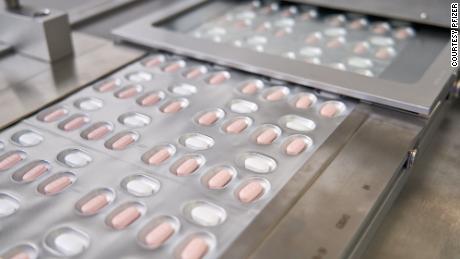
In addition, Pfizer has developed a pill that could greatly minimize the threat of significant complications, hospitalization and dying for people who contract the virus. The Food items and Drug Administration announced adhering to the job interview with Bourla that it experienced accepted Pfizer’s Paxlovid oral therapy.

But Bourla pressured to CNN Business enterprise that the pill is not meant to be a substitute for the vaccine.

Completely ready to start an Omicron-particular vaccine if required

The the latest rise of the Omicron variant has created fears all-around the world about the efficacy of the current vaccines. But Bourla instructed CNN Enterprise that he thinks its and BioNTech’s vaccine will management Omicron “pretty nicely,” specially if folks have gained two doses and the booster.

He conceded, having said that, that it is possible Pfizer will have to have to launch a new vaccine to especially target Omicron or any other foreseeable future variants. Bourla explained Pfizer is previously creating a shot aimed at Omicron, and that he thinks it could be tested and submitted to regulators for acceptance by March.

If Pfizer demands to develop Omicron-precise shots, that will not slow the production of the current vaccine, Bourla explained.

A freezer farm for Covid-19 vaccines at the Pfizer Kalamazoo Manufacturing site on February 19, 2021, in Portage, Michigan.

“We are aiming for a four billion [dose] annual production capability of our latest vaccine. And if we have to switch concerning the two, the old and the new, we nevertheless will make 4 billion. We you should not count on that we will eliminate any volume,” he reported.

Bourla also acknowledged that there are cynics who issue whether Pfizer is just making an attempt to make as a lot income as achievable from the vaccine.

Immediately after all, Pfizer explained in its newest earnings launch in November that it produced $13 billion in income from the vaccine in the third quarter and that it now expects $36 billion in earnings from it for the comprehensive calendar year.

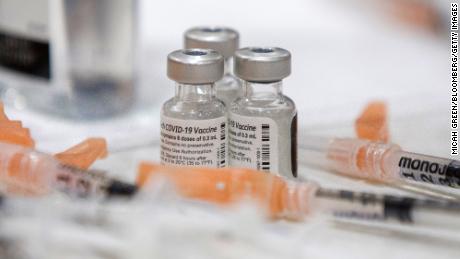
Vials of the Pfizer-BioNTech Covid-19 vaccine during a vaccination event at Manning High School in Manning, South Carolina, on Friday, March 12, 2021.

Bourla informed CNN Business enterprise that it is charging poorer, developing nations a lot less for the vaccine than it does to wealthier international locations. But price tag isn’t the only obstacle. He mentioned some international locations, these kinds of as those in remote components of Africa, are “missing primary infrastructure.”

“They never have facilities to vaccinate men and women, particularly in distant spots. They do not have ample nurses,” he claimed. “Sometimes they are lacking syringes, in some cases they are lacking refrigerators so that they can retail store the vaccine. So this is regretably the situation.”

Bourla is hopeful the Earth Wellness Organization and the public-personal vaccine alliance Gavi will be in a position to help solve some of these concerns. He also explained the company is on the lookout into drone shipping far more to be certain that people get the vaccine much more rapidly.

“We are carrying out every thing we can to locate ourselves on the right [side] of record,” he mentioned.

Bourla also continued to anxiety that the vaccine is harmless and that the only way for lifestyle to return to typical is for folks to get the shots.

“I you should not see any motive why up coming year will not be a ordinary year if we do the simple things that are out there for us,” Bourla explained. “If we have extremely massive figures of men and women that really don’t want to do a third dose or you should not want to vaccinate at all, which is a trouble.”

Extra to Pfizer than the Covid vaccine

Pfizer and Bourla aren’t resting on their laurels.

The company has also been at the forefront of creating lots of other promising blockbuster medication this kind of as blood thinner Eliquis, breast cancer treatment method Ibrance and rheumatoid arthritis capsule Xeljanz, as nicely as the Prevnar loved ones of pneumonia vaccines.

Bourla is thoroughly aware that for a drug enterprise to keep on being prosperous, it has to have even a lot more promising medications in the pipeline.

A number of of Pfizer’s recent major sellers are owing to drop patent protection in the next handful of a long time. When they expire, that opens the door for more affordable generic prescription drugs to contend with them.

That’s a major reason why Pfizer introduced plans for a practically $7 billion deal earlier in December to receive Arena Prescription drugs (ARNA), a firm acquiring prescription drugs to address immuno-inflammatory diseases. The acquisition came just one particular thirty day period soon after Pfizer done a extra than $2 billion purchase of cancer drug maker Trillium Therapeutics.

“It’s challenging to multitask,” Bourla mentioned. “But let’s not overlook what else we are operating on. There are so a lot of medicines for most cancers, for other infectious health conditions, for cardiovascular conditions, for other ailments.”

“We are heavily invested suitable now in most cancers,” Bourla included. “The most significant proportion of our R&D investment goes into oncology correct now.”

Traders have rewarded Pfizer, which ironically plenty of was booted from the venerable Dow Jones Industrial Typical in 2020 just a few months prior to its vaccine was approved. Shares are up virtually 65{cfdf3f5372635aeb15fd3e2aecc7cb5d7150695e02bd72e0a44f1581164ad809} in 2021 — much more than any Dow inventory — and are not much from a history significant.

The year in medical research

2021 has been an eventful year, particularly in medical research. Medical News Today’s editors reflect on some of the year’s highlights.

In 2021 we reached the 1-year mark since World Health Organization (WHO) declared the start of the COVID-19 pandemic, and the world of medical research continues to grapple with this public health crisis.

Throughout this year, researchers, healthcare workers, and public health experts have been working tirelessly to find the best ways of limiting the impact of SARS-CoV-2, the virus that causes COVID-19.

According to WHO data, over 8 billion COVID-19 vaccinations have taken place globally, using 29 approved vaccines. Little wonder then that one of the top Google searches of 2021 has been “COVID vaccine.”

However, pandemic-related news has been just part of this year’s global storyline.

Research into the unknowns of the microcosm that is the human body was in the spotlight, as scientists wondered whether the microbiome is, in effect, a kind of organ in its own right.

Research in mouse models may have uncovered the likely cause of Alzheimer’s disease: an overabundance of toxic fat-protein complexes in the blood.

And on December 16, the Democratic Republic of Congo declared its 13th Ebola outbreak — which lasted a little over 2 months — over.

It has also been a busy year for Medical News Today‘s writers and editors, as the ongoing pandemic has impacted health journalism just as much as it has affected other sectors.

In this month’s “In Conversation” podcast, our editorial team discusses the research and topics that stuck with us this year, and we reflect on what we would like to see in medical research going forward.

Previously, we mentioned the fascination that the human microbiome holds over medical researchers. In sum, it is the genome of the microorganisms that inhabit the human body, which includes bacteria, fungi, and viruses.

Most of us are perhaps more familiar with bacteria, especially those present in the gut. Researchers have linked gut bacteria to a wide array of health phenomena, including, most recently, weight loss, heart disease, and inflammation.

Our body’s most surprising permanent lodgers are viruses, which we tend to associate with infections and ill health. However, not all viruses are the same, and scientists believe that many might even play a positive role in health,

Back in February 2021, scientists from the Wellcome Sanger Institute and the European Bioinformatics Institute in Hinxton, United Kingdom, reported that they had established a comprehensive “atlas” of bacteria-eating viruses that inhabit the human gut. These viruses are called bacteriophages or phages for short.

This new database indicates that the human gut contains over 140,000 different phages. While most of these viruses can only infect and attack a single bacterial species, around 36{cfdf3f5372635aeb15fd3e2aecc7cb5d7150695e02bd72e0a44f1581164ad809} of phages may have the capability to infect several types of bacteria.

Researchers identify previously unknown phages regularly. One study from October 2021 reported on a newly identified phage that occurs in the human gut. The scientists dubbed it LoVEphage, which stands for “lots of viral elements.”

Currently, it is unclear what role or roles this and other bacteriophages might play in human health. Yet, it is becoming increasingly apparent that they could provide the key to some unanswered questions.

“Everyone knows that gut bacteria are important,” said our Senior News Editor, Tim Newman. “That’s something that has become common knowledge over the last 20-30 years. But these bacteriophages kill bacteria. So if gut bacteria are really important to health, then these phages will be as well.”

One way bacteriophages interest scientists is through their potential for offering an alternative to antibiotics in an era when antibiotic resistance is becoming a widespread problem. Indeed, one study published this autumn suggests that a naturally occurring phage can successfully reduce the spread of the bacterium that causes dysentery.

It is no secret that, like many other fields, medical research and healthcare are gravely affected by structural racism and other forms of discrimination. This impacts who receives healthcare and whether they feel able and confident to seek medical assistance in the first place.

There are many expressions of structural racism in medicine, and one of these is through the visual representation of skin conditions. For years, visual reference material about skin conditions has taken white skin as the standard.

Yet, it stands to reason that signs of dermatological issues will present differently on skins of different tones and colors. So, not including accurate visual representations for the full spectrum of skin colors results in untreated conditions, often leading to fatalities.

For example, around one-quarter of African American people with skin cancer only receive a diagnosis once the cancer has already spread to the lymph nodes. And while white adults in the United States who have received a diagnosis of melanoma have a 5-year survival rate of 92{cfdf3f5372635aeb15fd3e2aecc7cb5d7150695e02bd72e0a44f1581164ad809}, African American people with skin cancer have a 5-year survival rate of 67{cfdf3f5372635aeb15fd3e2aecc7cb5d7150695e02bd72e0a44f1581164ad809}.

One global initiative — called Project IMPACT, built on the clinical decision support system software VisualDx — is now working to level these disparities by creating and sharing a catalog of images that show how different skin conditions appear on darker skins.

Earlier this year, Ana Sandoiu, News Editor II at MNT, interviewed Dr. Nada Elbuluk about systemic discrimination in healthcare and the development of Project IMPACT, which she helped launch. Dr. Elbuluk is a skin of color expert, practicing dermatologist, and dermatology professor at the Keck School of Medicine at the University of Southern California in Los Angeles.

“[I]n our interview, it quickly became clear that basically worse disease outcomes [for] morbidity and mortality that result from these inequities are the main reason why resources, such as the one that VisualDx created, are so important,” said Ana.

She called the statistics showing the lower survival rates for African Americans with skin cancer “chilling numbers,” pointing out that they mean one thing: Black Americans do not receive timely care for this condition.

“[W]hen Black Americans do reach the doctor’s office, and they get a diagnosis, it’s either already at a late stage, or as Dr. Elbuluk pointed out in her interview with me, these biases in dermatology and medical practice that favor white skin could mean that a lot of these conditions may be missed altogether or misdiagnosed,” Ana noted.

Dr. Elbuluk and her colleagues also found a shockingly low number of published research articles looking at how skin discoloration, acne, and eczema affect People of Color.

According to her, such articles are “in the single digits,” and this situation will likely impact outcomes for People of Color who, as the expert’s research shows, often seek dermatological care for these same conditions.

“Having that cultural competence, or cultural humility, which is a more recent term, is really important. When patients feel that they’re seen and they’re heard and they’re acknowledged, it makes a difference,” Dr. Elbuluk told Ana.

“[T]hose things carry a lot of weight for patients, and if I’m a patient of color and my physician understands what’s pertinent to me, to my background, [and] to how I take care of my hair or my skin, all of that is so important in making a connection with the patient.”

– Dr. Nada Elbuluk

Racism is not the only issue that medical research and healthcare have had to face in 2021. They have also had to contend with the gender data gap, as evidenced by reports that some people who menstruate experienced unusual periods following a COVID-19 vaccine.

The gender data gap refers to the phenomenon that, historically, researchers have taken men’s lives and the male body as the standard of health and well-being and then applied them to female bodies.

However, it has become increasingly evident that females experience many conditions, such as coronary heart disease and ADHD, differently. The gender data gap means that many females with these conditions do not receive an accurate diagnosis.

Earlier this year, a study looking at sex bias in clinical trials concluded that females were most underrepresented in the area of oncology, which is the study of cancer. Other neglected areas include neurology, immunology, cardiology, and genitourinary disease.

Little wonder then that reports of the COVID-19 vaccines potentially disturbing menstrual cycles caused confusion: Do the vaccines really cause these disturbances, and if so, what might the mechanisms be, and who is most at risk of experiencing them?

There is currently only one study that gathered data about COVID-19 vaccines and menstrual changes. Dr. Katharine Lee, a postdoctoral research fellow in the Division of Public Health Sciences at the Washington University School of Medicine in St. Louis, MO, and Dr. Kathryn Clancy, an associate professor in the Department of Anthropology at the University of Illinois at Urbana-Champaign conducted the study. I interviewed them in July 2021.

They set up a survey — now closed, with data analysis pending — asking people who menstruate about their experiences back in spring, after Dr. Clancy and then Dr. Lee experienced changes to their periods following vaccination.

The study, however, only looks at the prevalence of such menstrual changes and not at the potential mechanisms, which, hopefully, future studies will cover.

Understanding how often such changes might occur post-vaccination is only the first step in a long process.

Researchers are yet to determine whether these disturbances to menstrual cycles are due to COVID-19 vaccines since many independent factors can affect periods, including chronic stress — and an ongoing pandemic, as well as vaccine hesitancy, can be prominent stress factors.

Looking out for how new vaccines might impact menstrual cycles at the clinical trial stage could go a long way towards clarifying the presence — or absence — of causal links.

Yet when I interviewed Dr. Lee, she expressed some surprise and disappointment that the researchers behind COVID-19 vaccine development and testing do not seem to have given much thought to how these vaccines might affect periods.

“I think just remembering to ask about differences in the menstrual cycle as part of standard clinical testing of vaccines might be nice, given that we expect a huge immune response, and we know that huge immune response[s] can disrupt lots of other inflammatory pathways in people. Menstrual cycles tend to be something that people who have periods pay attention to, and [they] notice when things get a little bit wonky […].”

– Dr. Katharine Lee

In the meantime, an editorial that appeared in The BMJ also called for more investigation into the potential link between COVID-19 vaccines and changes to periods.

Data cited in the editorial at the time of publication indicate that over 30,000 people in the United Kingdom alone had reported disturbances to menstrual cycles following vaccination.

Our News Editor, Yasemin Nicola Sakay, was most struck by the debates around the so-called Freedom Day in the United Kindom, home to the MNT offices.

On July 19, 2021, British authorities announced Freedom Day when they lifted almost all previous pandemic restrictions — including requiring people to wear masks indoors and on most means of public transport.

While some members of the public, tired of the sense of isolation that obligatory mask-wearing and physical distancing can give, rejoiced at this decision, some public health experts criticized it as unwise, suggesting that it might lead to surges in SARS-CoV-2 infections.

At the time, a study conducted by Imperial College London found that new infections with the Delta variant were on the rise in unvaccinated 5-12-year-olds and in 18-24-year-olds who had only just become eligible to receive a COVID-19 vaccine.

In an open letter published in The Lancet at the end of July, several signatories warned about lifting the restrictions too soon.

“My epidemiology colleagues are concerned that this virus has a high propensity to mutate, and the ‘survival of the fittest’ principle will ensure that new variants are adapted to their environment better than the ones they replace,” one of the signatories, Prof. Trish Greenhalgh, told Yasemin.

In hindsight, her prediction appears to have come true. At present, the U.K. is facing an alarming rise in cases of COVID-19, mainly attributed to the spread of the new Omicron variant of SARS-CoV-2.

Keeping one key restriction in place could have made a significant difference, Yasemin explained: “[A]lmost all of the scientists [I interviewed] converged on one point, and that was that some restrictions, namely mask-wearing, should remain in place. And that decision was science-based because COVID-19, as we know, is an airborne disease and SARS-CoV-2 particles spread through the air.”

Yet there has been and continues to be widespread resistance to mask-wearing. The concept of psychological reactance, which refers to the phenomenon whereby people react adversely to messages concerning public health, may help explain it.

A study that appeared in PLOS ONE in February suggests that to address psychological reactance and improve adherence to mask-wearing, those generating the public health messages should focus more on highlighting personal choice and its impact on the individual and on those around them.

“[D]o it for yourself or someone you love,” said Yasemin when asked what she would tell people who are unsure about using face masks. She and our other editors encourage all of our readers to reflect on how small choices — such as wearing a mask or not — could alter the lives of those at high risk of developing severe COVID-19.

Looking to 2022, MNT‘s editors would like to see more exciting research on the intriguing, mysterious inhabitants of the human body, such as phages.

We also hope there will be an increased focus on health equity in research and healthcare and that health workers and public health experts will continue to empower those who seek medical advice by listening closely to all their concerns.

Finally, we hope to see more research into how emerging COVID-19 vaccines and therapies affect people who are immunocompromised and into ways of offering more protection to those at risk of becoming seriously ill.

In the meantime, may we all stay healthy and safe!

What a year for Brevard news and Florida Today is where to get it

It really is funny often how promptly the years seem to be to go.

It feels like just yesterday I was anxiously awaiting the begin of 2021. Now, in the blink of an eye, it truly is almost gone. And even while that’s the situation, it really is also strange how some of the issues that occurred earlier in the yr seem to be as if they took place so a great deal extended back than they did.

As I was hunting back again on the top stories of the yr seeking to compile a checklist, I just about omitted Crosley Green’s conditional release from jail and the remarkable one-on-a person interview I had with him. 

How the many years can move so swiftly and so slowly and gradually is a phenomenon I am going to by no means determine out. 

But in coming up with a list of the major stories I was shocked at how much occurs on a neighborhood amount, essential news that individuals have to have to know. Absolutely sure, the national news featured the Jan. 6 insurrection, the ongoing migrant debacle at our southern border and, of course, the present that keeps on providing: COVID-19 and all the different variants.

Nikola’s year has seen delayed products, stock price drops and a cash shortage

Nikola’s year has seen delayed products, stock price drops and a cash shortage

Nikola Corp. entered this yr with ambitions to start out entire generation of a battery-powered semi-truck, make progress on a gas-cell large rig and crack floor on a network of hydrogen fueling stations.

It really is heading into 2022 with individuals and other targets incomplete — and a shrinking dollars pile to make them occur, Travel & Tips.

A single of the first of a collection of electric car or truck startups to obtain a community listing by merging with a blank-examine company, the when high-flying stock is mired at less than the SPAC’s $10-a-share presenting price tag a few a long time back.

Nikola’s been trapped in neutral because last calendar year, when its founder resigned less than a cloud of fraud allegations, General Motors Co. pulled absent from a partnership and it lost a essential truck provide contract. Recurring creation delays have harm attempts to rebuild belief with investors.

While the organization suggests it has entry to a great deal of money — together with an obscure financing device to increase more cash if required — Nikola has burned by 1-3rd of its money on hand about the earlier 12 months as it tinkers with its battery-driven vehicles.

Nikola’s Tre battery-electric heavy duty truck is not going to be completely ready for professional income until finally early next year, even as the firm methods up paying on them and a different initiative to create hydrogen-run semis that these days exist only as prototypes.

“Presented the worries, they have constrained choices,” Dan Ives, an analyst at Wedbush Securities with a neutral rating on the inventory, claimed in an interview. “They will have extra choices to faucet capital in non-public or public markets” only if the organization is ready to meet its in the vicinity of-phrase generation ambitions, he mentioned.

Shipping and delivery targets for its debut Tre electric semi have been pushed again two times this year and Nikola now ideas to create up to 25 vans by year finish. It sent the to start with two very last week. But all those is not going to make quick income for the reason that they are pre-creation automobiles, built with no key elements in brief supply these types of as semiconductors.

Nikola’s 2020 merger with the SPAC gave it a income injection of extra than $900 million. Driving superior adhering to the listing and bold predictions for success by its outspoken founder and then-main government officer, Trevor Milton, Nikola’s current market capitalization at a person point exceeded Ford Motor Co.

At the time of its merger, Nikola and Milton vowed to revolutionize the entire world of industrial vehicles with long-haul vehicles working on hydrogen and a nationwide community of fueling stations. But by September of previous year, Milton left amid federal regulatory probes examining promises he’d exaggerated the company’s development and misled investors.

Nikola is eager to shut that chapter following achieving a offer with the govt around all those allegedly deceptive statements. The business agreed on Tuesday to spend a $125 million civil penalty to the U.S. Securities and Exchange Commission without having admitting or denying wrongdoing.

A settlement lets the firm to “leave the past in the earlier and glance forward,” RBC analyst Joseph Spak, who has a sector complete ranking on the inventory, wrote in a Nov. 4 notice to purchasers after Nikola disclosed the talks with the SEC.

In the meantime Nikola’s valuation has plunged to $4 billion and the business forecasts it will conclusion the yr with about $350 million in money remaining on its equilibrium sheet. The startup suggests it has accessibility to extra money through an strange software: equity traces of credit score, achieved before this 12 months with a small-recognised financier.

The equity traces give Nikola the proper to demand New York-dependent Tumim Stone Capital LLC buy shares at a time of the startup’s picking at the marketplace price minus 3 {cfdf3f5372635aeb15fd3e2aecc7cb5d7150695e02bd72e0a44f1581164ad809}. Nikola can draw on the line only in installments, which are capped. To date it has identified as on $72.9 million, leaving $527.1 million remaining.

“We believe this will provide sufficient liquidity for Nikola to fund our mentioned operational milestones through the conclude of 2022,” Chief Government Officer Mark Russell, who succeeded Milton, claimed in a assertion.

An equity line of credit rating is not a new funding instrument, but it is just not greatly applied. Ordinarily it’s a resource of past resort when a lot more prevalent types of fund boosting usually are not available. Fellow troubled EV startup Lordstown Motors Corp. unveiled a identical offer with an investment decision fund in July.

“It is predominantly utilized for a general public company that is pretty little and its fairness tale is not keeping up,” in accordance to Reed Smith companion Tadashi Okamoto, an legal professional specializing in credit card debt and fairness offerings. “Historically, it has a extremely unfavorable market place notion because it has a incredibly important dilutive outcome.”

All instructed, Nikola is ending 2021 with access to all around $850 million, based on its public statements, which it reported is enough to finance by itself for the subsequent year. RBC Cash Markets expects Nikola to attract down the comprehensive total. The firm’s chief fiscal officer, Kim Brady, advised very last thirty day period another money raise might be in the playing cards, most likely in the variety of a stick to-on presenting.

Nikola’s administration has culled once-promised products and solutions like an electrical pickup and a suite of motorized recreational cars. Instead, the firm is concentrated on obtaining its large-responsibility electric vehicles into output. It’s also built compact methods towards building a fueling network for the prepared fleet of hydrogen trucks.

Comprehensive generation of the battery electric powered truck is however on keep track of for the end of the 1st quarter of 2022 despite provide chain backlogs, the firm told Bloomberg by electronic mail. Nikola options to initiate output at its personal facility in Coolidge, Arizona, and at a web site in Ulm, Germany — part of a joint enterprise with CNH Industrial NV’s Iveco device.

A yr back, CEO Russell reported Nikola experienced secured pledges from unspecified strategic investors to retain their shareholdings intact. But that was before the stock in April breached $10 for the first time due to the fact the SPAC merger.

Some essential traders have shed part of their stakes, including major automotive provider Robert Bosch Gmbh and Hanwha Corp., a South Korean electricity and fiscal providers conglomerate.

Milton has also been a drag on the stock. Since becoming indicted in July, he has bought much more than $300 million of his shares. Associates for the previous CEO haven’t responded to requests for comment on the share income.

He is considering the fact that been sued by the SEC and billed by the U.S. Justice Dept. for allegedly making bogus statements. Milton has reported he’s innocent and questioned to have the charges dismissed. His previous corporation explained it will look for reimbursement from him for the expenses and damages in connection to the investigation and other governing administration probes.

Nikola’s embattled founder remains the solitary major shareholder, according to Bloomberg details. He also holds stock by means of an entity, T&M Residual, owned jointly with Russell. Nikola has mentioned Russell manages the T&M shares independently of Nikola.

Beauty Salon
Financial Management
Vacation Destinations

Coronavirus Today – Dec 14: One year with the vaccine


By Anne Blythe

On the anniversary of the first COVID-19 vaccine arriving in North Carolina, Gov. Roy Cooper and his top public health official, Mandy Cohen, took a look back on the coronavirus pandemic with a nod to the future that will place a new secretary of health and human services in the lead role.

After more than 22 months of speaking to North Carolinians and reporters from the podium at the state Emergency Operations Center in Raleigh, Cohen gave her final presentation of charts, graphs and data used to guide the response to the pandemic.

Cohen, who has been secretary of the state Department of Health and Human Services since 2017, announced several weeks ago that she will resign at the end of this month to try something different. The physician and mother of two daughters has not divulged what that might be.

She has knocked back speculation that she plans to run for the U.S. Senate next year in North Carolina and offered another clue when asked whether she might be working for the Biden administration.

“I want to continue to make sure that I am doing something that can impact the lives and public health of communities, but I don’t believe it will be in a public service role in the future,” Cohen said.

Cooper has tapped Kody Kinsley, the DHHS chief deputy secretary of health, to grab the baton from Cohen and lead North Carolina through the next phases of the pandemic response and recovery.

The handoff to Kinsley, subject to approval by the state Senate, will come as North Carolina tussles with yet another COVID strain — the Omicron variant.

Though first detected in South Africa, Mecklenburg County public health officials reported that the extremely contagious variant was detected in Charlotte earlier this month after a fully-vaccinated UNC-Charlotte student returned from travel out of state. The student had mild symptoms, UNC-C officials told reporters. Though that was the first case detected in North Carolina, public health officials speculate that it is not the only one case here caused by Omicron.

The Delta variant remains dominant in North Carolina, but scientists studying Omicron as it moves swiftly around the world are troubled by its extreme ability to pass easily from person to person.

Cohen was asked what she thought of data coming from South Africa, the first country to report the Omicron variant, that showed infected people were reporting less severe illness than that seen with the Delta variant. Should North Carolina expect a similar pattern?

“What I think about Omicron is that we are still learning,” Cohen responded. “What early data shows us is that it is certainly much more contagious than the Delta variant, but we are seeing that it is less severe.”

Leading epidemiologists expect Omicron to eventually out-compete Delta for dominance in multiple countries. 

“I think we are still trying to understand from the science and the data what is that lower level of severity being driven by,” Cohen said. “Is it because it has largely been infecting folks who are younger who tend to get less severe disease to begin with? Or is it because there are many, many folks who have gotten a vaccine or have had past exposure to COVID already? I think the scientific community is still trying to tease out the why.”

Cohen said with more data and more time to study the patterns of Omicron, it could turn out that the variant causes illness as severe as that seen with the Delta strain.

That uncertainty lingers as Christmas, Kwanza and New Year’s Day approach. COVID cases are on the rise again in North Carolina, according to the DHHS dashboard. On Tuesday, there were 1,932 lab-confirmed cases, one day last week saw 4,153 cases. 

The number of people hospitalized with illness related to COVID has been steadily rising over the past two weeks. On Tuesday, 1,575 people were hospitalized and 439 of them were in intensive care units, according to the dashboard.

Holiday spikes?

Cohen speculated that Thanksgiving gatherings and the colder weather pushing more people indoors, where the virus spreads more readily, contributed to that increase.

In 2020 and early 2021, North Carolina saw a surge in cases after the holidays at the end of the year, straining health care systems and leading to thousands more deaths.

On Dec. 14, 2020, Katie Passaretti, medical director of infection prevention at Atrium Health in Charlotte, became the first person in North Carolina to get a COVID vaccine. 

Since then, more than 6.5 million people have had at least one dose of vaccine, according to the DHHS vaccinations dashboard. Some 1.981 million booster shots have been administered, the dashboard shows.

Cooper and Cohen have consistently touted the vaccines as the best weapon against COVID and a tool that can help North Carolina move beyond the pandemic.

“As new variants emerge and COVID continues to circulate, getting vaccinated and then boosted is the best way to protect yourself and get us out of this pandemic,” Cooper said. “Vaccines and boosters are widely available, and you can make an appointment today to give yourself this protection and more peace of mind.”

In a different place

This year, unlike last year, when vaccines were not widely available, Cooper and Cohen say people can enjoy the holidays with loved ones if they are vaccinated, boosted, getting testing before and after events, and wearing masks when indoors in public settings.

“We are in a different place as we go into this holiday season than we did last year,” Cohen said. “We’re a year into having a powerful tool. The vaccines have really helped us beat back this pandemic.”

Because of the vaccines, Cohen said, North Carolina does not have a statewide mask mandate and other restrictions that were in place this time last year.

“Folks can gather safely if they are getting vaccinated, getting boosted, using tests, using masks,” Cohen said. “There are safe ways to make sure that folks can enjoy the holidays, but I am still worried about our hospital capacity. 

“We are seeing a more contagious version of COVID in the Omicron variant on the horizon. We know we’re going into the winter, which is what the COVID virus likes. It likes the winter, and we know that it’s also flu season. So there are a lot of strains on our hospitals as we go into these winter months.

Flu and COVID circulating

On Tuesday morning, North Carolina reported its first flu death of the season.

Though many symptoms of flu are similar to COVID-19, the adult in the western part of the state who died in the second week of December tested positive for influenza and not COVID.

State officials did not release the person’s name, hometown, county, age or gender, citing privacy concerns for the family.

The somber news prompted Zack Moore, the state epidemiologist, to encourage everyone to not only get vaccinated against COVID, but also get a flu shot.

Flu season in North Carolina begins in October and extends through May.

“This is a sad reminder that flu can be a serious illness and can lead to complications and even death in some cases,” Moore said in a statement. “With flu cases increasing and the ongoing COVID-19 pandemic, it is more important than ever for people to get a flu vaccine this year, as well as a COVID-19 vaccination or booster if they have not already done so.”

North Carolina had an atypically low number of influenza cases in 2020, when many people wore masks because of the coronavirus pandemic and restricted who they gathered with, as well as the number of people.

During the five flu seasons before the pandemic, though, influenza deaths ranged from 186 to 391, according to a DHHS press release.

As the number of COVID cases rise again, health officials are seeing a similar pattern with influenza as the cold weather pushes people indoors more where viruses can spread more quickly in confined spaces.

“Unfortunately, COVID-19 cases are on the rise in the midst of the flu season, creating even more demand of our state’s hospital beds,” Kinsley said in a statement.

Seasonal flu shots are recommended annually by the Centers for Disease Control and Prevention for anyone 6 months old and older. COVID shots are recommended for children as young as 5 and everyone older than that. The shots can be administered at the same time, according to DHHS officials.

‘Use the tools’

Though children as young as 5 have been eligible for a kid-size dose of vaccine since last month, only 17 percent of the children ages 5 to 11 have had one dose of the two-dose Pfizer vaccine, according to one of the charts Cohen shared at her final briefing. Forty-six percent of children ages 12 to 17 have had at least one dose of the COVID vaccine and only 56 percent of the population ages 18 to 24 have had a dose.

As COVID cases begin to climb again, children and young adults, the least vaccinated age groups, are bearing the brunt of the infections, Cohen said.

Cohen got her daughters vaccinated in November, the first weekend that children younger than 12 were eligible for shots. She encourages other parents to do the same.

Though many people have tired of the pandemic, the presence of COVID remains a factor in how people gather.

“As we went through the data today, everyone should be on guard,” Cohen said. “The virus is still here. But we have tools in order to beat back this pandemic, vaccines being our tools. What I hope folks take away from our message today is get vaccinated and get boosted as soon as possible. There are other tools. Make sure you are getting tested as you go to your family gatherings for the holidays. Test yourself before and after travel and wear masks, absolutely, when you are indoors and in public settings. 

“I think everyone knows what to do at this point. We just have to use the tools that we know work.”

Coronavirus by the numbers

According to NCDHHS data, as of Tuesday afternoon:

  • 19,033 people total in North Carolina have died of coronavirus.
  • 1,577,154 have been diagnosed with the disease. Of those, 1,575 are in the hospital. The hospitalization figure is a snapshot of people hospitalized with COVID-19 infections on a given day and does not represent all of the North Carolinians who may have been in the hospital throughout the course of the epidemic.
  • As of Tuesday, 439 COVID-19 patients were in intensive care units across the state. 
  • North Carolina tracked COVID-19 re-infections in the case counts from March 1, 2021 through Sept. 20, 2021. All told, North Carolina tracked 10,812 reinfections, 200 of those were in people who were previously vaccinated. Ninety-four people who were reinfected with COVID-19 have died. 
  • 1,515,240 people who had COVID-19 are presumed to have recovered. This weekly estimate does not denote how many of the diagnosed cases in the state are still infectious. Nor does it reflect the number of so-called “long-COVID” survivors who continue to feel the effects of the disease beyond the defined “recovery” period.
  • To date, 20,893,384 tests have been completed in North Carolina. As of July 2020, all labs in the state are required to report both their positive and negative test results to the lab, so that figure includes all of the COVID-19 tests performed in the state. Most recently, 9.2 percent of those testing were testing positive. 
  • People ages 25-49 make up the largest group of cases (39 percent). While 12 percent of the positive diagnoses were in people ages 65 and older, seniors make up 74 percent of coronavirus deaths in the state. 
  • 263 outbreaks are ongoing in group facilities across the state, including nursing homes and correctional and residential care facilities.
  • As of Nov. 30, 6,510,428 North Carolinians have received at least one dose of a coronavirus vaccine. Ninety-one percent of people over the age of 65 have been completely vaccinated, while 58 percent of the total population is fully vaccinated. 1,981,998 boosters have been administered.
  • Children between the ages of 5 and 11 became eligible for vaccination during November. A total of 150,476 first doses have been given to those children, a total of 17 percent of that population.

Creative Commons License

Republish our articles for free, online or in print, under a Creative Commons license.