
What will TV be like in three years? Insiders predict future

What will TV be like in three years? Insiders predict future

Illustration by Elham Ataeiazar

The media industry is in the middle of change. There’s little doubt legacy cable TV will continue to bleed millions of subscribers each year as streaming takes over as the primary way the world watches television.

Still, the details of what’s about to happen to a transitioning industry are unclear. CNBC spoke with more than a dozen leaders who have been among the most influential decision-makers and thinkers in the TV industry over the past two decades to get a sense of what they think will happen in the next three years.

CNBC asked the same set of questions to each interviewee. The following is a sampling of their answers.

In three years, will legacy TV effectively die?

Peter Chernin, The North Road Company CEO: It will continue to be in decline. It will be crappier. Budgets will get cut. More scripted programming will migrate away to streaming. There will be more repeats. But it will continue to exist. One of the really interesting questions here – this will be fascinating – the core of linear TV is sports rights. The NFL deal starts next season and is double the price of the previous one. That will suck even more money out of programming budgets. Then you’ve got the NBA deal, those renewal talks will happen this year. That will probably double in price. So you’ve got increasing prices of the most high-profile sports and declining number of homes watching. That will eat away at everything else.

Peter Chernin

Getty Images for Malaria No More 2013

Kevin Mayer, Candle Media co-CEO: It only has a few years left. It’s nearing the end. For entertainment that has no need to be viewed at any specific time, that’s already done. It’s already largely shifted to streaming. Next will be the end of scripted programming on broadcast networks. There’s zero need for that. That’s going to come to a close in the next two or three years. When ESPN finally pulls the plug, the bundle is effectively over. And that will happen relatively soon. Linear TV is in its final death throes.

Barry Diller, IAC chairman: It’s dying, but while syndication is around, even if its diminished, it will still be here. The tail end of these things lasts much longer than anyone predicts.

Ann Sarnoff, former Warner Bros. chairwoman and CEO: The linear bundle will definitely be around in three years, but the number of subscribers will continue to decline, and the average age of the viewers will continue to increase steadily. One big X factor regarding how the cable channel universe evolves will be sports and how big a role streaming services play in sports. The fragmentation of sports rights is good for the leagues but confusing for consumers. The most passionate sports fans will subscribe to everything and find their sport wherever it is, but fragmentation creates a delicate tightrope for the leagues to walk in terms of maintaining mass appeal and engagement, which have driven a stellar sports advertising business.

Bill Simmons, The Ringer founder: Three years feels way too short to me. I think it’s going to play out like it has with terrestrial radio and digital audio. Five years ago, you could have said radio would absolutely be dead soon, and nobody would have challenged you. But it’s still limping along even with much heavier competition from podcasts, streaming, TikTok and everyone else. Even with ad markets dwindling and the advertising being much more localized, it’s not close to being dead yet. It’s like when Michael Corleone says how Hyman Roth has been dying of the same heart attack for the last 20 years. That’s radio. And linear TV will be the same way. It will have a Hyman Roth death, not a Sonny Corleone death.

Bill Simmons at the 2017 Code Conference on May 31, 2017.

Asa Mathat for Vox Media

Jeff Zucker, former CNN president: It will continue to exist. Obviously it will have fewer subs than it does today. News and sports will keep it alive.

Richard Plepler, former HBO CEO: While linear is obviously not the wave of the future, cash flow is cash flow, which means it still hangs on to some form of life.

Bela Bajaria, Netflix chief content officer: Since I started in this business in 1996, people have always talked about linear TV dying. Definitely the pie will be smaller in three years. But there are so many people who watch linear TV, especially sports and news. It will be smaller, but not gone.

Kathleen Finch, Warner Bros. Discovery U.S. networks chief content officer: Linear TV will absolutely still be here. When you look at the size and scope of the linear TV business, it’s huge. People still like to sit down as a group in front of the TV. It’s very communal. And advertisers love it — whether they’re selling a new movie coming out or launching a car sale. The linear TV business will be healthy for a long time. Obviously people’s habits are changing, but as a business, it’s a large, robust, high-margin business. One of the other things so important about linear is it provides the financial ecosystem to feed a lot of streaming platforms. In our group at WBD, it makes about 4,000 hours a year of content, and it’s a huge amount of content that we make to feed the networks. A lot get a second life on streaming – or a first life based on what we determine. To fund the content just for streaming is a bit of a challenge. But because we really have a great margin with a dual revenue system, we super serve that audience on linear.

Byron Allen, founder, chairman, and CEO of Entertainment Studios and Allen Media Group, speaks during the Milken Institute Global Conference in Beverly Hills, California, on May 2, 2022. 

Patrick T. Fallon | Afp | Getty Images

Byron Allen, Entertainment Studios founder and CEO: I think linear TV will exist for a very, very long time. I believe that all of these various platforms – they’re not instead of, they’re additive. Look at human behavior and how we consume content, we’ve only made a richer landscape. When there was the industrial revolution, it was fueled by oil and gas. This is the digital revolution, and it’s fueled by content. Local TV will still be here and much needed. You need local news. And let’s not forget the networks — ABC, CBS, Fox, NBC, the big four broadcasters — have locked up the true religion of America, the NFL, for the next 11 years. So you will be watching those networks for sports. Not just on streaming. I think that contract tells you the bundle is here for a while.

Wonya Lucas, Hallmark Media president and CEO: I don’t think this is the death of linear. I just don’t. I think that linear will still be alive and thriving. I do think there will be some shakeout in terms of which services survive and which ones don’t and which ones are bundled together, and there will be some consolidation. I don’t think everyone can have independence. But I think when we start bundling the cost of all the streaming services, you’re looking at the same cost of a cable package at some point.

Chris Winfrey, Charter Communications CEO: It won’t be effectively dead, but it will be significantly more expensive and have fewer subscribers. A lot of that has to do with the rising cost of sports rights. The new NFL rights extension deal will generate about twice as much cost per year starting in the 2023-24 season. That cost is now being distributed over an increasingly smaller base of subscribers, which is pushing up the overall cost of content. But in the next three years, there will still be customers who can afford it. It’ll just be much, much smaller and more expensive. Eventually there will have to be a restructuring of the business.

In three years, which major streaming services will definitely exist?

Ex-CNN boss Zucker: Netflix, Amazon Prime Video, Apple and the Disney suite [Hulu, ESPN+ and Disney+]. The fifth could be a combo of the remainders: HBO Max, Paramount+ and Peacock.

Jeff Bewkes, former Time Warner CEO: Netflix, Amazon, Disney, HBO Max. Maybe one more that doesn’t make much money or is about break even and hovers near death.

North Road’s Chernin: All of them with the caveat that there may be some combination of Paramount, Peacock and HBO Max. The big guys don’t want to buy any of them with exception with HBO.

IAC’s Diller: There’s only one streaming service that’s dominant, now and forever, and that’s Netflix. But many others will exist.

Chairman and Senior Executive of IAC/InterActiveCorp and Expedia Group Barry Diller walks to a morning session at the Allen & Company Sun Valley Conference on July 07, 2021 in Sun Valley, Idaho.

Kevin Dietsch | Getty Images

Jeffrey Hirsch, Starz President and CEO:  Disney, Netfilix, Warner Bros. Discovery, Amazon … and of course, Starz.

Candle Media’s Mayer: Apple TV+, Disney+, Netflix, Amazon Prime, Max, probably. Paramount+ will be folded in, Peacock will folded in. Maybe they’ll be combined with a smaller service like Starz.

The Ringer’s Simmons: You have Hulu, Peacock and Paramount out there as candidates to get swallowed up by a bigger streamer, but who’s doing it? Apple never does anything. Amazon doesn’t need to do anything. HBO/Discovery just went through two mergers in six years. Netflix never does anything. Disney/ESPN seems more likely to shed stuff than buy stuff. So unless Comcast goes on a crazy spending spree, I don’t see anything changing — I think everyone will still be around, just with less employees and way less original content.

Netflix’s Bajaria: Netflix, of course. Disney+ has such a strong library. Many of the others will be interesting. You’re already seeing Showtime and Paramount+ come together. Does Hulu stay in Disney, or does Comcast buy their share out? Does Warner Bros. Discovery stay with Discovery+ and HBO Max, or does it merge with another company? There will be a lot of movement and changes in the streaming landscape. 

Will there be a cable-like bundle of several major streaming services?

Candle Media’s Mayer: Yes, I think so. I don’t know if we’ll see bundles between entertainment companies, but there will be some version of a bigger bundle of content you’ll be able to buy at your choice.

Aryeh Bourkoff, LionTree chairman and CEO: It’s more about self-bundling content and other offerings to generate platform and brand loyalty from the consumer. What I think you will also see is the eventual release of exclusive premium content to multiple platforms to better monetize the best content, but the most successful platform relationships will be self-bundled.

Ex-Time Warner boss Bewkes: I doubt it. I don’t see why you’d need it. Any aggregator’s role would be taking any of the leading streamers and attaching what are laggard, subscale channels. I’m not sure it’s compelling.

Randall Stephenson, then-chairman and chief executive officer of AT&T and Jeff Bewkes, then-chairman and chief executive officer of Time Warner, a few days after the AT&T acquisition of Warner was announced in October 2016.

Patrick T. Fallon | Bloomberg | Getty Images

IAC’s Diller: I do think there will probably be a more efficient way of buying more streaming services, but I don’t think it will be analogous to the cable bundle. One central warehouse who deals with all players and sends one bill — that I don’t think is going to happen. I think it will be somewhat chopped up. But there may be multiplicity, where there may be a much easier way to access a group of streamers than dealing with them individually.

Naveen Chopra, Paramount Global CFO: I think it’s very possible but not necessarily inevitable. On one hand, bundles have tremendous value in terms of increasing acquisition costs, lowering churn and the convenience for consumers. It’s something we definitely embrace. We’ve done a lot of bundles and partnerships that we’ve been very successful with, whether that’s with Sky in Europe or Walmart or T-Mobile in the U.S. A broader bundle that incorporates multiple streaming services could offer some of the same benefits. But there are two really big things you have to solve in trying to effectuate that kind of bundle. The economics is one dimension, and the other is the user interface and customer relationship. Today, streaming services have independent user interfaces and streamers like to own the relationship with the customer. So, you have to give up some economics to be part of that bundle and still have a way of sharing information and enough control over the UI to help build and maintain audiences around the content. There is some experimentation going on with all of these things, and with all sorts of challenges. But I definitely think there’s a possibility of a cable bundle with streaming. It takes time to evolve.

Ex-Warner Bros. boss Sarnoff: It’s hard to understand the economics of how that will work. Can there be an aggregator so people wouldn’t have to subscribe to a bunch of different offerings? The problem is always who goes in the middle. That’s the thing: most media companies have wanted to move away from someone controlling their audience, like cable operators, and determining the value of the programming. Bundling makes sense from a consumer perspective, but as a supplier, it’s much more complicated. Paying one rate is simpler, but there’s an imperfect value equation in there for the content supplier/programmer.

Ann Sarnoff attends the 32nd Annual WP Theater’s Women of Achievement Awards Gala at The Edison Ballroom on March 27, 2017 in New York City.

Mike Pont | WireImage | Getty Images

North Road’s Chernin: I don’t know. A full-blown stand-alone bundle is hard to do. There’s not an obvious aggregator who is going to benefit. Whose best interest is it to subsidize losses to bundle these things together? It’s pretty tough to figure out the economics. The big guys won’t want to take a discount. It would take very complex negotiations.

Mark Lazarus, NBCUniversal Television and Streaming chairman: I think bundles are definitely in the future. It’s sort of already headed in that direction. What’s not there is the ability to replicate the cable bundle user experience. It’s cumbersome, to have to go in and out of every app. It’s buffering. You can’t flip between any two channels, which is instantaneous. It needs to get to a point where the user interface or user experience lets you seamlessly enter or exit content if we’re going to live up to consumer expectations.

Starz’s Hirsch: Yes. In 18 to 24 months, you’ll start to see a repackaging of the linear business into the digital business. The value of aggregation is really important. You’ll start to see more people partnering up. Right now, everyone is seen as a channel. Ultimately, the big folks will become platforms, much like Amazon is doing today. The big guys are going to become platforms. You’re seeing it now with Showtime as a tile within Paramount+. Other companies’ content will become branded tiles within the larger streaming platforms.

Starz CEO Jeffrey Hirsch

Source: Starz

Which companies will dominate as the main hub of streaming?

The Ringer’s Simmons: I believe Apple will be the dominant platform because of its connectivity to user behavior through Apple TV and our phones. They make it so goddamn easy; their main page allows you to order movies, see all the new releases, see where you left off on any show or movie you were watching on every other platform … it’s amazing. That’s the only streamer that acts like a one-stop shop for everything I care about. And they will get better and better at perfecting that. Plus, you can keep logging into your different platforms on there through your iPhone. It’s really smart. All roads lead through Apple.

North Road’s Chernin: YouTube, Amazon and Apple.

Candle Media’s Mayer: There will be three categories. The cable guys could repackage streaming offerings. They’re already doing that with their linear offerings. You’ve got the telcos (T-Mobile, AT&T and Verizon), and then you’ve got the big digital players — Google, Apple and Amazon.

Kevin Mayer, co-founder and co-chief executive officer of Candle Media, chairman of DAZN Group, speaks at the Milken Institute Asia Summit in Singapore, on Thursday, Sept. 29, 2022.

Bryan van der Beek | Bloomberg | Getty Images

Starz’s Hirsch: You’re seeing Amazon become a platform, and Warner is now starting to become a platform. In the next three years, we’ll also see compression technology that will allow wireless companies to be true aggregators of streaming services — T-Mobile, AT&T and Verizon. They’ll become real challengers.

Charter’s Winfrey: There are a number of platforms — Roku, Apple TV and Amazon Fire — that are trying to aggregate streaming content. But I think cable has a real advantage. It’s what Comcast and Charter are putting together with our joint venture, Xumo. We will take the voice remote from Comcast, the technology assets from Sky and Xfinity, the leading live video app in Spectrum TV — you combine all that with the fact that Comcast and Charter have a much broader array of programming relationships than anyone else in the market. We also have a powerful distribution channel to deliver this operating platform, both to existing customers who pay for broadband and TV and new sales from our different sales channels — stores, platforms — to put these boxes and smart TV sets in customers’ hands. I think we have the best set of assets and existing relationships to be able to put it together that none of these other platforms can do.

LionTree’s Bourkoff: There hasn’t yet been an aggregator that has incorporated all of video, audio and gaming content — and we don’t foresee one anytime soon. That would be the beacon for consumers in their search for entertainment, in the broadest sense. Absent that, any other aggregation tool would have a different definition for different customers. For example, younger demographics are increasingly moving towards short-form content on TikTok, YouTube and other platforms. Would that be included? The definition of content we want to consume and where we consume it is always changing, particularly in a mature, scarce environment.

Entertainment Studios’ Allen: I don’t know if there will be a primary aggregator of this content, but I do believe the consumer is very smart and resourceful and will figure out how to get their needs met at a very efficient price. The key here is to look at the world’s biggest streamer, which is YouTube, and how it is completely free. Good luck putting something in that search bar and it doesn’t come up.

What happens to cable entertainment networks? Will they be sold? Shut down? Or will it look the same?

Paramount’s Chopra: I do think there’s the potential for additional consolidation of cable networks over time. I think in the near term, we’re going to see an evolution of the type and mix of programming you see on cable networks, given the audience declines in that area. The economics of producing expensive original content isn’t going to work for every cable network. They will have to look at different formats, relying on more lower-cost content, library content, etc., but it will definitely evolve.

Ex-Time Warner boss Bewkes: If you’re a network with news and sports, those can last. General entertainment network subscribers and cash flow will decline. Some might get sold to private equity to harvest cash flow in the three or four years. It’s not like they’ll go bankrupt, but they’re not good for public equity ownership.

Warner Bros. Discovery’s Finch: It’s hard for me to say because things seem to change so quickly in this industry. One of the most valuable things is a brand that stands for something. Brands really, really matter. A more generic cable network that lives on older content doesn’t necessarily offer something to someone on a nightly consistent basis. People don’t surf the way they used to. That’s not really how people are wired to watch content anymore. They come to a decision based on how they feel. So it’s true it is more challenging if you’re more of a general entertainment network. You need highly specialized content. Without it, you can’t survive or drive the kind of ad revenue that we can. When you have a HGTV you have endemic advertisers. If you’re Home Depot or Lowe’s, you have to be on HGTV.

Charter’s Winfrey: The question comes down to what is the value of the content they’re providing? If they’re providing reruns but you can’t find it elsewhere, then it still provides value to the customer. But what you have today is programmers selling us content at increasingly higher prices and asking us to distribute that to largely all of our customers, and at the same time, selling that exact same content either into streaming platforms or creating a direct-to-consumer product themselves at a much lower cost. And many of those services have a much lower security threshold than cable, so customers are able to share passwords and access the same content for free. So, our willingness to continue to fund that for programmers when that content is available for free elsewhere is declining. That means within the linear video construct, you’ll see an increasing number of distributors deciding it no longer makes sense to carry certain content, because customers are already can access it either for free in a pirated fashion or just paying for it at a lower rate.

NBCUniversal’s Lazarus: I don’t think it’s a one-size-fits-all strategy in the future. I think we’ll see some networks combine, like we’ve done. Some will close down that don’t make meaningful contributions to the bottom line. There’s so many networks today. Even with the erosion of the pay-TV bundle down to 50 million, these networks are still a meaningful contributor of revenue and EBITDA to companies like ours. So closing them isn’t necessarily a great answer because you’re giving up profit. Even if it’s a declining profit, it’s still profit. I think that part gets lost a bit in the conversation now. Yes, we are managing a decline and streamers are there to make up for lost revenue and profitability, but those businesses still kick off, in many cases, hundreds of millions of dollars in profit. Companies just don’t give that up.

What’s one thing that will become a TV standard that doesn’t exist today?

North Road’s Chernin: Windowing. That’s the most likely change. Right now, the current economic model is two things: pure vertical integration, where you produce and own everything, and long-term exclusive licenses. Neither make sense. You can’t produce enough good content and it’s wildly overexpensive. What’s the value of 5- to 10-year-old shows? Right now, a huge amount of money is spent for those shows. Media companies would be better off doing three-year licenses and saving 20{cfdf3f5372635aeb15fd3e2aecc7cb5d7150695e02bd72e0a44f1581164ad809} to 30{cfdf3f5372635aeb15fd3e2aecc7cb5d7150695e02bd72e0a44f1581164ad809} on the cost. Cable networks will be interested in buying old reruns from other streaming platforms. It’ll be brand-new programming to a different audience. What defines programming is what’s new. When “Sopranos” aired in syndication on A&E, it’s didn’t make HBO any weaker. You’ll see streamers start selling programming to cable and to one another, and it will produce value both to the company that owned it and the company that bought it in syndication.

The Ringer’s Simmons: I believe Apple, out of nowhere, will start making their own awesome televisions that have Apple TV embedded in them. It’s kind of incredible that this hasn’t happened yet. They have every other piece of the streaming puzzle in place — literally, all of it — except for the actual TV. Why would they want Samsung, LG and whomever else to keep innovating on their smart TVs and eventually cut Apple out of the entire ecosystem? They’ll just make a better TV and crush them. I wish I could bet on this.

Ex-Warner Bros. boss Sarnoff: A “metaverse” which offers commerce, gaming, social interaction, sports, news and entertainment is inevitable, but I think we’re quite a ways from that being the primary way people consume media. It will be interesting to watch the metaverse evolve in parallel to streaming and other direct entertainment offerings. The offering that best engages and entertains the consumer will win.

Chairman, WarnerMedia Jeff Zucker attends CNN Heroes at American Museum of Natural History on December 08, 2019 in New York City.

Mike Coppola | Getty Images

Ex-CNN boss Zucker: The ability to bet and/or gamble while you’re watching sports on TV will be much easier. You’ll be able to go through the TV to place a bet with a remote control, or your voice. It requires partnership from the betting companies, but that shouldn’t be a problem.

Starz’s Hirsch: Content without borders. Artificial intelligence technology will make subbing and dubbing of content simple. AI will allow you to watch content in your home language without a third-party dubbing it for you. The world shrinks that way from a content perspective.

Netflix’s Bajaria: More people will have access to incredible global stories on demand. The average person will gain access to more content than ever before.

Entertainment Studios’ Allen: I think we’re going to see more AI integrated into content, and it’s going to be more intuitive, so when people watch the content it’ll be far more advanced in recommending content for you. I think AI is going to help understand the touch points in content and how to make it better and more compelling and engaging.

Charter’s Winfrey: Unified search. You’ll have a discovery and recommendation engine combined with a voice remote that allows for a seamless experience for the customer living inside a single platform. That will allow a viewer to pick and choose what content they want month to month — either live video or streaming.

LionTree’s Bourkoff: Sports is being unlocked in a big way. It’s the last major bastion of content that must be watched live, which begs a different approach. As owners of valuable IP, professional sports leagues may increasingly go direct, either on their own or via a partnership model, and monetize in other ways — from advertising and sponsorships to commerce and experiences, including gaming and sports betting. We are witnessing early stages of this dynamic with deals like “NFL Sunday Ticket” on YouTube and the MLS deal with Apple TV.

Los Angeles Chargers running back Austin Ekeler, center, runs for extra yardage while Tennessee Titans linebacker Monty Rice, left, and safety Andrew Adams (47) attempt a tackle during the second half at SoFi Stadium on Sunday, Dec. 18, 2022 in Los Angeles, CA.

Allen J. Schaben | Los Angeles Times | Getty Images

Warner Bros. Discovery’s Finch: There is something that is beginning to exist now that I’m absolutely fascinated to see where it goes. It’s the technology that allows viewers to choose the content they watch as they are watching. Like the Netflix show “Kaleidoscope.” Handing the editorial decision-making to fans is so seductive. It’s an opportunity for a piece of content to be watched multiple times. There’s just a few pieces of content that’s tried this, but the technology is there, and it’s an exciting new development in content creation and consumption. It gives the audience an interactive way to view these things. It’s just beginning to be utilized and a lot of people are experimenting.

NBCUniversal’s Lazarus: Much of TV consumption is being done on the biggest, best screen in your home. It’s all coming through your living room flat-screen TV. What we see, and I think will change over the next three years, is the amount of customization people are able to have to curate their own abilities and to bundle themselves. How do you order your streaming apps? While it’s not a seamless user experience to go between Peacock and Netflix or something else, you can place them in whatever order you want on the screen. The degree of customization is there. That’s coming to the individual streamers, too. We’re working on a lot of customization for our consumers. Consumers would like to have that interactivity. If you’re on a live sports channel, you can curate your own replays and then bounce back to live. It’s the next iteration of interactivity.

WATCH: CNBC’s full interview with IAC Chairman Barry Diller
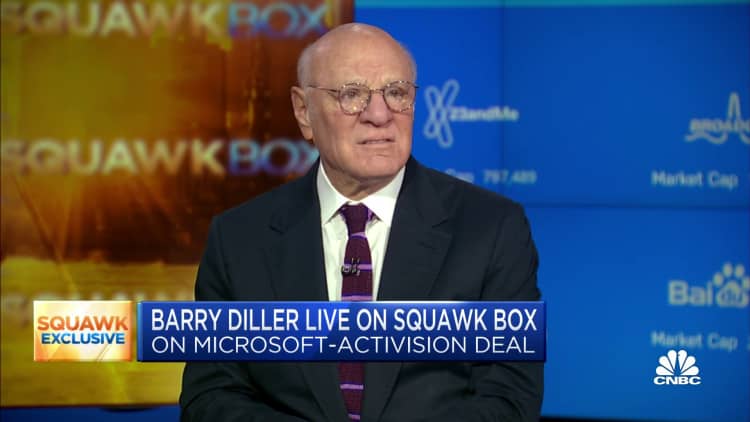
Watch CNBC's full interview with IAC chairman Barry Diller

Disclosure: CNBC is part of NBCUniversal, which is owned by Comcast.

Adidas’s new Gen Z, fashion-forward line is its biggest launch in 50 years

Adidas’s new Gen Z, fashion-forward line is its biggest launch in 50 years

With its soccer-impressed aesthetic, Sportswear aligns with blokecore, the Gen Z craze that swept TikTok in 2022. “When coming up with the assortment, we assumed about how Gen Z likes to design and style blokecore with their everyday don, whether they are producing a TikTok or if they are likely purchasing and hanging out with good friends.” claims Adidas’s Sportswear senior designer Jasmin Bynoe. “We want to stick to Adidas’s DNA and blend Performance and Originals factors, though evolving with the consumer and how they specific by themselves.” 

Globally, sports activities-influenced clothing was valued at $88.5 billion in 2022 and set to outperform functionality attire (valued at $97.6 billion in 2022) by 2027, states Euromonitor analyst Marguerite LeRolland, pushed by the major attire and footwear markets around the entire world such as US, China and in Europe.

There will be seasonal Sportswear drops with refreshed merchandise choices, but Adidas would like to make confident all the designs are as snug and functional as doable, instead than following micro-trends, Arana provides. “We’re viewing a shift in direction of a more mindful ‘capsule wardrobe’, and the Sportswear goods are all staples that can be styled a bunch of distinct techniques based on the situation or time. That’s 1 thing that sets us apart from other makes in the room.”

Submit-Covid, individuals are wanting for techniques to simplify their life (45 for each cent international respondents), truly feel classy (33 for every cent), says LeRolland. Sixty per cent of international respondents estimate “comfort” as the leading acquire criterium for apparel, she provides, according to Euromonitor’s Voice of the Client, Lifestyle Study 2022.

The selection will function a assortment of new sneaker types, taking factors from some of Adidas’s bestselling Effectiveness sneakers, from the Raise to the 4D. “Gen Alpha and Gen Z, they never know the Adidas classics. So for them it could be the Avryn which is their iconic shoe, they could possibly be expressing, ‘remember when they did that with the Strengthen and switched it up?’.”

The sportswear layout team are consistently observing Gen Z styling behaviors on social media, on exploration trips and in discussions with younger athletes, to create parts to fit their demands. For the Tiro tracksuit in this 1st collection, for instance, there is a double waistband on the trousers, to account for Gen Zs putting on their trousers decreased on their hips, Bynoe says.

Hunting in advance, Adidas is confident in Sportswear’s longevity. Arana says she and her teams are previously scheduling the label up to Autumn/Winter 2024. “We have ambitious targets for Sportswear and are confident it will resonate with the target viewers, with new merchandise and cross-company collabs presently in the operates.”

Remarks, concerns or feed-back? Electronic mail us at comments@voguebusiness.com.

Far more from this author:

How Rotate turned a single of Scandinavia’s swiftest-growing labels

Why menswear is falling powering on size inclusivity

Tarte’s Dubai backlash: Are influencer visits ‘tone deaf’ in 2023? 

Longevity gene may help rejuvenate the heart by 10 years

Longevity gene may help rejuvenate the heart by 10 years

black and white photo of wrinkled hand with a heart drawn on itShare on Pinterest
Could a so-called longevity gene help restore heart health? Image credit: David Jean/EyeEm/Getty Images.
  • Studies have shown that the longevity-associated variant (LAV) of the BPIFB4 gene is associated with a longer lifespan in humans and has protective effects in rodent models of cardiovascular disease.
  • A new study shows that LAV-BPIFB4 may exert its cardioprotective effects by promoting the formation of new blood vessels and reducing the number of blood vessel cells that have become senescent and stopped multiplying.
  • The study indicates that inducing the expression of LAV-BPIFB4 in aged mice improved cardiac function and regulation of blood flow to the heart.
  • These findings highlight the therapeutic potential of LAV-BPIFB4 for attenuating the adverse effects of aging on cardiovascular function.

A recent study published in Cardiovascular Research suggests that LAV-BPIFB4, a gene variant that previous research ha shown to be highly expressed by individuals with an exceptionally long lifespan, could also protect cardiac and vascular function in old age.

In the new study, inducing the expression of LAV-BPIFB4 in aged mice led to improvements in cardiac function that, translated to the human context, would be equivalent to a reduction in the heart’s biological age by 10 years.

Study author Dr. Paolo Madeddu, professor of experimental cardiovascular medicine at Bristol University in the United Kingdom, told Medical News Today:

“It is known that centenarians can pass their healthy genes to their offspring. This study demonstrates that it is also possible to make human cardiac cells younger and older mice hearts by transferring a gene expressed by centenarians. We also demonstrate that the benefit is related to the ability of the gene to reprogram cardiac cells to become more resistant to stress and build up the machinery (ribosomes) that make proteins.”

The heart has four chambers — two upper chambers called atria that receive blood from the body, and two lower chambers called the ventricles that pump blood to the body.

The right atrium receives deoxygenated blood from the body, and the right ventricle pumps the deoxygenated blood to the lungs. The left atrium receives oxygen-rich blood from the lungs, which is then pumped into the left ventricle.

Upon the contraction of the left ventricle, oxygenated blood is transported to the rest of the body. The functioning of the heart itself requires oxygen and nutrients that are supplied by the coronary arteries.

Aging is associated with an increase in the risk of cardiovascular conditions, including heart attack, heart failure, and coronary artery disease. These cardiovascular conditions are caused by alterations in the structure and function of the heart and blood vessels, including the coronary arteries.

These changes include an increase in the thickness and stiffness of the walls of the coronary arteries and the left ventricle. The thickening of the left ventricle, known as left ventricular hypertrophy, can result in complications such as heart failure, which is the inability of the heart to pump sufficient quantities of blood to the body.

Another change associated with aging involves the dysfunction of endothelial cells, which form the inner lining of blood vessels and the heart.

Endothelial cells regulate the blood flow as well as the exchange of fluids and molecules between the blood and the tissue. The dysfunction of endothelial cells results in the narrowing of arteries and can increase the risk of cardiovascular diseases.

Endothelial cells also play an important role in angiogenesis, the process of formation of new blood vessels from preexisting ones. Endothelial dysfunction during aging is also associated with the reduction in the density of capillaries, the small blood vessels that transport oxygen and nutrients to tissues.

Thus, endothelial cell dysfunction can lead to a reduction in the blood supply to the heart muscle by coronary arteries, thus increasing the risk of a heart attack or myocardial infarction.

Pericytes or perivascular cells are cells that are embedded at intervals along the walls of capillaries and wrap around endothelial cells. Pericytes interact with endothelial cells to play an important role in the formation of new blood vessels and the maintenance of blood vessels.

Whilst the evidence is mixed, some studies have suggested that aging is associated with a decline in the coverage of endothelial cells by pericytes, resulting in increased permeability of blood vessels. Thus, in addition to endothelial cells, impaired pericyte function may contribute to cardiovascular diseases.

Previous studies have shown that certain individuals have an exceptionally long lifespan, and this trait is inheritable. These long-living individuals tend to show delayed aging and have a lower incidence of cardiovascular diseases.

Moreover, these individuals with a longer lifespan have higher circulating levels of LAV-BPIFB4.

Besides being present in the blood, BPIFB4 is also expressed by endothelial cells, cardiomyocytes or heart muscle cells, and some immune cells.

Inducing the expression of LAV-BPIFB4 in older mice can reduce deficits in endothelial function and promote angiogenesis. Research has shown that LAV-BPIFB4 can stop atherosclerotic plaque formation in mice. However, the ability of this protein to attenuate the effects of healthy aging on heart function has not been established.

In the present study, the researchers first examined the potential mechanisms underlying the protective effects of LAV-BPIFB4 in cardiovascular conditions.

They examined the differences in the hearts obtained from elderly ischemic heart failure patients undergoing heart transplantation surgery and those from individuals who died due to reasons other than cardiovascular complications.

The hearts obtained from ischemic heart failure patients showed lower expression levels of BPIFB4 in the cardiomyocytes and endothelial cells than individuals with healthy hearts. The hearts of ischemic failure patients also had lower capillary density than healthy hearts.

Moreover, there was a reduction in the density of pericytes and lower coverage of blood vessels by pericytes in hearts obtained from ischemic heart failure patients.

Among ischemic heart failure patients, individuals who expressed the LAV variant of BPIFB4 on both chromosomes showed a higher density of pericytes and greater coverage of capillaries by pericytes than those who carried a single or no copies of the LAV-BPIFB4 gene.

However, these groups did not differ in capillary density, suggesting that LAV-BPIFB4 preserves the coverage of capillaries by pericytes without influencing the capillary density.

The pericytes isolated from the hearts of ischemic heart failure patients showed greater expression of markers of oxidative stress and cellular senescence. Senescence refers to the permanent arrest of cell growth and is observed in response to cellular stress and aging.

The researchers found that the addition of LAV-BPIFB4, but not other forms of BPIFB4, to cultured pericytes isolated from the heart of ischemic heart failure patients reduced the expression of senescence and oxidative stress markers.

Pericytes from the hearts of ischemic failure patients also showed a downregulation of the protein synthesis machinery, which is associated with cellular aging. The addition of LAV-BPIFB4 led to the upregulation of the protein synthesis machinery in the pericytes isolated from the hearts of ischemic heart failure patients.

Previous studies have shown that endothelial cell senescence is associated with impaired angiogenesis. In subsequent experiments conducted using endothelial cell cultures, LAV-BPIFB4 enhanced the ability of senescent endothelial cells to form new blood vessels to a greater extent than other BPIFB4 variants.

LAV-BPIFB4 also increased the secretion of molecules that promote angiogenesis by pericytes isolated from the hearts of patients with ischemic heart failure.

Preincubation of pericytes from ischemic heart failure patients with LAV-BPIFB4 also enhanced the ability of these pericytes to support the formation of new blood vessels by senescent endothelial cells.

These results suggest that LAV-BPIFB4 could directly enhance the ability of senescent endothelial cells to form new blood vessels as well as indirectly by promoting the secretion of molecules by pericytes that act on endothelial cells. In other words, the LAV-BPIFB4 gene could help restore deficits in the function of aged vascular cells.

In their previous work, the study’s authors had shown that delivery of LAV-BPIFB4 using a viral vector, which involves the use of a harmless virus carrying the gene of interest, could enhance the expression of the protein in the heart of a mouse model of diabetes.

In the present study, the authors delivered either LAV-BPIFB-4 or a different BPIFB4 variant to middle-aged and old mice using a viral vector.

The aged mice showed a decline in cardiac function at baseline compared with middle-aged mice. The delivery of LAV-BPIFB4 to middle-aged and old mice was associated with an improvement in the function of the left ventricle.

Aging is also associated with a decline in the ability of the blood flow from coronary arteries to meet the demands of the heart muscle in response to exercise or stress. This is described in terms of coronary flow reserve, which is a ratio of the maximum increase in coronary blood flow in response to stress to the coronary blood flow at baseline.

To simulate the heart’s response to stress, the researchers used dobutamine, a drug that mimics the effects of beta-adrenaline released during stress.

Treatment with LAV-BPIFB4 increased coronary blood flow at baseline and in response to dobutamine in both middle-aged and older rats. This suggests that LAV-BPIFB4 could have helped restore deficits in coronary blood flow in response to stress.

These improvements in cardiac function after LAV-BPIFB4 treatment were accompanied by an increase in blood vessel and pericyte density and pericyte coverage in the hearts of middle-aged and older mice while reducing the number of senescent cells.

In addition to cardiomyocytes, the cardiac tissue also consists of fibroblasts, nerve endings, and immune cells. These cells are embedded in an extracellular matrix secreted by fibroblasts. The extracellular matrix consists of collagen and other proteins and plays a pivotal role in maintaining the structure and function of the heart.

Conditions such as aging and heart failure are associated with cardiac fibrosis involving the excess deposition of collagen in the extracellular matrix.

Cardiac fibrosis leads to the stiffness of the cardiac walls and a decline in cardiac function. In the present study, LAV-BPIFB4 treatment reduced the levels of myocardial fibrosis in the hearts of aged mice.

These results suggest that LAV-BPIFB4 could attenuate the effects of aging on cardiac function and structure.

Dr. Yu-Ming Ni, a cardiologist specializing in noninvasive cardiology at MemorialCare Heart and Vascular Institute at Orange Coast Medical Center in Fountain Valley, CA, explained that “this research study suggests that [the] LAV-BPIFB4 gene variant associates with better heart health and longevity, and improved heart health when used as a treatment in heart cells.”

“While these findings are promising, this finding will need to be tested in a research study involving people before it can be considered for improvement of heart health and longevity,” he nonetheless cautioned.

Ford’s first new auto plant in 53 years. Not everyone is happy

Ford’s first new auto plant in 53 years. Not everyone is happy

At this point, BlueOval City is a major dig, with thousands of building personnel unexciting deep holes for foundation footings working with gargantuan drills that would appear at house in a Mad Max movie. More than 6,300 holes that could accommodate a compact car or truck dot the landscape. Growing from the Tennessee soil is the start off of a white metal skeleton that will frame the 50 percent-mile lengthy battery plant using shape at a person end of a web page that a yr in the past grew cotton.

“Big trucks, major rollers, loads of items happening in this article and you just have to preserve your head on a swivel,” Donna Langford, Ford’s venture manager reported as a big earth mover turned in entrance of her auto while touring the web page.

In the modest cities close by, citizens look at the long run producing colossus with hope and trepidation.

Just take Brownsville, Tenn., a town of 9,788 whose chief claim to fame is getting Tina Turner’s childhood dwelling. Signs welcoming Ford fill the storefronts, and a newly painted mural honoring the automaker adorns a developing wall. Meanwhile, in the heart of Brownsville’s town sq. stands a soaring monument topped with a Accomplice soldier and bearing the inscription: “Honoring the Accomplice Useless of Hayward County.”

John Ashworth, a retired airline worker, hopes the Ford plant will provide possibilities for the area’s Black local community, and probably carry Brownsville’s Black and White halves closer alongside one another. Doing work at the town’s corner drug retailer in his youth, Ashworth was demanded to take in lunch in the basement, away from White diners. Racial divisions proceed to be component of neighborhood everyday living, he said.

“This group has mainly segmented by itself – it’s either White or it’s Black,” reported Ashworth, 79, around lunch with a mate in a restored 1950s-design diner, the form of put he stated in all probability wouldn’t have welcomed him as a youthful person. “Ford Motor Co. is not only going to lead to Black and White to interact far more, it is likely to carry other men and women from other areas of the planet, and that is likely to be good for everyone.”

Ford hopes to tackle that background by recruiting staff from communities of colour, Drake stated. She achieved very last thirty day period with Tennessee Gov. Bill Lee to current Ford’s “curriculum” for the capabilities essential for the substantial-shelling out jobs at BlueOval Metropolis. That’s now being integrated into lesson strategies at Tennessee’s technological schools and higher universities. Drake said Tennessee educators are even counseling eighth graders on what to examine to land a occupation with Ford.

Elizabeth Holmes sentenced to more than 11 years in prison for fraud

Elizabeth Holmes sentenced to more than 11 years in prison for fraud


CNN
 — 

Elizabeth Holmes was sentenced to a lot more than 11 many years in prison on Friday following her conviction in January for defrauding traders while running the unsuccessful blood screening startup Theranos.

Choose Edward Davila imposed a sentence of 11 many years and a few months in jail, with a different 3 several years of supervision soon after Holmes is introduced. The sentence also involves a fine of $400, or $100 for every single count of fraud. Restitution will be established at a later on day. Holmes was requested to switch herself into custody on April 27, 2023. She is envisioned to appeal her conviction.

Holmes, who was uncovered responsible in January on 4 expenses of defrauding investors, faced up to 20 years in prison as very well as a good of $250,000 as well as restitution for each individual depend.

Attorneys for the governing administration asked for a 15-yr prison phrase, as effectively as probation and restitution, even though Holmes’ probation officer pushed for a nine-12 months expression. Holmes’ defense group requested Davila, who presided more than her situation, to sentence her to up to 18 months of incarceration followed by probation and community assistance.

Ahead of the sentencing was introduced, a tearful Holmes spoke to the court docket in San Jose, California. “I beloved Theranos. It was my life’s work,” she stated. “The folks I tried out to get involved with Theranos ended up the people today I cherished and highly regarded the most. I am devastated by my failings.”

Elizabeth Holmes, the founder of failed blood testing startup Theranos who was convicted of fraud earlier this year, was sentenced today by a judge in court in San Jose, California. She is shown here making a statement to the judge before the sentencing.

She also apologized to the workforce, investors and individuals of Theranos. “I’m so, so sorry. I gave anything I had to build our firm and to conserve our enterprise,” she said. “I regret my failings with each and every cell in my system.”

“The choose imposed a powerful sentence that confirms that fraud are not able to masquerade as innovation in Silicon Valley,” said George Demos, a previous SEC enforcement lawyer and adjunct legislation professor at UC Davis. “When offered the option to communicate, Elizabeth Holmes designed a statement that she takes responsibility for Theranos but did not say she takes accountability for the fraud.”

In arguments right before the choose on Friday more than her sentence, Kevin Downey, a single of Holmes’ lawyers, stated that unlike other defendants in company fraud circumstances, the Theranos founder did not express greed by cashing out shares or paying income on “yachts and planes.” In its place, the revenue was “used to build clinical technological innovation.”

Federal prosecutor Jeffrey Schenk pointed out that Holmes did achieve fame, admiration, and a way of living from the fraud, even if she did not make financial gains. “These nevertheless are added benefits she’s obtaining,” he mentioned.

Friday’s sentencing listening to caps off Holmes’ amazing downfall. As soon as hailed as a tech marketplace icon for her company’s claims to test for a assortment of circumstances with just a couple of drops of blood, she is now the rare tech founder to be convicted and encounter prison time for her company’s missteps.

Holmes, now 38, begun Theranos in 2003 at the age of 19 and before long thereafter dropped out of Stanford University to go after the enterprise whole-time. Following a decade underneath the radar, Holmes started courting the press with promises that Theranos experienced invented technological innovation that could accurately and reliably check for a range of ailments working with just a couple drops of blood taken from a finger prick.

Theranos elevated $945 million from an outstanding listing of investors, including media mogul Rupert Murdoch, Oracle founder Larry Ellison, Walmart’s Walton family members and the billionaire relatives of previous Secretary of Schooling Betsy DeVos. At its peak, Theranos was valued at $9 billion, earning Holmes a billionaire on paper. She was lauded on journal handles, regularly carrying a signature black turtleneck that invited comparisons to late Apple CEO Steve Work opportunities. (She has not worn that glimpse in the courtroom.)

The organization began to unravel right after a Wall Avenue Journal investigation in 2015 identified the company had only ever carried out approximately a dozen of the hundreds of exams it supplied working with its proprietary blood tests device, and with questionable precision. As a substitute, Theranos was relying on third-social gathering produced devices from regular blood screening firms.

In 2016, Theranos voided two a long time of blood take a look at outcomes. In 2018, Holmes and Theranos settled “massive fraud” prices with the Securities and Exchange Fee, but did not confess to or deny any of the allegations as element of the offer. Theranos dissolved before long following.

In her demo, Holmes alleged she was in the midst of a ten years-lengthy abusive marriage with her then-boyfriend and Theranos COO Ramesh “Sunny” Balwani while managing the enterprise. Balwani, she alleged, experimented with to control virtually every aspect of her everyday living, which include disciplining her taking in, her voice and her image, and isolating her from other folks. (Balwani’s attorneys denied her claims.)

In July, Balwani was located guilty on all 12 prices in a independent demo and faces the exact same possible most prison time as her. Balwani is scheduled to be sentenced on December 7.

“The results of Holmes and Balwani’s fraudulent carry out had been significantly-achieving and significant,” federal prosecutors wrote in a November court docket filing with regards to Holmes’ sentencing. “Dozens of traders dropped in excess of $700 million and quite a few clients gained unreliable or wholly inaccurate health care information and facts from Theranos’ flawed checks, inserting individuals patients’ wellness at really serious risk.”

Much more than 100 individuals wrote letters in guidance of Holmes to Davila, asking for leniency in her sentencing. The list features Holmes’ partner, Billy Evans, many associates of Holmes’ and Evans’ people, early Theranos investor Tim Draper, and Sen. Cory Booker. Booker described meeting her at a meal years ahead of she was charged and bonding above the fact that they were both vegans with almost nothing to eat but a bag of almonds, which they shared.

“I continue to believe that she retains on to the hope that she can make contributions to the life of other people, and that she can, in spite of mistakes, make the environment a far better area,” Booker wrote, noting that he continues to take into account her a buddy.

In advance of the listening to, there were also questions about how Holmes’ sentencing could be challenging by developments in her everyday living just after stepping down from Theranos. Holmes and her husband or wife, Evans, who achieved in 2017, have a young son. Holmes is also pregnant, as confirmed by recent court docket filings and her most recent court visual appeal in mid-October.

Mark MacDougall, a white-collar defense attorney and previous federal prosecutor, informed CNN Organization in advance of the hearing that the point that Holmes has a younger little one could affect how she is sentenced.

“I never know how it just can’t, just since judges are human,” he stated.

MacDougall also mentioned he does not see what a very long prison sentence accomplishes. “Elizabeth Holmes is never going to run a huge firm once more,” he reported. “She’s never ever likely to be in a placement to have some thing like this come about all over again.”

Diets worldwide only slightly healthier than 30 years ago

Diets worldwide only slightly healthier than 30 years ago

A man holding a large tray of food in a shaded alley outside a buildingShare on Pinterest
A study found that diets worldwide are not much healthier than they were three decades ago. Algi Febri Sugita/NurPhoto via Getty Images
  • Researchers investigated how global dietary patterns changed between 1990 and 2018.
  • They found that diets became modestly healthier by 2018.
  • They concluded that dietary recommendations should be based on localized nutrition data.

Data shows that poor diets are responsible for around 26{cfdf3f5372635aeb15fd3e2aecc7cb5d7150695e02bd72e0a44f1581164ad809} of global preventable mortality. Existing evidence suggests that different foods and nutrients have synergistic and complementary effects when consumed together.

While what makes up an optimal dietary pattern is largely well-established and validated, how common it is globally consumed remains unclear.

Previous studies have been limited to small subsets of countries and typically did not include those under 25 years old.

Studies investigating various countries’ dietary patterns across a wider age range could improve dietary guidelines and recommendations.

Recently, researchers analyzed global, regional, and national dietary patterns and trends among adults and children from 185 counties.

They found that between 1990 and 2018, diets became slightly healthier, although the extent of this varied by country.

“In general, healthy diets have become more affordable as countries have become richer,” Dr. Boyd Swinburn, Professor of Epidemiology and Biostatistics at the University of Aukland, not involved in the study, told Medical News Today.

“Also, the globalization of food means that the variety of whole foods has increased, which is good. But the countervailing forces of ultra-processed foods taking over from whole foods and the widening wealth inequalities are creating unhealthier diets,” Dr. Swinburn added.

The study appears in Nature Food.

The researchers collated data from nationally and subnationally-representative surveys on individual-level dietary intake alongside biomarker surveys.

Altogether, they compiled data from 1,248 dietary surveys from 188 countries. Among the surveys, 73.9{cfdf3f5372635aeb15fd3e2aecc7cb5d7150695e02bd72e0a44f1581164ad809} included data on children ages 0- 19 and 64.5{cfdf3f5372635aeb15fd3e2aecc7cb5d7150695e02bd72e0a44f1581164ad809} from adults ages 20 or over.

The researchers obtained data on individual-level dietary intake of up to 53 foods, beverages, and nutrients alongside demographic data, including age, sex, education, and urban or rural residence.

The researchers used the Alternative Healthy Eating Index (AHEI) to define a healthy diet. Victoria Miller, Ph.D., a research fellow at the PHRI Population Health Research Institute and Visiting Scientist at Tufts University, one of the study’s authors, told MNT:

“The AHEI recommends that individuals consume lots of fruit, vegetables, whole grains, nuts and legumes, polyunsaturated fats, and omega-3 fats, and limited quantities of red and processed meat, sugar-sweetened beverages, and sodium.”

In the end, the researchers organized diets on a scale of 0 to 100- with 0 being a poor diet, and 100 being an optimal diet.

They found that between 1990 and 2018, the global AHEI score increased modestly by 1.5 points- from 38.8 in 1990 to 40.3.

They also found that in 2018 only ten countries representing less than 1{cfdf3f5372635aeb15fd3e2aecc7cb5d7150695e02bd72e0a44f1581164ad809} of the world’s population had dietary scores of 50 or above. These included Vietnam, Iran, Indonesia, and India, with average scores of 54.5.

Meanwhile, the lowest scoring countries included Brazil, Mexico, the United States, and Egypt, with scores ranging between 27.1- 33.5.

The researchers noted that the mean AHEI scores in 2018 for children and adults were similar: ranging between 38.2 and 42. However, in most regions, those ages 5 and under and 75 and over tended to have the highest AHEI scores.

They further wrote that globally, children tended to consume less fruit, non-starchy vegetables, and seafood omega-3 than adults. However, they also consumed more sodium and polyunsaturated fats than adults.

The researchers further noted that higher education attainment was linked to a higher AHEI score in most regions apart from the Middle East, North Africa, and Sub-Saharan Africa, where they observed no differences.

When asked how these findings could improve dietary choices around the world, Dr. Miller said:

“Our findings are useful for informing the design and implementation of future research and national policies to improve dietary quality. Although South Asia and Sub-Saharan Africa had the highest dietary quality in 2018, consumption of fruit, vegetables, legumes/nuts, seafood omega-3 fat, and polyunsaturated fats were far from optimal in these regions. Policies to increase the intakes of produce, seafood, and plant oils will have the largest impact on dietary quality in these countries.”

“In Asia and Latin America and the Caribbean, we found that red/processed meat and sodium increased over time, and policies focused on lowering the intake of these foods and nutrients will greatly improve dietary quality,” she added.

“Low consumption of unhealthy foods and nutrients, such as sugar-sweetened beverages, red/processed meat, and sodium, led to higher dietary quality in many countries, including Vietnam. In the USA, a dual focus on increasing healthful foods (fruits, vegetables, plant oils) and lowering unhealthy foods (sugar-sweetened beverages, sodium) is needed to improve dietary quality,” she noted.

Dr. Marco Springmann, Senior Researcher on Environment and Health at the University of Oxford, not involved in this study, also told MNT:

“The study also highlights that there has been little progress in improving diets worldwide. This should come as a wake-up call to policymakers who routinely brush off the need for progressive food policies as interfering too much in the market.”

“Without clear policy measures that would empower citizens to make healthy and sustainable dietary choices, we risk having another decade without progress on improving diets and the health and environmental impacts associated with them,” he added.

The researchers concluded that their findings highlight the need for specific national and subnational policies to improve nutrition.

When asked about limitations to the study, Dr. Swinburn said: “Data on diets is notoriously challenging. There is always massive under-reporting- about 20{cfdf3f5372635aeb15fd3e2aecc7cb5d7150695e02bd72e0a44f1581164ad809} of calories under optimal conditions of data collection are never recorded.”

“Nevertheless, by taking a zoomed-out approach like this, you start to see patterns which can tell you very useful things about the underlying changes over time and differences between populations,” he added.

Dr. Rob M. van Dam, Professor of Exercise and Nutrition Sciences at the Milken Institute School of Public Health, George Washington University, also told MNT: “The limitation of these findings is that the survey instruments and accuracy of the data varied across countries.”

“Also, the dietary quality indices used in the study were developed in high-income countries to prevent chronic diseases but may be less suitable for low-income countries where nutrient deficiencies are common,” he added.

Salim Yusuf MD, D. Phil, Distinguished Professor of Physiology and Pharmacology at McMaster University, not involved in the study, agreed that guidelines based on data may not apply to most other regions of the world. He noted that undernutrition is a challenge for many, alongside getting an adequate variety of food. He added that cultural habits, taste, and cost also influence what people eat.