Graham has claimed an uptick in income and earnings from the dealerships, disclosing that automotive functioning revenue was $4.5 million for the third quarter and $8.8 million for the initial nine months of 2021. Third-quarter automotive revenue rose 10 percent to $84.7 million, while income for the first nine months of 2021 jumped 33 p.c to $242.7 million.
Income rose because of profits development at the then 3 dealerships and bigger rates for autos amid substantial purchaser demand and inventory shortages, Graham mentioned.
In addition to the December acquisition, Graham Ourisman Automotive in 2021 invested in its CarCare to Go system, a motor vehicle servicing and maintenance pickup and supply company. Graham Ourisman Automotive past 12 months also acquired the actual estate for its Honda dealership in Tysons Corner from Capital Automotive. The Washington Company Journal mentioned the $27 million offer closed in September.
Maas claimed the lease expression was expiring and the partnership experienced an possibility to obtain the land. Whether to invest in or lease dealership real estate will be deemed on a scenario-by-circumstance basis, he explained.
“For that distinct dealership, the appropriate detail to do was to individual that assets,” he reported.
The buy of Battlefield Ford demanded assuming several leases and originating two new leases covering about a half-dozen parcels on 11 acres, building it a additional intricate offer, said James Mitchell of Cushman & Wakefield’s Dealership Capital Products and services division. He and the firm’s Erin Rice represented the store’s vendor, who he described as getting at retirement age.
Mitchell stated they necessary a buyer who “wasn’t scared of a very sophisticated genuine estate composition with numerous leases.”
Cushman & Wakefield, which represented Sonic in its 2019 sale to the partnership, contacted Ourisman about Battlefield Ford in late summer time or early fall. The deal went under contract by the close of October, and vendor Fay desired it closed by yr-finish for tax functions, a feat that was completed, Mitchell mentioned.
Mitchell claimed his organization is in the system of having dealership platforms making $600 million or far more in once-a-year income to market and will share people chances with Graham Ourisman Automotive.
“Their ideas are to have a sizeable presence, absolutely in the mid-Atlantic and then extended phrase in the East Coastline,” Mitchell stated.
Graham views its tie-up with Ourisman as thriving, Maas stated.
The events came with each other “with a prolonged-term orientation and a perception that collectively we can make a sturdy automotive organization,” he explained, “and we still pretty considerably have that viewpoint currently.”
This is setting up to be one of the longest NFL head coach and general manager hiring cycles in recent memory. With each day, the pool of teams in search of new leadership has grown rather than shrunk. Two more jobs opened up Monday. We go through all the news and rumors on Day 9 of the NFL offseason.
NFL News and Rumors Today
The Las Vegas Raiders became the fourth team to need a new GM and the eighth searching for a new coach after firing Mike Mayock Monday and sending out signals that Rich Bisaccia is all but done too. That decision further gummed up the works that was already filled with Juicy Fruit.
Chicago Bears
Fired: Matt Nagy (HC), Ryan Pace (GM)
Scheduled/requested HC interviews:
Todd Bowles Buccaneers defensive coordinator
Jim Caldwell Former Colts, Lions head coach Saturday, Jan. 15
Brian Daboll Bills offensive coordinator Sunday, Jan. 16
Matt Eberflus Colts defensive coordinator Monday, Jan. 17
Brian Flores Former Dolphins head coach Friday, Jan. 14
Monti Ossenfort Titans director of player personnel Saturday, Jan. 15
Joe Schoen Bills assistant general manager Sunday, Jan. 16
Eliot Wolf Patriots director of scouting Tuesday, Jan. 18
The latest: Brown and Wolf get their face time with the McCaskeys Tuesday, and logic suggests the Bears are nearing some sort of resolution with their GM search. But that’s only Step 1 of a consequential offseason in the Second City.
Featured Story NFL Wild Card Power Rankings: Packers lead, Bengals secure spot
The Bears won’t be hiring a head coach before this weekend, assuming they still plan on interviewing Frazier.
Denver Broncos
Fired: Vic Fangio (HC)
Scheduled/requested interviews:
Eric Bieniemy Chiefs offensive coordinator
Brian Callahan Bengals offensive coordinator
Jonathan Gannon Eagles defensive coordinator Wednesday, Jan. 19
Luke Getsy Packers QB coach/passing game coordinator Friday, Jan. 14
Kellen Moore Cowboys offensive coordinator Tuesday, Jan. 18
Kevin O’Connell Rams offensive coordinator
Dan Quinn Cowboys defensive coordinator Tuesday, Jan. 18
The latest: It’s a big day for Broncos GM George Paton. He finally gets to sit down with Quinn, who many view as the front-runner for the Denver job. Quinn and Paton have a long history that dates back at least to 2005 when they were on staff together in Miami.
Houston Texans
Fired: David Culley (and offensive coordinator Tim Kelly)
Scheduled/requested interviews:
Brian Flores Former Dolphins head coach Friday, January 14
Jonathan Gannon Eagles defensive coordinator Tuesday, Jan. 18
Joe Lombardi Chargers offensive coordinator Saturday, Jan. 15
Hines Ward Florida Atlantic special assistant to the head coach Saturday, Jan. 15
The latest: Nick Caserio did the easy part. He fired Culley after one season. But he’s not exactly nailing the hard part. His dream of luring Josh McDaniels out of New England seems to be far-fetched. Caserio’s roster of candidates, at least as of now, seems thin to put it kindly.
Jacksonville Jaguars
Fired: Urban Meyer (HC)
Scheduled/requested interviews:
Darrell Bevell Jaguars interim head coach Tuesday, January 11
Todd Bowles Buccaneers defensive coordinator Friday, January 3 (Jan. 7 has also been reported)
Jim Caldwell Former Colts and Lions head coach Tuesday, January 4
Matt Eberflus Colts defensive coordinator Saturday, January 15 (first); Thursday, January 20 (second)
Nathaniel Hackett Packers offensive coordinator Friday, January 14
Byron Leftwich Buccaneers offensive coordinator Friday, January 7
Kellen Moore Cowboys offensive coordinator Friday, January 7
Bill O’Brien Alabama offensive coordinator Thursday, January 13
Doug Pederson Former Eagles head coach Thursday, December 30
Dan Quinn Cowboys defensive coordinator
The latest: Two significant pieces of news dropped by NFL Network late Tuesday: O’Brien, in the words of Mike Garafolo, will likely not be the hire. But Eberflus certainly could be. The Colts assistant because the first known finalist for the job.
Las Vegas Raiders
Resigned: Jon Gruden (HC)
Scheduled/requested HC interviews:
Jerod Mayo Patriots LB coach
Scheduled/requested GM interviews:
Ed Dodds Colts assistant general manager
Dave Ziegler Patriots director of player personnel
The latest: Jim Harbaugh is the name to watch here. Mark Davis’ decision to move on from Mayock, and presumably Bisaccia, might have been a set piece to lure Harbaugh back to the NFL. The Athletic reported Monday that Michigan is working to do right by Harbaugh this offseason after convincing him to take a pay cut last offseason, but will it be enough?
Miami Dolphins
Fired: Brian Flores (HC)
Scheduled/requested interviews:
Thomas Brown Rams assistant head coach
Brian Daboll Bills offensive coordinator Sunday, January 16
Leslie Frazier Bills defensive coordinator Sunday, January 16
Vance Joseph Cardinals defensive coordinator
Mike McDaniel 49ers offensive coordinator Wednesday, Jan. 19
Kellen Moore Cowboys offensive coordinator
Dan Quinn Cowboys defensive coordinator
The latest: Joseph isn’t getting much attention, but he’s a name to watch in Miami. He might not be the Dolphins’ first choice, but with a so-so quarterback situation and eight other openings they’re competing against, he might look more and more appealing as the process goes on.
Kwesi Adofo-Mensah Browns vice president of football operations Monday, Jan. 17
Brandon Brown Eagles director of player personnel Tuesday, Jan. 18
Glenn Cook Browns vice president of player personnel Thursday, Jan. 20
Monti Ossenfort Titans director of player personnel Sunday, Jan. 16
Ryan Poles Chiefs director of player personnel
Catherine Raîche Eagles vice president of football operations Monday, Jan. 17
John Spytek Buccaneers vice president of player personnel This week
Eliot Wolf Patriots player personnel consultant Thursday, Jan. 20
The latest: The Vikings on Tuesday got to better know Brown, who has worked the last five years with the Eagles, most recently as the director of player personnel. In addition to running Philadelphia’s pro scouting operation, he also has a hand in the draft. Brown also has spent time in the Colts’ front office.
New York Giants
Fired/retired: Joe Judge (HC), Dave Gettleman (GM)
Scheduled/requested HC interviews:
Scheduled/requested GM interviews:
Ran Carthon 49ers director of pro personnel Monday, January 17
Ryan Cowden Titans vice president of player personnel Friday, January 14
Quentin Harris Cardinals vice president of player personnel Thursday, January 13
Joe Hortiz Ravens director of player personnel Saturday, January 15
Monti Ossenfort Titans director of player personnel Friday, January 14
Adam Peters 49ers assistant general manager Monday, January 17
Ryan Poles Chiefs executive director of player personnel Thursday, January 13
Joe Schoen Bills assistant general manager Wednesday, January 12
Adrian Wilson Cardinals vice president of pro personnel Wednesday, January 12
The latest: The Giants might be closing in on making an offer. The New York Post first reported that Schoen was in-town for a second interview with assistant general manager Joe Schoen, who is also considered a top candidate for the Bears’ opening. Ryan Poles will also get a second look, per NFL Network.
Legendary games, immersive interactive entertainment and publishing expertise accelerate growth in Microsoft’s Gaming business across mobile, PC, console and cloud.
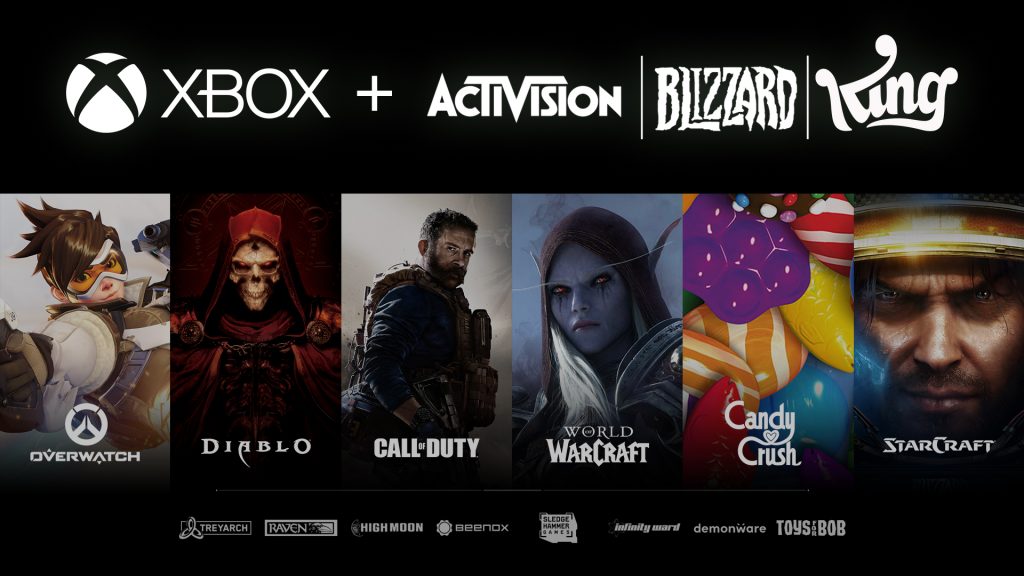
Microsoft announced plans to acquire Activision Blizzard, a leader in game development and an interactive entertainment content publisher. The planned acquisition includes iconic franchises from the Activision, Blizzard and King studios like “Warcraft,” “Diablo,” “Overwatch,” “Call of Duty” and “Candy Crush.”
REDMOND, Wash. and Santa Monica, Calif. – Jan. 18, 2022– With three billion people actively playing games today, and fueled by a new generation steeped in the joys of interactive entertainment, gaming is now the largest and fastest-growing form of entertainment. Today, Microsoft Corp. (Nasdaq: MSFT) announced plans to acquire Activision Blizzard Inc. (Nasdaq: ATVI), a leader in game development and interactive entertainment content publisher. This acquisition will accelerate the growth in Microsoft’s gaming business across mobile, PC, console and cloud and will provide building blocks for the metaverse.
Microsoft will acquire Activision Blizzard for $95.00 per share, in an all-cash transaction valued at $68.7 billion, inclusive of Activision Blizzard’s net cash. When the transaction closes, Microsoft will become the world’s third-largest gaming company by revenue, behind Tencent and Sony. The planned acquisition includes iconic franchises from the Activision, Blizzard and King studios like “Warcraft,” “Diablo,” “Overwatch,” “Call of Duty” and “Candy Crush,” in addition to global eSports activities through Major League Gaming. The company has studios around the world with nearly 10,000 employees.
Bobby Kotick will continue to serve as CEO of Activision Blizzard, and he and his team will maintain their focus on driving efforts to further strengthen the company’s culture and accelerate business growth. Once the deal closes, the Activision Blizzard business will report to Phil Spencer, CEO, Microsoft Gaming.
“Gaming is the most dynamic and exciting category in entertainment across all platforms today and will play a key role in the development of metaverse platforms,” said Satya Nadella, chairman and CEO, Microsoft. “We’re investing deeply in world-class content, community and the cloud to usher in a new era of gaming that puts players and creators first and makes gaming safe, inclusive and accessible to all.”
“Players everywhere love Activision Blizzard games, and we believe the creative teams have their best work in front of them,” said Phil Spencer, CEO, Microsoft Gaming. “Together we will build a future where people can play the games they want, virtually anywhere they want.”
“For more than 30 years our incredibly talented teams have created some of the most successful games,” said Bobby Kotick, CEO, Activision Blizzard. “The combination of Activision Blizzard’s world-class talent and extraordinary franchises with Microsoft’s technology, distribution, access to talent, ambitious vision and shared commitment to gaming and inclusion will help ensure our continued success in an increasingly competitive industry.”
Mobile is the largest segment in gaming, with nearly 95{cfdf3f5372635aeb15fd3e2aecc7cb5d7150695e02bd72e0a44f1581164ad809} of all players globally enjoying games on mobile. Through great teams and great technology, Microsoft and Activision Blizzard will empower players to enjoy the most-immersive franchises, like “Halo” and “Warcraft,” virtually anywhere they want. And with games like “Candy Crush,” Activision Blizzard´s mobile business represents a significant presence and opportunity for Microsoft in this fast-growing segment.
The acquisition also bolsters Microsoft’s Game Pass portfolio with plans to launch Activision Blizzard games into Game Pass, which has reached a new milestone of over 25 million subscribers. With Activision Blizzard’s nearly 400 million monthly active players in 190 countries and three billion-dollar franchises, this acquisition will make Game Pass one of the most compelling and diverse lineups of gaming content in the industry. Upon close, Microsoft will have 30 internal game development studios, along with additional publishing and esports production capabilities.
The transaction is subject to customary closing conditions and completion of regulatory review and Activision Blizzard’s shareholder approval. The deal is expected to close in fiscal year 2023 and will be accretive to non-GAAP earnings per share upon close. The transaction has been approved by the boards of directors of both Microsoft and Activision Blizzard.
Advisors Goldman Sachs & Co. LLC is serving as financial advisor to Microsoft and Simpson Thacher & Bartlett LLP is serving as legal counsel. Allen & Company LLC is acting as financial advisor to Activision Blizzard and Skadden, Arps, Slate, Meagher & Flom LLP is serving as legal counsel.
Webcast details
Microsoft Chairman and CEO Satya Nadella; Bobby Kotick, CEO, Activision Blizzard; CEO, Microsoft Gaming, Phil Spencer; and Microsoft Chief Financial Officer Amy Hood will host a webcast for investors and media on Jan. 18, 2022, at 6 a.m. Pacific time/9 a.m. Eastern time regarding this transaction.
There will be a recording of the conference call available shortly after the call until Friday, Jan. 28, 2022, at 5 p.m. Pacific time. To access that recording:
S.: (877) 660-6853
International: +1 (201) 612-7415
Conference ID: 13726291
For more information, please visit the blog post from Phil Spencer, CEO, Microsoft Gaming. Related imagery is also available. For broadcast quality b-roll and audio, please contact [email protected]
Fast facts on gaming
The $200+ billion gaming industry is the largest and fastest-growing form of entertainment.
In 2021 alone, the total number of video game releases was up 64{cfdf3f5372635aeb15fd3e2aecc7cb5d7150695e02bd72e0a44f1581164ad809} compared to 2020 and 51{cfdf3f5372635aeb15fd3e2aecc7cb5d7150695e02bd72e0a44f1581164ad809} of players in the U.S. reported spending more than 7 hours per week playing across console, PC and mobile.
3 billion people globally play games today, which we expect to grow to 4.5 billion by 2030.
More than 100 million gamers, including over 25 million Xbox Game Pass members, play Xbox games across console, PC, mobile phones and tablets each month.
*******
About Microsoft Microsoft (Nasdaq “MSFT” @microsoft) enables digital transformation for the era of an intelligent cloud and an intelligent edge. Its mission is to empower every person and every organization on the planet to achieve more.
About Activision Blizzard
Our mission, to connect and engage the world through epic entertainment has never been more important. Through communities rooted in our video game franchises we enable hundreds of millions of people to experience joy, thrill and achievement. We enable social connections through the lens of fun, and we foster purpose and meaning through competitive gaming. Video games, unlike any other social or entertainment media, have the ability to break down barriers that can inhibit tolerance and understanding. Celebrating differences is at the core of our culture and ensures we can create games for players of diverse backgrounds in the 190 countries our games are played.
As a member of the Fortune 500 and as a component company of the S&P 500, we have an extraordinary track record of delivering superior shareholder returns for over 30 years. Our sustained success has enabled the company to support corporate social responsibility initiatives that are directly tied to our franchises. As an example, our Call of Duty Endowment has helped find employment for over 90,000 veterans.
Learn more information about Activision Blizzard and how we connect and engage the world through epic entertainment on the company´s website, www.activisionblizzard.com
Forward-looking statements
This presentation contains certain forward-looking statements within the meaning of the “safe harbor” provisions of the United States Private Securities Litigation Reform Act of 1995 with respect to the proposed transaction and business combination between Microsoft and Activision Blizzard, including statements regarding the benefits of the transaction, the anticipated timing of the transaction and the products and markets of each company. These forward-looking statements generally are identified by the words “believe,” “project,” “predicts,” “budget,” “forecast,” “continue,” “expect,” “anticipate,” “estimate,” “intend,” “strategy,” “future,” “opportunity,” “plan,” “may,” “could,” “should,” “will,” “would,” “will be,” “will continue,” “will likely result,” and similar expressions (or the negative versions of such words or expressions). Forward-looking statements are predictions, projections and other statements about future events that are based on current expectations and assumptions and, as a result, are subject to risks and uncertainties. Many factors could cause actual future events to differ materially from the forward-looking statements in this presentation, including but not limited to: (i) the risk that the transaction may not be completed in a timely manner or at all, which may adversely affect Activision Blizzard’s business and the price of the common stock of Activision Blizzard, (ii) the failure to satisfy the conditions to the consummation of the transaction, including the adoption of the merger agreement by the stockholders of Activision Blizzard and the receipt of certain governmental and regulatory approvals, (iii) the occurrence of any event, change or other circumstance that could give rise to the termination of the merger agreement, (iv) the effect of the announcement or pendency of the transaction on Activision Blizzard’s business relationships, operating results, and business generally, (v) risks that the proposed transaction disrupts current plans and operations of Activision Blizzard or Microsoft and potential difficulties in Activision Blizzard employee retention as a result of the transaction, (vi) risks related to diverting management’s attention from Activision Blizzard’s ongoing business operations, (vii) the outcome of any legal proceedings that may be instituted against Microsoft or against Activision Blizzard related to the merger agreement or the transaction, (viii) the ability of Microsoft to successfully integrate Activision Blizzard’s operations, product lines, and technology, and (ix) the ability of Microsoft to implement its plans, forecasts, and other expectations with respect to Activision Blizzard’s business after the completion of the proposed merger and realize additional opportunities for growth and innovation. In addition, please refer to the documents that Microsoft and Activision Blizzard file with the SEC on Forms 10-K, 10-Q and 8-K. These filings identify and address other important risks and uncertainties that could cause events and results to differ materially from those contained in the forward-looking statements set forth in this press release. Forward-looking statements speak only as of the date they are made. Readers are cautioned not to put undue reliance on forward-looking statements, and Microsoft and Activision Blizzard assume no obligation and do not intend to update or revise these forward-looking statements, whether as a result of new information, future events, or otherwise.
Additional information and where to find it
In connection with the transaction, Activision Blizzard, Inc. will file relevant materials with the SEC, including a proxy statement on Schedule 14A. Promptly after filing its definitive proxy statement with the SEC, Activision Blizzard will mail the definitive proxy statement and a proxy card to each stockholder entitled to vote at the special meeting relating to the transaction. INVESTORS AND SECURITY HOLDERS OF ACTIVISION BLIZZARD ARE URGED TO READ THESE MATERIALS (INCLUDING ANY AMENDMENTS OR SUPPLEMENTS THERETO) AND ANY OTHER RELEVANT DOCUMENTS IN CONNECTION WITH THE TRANSACTION THAT ACTIVISION BLIZZARD WILL FILE WITH THE SEC WHEN THEY BECOME AVAILABLE BECAUSE THEY WILL CONTAIN IMPORTANT INFORMATION ABOUT ACTIVISION BLIZZARD AND THE TRANSACTION. The definitive proxy statement, the preliminary proxy statement and other relevant materials in connection with the transaction (when they become available), and any other documents filed by Activision Blizzard with the SEC, may be obtained free of charge at the SEC’s website (http://www.sec.gov) or at the Activision Blizzard website (https://investor.activision.com) or by writing to Activision Blizzard, Investor Relations, 3100 Ocean Park Boulevard, Santa Monica, California, 90405.
Activision Blizzard and certain of its directors and executive officers and other members of management and employees may be deemed to be participants in the solicitation of proxies from Activision Blizzard’s stockholders with respect to the transaction. Information about Activision Blizzard’s directors and executive officers and their ownership of Activision Blizzard’s common stock is set forth in Activision Blizzard’s proxy statement on Schedule 14A filed with the SEC on April 30, 2021. To the extent that holdings of Activision Blizzard’s securities have changed since the amounts printed in Activision Blizzard’s proxy statement, such changes have been or will be reflected on Statements of Change in Ownership on Form 4 filed with the SEC. Information regarding the identity of the participants, and their direct or indirect interests in the transaction, by security holdings or otherwise, will be set forth in the proxy statement and other materials to be filed with SEC in connection with the transaction.
For more information, press only:
Microsoft Media Relations, Assembly Media for Microsoft, [email protected]
For more information, financial analysts and investors only:
Brett Iversen, General Manager, Investor Relations, (425) 706-4400
Note to editors: For more information, news and perspectives from Microsoft, please visit the Microsoft News Center at http://www.microsoft.com/news. Web links, telephone numbers and titles were correct at time of publication, but may since have changed. Shareholder and financial information, as well as today’s 6:00 a.m. Pacific time conference call with investors and analysts, is available at http://www.microsoft.com/en-us/investor.
Over the last 20 years, social media has risen from relative obscurity to become a fully accepted and integrated part of everyday life. However, despite social media’s ubiquity, the research on how it affects mental health remains inconclusive.
Share on PinterestWhat do we really know about social media and mental health? Image credit: Colin Anderson/Stocksy.
So far, most research investigating the effects of social media on mental health has focused on the potential negative aspects.
For instance, a 2019 study involving 6,595 teenagers from the United States concludes that those who spend more than 3 hours per day on social media may have a higher risk of mental health problems than those who do not.
But the degree to which social media actually harms mental health is debatable. A recent review, available as a preprint, found that most studies investigating the link between social media and mental health demonstrate “weak” or “inconsistent” associations.
Another review found that while there may be a small negative association between social media use and mental health, the link is complex and depends on exactly how researchers define mental health and social media use.
Meanwhile, other research suggests that social media may even benefit mental health, especially for people belonging to LGBTQIA+ communities and those living with mental health conditions.
These conflicting findings make it challenging to navigate the research investigating the effects of social media on mental health and how best to use social media. With this in mind, Medical News Today sought the input of seven psychology experts at the intersection of social media and mental health.
“One promising area of research is the role of online peer networks, where it appears that connecting online with others who share similar mental health challenges can offer important benefits for feeling less alone, learning coping skills, and being able to offer/receive emotional or informational support from others,” Dr. John Naslund, Ph.D., an instructor in global health and social medicine at Harvard Medical School, told MNT.
Dr. Niklas Johannes, a postdoctoral researcher in the Adolescent Well-Being in the Digital Age program at the University of Oxford in the United Kingdom, agreed that social media might be linked to some mental health benefits. However, he added that more research is necessary to confirm the direction in which this connection lies.
“There’s a lot of research out there that suggests social media are a useful tool to stay connected to others. In fact, those who use social media more also report feeling more social support. However, all of this comes with a huge caveat: We simply don’t know about cause and effect. It’s just as plausible that heavy social media users make more friends or that those with a lot of friends use more social media. It’s also plausible that both are true,” he explained.
Other research suggests that “how” a person uses social media rather than “how much” may have a stronger association with mental health outcomes.
“There is evidence that routine social media use in the general population is positively associated with mental health and social well-being, as long as one is not ’emotionally invested’ in the media, in which case the outcomes are negative,” Dan-Mircea Mirea, a Ph.D. student in psychology and project coordinator at Mental Health for Romania, told MNT.
Dr. Gonneke Stevens, associate professor of social and behavioral sciences at Utrecht University in the Netherlands, agreed that “emotional investment” in social media use may be more indicative of mental health outcomes than how much a person uses it.
“[O]ur research suggests that not so much the intense use of social media, but social media use problems — that is, addiction-like symptoms such as feeling bad when social media use is restricted, loss of control over and preoccupation with social media, and conflicts with others because of the social media use — are associated with mental health problems.”
– Dr. Gonneke Stevens
“Indeed, we found that social media use problems predicted increases in mental health problems 1 year later — this was true for both depressive symptoms and ADHD [attention deficit hyperactivity disorder] symptoms,” she added.
“For children and teens, I think the most compelling evidence is the research regarding cyberbullying on social media,” said Dr. Kya Barounis, a senior mental health researcher at the University of California, San Diego. “Cyberbullying is associated with symptoms of depression and suicidality. It may be a particular problem for youth who identify as sexual or gender minorities.”
Dr. Barounis also noted that social media use could displace other behaviors, such as sleep and exercise, which are “important for maintaining good mental health.” Researchers study this process through what is known as “displacement theory.”
To give an example, she said:“If a youth is staying up late each night on social media and not getting enough sleep, the lack of sleep can lead to feelings of irritability or depressed mood the next day.”
She cautioned, however, that this does not mean that social media use causes mental health conditions, noting that the relationship between chronic sleep problems and clinical depression in youth is complicated.
Dr. Naslund agreed that social media can perpetuate “targeted hate from others” or cyberbullying, which can have a negative effect.
He added that although research related to social media and mental health is generally mixed, “exposure to hateful content online — such as viewing or being targeted by derogatory content targeting race, ethnicity, or gender — is associated with poorer mental health and feelings of distress.”
Beyond the risk of cyberbullying and exposure to hate content, others say that it is important to interpret with caution any studies related to more generalized social media use because they are often based on unreliable data.
“There are multiple observational studies that find that social media use is negatively associated with mental health,” said Mirea.
“However,” he added, “there are also studies looking at similar datasets, or sometimes the same dataset with different methods, that find no effect. One study found only small negative associations between mental health and using digital/electronic technologies, including social media — about as large as regularly eating potatoes!”
“It seems that the conclusions are very much affected by how researchers analyze their data, which makes it hard to draw a concrete conclusion about to what extent social media has negative effects on mental health. A plausible explanation for these unclear findings is that social media use affects some people more and others less.”
– Dan-Mircea Mirea
To give an example of how difficult it can be to interpret studies on the mental health effects of social media, Dr. Craig Sewall, a postdoctoral fellow at the University of Pittsburgh, told MNT:
“The strongest evidence indicating that social media can have negative effects on mental health — that I am aware of — comes from a randomized experiment that examined the impact of Facebook deactivation on well-being among a large sample of U.S. adults. This study found that, overall, the group that deactivated their Facebook account experienced increased levels of subjective well-being compared with the group that did not.”
“However, there are a couple of important limitations to this study. First, the ‘treatment effect’ — that is, the effect of deactivating Facebook — was very small. Second, the sample of participants was older, so it’s not clear how these results would apply to younger people,” Dr. Sewall noted.
“And, finally, it’s unclear whether the effects observed for deactivating Facebook would be consistent across other social media platforms, as there are many differences between Facebook and TikTok, for example.”
Best to look at the different aspects of social media separately
For some people, it is also difficult to establish whether social media has positive or negative effects on mental health because it is unclear to which platform or platforms the terms “social media” refer.
Dr. Jacob T. Fisher, assistant professor at the Institute of Communications Research and the College of Media at the University of Illinois Urbana-Champaign, told MNT:
“I just don’t really know that we have compelling evidence for ‘social media,’ in a general sense, having adverse effects on mental health. ‘Social media,’ as a descriptor, covers a vast range of platforms and services, each of which is very different from one another, enabling and incentivizing very different sorts of behaviors. To add to this, both social media platforms and how people use social media have changed drastically over the years.”
“In this sense,” he said, “trying to define the ‘effect [of] social media on well-being’ is a lot like trying to determine the ‘effect of food on health’ — the question is so broad so as to be essentially unanswerable.”
“In my opinion,” Dr. Fisher added, “a better approach would be to break apart the different features and design decisions that comprise social media platforms — how information is presented, how the algorithm amplifies or suppresses content, the behavioral engineering involved in how a platform solicits (or even demands) our attention — and start to investigate the influence of those things on well-being.”
“A central issue here is that social media platforms refuse to share data that can begin to answer these questions with researchers like my colleagues and me,” he explained.
“There are two completely different stories being told about the effects of social media on well-being,” said Dr. Sewall. “In the popular media — where the vast majority of people get their information on this subject — the story is often some version of ‘social media is bad, especially for younger people.’”
Yet, he cautioned, “[t]he evidence cited in these popular media pieces is often cherry-picked, oversimplified, and overinterpreted — giving the impression to readers that social media causes harm to well-being.”
“On the other hand, in the scientific literature — which has a much smaller, niche readership — the story is much more complicated. The fundamental complexity of the issue combined with a litany of methodological issues and contradictory findings make it difficult, if not impossible, to conclude anything with confidence,” Dr. Sewall added.
“If anything, our best evidence to date suggests that social media does not have a meaningful impact on well-being. However, this story — that it’s very complicated, and there’s a lot we don’t know — does not generate many clicks,” he explained.
Dr. Barounis added that much research on the topic is based on people having symptoms of mental health issues, as opposed to receiving a formal diagnosis. “It’s really important to distinguish between symptoms of mental health problems versus a diagnosis of a mental health problem,” he explained. “One can have a few symptoms without having a full diagnosis. So far, a lot of researchers have examined the relationship between social media use and symptoms of depression or anxiety (as measured on a survey) in typically developing youth.”
“It is a mistake to interpret a positive relationship in these studies’ results as evidence that social media use causes youth to meet all of the criteria for a diagnosis of clinical anxiety or depression. Also, there is a measurement issue. Self-reports of time spent on social media may not be very accurate,” she explained.
To help navigate through exaggerated claims and confusing literature, Mirea recommended four points to bear in mind when looking into the link between social media and mental health:
Follow trustworthy sources(academic journals or trusted outlets): You shouldn’t have to play the detective every time you see a scientific claim. Fortunately, if your sources are reputable, most of the work is being done for you.
Avoid clickbait-sounding headlines: Good reporting would never trade accuracy for the prospect of attracting your attention. Also, be cautious if an article uses words that a scientist (especially one in the social or clinical sciences) would never use — such as that something is “a fact” or that they “proved” something.
Be wary of ideological content [and] your own biases: Ask yourself: “Do I want this to be true, or the opposite?” If so, then be extra careful when assessing the information.
Ask an expert friend, if you have one: If you’re in doubt about the scientific aspects of a claim and you’re not sure how to assess it, think of someone you know that might be able to help (such as someone that majored in that field in college — e.g., biosciences for COVID-19 studies or psychology for mental health studies).
Dr. Barounis recommended that parents or caregivers of children and adolescents “talk with their children about cyberbullying and take steps to address it if it is occurring.”
She further explained: “Parents can also monitor their child’s use to see if it is displacing healthier behaviors, like sleep and exercise. Simple steps, like limiting use before bedtime and charging mobile devices outside the bedroom, can help prevent social media use from disrupting sleep.”
“In terms of the pandemic, parents should remind youth that a lot of their friends and followers on social media may be feeling slightly anxious or depressed during these uncertain times. Youth can support these friends and followers by refraining from posting content that could be misinterpreted in a negative way (i.e., a joking comment in reaction to someone’s post that might come across as mean-spirited) or content that could increase anxiety.”
– Dr. Kya Barounis
Due to a lack of consensus on whether and how social media relates to mental health, some experts say that it is difficult to make specific recommendations.
“Unfortunately, the scientific evidence isn’t strong enough to make specific recommendations,” said Dr. Johannes. “I’d advise, just like with any other activity, to observe what’s good for the user. If I feel like I’m comparing myself with others and it isn’t good for me, then take more breaks and maybe focus on different functions of social media. If I feel lonely and know that going on social media makes me feel connected, go for it. It’s rather obvious advice, I’m afraid.”
For others, using social media with an intention clearly in mind is key to avoiding getting swept up in any of its potentially harmful effects — from wasting time to damaging mental well-being.
“I’d suggest that the best way for people to use social media is to use it intentionally,” said Dr. Fisher. “Like lots of big businesses, social media platforms frequently incentivize mindlessness on the part of their users because it makes it easier for them to make money (both from showing you advertisements and collecting more data about you).”
“Curate who you follow, how much time you spend on the platform(s), etc., and do your best to cultivate a healthy relationship with the platforms you use,” he added.
“Something that is becoming clear from recent studies is that the effects of social media, or certain aspects of social media use, can differ significantly from person to person,” said Dr. Sewall. “So, there’s no one-size-fits-all approach.”
“However, in general, I’d say the best way to use social media is to make sure you are getting out of it what you are intending. That is, if you are intending to use social media as a way to stay connected with others, or as a form of entertainment, or whatever, try to be mindful about whether the way you are using social media in that instance is helping you meet that intention,” he concluded.
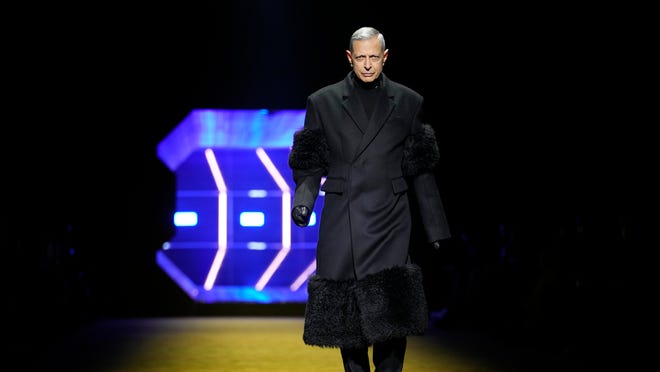
MILAN – Jeff Goldblum infused Milan Style Week with some levity on Sunday as he shimmied down the Prada runway in a darkish overcoat that solid a dramatic silhouette.
The hottest menswear assortment in the two-yr-aged collaboration amongst Miuccia Prada and Raf Simons as co-innovative administrators was at the moment elemental and celebratory, presenting elevated versions of each day parts.
“We had been imagining about meaningful manner, pieces that make feeling,” Prada mentioned in the show’s notes. “Garments that make folks really feel essential, and that are thus, in on their own, important, not a little something to discard.”
Kyle MacLachlan and Goldblum respectively opened and shut the runway demonstrate that showcased 8 other actors, chosen by the designers to symbolize “true men, identified figures,” improving truth.
The two wore very long overcoats. Goldblum’s was established off significantly with furry trim, while MacLachlan’s was contrasted with shimmering trousers and a shirt in light blue. Closing the show, Goldblum emerged hilariously from a purple-lit tunnel, as if astonished to uncover himself on a runway, then sashayed merrily along.
Visitors at the Fondazione Prada’s exhibition room ended up seated in nicely-spaced velvet-protected theater seats. Long lasting outerwear and operate clothing shaped the spine of the selection. Statement items like lengthy overcoats were being trimmed in technological mohair, thick along the hem, and ringing the higher arms. At instances, shoulders were accentuated, and a belt pulled limited at the midsection for greatest kind.
The designers continued their exploration of the uniform, as the world makes on-yet again, off-again moves back again into the office amid the coronavirus pandemic, proposing classy, lightweight and almost formless coveralls in silk tech, leather-based and cotton.
“They exchange the classic, historic shirt/tie/bow tie, and give a new power and truth, a young angle also,” Simons mentioned.
The designers also gave the selection flashes of shade, in orange, yellow and icier hues. Appears were being finished with matching coloured gloves. Assertion earrings were being shaped like robots or the new Prada triangular logo. Bags bundled futuristic triangular styles or double-cylinder backpacks.
With the pandemic even now raging, manner designers took differing, even opposing, sights of the latest minute: That we are transferring out of the darkness and towards the light – or that it is time to hunker down.
Indian designer Dhruv Kapoor took the previous check out, in a collection that unites masculine varieties with psychedelic layouts with the underlying concept that it is intellect about make a difference.
“I seriously want to press the ability of the thoughts via this selection,” said Kapoor. “That is what I want, to distribute enjoy by the model.”
“Linear time is an illusion” is embroidered in a burst of pink on a tailor-made overcoat, a job that can take 20 to 25 times to complete. An additional slogan encourages “parallel worlds,” the notion that we can be in a lot more than one location at a time. Felt hats with thick fringe depict dreadlocks worn by yogis and thought of auspicious.
By distinction, Rome-centered American designer Justin Gall’s debut Milan runway collection exuded the require for defense, to hunker down and hold out it out.
The looks could outfit squads of survivalists caught in a dystopia, with a mashup of puffer jackets, vests and quilted trousers, layered or alternated with fake fur things. Hoods were cinched restricted over dim sunglasses, and pants alternated among hefty-responsibility leather-based with utility pockets and lightweight parachute product.
“A commitment of mine is survival. That is what we are seeking to do now,” Gall mentioned backstage.
Limitations imposed throughout many states because of to growing Covid-19 situations have straight afflicted a lot of organizations in the state.
The Confederation of All India Traders (CAIT) has claimed that enterprises working with different verticals of merchandise have observed losses of in excess of 50 for every cent around the past 15 days.
CAIT has urged the Centre and condition governments to consider all feasible actions to avert Covid-19 from spreading additional though guaranteeing easy functioning of professional and economic routines. It also urged authorities to take ways immediately after consulting with trade and field bodies as it will enable avoid enterprise disruption.
Read | Covid-19: Omicron surge cripples a number of organizations, to hit economic recovery
The trade overall body mentioned techniques like Odd-Even in Delhi have proved to be futile, incorporating that it has also damage company pursuits. CAIT explained these forms of limits coupled with weekly lockdown instantly impacted a significant number of firms in the nationwide funds. It also spoke about how identical limits hampered income in other states in the state.
An additional critical level that CAIT observed was how several traders from close by states are dependent on Delhi for sourcing tools virtually 5 lakh traders occur to Delhi for sourcing tools, but they have stopped coming owing to latest constraints. The trade human body mentioned this is severely impacting Delhi’s posture as a trade hub.
CAIT Nationwide President BC Bhartia and Secretary Normal Praveen Khandelwal said, “Due to several limits of Covid-19, there has been an common drop of 45 {cfdf3f5372635aeb15fd3e2aecc7cb5d7150695e02bd72e0a44f1581164ad809} in business enterprise in excess of the past seven times across the country.”
“The out-of-town purchaser is not heading out of his town, when shoppers are heading to the marketplaces to acquire items only when it is genuinely significant. So, the enterprise of the place has fallen poorly, to which the central and all the point out governments have to have to pay back interest.”
CAIT Survey Results
The major CAIT associates educated that the study organisation of CAIT, the CAIT Analysis and Trade Development Culture, has done a 2nd survey among the traders from January 1 to January 15, in 36 metropolitan areas of diverse states of the place, (which CAT has specified the position of “distribution centre”), to discover out the effects of the numerous restrictions imposed by the regional administration due to the enhance in the instances of Covid-19.
Also Read | Omicron surge: How terrible will it damage India’s economic system?
The survey conclusions have disclosed that the country’s domestic trade has declined by an common of additional than 50 for every cent in the very last 7 days. The main cause for this drop is the panic amid persons thanks to the third wave of Covid and restrictions that have harm the overall trade cycle.
COVID DERAILS Economic Action
Although sectors like FMCG, jewellery, apparel, cosmetics and kitchen area appliances have witnessed losses to the tune of 35 for every cent, other individuals corporations like electronics , furniture, watches and stationary items have found losses up to 50 per cent.
The highest decline of 70 per cent has been found in organizations engaged in providing footwear, gift products and baggage.
CAIT added that the marriage market has been influenced due to the fresh new Covid limits. In the coming 2-3 months, the wedding ceremony market predicted earnings worth Rs 4 lakh crore, but could dip because of to constraints imposed by states. If the limitations final above the future several months, the market could finish up dealing with a decline of Rs 2.5 lakh crore.