We include products we think are useful for our readers. If you buy through links on this page, we may earn a small commission. Here’s our process.
A person with UC may experience symptoms, such as abdominal pain or diarrhea after consuming certain foods, especially during a flare-up. Many individuals with UC choose a diet that eliminates some foods and relieves their symptoms.
Ulcerative colitis (UC) is an inflammatory bowel disease that results in inflammation and sores, called ulcers in the digestive tract.
The most common symptoms of ulcerative colitis include:
abdominal pain
bloody diarrhea
mucus in stool
A person can manage these symptoms by eating or avoiding certain foods to help reduce the risk of flares and inflammation of ulcers.
Read this article to learn more about different diets to consider if a person has UC, including breakfast, lunch, dinner, dessert, and snack recipe ideas that may relieve the symptoms a person may experience.
Learn more about inflammatory bowel disease (IBD) here.
People with ulcerative colitis can follow several diets to help minimize the frequency and severity of their symptoms.
Some of these diets include:
Gluten-free diet: Gluten is a protein found in wheat, rye, and barley. This diet eliminates all foods that contain gluten. Reasearch from 2021 has shown that gluten ingestion may promote inflammation. However, there is still insufficient evidence to evaluate the role of gluten in maintaining UC. A gluten-free diet may also significantly modify the gut’s microbiota composition.
Specific carbohydrate diet (SCD): This diet involves individuals eating simple carbohydrates that are easier for the body to digest to minimize intestinal inflammation. A case study on one patient with a persistent case of UC demonstrated that the diet can decrease the frequency of bowel movements. The patient also noted the absence of abdominal pain and blood in their stool. However, the authors advise trying more conventional therapies first.
Paleo: This dietary strategy involves mimicking how prehistoric ancestors may have eaten. A person following this diet will only consume whole foods that people could hunt or gather. Studies have shown that a paleo diet can regulate inflammation in the gut, which can help individuals with UC. Read more about paleo and ulcerative colitis.
Vegandiet: A vegan diet eliminates all animal products including meat, dairy products, fish, and eggs. A plant-based diet may significantly reduce the risk of relapse in people with ulcerative colitis.
Vegetariandiet: A vegetarian diet eliminates all meat and fish but a person will still consume dairy products and eggs. Studies show that consuming vegetables can increase the beneficial bacteria in the gut. Although, some people may also experience aggravated symptoms by foods used to replace meat.
A person should consult a doctor or nutritionist before starting any specific diet to ensure they are not lacking in any vital nutrients.
Read more about what foods to eat and avoid with ulcerative colitis.
Breakfast can replenish the supply of glucose to boost energy levels. An individual with UC can consume various sweet and savory breakfast options. These include:
Breakfast smoothie
A diet rich in fruits and vegetables has anti-inflammatory effects, which helps reduce the severity of UC for people.
Most individuals with UC can tolerate smoothies, but they are also a great way to incorporate fruits and vegetables first thing in the morning.
However, fruits and vegetables are high in fiber. People with active UC should avoid or reduce insoluble fiber consumption. For example, not consuming raw foods and removing peels when possible.
Fruits and vegetables contain high soluble dietary fibers, such as:
An alternative to smoothies is juices for ulcerative colitis.
Read more about insoluble and soluble sources of fibers.
Oatmeal
Oatmeal is high in resistant starch and easy to digest.
Research has investigated the potential use of resistant starch as a prebiotic. Prebiotics can stimulate the growth of beneficial bacteria in the colon, which is important in reducing inflammation in people with ulcerative colitis.
People can make oatmeal with non-dairy milk, such as soymilk, nut-based milk, or water. They can also top their oatmeal with fresh, dried, or peeled fruits and some nuts, which are all soluble sources of fiber.
Read on for benefits and ways to make oatmeal.
Egg scrambles
Egg scrambles are a great source of lean protein in the morning. Including different vegetables can also add variety.
Egg yolks also contain Vitamin D. Vitamin D plays a significant role in:
maintaining the gastrointestinal barrier
monitoring the gut microbiota
regulating inflammatory immune responses
People who follow vegan or vegetarian diets can use tofu instead of eggs to make a delicious tofu scramble.
Breakfast muffins
People can make breakfast muffins ahead of time to make busy mornings simpler. There are also plenty of recipes that use alternative flours, and people can have them sweet or savory.
For example, a person can make sugar-free blueberry muffins using gluten-free flour.
Sweet potato pancakes
Research shows that purple sweet potatoes can decrease inflammation in the gut because they contain numerous anti-inflammatory compounds.
A person can use sweet potatoes instead of flour in pancakes, which may help decrease UC symptoms.
Additionally, using coconut flour allows a person to make sweet pancakes rather than savory ones.
A person can combine any vegetable with meat or meat alternatives and bread or salad. Some recipe ideas include:
One pan chicken and butternut squash
A one pan chicken and butternut squash recipe contain two, simple main ingredients. White poultry is a source of lean protein. Meanwhile, butternut squash is a type of winter squash. Squash contains potassium, an important nutrient for people with UC.
People may also substitute the chicken for a meatless option, such as tofu or tempeh.
Read on for good meat alternatives.
Salads
Salads are a good lunch option and may include dark, leafy greens, vegetables, carrots, beets, and other salad greens. These foods help fight disease at a molecular level, which may benefit UC symptoms.
Alternatively, if a person is experiencing difficulty tolerating these foods, they should try eating them in smaller amounts. However, if a person is experiencing an extended flare of symptoms, it is best to avoid raw ingredients.
Salad recipes are available online for all types of diets.
Veggie wraps
Veggie wraps are a good sandwich alternative. They usually contain cooked or baked vegetables, which are a good source of soluble fiber. Vegetables also contain antioxidant and anti-inflammatory properties, which benefit a person’s maintenance of symptoms.
A veggie wrap is quick and easy to make. A person can also opt for gluten-free wrap options as an alternative.
Dinner recipes will also include vegetables and meats or meat alternatives. These can include:
Cauliflower pizza
Cauliflower pizza is great for individuals with UC because it eliminates the gluten-based crust and is a healthy alternative to a wheat pizza. A person can also try other gluten-free pizza bases or alternative recipes online.
Pizza topping options include:
roasted butternut squash
zucchini
roasted garlic
tomatoes
meat or plant-based alternatives
Stir-fry
Stir-fry is another great option because it incorporates meats or meat-free alternatives, vegetables, or noodles. These foods contain protein, fiber, and carbohydrates, respectively.
Rice and rice-based noodles can be a great alternative for people with UC, as they are low in fiber and easily digestible.
Read more about a low fiber diet.
Dessert options usually contain a high amount of sugar. High sugar intake may stagger the balance of the gut’s microbiota, which can be problematic for people managing UC symptoms. However, there are alternative options for sweet treats:
Muffins and pancakes
People can make breakfast muffins and pancakes as a sweet dessert option.
People can also try flourless and sugar-free online recipes for gut-friendly options.
Yogurt
Another dessert idea for people with UC is yogurt. Some yogurts contain probiotics. Probiotics are a type of healthy bacteria that benefit the gut.
Probiotic yogurt may have nutritional and beneficial immune-modulatory effects in people with UC. People can buy these online or make their own at home. There are many recipes online for SCD homemade yogurts.
People can add soluble fruits to the yogurt, including berries such as blueberries or mangoes.
Read more about probiotics for ulcerative colitis.
Coconut flour cake
To avoid consuming refined sugars and wheat flour, a person can make a cake from alternative flours, such as coconut flour. They can also use sugar-free alternatives and coconut oil. These ingredients offer further anti-inflammatory properties for people with UC.
A person with ulcerative colitis may consume healthy snacks in between meals to maintain a moderate weight.
Vegetables or chips with hummus
Vegetables are a healthy plant-based snack. Although, if a person is experiencing a flare-up, they may want to avoid consuming too much insoluble fiber, such as raw carrots.
People with UC are generally able to tolerate chips and hummus as a snack well. The chickpeas in hummus may help relieve symptoms of gas or bloating.
To make hummus at home, a person can blend chickpeas, tahini, and olive oil. They can add seasoning but should avoid adding too much salt. Find a recipe online to make hummus at home.
Fruits
Fruits are a healthy option full of mostly soluble fiber, so they are a great snack for those who are experiencing severe UC symptoms.
Soluble fibers are present in peeled apples and citrus fruits.
Nuts
Nuts have numerous anti-inflammatory properties and are another convenient snack.
As research from 2020 demonstrates, cashew nuts show preventive effects on intestinal inflammation in mice. However, more human research is needed.
Read more for snack ideas for people with ulcerative colitis.
One of the best strategies for those experiencing a UC flare-up is to meal prep. This takes the guesswork out of what a person eats and allows them to prepare foods that are easier on their gut.
A person can decide what dishes to eat for a few days or weeks and make them ahead of time.
There is no single diet or meal plan that will relieve symptoms for every person with UC. However, keeping a food diary is a good method for managing the condition. By keeping a record of what and when one eats, they should be able to identify problem foods and eliminate them from their diet.
A person can also consult a nutritionist for help creating a specific plan suitable for them.
During the middle of a flare-up, individuals usually need to be more cautious of what they consume to minimize their symptoms. They should also follow guidelines from doctors and continue to take their prescribed medication at its appropriate dose.
A person should try reducing foods high in protein. Researchers associate a diet high in protein, particularly animal protein, with an increased risk of inflammatory bowel disease and relapses. People can try substituting high protein foods with tofu, tempeh, and legumes.
People should also try to decrease their intake of insoluble fibers during flares. Instead, opt for items that have soluble fibers, which are easier to digest.
If a person is experiencing particularly bad symptoms during a flare, it is best to eat simple, less complex meals so that digestion is easier. Simple soup recipes with just a few ingredients are a great way to feel full while also going easy on the gut.
Moreover, instead of consuming three meals a day, eat 5–6 smaller meals throughout the day. Consuming smaller meals is easier on the gut and digestion, so this may help with UC symptoms.
People should speak with a doctor for effective ways to manage a flare-up.
There are many recipe books available that make knowing what foods to eat and how to prepare them much easier.
Here is one example of a recipe book for an SCD. There are also recipe books available to help improve gut health.
Finally, there are recipe books specifically for UC.
Some individuals can tolerate some foods that others cannot. It is good for people to experiment with their diet to determine which foods make their symptoms worse and what foods do not.
To start, try decreasing animal-based foods and gluten during a flare-up, as these may aggravate symptoms.
A person should work with a nutritionist to determine which foods to consume and avoid to manage their condition effectively.
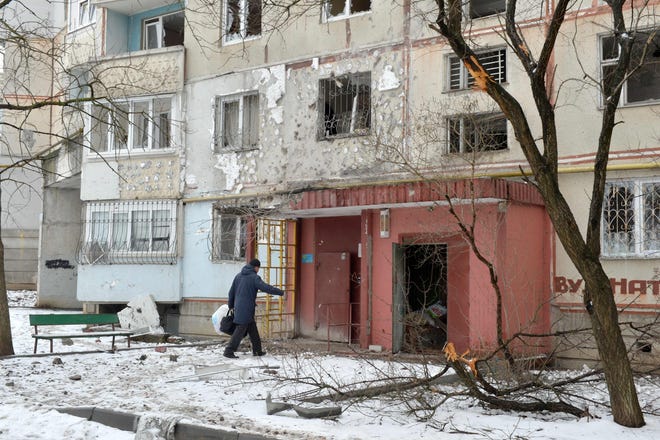
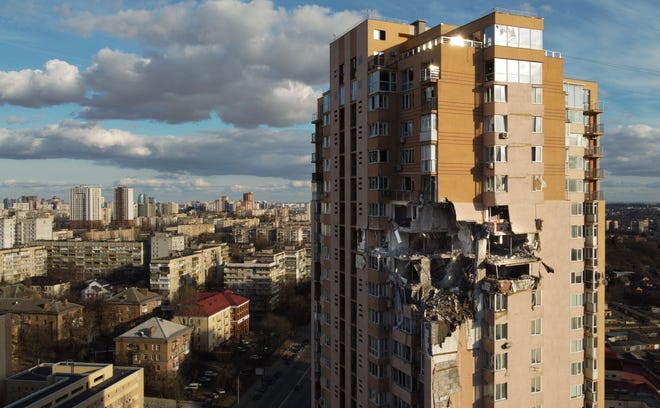
As Russia’s assault on Ukraine reached into its second largest city, and Russian President Vladimir Putin said he was putting nuclear forces on high alert, the EU announced unprecedented new actions against Moscow.
Putin’s order to make his nuclear weapons more ready for launch – made Sunday in response to “aggressive statements” by leading NATO powers and economic sanctions by the West – represent an unnecessary and dangerous move, according to the Pentagon.
A senior Defense Department official said Russia is under no threat from the United States and its NATO allies. The Pentagon is confident it can protect the United States and its allies, said the official, who spoke on condition of anonymity to discuss intelligence matters.
President Joe Biden, who has spent the weekend in Wilmington, Delaware, has spoken with his national security team regularly Sunday to receive updates on Russia and Ukraine, according to the White House.
The 193-member U.N. General Assembly scheduled an emergency session Monday on Russia’s invasion.
Also Monday, neutral Switzerland will consider joining other Western nations in sanctioning Russia. Swiss President Ignazio Cassis said Sunday it was “very probable” the Swiss would follow the EU’s lead and sanction Russia and freeze Russian assets in the country, Reuters reported.
Meanwhile, the European Union plans to close its airspace to Russian airlines, fund a weapons purchase to assist Ukraine and ban some pro-Kremlin media outlets in its latest response to Russia’s invasion, European Commission officials said Sunday. It marks the first time the block would finance military equipment for a country under attack.
On top of the military funding from the EU, the U.S. approved delivery of anti-aircraft Stinger missiles to Ukraine, according to the Associated Press.
The move to shut down Russian flights to Europe prompted a call from the U.S. Embassy in Moscow, urging all Americans in Russia to consider leaving “immediately,” ahead of the impending drop off in flights.
Earlier Sunday, the office of Ukrainian President Volodymyr Zelenskyy said a delegation would meet with Russian officials for talks, near the Belarus border.
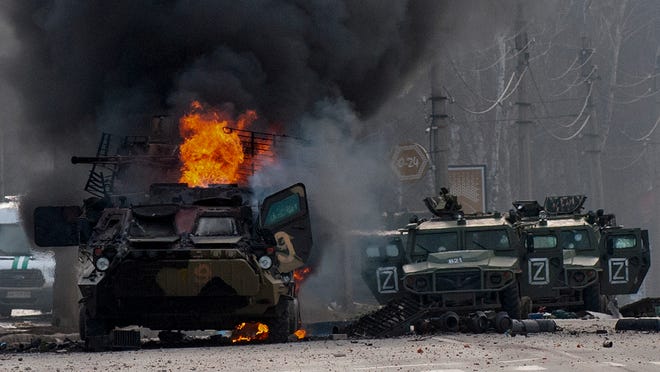
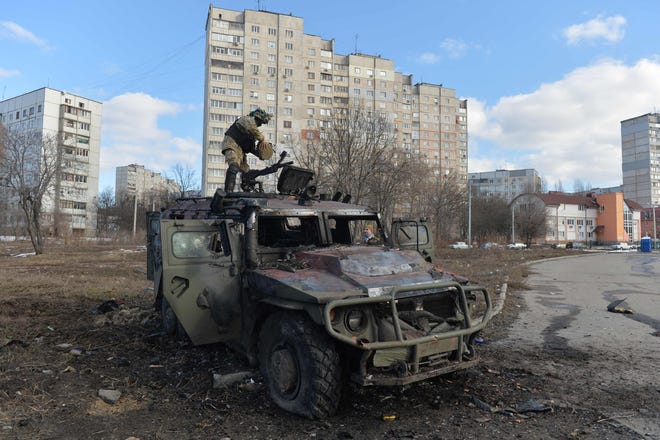
Also Sunday, Russian troops entered Kharkiv, Ukraine’s second-largest city, and fighting is underway in the streets, according to the Associated Press. Videos posted on Ukrainian media and social networks showed Russian vehicles moving across Kharkiv and a light vehicle burning on the street. Residents were urged to stay inside.
The U.S. for the first time has approved the direct delivery of Stinger missiles to Ukraine as part of a package approved by the White House on Friday, the Associated Press reported.
The exact timing of delivery is not known, but officials say the U.S. is currently working on the logistics of the shipment. The officials agreed to discuss the development only if not quoted by name.
The decision comes on the heels of Germany’s announcement that it will send 500 Stinger missiles and other weapons and supplies to Ukraine.
The high-speed Stingers are very accurate and are used to shoot down helicopters and other aircraft. Ukrainian officials have been asking for more of the powerful weapons.
Estonia has also been providing Ukraine with Stingers since January, and had to get U.S. permission in order to do that.
After days of fence-sitting, Swiss President Ignazio Cassis said on Sunday it was “very probable” that neutral Switzerland would follow the European Union’s lead and sanction Russia and freeze Russian assets in the country.
Reuters reported that Cassis, who was interviewed on French-language Swiss public television, said the nation’s seven-member Federal Council would meet Monday and review recommendations by finance and economy officials.
“It is very probable that the government will decide to do so tomorrow, but I cannot anticipate decisions not yet taken,” Cassis said, via Reuters.
Switzerland, a global financial hub and commodities trading center – has so far resisted calls for it to levy sanctions and possibly freeze Russian assets, especially after the EU and U.S. announced sanctions.
“The civilized, democratic world has to stand up to the biggest threat to European security and stability since the Second World War,” Peter Stano, lead spokesperson for EU external affairs, said on Friday. “It affects not only Ukraine. It affects Europe. Switzerland is part of Europe. So we expect our partner, our neighbor, our ally to follow suit in standing up for defending the principles on which our communities and countries are based.”
The oft-neutral country’s move came as a surprise to some.
“Switzerland to sanction Russia! Holy crap. A country that was neutral against the literal Nazis. Neutral no more!” tweeted Paul Massaro, a counter-corruption advisor to the U.S. Congress.
It was not known immediately how many wealthy Russian elites, especially oligarchs close to Putin, have stashed money in Swiss banks, known for their strong privacy firewalls. But various leaks of banking documents over the years suggest they have a sizable amount invested in Switzerland.
In 2018, Swiss banks reportedly frozen $1 billion in the accounts of one oligarch alone – Russian metals tycoon Viktor Vekselberg – over fears that they could be fined for doing business with him after Washington levied sanctions against the businessman, the Moscow Times reported at the time.
The U.S. Embassy in Moscow said Sunday that American citizens “should consider departing Russia immediately” because of the dramatic drop-off in airline service in and out of the country.
“An increasing number of airlines are cancelling flights into and out of Russia, and numerous countries have closed their airspace to Russian airlines,” a security alert posted to the embassy’s website states. “U.S. citizens should consider departing Russia immediately via commercial options still available.”
The guidance comes after the EU’s move to close its airspace to Russian airlines. Russian airline Aeroflot says it cancelled all flights to Europe.
The State Department had already advised Americans not to travel to Russia because of its aggression against Ukraine, as well as the potential harassment of U.S. citizens in the country and the COVID-19 pandemic.
The U.N. Security Council has voted for the 193-member General Assembly to hold an emergency session on Russia’s invasion of Ukraine on Monday.
The vote on Sunday to authorize an emergency meeting was 11 in favor, Russia opposed, and China, India and the United Arab Emirates abstaining. That was the exact same vote on a resolution Friday demanding that Moscow immediately stop its attack on Ukraine and withdraw all troops. But in that case, Russia used its veto and the resolution was defeated.
Ukrainian U.N. Ambassador Sergiy Kyslytsya asked for the General Assembly meeting to be held under the so-called “Uniting for Peace” resolution, initiated by the U.S. and adopted in November 1950 to circumvent vetoes by the Soviet Union during the Korean War.
That resolution gives the General Assembly the power to call emergency meetings when the Security Council is unable to act because of the lack of unanimity among its five veto-wielding permanent members – the U.S., Russia, China, Britain and France.
The United Nations had announced the civilian death toll had reached 240 by Saturday, but stressed that the actual figure was potentially “considerably higher.”
Officials with the U.S. Embassy in Ukraine issued a new advisory Sunday, telling Americans to choose departure routes very carefully if they are trying to flee.
“Ukraine’s roads are in many cases crowded, exposed to combat operations, and infrastructure such as bridges in some locations has been destroyed,” the embassy said in a notice. “Sheltering in place may remain the best option for some.”
Most border crossings into Poland and all main crossing points into Moldova “are severely backed up,” with extremely long wait times – in some cases, more than 30 hours, the embassy said.
“We recommend that, if possible, U.S. citizens consider redirecting to border crossings with Hungary, Romania, and Slovakia, which are currently experiencing lower wait times to cross,” the note says. “Note that conditions at each border can change very quickly and wait times can increase at any time without warning.”
Shipping giants FedEx and UPS have suspended services to Russia amid the country’s military assault on Ukraine.
UPS said it had halted all international shipments to addresses in Russia as of Feb. 25. FedEx said it was “closely monitoring the situation” and had suspended inbound service to Russia “until further notice.”
Both companies had already stopped service to Ukraine, after Russian troops invaded the neighboring country. Russian troops have now advanced well into Ukrainian territory, reaching its second largest city and encircling the capital, Kyiv.
Former national security adviser H.R. McMaster said Sunday that Ukrainians are doing a “tremendous job” defending the country against Russian military attacks.
“I think Putin got a lot more than he bargained for. He’s in a very difficult position. And I think anything we can do, obviously, financially, going after his international criminal enterprise with sanctions and so forth is important. But the support for Ukraine’s ability to defend themselves is also important,” McMaster told Margaret Brennan on CBS’ “Face the Nation.”
The retired lieutenant general also said the seizure of Ukraine’s capital Kiev is “not in the cards for the immediate future,” but acknowledged the next 72 hours are going to be “really critical.”
KYIV, Ukraine – As Russian troops draw closer to the Ukrainian capital, Kyiv’s mayor is both filled with pride over his citizens’ spirit and anxious about how long they can hold out.
In an interview with The Associated Press on Sunday, after a grueling night of Russian attacks on the outskirts of the city, Mayor Vitali Klitschko was silent for several seconds when asked if there were plans to evacuate civilians if Russian troops managed to take Kyiv.
“We can’t do that, because all ways are blocked,” he finally said. “Right now we are encircled.”
When Russian troops invaded Ukraine on Thursday, the city of 2.8 million people initially reacted with concern but also a measure of self-possession. However, nerves started fraying when grocery stores began closing and the city’s famously deep subway system turned its stations into bomb shelters.
The mayor confirmed to the AP that nine civilians in Kyiv had been killed so far, including one child.
A Klitschko-ordered curfew began about sundown on Saturday and is to extend until at least 8 a.m. Monday. His order pointedly stated that any unauthorized person outside could be considered a saboteur.
“We are hunting these people, and it will be much easier if nobody is on the street,” Klitschko explained, saying that six Russian “saboteurs” were killed Saturday night.
In the last few days, long queues of people — both men and women — were spotted waiting to pick up weapons throughout the capital, after authorities decided to distribute weapons freely to anybody ready to defend the city. There are concerns, however, about arming nervous civilians with little military experience amid warnings of Russian saboteurs disguised as Ukrainian police or journalists.
“To be honest, we don’t have 100{cfdf3f5372635aeb15fd3e2aecc7cb5d7150695e02bd72e0a44f1581164ad809} control,” said Klitschko. “We built this territorial defense in a short amount of time — but these are patriotic people.”
“Right now, the most important question is to defend our country,” he added.
The top official in the European Union said the bloc will take unprecedented new steps after Russian President Vladimir Putin raised tensions with talk of nuclear weapons.
“We are proposing a prohibition on all Russian-owned, Russian registered or Russian-controlled aircraft. These aircraft will no more be able to land in, take off or overfly the territory of the EU,” she said.
“For the first time ever, the European Union will finance the purchase and delivery of weapons and other equipment to a country that is under attack,” she added.
The EU will also ban pro-Kremlin media outlets Russia Today and Sputnik, she said.
The European Commission’s plans followed the announcement earlier in the day that Germany was committing 100 billion euros ($113 billion) to a special armed forces fund and would keep its defense spending above 2{cfdf3f5372635aeb15fd3e2aecc7cb5d7150695e02bd72e0a44f1581164ad809} of GDP from now on. The shift underscored how Russia’s war on Ukraine was rewriting Europe’s post-World War II security and defense policy in ways that were unthinkable only a few weeks ago.
The EU’s plan to fund weapons purchases was unprecedented and would use millions of euros to help buy air defense systems, anti-tank weapons, ammunition and other military equipment to Ukraine’s armed forces. It would also supply things like fuel, protective gear, helmets and first aid kits.
Oil giant BP will walk away from its nearly 20{cfdf3f5372635aeb15fd3e2aecc7cb5d7150695e02bd72e0a44f1581164ad809} stake in Russian oil company Rosneft, according to media reports.
BP Chairman Helge Lund issued a statement announcing the exit, as well as the resignation of BP CEO Bernard Looney from the board of the Russian oil firm.
BP has been a shareholder in Rosneft since 2013, according to the BBC.
Sen. Mark Warner, chairman of the Senate Intelligence Committee, said Putin “totally underestimated” the resolve of the Ukrainians and the support building worldwide for the Ukrainian people, describing the Russian invasion so far as a major “miscalculation.”
“Remarkably what he’s also been able to do his unify the vast majority of us in the Senate, Democrats, Republicans alike,” Warner said on NBC’s “Meet the Press.” “And he’s going to pay a high price.”
Warner said Putin over the past few years became “more and more isolated.”
“When you are an authoritarian leader, and you’re only hearing from people that want to say to the boss, hey, you’re right. I think that leads to miscalculation. I think that is what has happened in the case of this invasion in Ukraine.”
As she made the rounds of the Sunday talk shows, United Nations Ambassador Linda Thomas-Greenfield made clear that the U.S. response to the invasion of Ukraine will not include American troops or air personnel.
“The president has made clear that we’re not going to put boots on the ground,” Thomas-Greenfield said on CNN’s “State of the Union.”
Thomas-Greenfield said that mandate includes no patrols of any “no-fly zone” in the region.
The U.S. will provide whatever assistance it can to Ukraine, working with NATO partners, she said, but: “We’re not going to put American troops in danger. So that means we’re not going to put American troops in the air as well. But we will work with the Ukrainians to give them the ability to defend themselves.”
The main force of Russian assault aimed at Kyiv remained stalled Sunday about 18 miles from the city’s center, hindered by stiff Ukrainian resistance and Russia’s own problems providing fuel and supplies for its troops, according to a senior Defense Department official.
There are indications of some fighting inside Kyiv and that Russian troops in Ukrainian military uniforms have appeared there, said the official who briefed reporters on condition of anonymity to discuss intelligence matters.
The officials described Ukrainian resistance as stiff and creative around Kyiv and Kharkiv. Meantime, fuel shortages and logistics problems for Russian troops are most acute near Kharkiv.
The war is a major operation for Russia’s military, a complex mission that it does not have recent experience mounting, the official said. It’s unclear if the shortages in materials represent a failure in planning or execution. However, the official said Russian officers are expected to learn and adapt to its logistical problems.
Elsewhere in Ukraine, there are troubling indications that Russia is encircling the city of Chernihiv, northeast of Kyiv, and could be planning to besiege it, the official said. There are increasing rocket attacks there, imprecise weapons that can kill civilians and damage infrastructure.
Overall, Russian President Vladimir Putin has committed two-thirds of the combat forces he deployed against Ukraine is now inside the country, the official said.
Russia has launched more 320 ballistic missiles into Ukraine during the four-day war. There are some indications that several ballistic missiles have failed to launch.
Linda Thomas-Greenfield, the U.S. ambassador to the U.N., said Sunday the U.S. will continue to apply stiffer economic sanctions against Russia as Putin escalates fighting in Ukraine.
“We are continuing to assess what we can do moving forward,” Thomas-Greenfield said on NBC’s “Meet the Press.” “And the Russians can be assured that we will continue to put more and more sanctions as they continue to press more on the Ukrainian government.”
U.S. and Western allies have cut some Russian banks out of the SWIFT financial system but stopped short of a complete removal.
“They will feel the pain,” she said, adding there are also actions the U.N. can take.
“We can isolate them. We can isolate them in the United Nations. We can isolate them in U.N. specialized agencies. They are feeling that isolation.”
NATO Secretary-General Jens Stoltenberg said if peace talks are to succeed, Russia must be willing to make “serious compromises” and “respect the sovereignty of Ukraine.”
Stoltenberg told CNN’s “State of the Union” that Putin’s decision to put his nuclear forces on high alert is not a good sign.
It “just adds to the very aggressive rhetoric” of Russia, the NATO leader said.
Ukraine’s ambassador to the United States accused Russia of committing war crimes in its attack on her country.
Ambassador Oksana Markarova said Sunday that Russian troops are using heavy missiles and heavy artillery to attack Ukraine’s infrastructure, as well as hospitals and kindergartens. Many children have been killed, and one entire family was shot in their car, she said.
“Nothing is off limits to them,” Markarova said on ABC’s “This Week.” “What we see is a full-fledged war, with war crimes on the ground.”’
Asked whether Ukrainian President Volodymyr Zelenskyy is safe, Markarova offered no information on his whereabouts but added, “He is as safe as our country.”
She spoke shortly after Zelenskyy’s office confirmed that a delegation will meet with Russian officials. Marakova said Ukraine is ready “for any peace talks that would stop the war and get them out from our country.” But the Ukrainians will not surrender, she said.
Sen. Tom Cotton on Sunday called on the Biden administration and American businesses to provide “no support whatsoever” to Russia amid its invasion of Ukraine.
“We can do more than prayers and hashtags and lining up building storage,” he said on ABC’s “This Week.” “It’s time for the president and some of our European partners to quit pussyfooting around.”
Cotton appealed to the Biden administration to increase its sanctions on Russian banks, arguing that while the administration says it has sanctioned 80{cfdf3f5372635aeb15fd3e2aecc7cb5d7150695e02bd72e0a44f1581164ad809} of Russian banks, Russian President Vladimir Putin “controls 100{cfdf3f5372635aeb15fd3e2aecc7cb5d7150695e02bd72e0a44f1581164ad809} of banks.”
The Arkansas Republican also blamed Western nations for underestimating Putin’s ambition.
Despite a strong condemnation of Putin, Cotton stopped short of condemning former President Donald Trump, who has called Putin “smart” and his plan both “savvy” and “genius.” Cotton repeatedly said he does not speak for other politicians.
Former Secretary of State Condoleeza Rice said Russian President Vladimir Putin recent behavior is a departure from her past encounters with the “cold and calculating” leader.
“This is a different Putin,” Rice, who served under former President George W. Bush, said on “Fox News Sunday.” “He seems erratic… He has descended into something I have not seen before.”
While Rice said the prospect of peace talks was promising, she urged Ukraine to follow the advice of former President Ronald Reagan.
“Trust but verify,” she said. “It’s always a good thing if there is a chance (at peace),” she said.
Russian President Vladimir Putin’s decision to put nuclear deterrent forces on high alert is another example of the Russian leader “manufacturing threats” to justify aggression against Ukraine, White House press secretary Jen Psaki said Sunday.
“We’ve seen him do this time and time again,” Psaki said on ABC’s “This Week.” “At no time has Russia been under threat from NATO.”
“This is all a pattern from President Putin,” Psaki said, “and we’re all going to stand up” to him.
Former Secretary of State Condoleeza Rice said Russian President Vladimir Putin may have “bitten off more than he can chew” perhaps forcing early peace talks.
Rice, speaking on “Fox News Sunday,” said Putin likely believed that he could “waltz” into Ukraine.
Sen. Mitt Romney, R-Utah, cast Ukraine’s defense against the Russian invasion as a battle of “good and evil,” and called for more sanctions on the “evil regime” of Vladimir Putin.
Speaking on CNN’s “State of the Union,” Romney also said he hopes Putin will use potential peace talks with Ukraine as an opportunity to back off.
“He made a huge error,” Romney said of Putin. “This is not going well for him.”
Removing Russia from a global banking network as part of a new round of sanctions “will make a big difference” in isolating the Kremlin, said Sen. Amy Klobuchar, D-Minn.
Linda Thomas-Greenfield, the U.S. ambassador to the United Nations, expressed hope for prospective peace talks between Russia and Ukraine.
“We’ll look forward to what comes out of those discussions,” Thomas-Greenfield told CNN’s “State of the Union.” The ambassador spoke shortly after reports that Ukraine would send a delegation to a location near the Belarus border to talk with Russian negotiators.
U.N. ambassador says Russian leaders will be held accountable – including Putin
Thomas-Greenfield did not directly address the question of whether Putin should be tried as a war criminal – but also did not reject the idea.
“We’re holding the Russians accountable at every level,” she said on CNN.
The office of Ukraine’s president has confirmed that a delegation will meet with Russian officials as Moscow’s troops draw closer to Kyiv.
Ukrainian President Volodymyr Zelenskyy’s office said on the Telegram messaging app that the two sides would meet at an unspecified location on the Belarusian border and did not give a precise time for the meeting.
The announcement on Sunday came hours after Russia announced that its delegation had flown to Belarus to await talks. Ukrainian officials initially rejected the move, saying any talks should take place elsewhere than Belarus, where Russia has placed a large contingent of troops.
U.S. Ambassador to the United Nations Linda Thomas-Greenfield said Sunday that Vladimir Putin’s decision to put nuclear deterrent forces on high alert indicates the Russian president is “continuing to escalate” the war in Ukraine in a way that is “unacceptable.”
Speaking on CBS’ “Face the Nation,” Thomas-Greenfield said the U.S. is using “every possible lever” to stop Russia’s invasion of its neighbor and that the U.N. Security Council will meet later Sunday.
“I’m not surprised at this information because Putin has tried every means possible to actually put fear in the world in terms of his actions. It just means that we need to ramp up up our actions at the U.N.”
When asked whether there’s a threat of chemical or biological weapons in Ukraine, Thomas-Greenfield responded: “Certainly nothing is off the table with this guy.”
Russia President Vladimir Putin ordered Russian nuclear forces Sunday to be on high alert, a dramatic escalation of tensions with the West that brought immediate condemnation from the U.S. as Russia continues its full-scale assault on Ukraine.
Putin, announcing the move on Russian state television, called it a response to “aggressive statements” and tough financial sections from NATO countries. The extraordinary step raises the threat of nuclear warfare entering the conflict in Ukraine, a scenario the White House has previously said it has not assessed.
Linda Thomas-Greenfield, the U.S. ambassador to the UN, condemned the action as “unacceptable” in an appearance on CBS’ “Face the Nation.”
Putin directed the Russian defense minister and the chief of the military’s General Staff to put the nuclear deterrent forces in a “special regime of combat duty” during a meeting with top officials.
“Western countries aren’t only taking unfriendly actions against our country in the economic sphere, but top officials from leading NATO members made aggressive statements regarding our country,” Putin said in televised comments.
At the onset of the conflict with Ukraine, Putin warned that any nation that would “hinder us” will face” such consequences that you have never encountered in your history,” although he did not elaborate what he meant.
The White House did not immediately respond to a request for comment.
The capital, Kyiv, was eerily quiet after huge explosions lit up the morning sky and authorities reported blasts at one of the airports. Only an occasional car appeared on a deserted main boulevard as a strict 39-hour curfew kept people off the streets. Terrified residents instead hunkered down in homes, underground garages and subway stations in anticipation of a full-scale Russian assault.
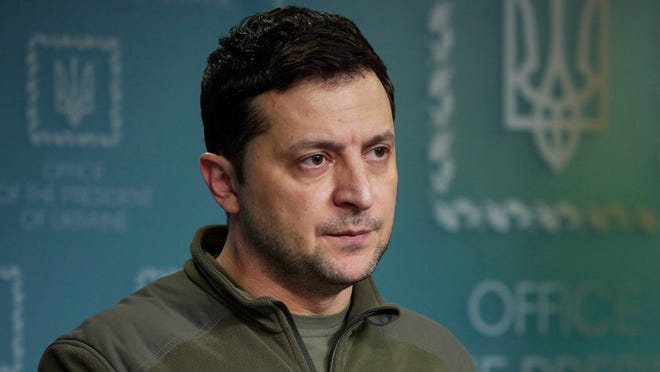
“The past night was tough – more shelling, more bombing of residential areas and civilian infrastructure,” Ukrainian President Volodymyr Zelenskyy said. “There is not a single facility in the country that the occupiers wouldn’t consider as admissible targets.”
Videos posted on Ukrainian media and social networks showed Russian vehicles moving across Kharkiv, Ukraine’s second-largest city. The images showed Russian troops roaming the city in small groups. In one image, Ukrainian troops were seen firing at the Russians and damaged Russian light utility vehicles abandoned nearby.
The images underscored the determined resistance Russian troops face while attempting to enter Ukraine’s bigger cities. Ukrainians have volunteered en masse to help defend the capital, Kyiv, and other cities, taking guns distributed by authorities and preparing firebombs to fight Russian forces.
Located in The Hague, the Netherlands, the ICJ is the main judicial arm of the United Nations.
“Russia must be held accountable for manipulating the notion of genocide to justify aggression. We request an urgent decision ordering Russia to cease military activity now and expect trials to start next week,” Zelenskyy wrote on Twitter.
The ICJ rules on disputes between states, including responsibility for breaches of international law. It is not linked to the International Criminal Court, also based in The Hague, which holds individuals accountable for atrocities.
When offered an escape from Kyiv, allegedly by the United States, the 44-year-old Ukrainian president immediately rejected the notion and demonstrated selfless leadership and a portrait of courage generally reserved for Hollywood.
Many leaders would have abandoned ship, putting their own personal safety above that of their countrymen. Zelenskyy, on the other hand, is taking a stand for freedom, boldly demonstrating that freedom is worth fighting for; that a government of, by and for the people is worth defending.
Hockey Hall of Famer Dominik Hasek has called for the NHL to “immediately suspend contracts for all Russian players” amidst Russia’s deadly invasion of Ukraine.
Hasek, who played in the NHL for 16-seasons and is widely considered one of the best goaltenders of all time, called Ovechkin an “alibist,” a “liar” and a “chicken (expletive)” after Ovechkin failed to publicly denounce Putin and his country’s aggression.
Ukraine’s President Volodymyr Zelenskyy says his country is ready for peace talks with Russia but not in Belarus.
Speaking in a video message Sunday, Zelenskyy suggested meeting in Warsaw, Poland; Bratislava, Slovakia; Istanbul; Budapest, Hungary; or Baku, Azerbaijan. He said other locations are also possible but made clear that Ukraine doesn’t accept Russia’s selection of Belarus, which Russia has used as a staging ground for its invasion.
The Kremlin said Sunday a Russian delegation had arrived in Homel, Belarus, for talks with Ukrainian officials. Kremlin spokesman Dmitry Peskov said the delegation includes military officials and diplomats.
Russia was working Sunday to limit strategic strategic ports along the Ukraine’s coastline stretching from the border with Romania in the west to the border with Russia in the east. A Russian Defense Ministry spokesman, Maj. Gen. Igor Konashenkov, said Russian forces had blocked the cities of Kherson on the Black Sea and the port of Berdyansk on the Azov Sea.
Russia’s military also put increasing pressure on strategic ports in the south of Ukraine, blocking the cities of Kherson on the Black Sea and the port of Berdyansk on the Azov Sea.
Cutting Ukraine’s access to its sea ports would deal a major blow to the country’s economy.
Russia unleashed a wave of attacks on Ukraine targeting airfields and fuel facilities in what appeared to be the next phase of an invasion that has been slowed by fierce resistance. The U.S. and EU responded with weapons and ammunition for the outnumbered Ukrainians and powerful sanctions intended to further isolate Moscow.
Huge explosions lit up the sky early Sunday south of the capital, Kyiv, where people hunkered down in homes, underground garages and subway stations in anticipation of a full-scale assault by Russian forces.
On Sunday morning, Ukranian writer Illarion Pavliuk plans to set out on a dangerous journey to help his countrymen as explosions rock Kyiv, and outgunned Ukrainian forces continue to maintain control of their capital.
Pavliuk is not a solider, but he does have a military background. In 2015, he was an intelligence volunteer in the war in Eastern Ukraine. And yet, this is what Ukraine has become – a country where internationally acclaimed artists are forced to kiss their children goodnight before they go off to defend their homeland from the occupying force. “We will never give up and we are going to win this war. You cannot defeat the whole nation. And Ukrainians are absolutely united as a nation now.”
His words are haunting and powerful, with his children in the background.
“What can I tell you about this war? It is difficult to say a couple of words,” he says. “I would never ever imagine my four children dropping their toys and running to sit in the thickest doorway in the house because of cruise missiles above our city; ballistic missiles.
“And I would never imagine this and I will never forgive Russia.”
Share on PinterestA new review investigates inbound links amongst psychological overall health and dementia. Rob and Julia Campbell/Stocksy
A substantial new research finds an association among psychological well being situations and dementia later on in life.
Though study has not established a causal website link, psychological wellness difficulties continue being a predictor of dementia.
Effectively addressing psychological wellbeing situations may help cut down the likelihood of dementia for older grown ups.
As of 2020, there ended up in excess of 55 million people today all over the world residing with dementia, with an estimated 10 million new scenarios just about every calendar year. Industry experts estimate that an individual develops the problem each 3 seconds.
For decades, scientists have suspected a relationship amongst mental overall health ailments previously in lifestyle and dementia afterwards on, although the outcomes of this kind of investigations have been inconsistent.
Now, scientists from the College of Michigan in Ann Arbor, Duke College in Durham, NC, and the University of Auckland in New Zealand have posted a extensive-phrase examine of 1.7 million individuals from New Zealand aged 21–60 many years.
The integrative character of the country’s national overall health program allowed the study’s authors to follow individuals throughout 30 a long time — from 1988 to 2018 — linking hospital information and inhabitants databases.
The study finds that psychological health and fitness disorders are strongly involved with dementia later in everyday living.
Though the review reveals a sturdy statistical association concerning mental wellbeing problems and dementia, a longitudinal review these as this simply cannot demonstrate that previously psychological health problems bring about dementia.
The study’s direct author is Dr. Leah Richmond-Rakerd, an assistant professor in the Division of Psychology at the College of Michigan. She advised to Medical News Right now a few causes why such a robust affiliation may possibly exist:
“There could be shared danger things for the two psychological [health conditions] and dementia, this sort of as shared genetics. It may also be that people working experience a brain vulnerability that displays up as mental wellness problems previously in existence, and demonstrates up as dementia later in lifestyle.”
Dr. Archana Singh-Manoux, who was not associated in this review, advised MNT that she agrees that this rationalization is attainable.
Nonetheless, “it is a lot more possible that [having a mental health condition] early in lifestyle [may set] you on pathways that direct to adverse well being outcomes. This may well include things like harmful behaviors, [difficulties with managing] self-wellbeing treatment, noncompliance to therapy, poverty, side effects of medication, and many others.”
Dr. Singh-Manoux is a principal investigator of the epidemiology of growing old and neurodegenerative conditions at the Université de Paris in France.
“It’s essential to notice, though,” claimed Dr. Richmond-Rakerd, “that even if psychological wellbeing conditions are not a causal hazard factor for dementia, the existence of a mental health problem is even now an crucial indicator of danger.”
“The mental [health conditions] thought of in the examine,” stated Dr. Singh-Manoux, “were: material use, psychotic, temper, neurotic (i.e., anxiousness), physiological disturbance, temperament, developmental, behavioral, and unspecified diseases.”
As the lead author of a preceding analyze checking out a website link amongst melancholy and dementia, Dr. Singh-Manoux noted:
“It is significant to individual these findings from experiments that look at the association in between depressive signs and dementia, specifically experiments based on older grown ups. This is because depressive symptoms are prevalent in the preclinical section of dementia, and any affiliation is possible to be due to ‘reverse causation.’”
In other phrases, despair in more mature grown ups may possibly be an early indication of dementia, fairly than evidence that depressive signs are a hazard aspect for dementia.
The research observed that psychological overall health disorders were related with subsequent Alzheimer’s and non-Alzheimer’s dementias, as perfectly as other early- and late-onset dementias.
Of the total group researched, researchers recognized 3.8{cfdf3f5372635aeb15fd3e2aecc7cb5d7150695e02bd72e0a44f1581164ad809} (64,857) of individuals as getting a psychological wellbeing affliction, even though 2{cfdf3f5372635aeb15fd3e2aecc7cb5d7150695e02bd72e0a44f1581164ad809} (34,029) experienced a analysis of dementia.
Just about 6{cfdf3f5372635aeb15fd3e2aecc7cb5d7150695e02bd72e0a44f1581164ad809} of people today with mental wellness situations made dementia in the course of the observation period of time. Between individuals with no mental health and fitness disorders, only 1.8{cfdf3f5372635aeb15fd3e2aecc7cb5d7150695e02bd72e0a44f1581164ad809} produced dementia.
The affiliation persisted throughout all genders and age teams.
The scientists also determined that socioeconomic deprivation or earlier persistent actual physical health conditions ended up not considerable elements.
“We were being stunned to uncover that mental well being problems had been a a great deal stronger predictor of dementia than persistent bodily diseases,” reported Dr. Richmond-Rakerd.
“This reinforces the need to have,” stated Dr. Richmond-Rakerd, “to imagine about dementia prevention earlier in the daily life program for the reason that mental health conditions have a tendency to peak in young adulthood, although persistent physical illnesses do not ordinarily arise until eventually later on in lifetime. Supporting youthful people’s mental overall health could be a window of opportunity to support lessen the burden of dementia in older grown ups.”
MNT asked Dr. Richmond-Rakerd what kind of study she would like to see that could build or refute a causal connection among mental health conditions and dementia. She replied:
“One insightful approach would be to detect effective randomized scientific trials of psychiatric interventions and follow up the participants who obtained the intervention to see if in afterwards existence they are faring greater in conditions of their cognitive health and are protected against dementia. This would provide evidence that psychological overall health problems are a causal hazard issue.”
On the other hand, stated Dr. Singh-Manoux, “Establishing causality wherever dementia is worried is challenging thanks to the extensive interval more than which dementia develops — probably as lengthy as 15–20 decades. [Randomized controlled trials], the gold normal method to establish causality, are clearly not beneficial.”
This still left Dr. Singh-Manoux with much more faith in longitudinal scientific studies like Dr. Richmond-Rakerd’s:
“Thus, well-performed longitudinal reports, with a very long adhere to-up, are critical.” She extra, “Another technique is Mendelian randomization, the place genes are used as instruments to check causality in the affiliation among an exposure and an consequence.”
While the conflict between Russia and Ukraine carries on to unfold, its outcomes are currently remaining felt across the globe.
Here is a roundup of posts to enable continue to keep you knowledgeable on the markets, fertilizer sector, trade procedure, and a lot more.
Russia and Ukraine
Rebuilding resilience has the USTR very chaotic these days, in accordance to U.S. Trade Representative’s Ambassador Katharine Tai. “The pandemic was a major shock to the (trade) process,” Tai suggests. “And, what we are seeing involving Russia and Ukraine is yet another shock to the process.”
The U.S. has skilled pandemics, organic disasters, and war prior to, but this brings us to a want for innovation from our stakeholders and financial state, the U.S. trade official claims.
As Russia kilos Ukraine’s funds Friday, rushing tankers and troopers toward toppling the authorities in Kyiv (Kiev), civilians are scattering for shelter, corporations are shutting down, and general public transportation is scarce.
Iurii Mykhailov, a Kyiv resident and Productive Farming contributor, is reporting from within the traces of war.
Fertilizer
Editor Madelyn Ostendorf handles the lates on the fertilizer industry.
Even though the U.S. imports most of its potash from Canada, a state which generates 39{cfdf3f5372635aeb15fd3e2aecc7cb5d7150695e02bd72e0a44f1581164ad809} of potash globally, we also get 7.8{cfdf3f5372635aeb15fd3e2aecc7cb5d7150695e02bd72e0a44f1581164ad809} from Russia. Because it is this kind of a main player in the worldwide marketplace, sanctions on Russia have a ripple outcome on markets, claims Jason Troendle, director of industry intelligence and investigation at The Fertilizer Institute.
The Russian invasion of Ukraine this 7 days may drive up the expenditures of farm fertilizers globally — which virtually quadrupled last yr in rate in the United States and continue to be high — and offers an opportunity for unscrupulous corporations to artificially inflate these prices further more, according to U.S. Secretary of Agriculture Tom Vilsack.
Markets
Editor Laurie Bedord interviews Angie Setzer, co-founder of Consus, LLC, about the circumstance in Ukraine and its brief- and prolonged-phrase impacts on agriculture.
“Today transformed a lot of items,” Setzer claims of yesterday’s invasion of Ukraine by Russia. “We have develop into a different world, and it is unattainable not to imagine of all the implications this is acquiring and could have on our state. The international markets are now reflecting that.”
Crops
Editor Gil Gullickson writes about scheduling for herbicides this year.
Communicate with your chemical retailer. Examine weed control guides compiled by your community land-grant universities. And above all, have a system B or even prepare C. Those people are approaches farmers can deal with looming 2022 herbicide shortages, claims Monthly bill Johnson, Purdue University Extension weed expert.
It’s a challenging scenario, considering that aged standby substances are most impacted by shortages.
Livestock
A person cow can consume 1 to 2 two gallons of drinking water for each 100 lbs . of human body body weight each working day. Multiply that in the incredibly hot summer months months or if the cow is lactating. It is important to have a big enough watering tank so just about every animal can get the h2o it requires.
Editor Jodi Henke interviews Brad White, a professor at the University of Veterinary Drugs at Kansas Point out College and director of the Beef Cattle Institute, about this topic.
Happy Thursday, everyone! The clock is ticking for the MLB and the MLB Players Association to come to an agreement after meeting for the third straight day on Wednesday in Jupiter, FL. We’ll have an update with more on the ongoing negotiations and what they could mean for the regular season below. But the focus of today’s newsletter will be Wednesday’s industry mock draft — key takeaways from the mock that included the entire Fantasy Baseball Today team — Scott White, Frank Stampfl and Chris Towers.
What I found most interesting about this mock was how much impact the scoring and format had on the draft results. This was our first mock with this specific scoring format — head-to-head and categories — and it had a major impact on where players went. For starters, finding stolen bases are tackles with an entirely different approach.
While it can be argued that stolen bases are made even more important in this format, that may only be true for players who steal a lot of bases rather than those who accumulate between 10-15 over the course of a season. The latter are a lot more valuable in Roto scoring leagues. Scott has advocated for a “zero-stolen base” strategy in 2022 — which is not exactly as it sounds — and a lot more like the “zero RB” counterpart we’ve seen used in Fantasy Football. In a H2H categories format, punting the steals category can pay major dividends — specifically if you build out a strong pitching staff.
We’ll have a lot more on the mock draft below, but first, let’s get to some news and notes on the lockout and more.
And of course, as always, you can follow to make sure you get the latest episodes of Fantasy Baseball Today right when they drop on Apple and Spotify.
Lockout update
According to Evan Drellich of The Athletic, a MLB spokesperson said Wednesday that regular season games will be canceled if an agreement on a new Collective Bargaining Agreement isn’t reached by Feb. 28. That gives us just four more days for the two sides to come to an agreement before we have to start worrying about losing games. For a more detailed look at how this impending decision and others will impact the Fantasy Baseball season, your drafts and more, be sure to check back on the Fantasy Baseball main page later today where Towers will be providing a detailed lockout primer.
Per the spokesperson, “A deadline is a deadline… Missed games are missed games. Salary will not be paid for those games.”
The expectation is that the MLB doesn’t intend to rewrite the schedule and would simply pick up whenever games begin. The owners seem prepared to extend the lockout into March, which would cancel early-season games. Both sides remain far apart in negotiations on a number of key issues, namely the major-league minimum salary, pre-arbitration bonus pools, MLB Draft lottery slots and competitive balance tax (CBT) thresholds.
Please check the opt-in box to acknowledge that you would like to subscribe.
Thanks for signing up!
Keep an eye on your inbox.
Sorry!
There was an error processing your subscription.
Other news and notes
Astros SP Lance McCullers Jr. (forearm) is “behind” in his recovery from a forearm strain that he sustained during the 2021 postseason. Per McCullers, while he has resumed throwing, he has yet to throw off a mound.
Rangers 3B prospect Josh Jung underwent surgery on Wednesday to repair a torn labrum in his left shoulder. This is terrible news considering Jung was one of the most pro-ready prospects in the game and had a chance to make the opening day roster after batting .326/.398/.592 batting line with 19 homers in 78 games last year between his time at Double-A Frisco and Triple-A Round Rock.
Key takeaways from Scott
Kyle Tucker, who’s normally a borderline first-rounder, slipped to the middle of Round 2, behind notables like Freddie Freeman, Ozzie Albies, Luis Robert and Jacob deGrom. Apparently, others agree that his 12-15 steals don’t have the same impact a week at a time as they do over a full season in Roto.
Liam Hendriks and Josh Hader continue to set a new standard for how early high-end relievers should go, bookending Round 4 in this draft. Interestingly, Raisel Iglesias got stapled to them this time, going with the first pick of Round 5, which then led to Ryan Pressly and Edwin Diaz going a couple picks later. I am not in favor.
All of those reliever picks likely contributed to Francisco Lindorslipping to Round 7, which I think is more appropriate than Round 4, where he normally goes.Tim Andersonslid along with him.
For more takeaways from Scott and the full draft results, check out the mock recap.
More takeaways
Chris brought up an excellent point on the live YouTube recap of the draft: If you’re concerned about drafting a player with an injury history, the shallower rosters and H2H format make supposed injury-prone players a little less scary.
Angels DH/SP Shohei Ohtani went off the board at No. 9 overall and a case can be made that he should be the No. 1 overall pick in this format because you can set him in your lineups every day and get his stats as both a pitcher and hitter.
Frank was actively looking to avoid the steals category in this format, one of the reasons he avoided Astros OF Kyle Tucker at the end of Round 1. One thing to note if you’re planning to punt steals, it works better in these H2H leagues where there is only one win per week rather than each category tallies a point (EX: 9-1, 8-2). If you’re last in steals, you’re still going to have a chance to win the category in a given week vs. in a Roto scoring format where you’ll finish with the least points in that category.
Scott put his money where his mouth is by drafting Orioles OF Cedric Mullins in Round 3. Scott is particularly high on Mullins and leaving every draft with Royals C Salvador Perez, who he ironically regretted not selecting in Round 3.
This might be the earliest we’ve EVER seen Towers take a closer. At the end of the fourth round, he selected Brewers RP Josh Hader. We’ve seen him go full drafts without going with a closer, but in this draft, he is rolling with a modified Marmol strategy. This strategy stresses the importance of building a staff with productive relievers. Chris then did something even more unexpected, though in line with his strategy for this specific mock, when he drafted Angels RP Raisel Iglesias right after Hader.
More Draft Prep
There are breakouts and sleepers, but what about the players who are being drafted at a notable discount due to recency bias? Those players qualify as post-hype sleepers. Scott’s group of 18 post-hype sleepers includes former top prospects and players with notable upside who the consensus is giving up on far too soon.
Towers did an excellent job breaking down why you should be passing on name-brand players with inflated ADPs for these five cheaper alternatives. And then also these five additional value picks.
Scott also dove into the best and worst-case scenarios for these 15 potential first-round draft picks. I really enjoyed this one because it gave an excellent perspective on floor vs. ceiling for first-round picks. I’m a believer in prioritizing floor with early-round investments.
Two large studies have found a small increase in the absolute risk of rare types of blood clot in the head following a first dose of the AstraZeneca COVID-19 vaccine.
An increased risk of a type called intracranial venous thrombosis only applied to individuals under 70 years of age.
The benefits of vaccination to protect against severe COVID-19 far outweigh the risks that the researchers identified.
They found no evidence of increased risks following a first dose of the Pfizer-BioNTech COVID-19 vaccine.
In late February 2021, several reports emerged of rare types of “thromboses” — blood clots that block veins or arteries — after the AstraZeneca (ChAdOx1-S) COVID-19 vaccine.
The clots were in unusual locations, such as the veins in the head, and often accompanied by low platelet levels in the blood.
However, because the number of reported cases was so small, it has been difficult to estimate the increased risk for populations as a whole.
Scientists were also unsure whether the risk of common types of thrombosis also increases.
Part of the problem was that when COVID-19 vaccines became widely available, governments prioritized clinically vulnerable and older people, who are already more prone to thromboses.
In addition, publicity about the risk of blood clots after vaccination may have made doctors more likely to diagnose thromboses. This would give a false impression that they had become more common.
Two studies that pooled data for millions of patients in the United Kingdom have now found a small increase in the absolute risk of rare types of blood clot in the head. There was no evidence of any increased risk of more common types of blood clot.
“We were worried that there might be more thromboses diagnosed in people after the complications of the AstraZeneca vaccine had been reported,” explained Dr. William Whiteley, Ph.D., of the Centre for Clinical Brain Sciences at the University of Edinburgh in the U.K., and the lead author of one of the studies.
“This was the reason we did the study using data from before the date the thrombotic complications of the AstraZeneca vaccine were widely reported,” he told Medical News Today.
“But our estimates [of the frequency of blood clots], and those done afterward are similar, so this may not be such a concern,” he added.
In the U.K., a vaccination program that employed the Pfizer-BioNTech vaccine began on December 8, 2020, with the AstraZeneca vaccine added on January 4, 2021.
The program prioritized extremely clinically vulnerable individuals and those over 70 years, followed by people with chronic illnesses, such as diabetes and high blood pressure, and those over 65 years.
In the first study, researchers led by Dr. Whiteley analyzed the electronic health records of 46 million adults in England, 21 million of whom had their first vaccine dose between December 2020 and March 2021.
Overall, 79{cfdf3f5372635aeb15fd3e2aecc7cb5d7150695e02bd72e0a44f1581164ad809} of the participants were white, 51{cfdf3f5372635aeb15fd3e2aecc7cb5d7150695e02bd72e0a44f1581164ad809} female, and 84{cfdf3f5372635aeb15fd3e2aecc7cb5d7150695e02bd72e0a44f1581164ad809} under 70 years.
The researchers compared the incidence of thromboses before and after the first dose of vaccine. They then adjusted the figures to account for other factors that might affect the incidence of blood clots, including age, sex, ethnicity, socioeconomic status, existing medical conditions, and medications.
After adjustments, the overall risk of thromboses was lower in the 28 days after the first dose of either the AstraZeneca or Pfizer-BioNTech vaccine, compared with before vaccination.
For AstraZeneca, the risk of thromboses in veins was 3{cfdf3f5372635aeb15fd3e2aecc7cb5d7150695e02bd72e0a44f1581164ad809} and 42{cfdf3f5372635aeb15fd3e2aecc7cb5d7150695e02bd72e0a44f1581164ad809} lower in those under 70 and those 70 years or older, respectively. The risk of thromboses in arteries was 10{cfdf3f5372635aeb15fd3e2aecc7cb5d7150695e02bd72e0a44f1581164ad809} and 24{cfdf3f5372635aeb15fd3e2aecc7cb5d7150695e02bd72e0a44f1581164ad809} lower, respectively, in these age groups.
The corresponding figures for the Pfizer vaccine were 19{cfdf3f5372635aeb15fd3e2aecc7cb5d7150695e02bd72e0a44f1581164ad809} and 43{cfdf3f5372635aeb15fd3e2aecc7cb5d7150695e02bd72e0a44f1581164ad809} lower for thromboses in veins, and 6{cfdf3f5372635aeb15fd3e2aecc7cb5d7150695e02bd72e0a44f1581164ad809} and 28{cfdf3f5372635aeb15fd3e2aecc7cb5d7150695e02bd72e0a44f1581164ad809} lower for thromboses in arteries.
The researchers believe that the most likely explanation for these improvements is that vaccination substantially reduced the likelihood of COVID-19, which can itself cause thromboses, especially in the lungs.
In people under 70 years of age, the rates of intracranial venous thromboses — blood clots in a vein in the head — or hospitalization with low platelet levels were roughly twice as high in the 28 days after a first dose of the AstraZeneca vaccine.
However, because these events are extremely rare, the absolute increase in the number of events was very small.
The scientists estimate that after adjustments for other risk factors, the AstraZeneca vaccine may cause between 0.9 and 3 extra cases, depending on age and sex, for every million people vaccinated.
This small increase in risk is easily offset by the reduced risk of becoming sick or dying from COVID-19 that the vaccine provides.
“Most people want accurate information about the pros and cons of the treatments that they take, and we are providing information for them,” said Dr. Whiteley.
“The overwhelming majority of people in the U.K. decide to be vaccinated against COVID-19 when offered a vaccine, and because of this COVID-19 is less of a threat to us all,” he added.
After a first dose of the AstraZeneca vaccine, the study found no increase in the risk of intracranial thromboses among people 70 years or older.
Following a first dose of the Pfizer vaccine, there was no increased risk either for people older or younger than 70.
“For older populations, who are most vulnerable to COVID-19, we found no evidence of increased risk of any event with ChAdOx1-S. In younger populations, who have a lower morbidity and mortality due to COVID-19, other available vaccines might be prioritized, especially when the risk of COVID-19 is otherwise low.”
The scientists plan to publish results of their analyses of blood clots after second vaccine doses, and after COVID-19 infections, in future papers.
In the second study, scientists led by the University of Edinburgh in the U.K. investigated the incidence of a rare type of blood clot in the brain called cerebral venous sinus thrombosis (CVST).
In 2021, several countries withdrew the AstraZeneca vaccine or restricted its use to older people following initial reports of a possible link between the vaccine and CVST.
The background incidence of CVST is only 3 to 4 per million person-years in adults, but the chances of dying for someone with a CVST is around 4{cfdf3f5372635aeb15fd3e2aecc7cb5d7150695e02bd72e0a44f1581164ad809}.
Dr. Steven Kerr, Ph.D., a senior data scientist at the University of Edinburgh, and his colleagues linked electronic medical information from primary care and secondary care, plus mortality and virological test data.
The study encompassed data from more than 11 million people in England, Scotland, and Wales who received their first dose of a COVID-19 vaccine from December 2020 through June 2021.
The researchers compared the rate of CVST events for individuals during a 90-day period before their vaccination with the 4 weeks afterward.
This is known as a self-controlled case series, where individuals act as their own control to account for other possible risk factors that they might have that are unchanging over time.
There were 201 CVSTs in total. Out of these, 81 CVSTs occurred in the follow-up period after the first dose of the AstraZeneca vaccine, or 16.34 events per million doses.
This represents a doubling of the very low initial incidence of CVST, which equates to one extra event for every 4 million people vaccinated.
There were 40 CVSTs among those who received a first dose of the Pfizer vaccine, or 12.6 events per million doses.
This suggests that there is no link between the Pfizer vaccine and CVST.
“It is important to understand that CVST is an extremely rare event, which typically only occurs a handful of times per million people per year,” Dr. Kerr told MNT.
“This should be weighed up against the risk associated with contracting COVID and the level and duration of protection that vaccines offer,” he said.
He added that the relative increase in the risk of CVST following a first dose of the AstraZeneca vaccine may be higher in young people than in older people.
“This is something we may be able to study in the future as we amass data that covers a longer time period,” he added.
The authors say they will use the same methodology to investigate any possible risks of CVST with the Moderna vaccine, which is now also in use in the U.K., and the second and booster doses of all three vaccines.