Coronavirus daily news updates, May 18: What to know today about COVID-19 in the Seattle area, Washington state and the world

Coronavirus daily news updates, May 18: What to know today about COVID-19 in the Seattle area, Washington state and the world

Editor’s note: This is a live account of COVID-19 updates from Wednesday, May 18, as the day unfolded. It is no longer being updated. Click here to see all the most recent news about the pandemic, and click here to find additional resources.

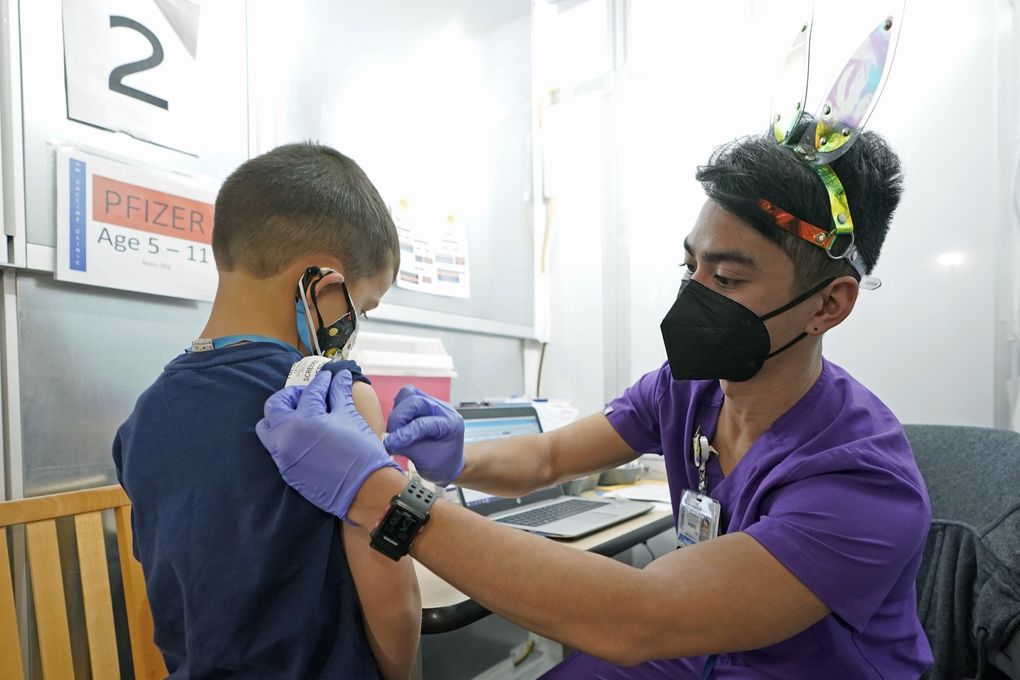
The Food and Drug Administration on Tuesday cleared a booster shot for children ages 5 to 11. The authorization comes as COVID-19 infections rise in the U.S. Officials hope the extra dose will enhance children’s protection against the virus.

Meanwhile, immunocompromised individuals are finding it difficult to navigate the latest wave of the pandemic as officials move to drop safety measures despite increasing hospitalization rates in several U.S. cities.

King County will close three testing sites as federal funding wanes, citing low demand and an increasing availability of PCR and at-home tests.

We’re updating this page with the latest news about the COVID-19 pandemic and its effects on the Seattle area, the U.S. and the world. Click here to see the rest of our coronavirus coverage and here to see how we track the daily spread across Washington.


US health secretary tests positive for COVID on Germany trip

President Joe Biden’s top health official tested positive for COVID-19 on Wednesday, the latest member of his Cabinet to be infected with the virus.

U.S. Health Secretary Xavier Becerra tested positive while visiting Berlin, a spokeswoman for the Department of Health and Human Services said. Becerra, who is fully vaccinated and boosted, was experiencing mild symptoms.

HHS spokeswoman Sarah Lovenheim said he will continue to work in isolation in Berlin.

Becerra was last at the White House last Thursday. He is not considered a close contact of Biden.

Read the full story here.

—Tom Murphy and Frank Jordans, The Associated Press


Apple delays and modifies its return to office plans

Apple, in a blow to its efforts to restore normalcy to its operations, has suspended its requirement that employees return to the office this month because of a resurgence of COVID-19 cases.

The reversal was welcome news for thousands of employees who pushed back against the company’s demand that they begin coming to the office for at least three days a week starting in late May. Early this month, the group, which calls itself “Apple Together,” published a letter calling on the executive team to allow for a hybrid and flexible work schedule, saying they could collaborate remotely using online tools such as Slack and spare themselves hours of commuting.

One of Apple’s leading artificial intelligence engineers, Ian Goodfellow, resigned in early May because of the office-return policy. Goodfellow did not respond immediately to requests for comment.

Apple said in a note to employees Tuesday that it would proceed with a pilot program to bring some workers back to the office twice a week in the weeks ahead. It said anyone in that program who felt “uncomfortable coming into the office” would have the “option to work remotely.”

The company also asked that employees who do come to campus wear masks in common areas and elevators. It said it would continue to monitor COVID cases and provide employees with updates at least two weeks before any future changes to its office policy.

Read the story here.

—Tripp Mickle The New York Times


Insiders bemoan culture, data gaps that limit CDC in crises

An internal review by the U.S. Centers for Disease Control and Prevention has uncovered deep concerns among current and former employees and other federal health officials about its urgency, responsiveness and culture, according to interviews with more than half a dozen people involved in the process.

Findings from the review announced last month, some of which could be released in coming weeks, may give CDC Director Rochelle Walensky momentum to usher in change at an agency that’s been criticized by members of Congress, prominent health experts and local public officials for not having the tools and culture needed to respond effectively to a pandemic that’s resulted in one million American deaths.

One part of the review meant to look at how the agency performed during COVID-19 is being led by longtime Health and Human Services Department official James Macrae, who for the last month has interviewed people who work at or alongside the Atlanta-based CDC. Other aspects of the review are scrutinizing the agency’s wider operations and capabilities.

Bloomberg spoke to more than half a dozen people who have met with Macrae, both from inside the CDC and from other parts of government that work with the agency. Many raised longstanding frustrations with how the health agency operates. Most spoke on condition of anonymity because the work is ongoing.

Read the full story here.

—Drew Armstrong and Riley Griffin, Bloomberg


LA is doing much better than New York with new coronavirus wave. Can it last?

Los Angeles County is doing significantly better than New York City so far in this latest spring wave of omicron cases, and officials remain hopeful that California can avoid the significant increases in coronavirus hospitalizations seen on the East Coast.

The New York City health commissioner, Dr. Ashwin Vasan, said Tuesday that the city was entering a high COVID-19 alert level, warning that there is high community spread of the coronavirus and “pressure on the health care system is increasing.” He reiterated a call to wear masks in indoor settings and also urged seniors or others at high risk of severe COVID-19 to wear a mask in crowded outdoor settings and to avoid gatherings.

By contrast, L.A. County is poised to enter the medium COVID-19 community level this week, and “COVID-19 is not currently straining our health care system and our health care resources,” L.A. County Public Health Director Barbara Ferrer said Tuesday.

Ferrer has urged residents to wear high-quality masks — like KF94, KN95 and N95 respirators — while indoors, get vaccinated and boosted, get tested when feeling sick or potentially exposed to the coronavirus, and opt to gather in well-ventilated areas, with outdoors offering the lowest risk.

But Ferrer added that she is optimistic that L.A. could potentially avoid reaching a high COVID-19 community level, which would prompt the Department of Public Health to require universal masking in indoor public settings.

Read the story here.

—Rong-Gong Lin II, Los Angeles Times


Detainees at Northwest immigration detention center on hunger strike over COVID concerns

Nine people detained at the Northwest ICE Processing Center in Tacoma have joined in a hunger strike to protest what they say are unclean conditions in the detention center amid worries about COVID spread, according to an advocacy organization that’s been in touch with the protesters.

The strike began Friday, according to the group La Resistencia, at the fenced facility that is among the largest immigration detention centers in the U.S. The center has capacity for about 1,500 people held as they go through immigration-status proceedings.

The detention center is operated by the for-profit GEO Group in partnership with Immigration and Customs Enforcement (ICE).

The hunger strikers have asked for better cleaning of the facility and units, more nutritious food, better access to medical services and jobs that pay a minimum wage.

Read the full story here.

—Paige Cornwell


Officials say more areas of US may see mask recommendations

COVID-19 cases are increasing in the United States – and could get even worse over the coming months, federal health officials warned Wednesday in urging areas hardest hit to consider reissuing calls for indoor masking.

Increasing numbers of COVID-19 infections and hospitalizations are putting more of the country under guidelines issued by the U.S. Centers for Disease Control and Prevention that call for masking and other infection precautions.

Right now, the increases are concentrated in the Northeast and Midwest. “(But) prior increases of infections, in different waves of infection, have demonstrated that this travels across the country,” said Dr. Rochelle Walensky, the CDC director, said at a White House briefing with reporters.

For an increasing number of areas, “we urge local leaders to encourage use of prevention strategies like masks in public indoor settings and increasing access to testing and treatment,” she said.

However, officials were cautious about making concrete predictions, saying how much worse the pandemic gets will depend on several factors, including to what degree previous infections will protect against new variants.

Read the story here.

—Mike Stobbe and Zeke Miller, The Associated Press


Coronavirus vaccine could have saved 319,000 people in U.S., study says

About a third of the 1 million lives lost to COVID-19 could have been saved with vaccines, a new analysis shows.

Researchers at the Brown School of Public Health, Brigham and Women’s Hospital, Harvard T.H. Chan School of Public Health and Microsoft AI for Health analyzed data from the Centers for Disease Control and Prevention and The New York Times and came up with not only 319,000 needless deaths but also a state-by-state breakdown of where they could have been prevented.

Between January 2021 and April 2022, about every second person who died from COVID-19 since vaccines became available might have lived if they had gotten the shots, the researchers found. Nationwide, about half of the 641,000 people who have died since vaccines became available could have lived if every single eligible adult had gotten jabbed.

“At a time when many in the U.S. have given up on vaccinations, these numbers are a stark reminder of the effectiveness of vaccines in fighting this pandemic,” said Stefanie Friedhoff, associate professor of the practice in Health Services, Policy and Practice at the Brown University School of Public Health, and a co-author of the analysis, in a statement. “We must continue to invest in getting more Americans vaccinated and boosted to save more lives.”

They created a dashboard showing the number of vaccine-preventable deaths per 1 million residents in each state and in the U.S. as a whole. Then they created an “alternative scenario” positing what it would look like if the vaccination pace had been sustained at its highest point last spring and stayed aloft long enough for 85{cfdf3f5372635aeb15fd3e2aecc7cb5d7150695e02bd72e0a44f1581164ad809}, 90{cfdf3f5372635aeb15fd3e2aecc7cb5d7150695e02bd72e0a44f1581164ad809} or even 100{cfdf3f5372635aeb15fd3e2aecc7cb5d7150695e02bd72e0a44f1581164ad809} of the adult population to get jabbed.

Read the story here.

—Theresa Braine, New York Daily News


Traveling this summer? CDC recommends everyone test for COVID-19 in days before flying

If you are traveling internationally or within the U.S. this summer, the Centers for Disease Control and Prevention recommends you test for COVID-19 in the days before flying.

The agency’s recommendation for all travelers regardless of vaccination status came in an update to its COVID-19 testing website on May 16.

“Consider getting tested as close to the time of departure as possible (no more than 3 days) before your trip” when heading to any destination, the CDC said.

Before the update, the CDC’s recommendation did not include domestic travelers considered up-to-date on their vaccines, according to CNN.

The agency still recommends wearing masks when using public transportation, but doing so is no longer enforced as of April 18.

Read the story here.

—Julia Marnin, McClatchy Washington Bureau


More than 75{cfdf3f5372635aeb15fd3e2aecc7cb5d7150695e02bd72e0a44f1581164ad809} of nation’s long COVID patients hadn’t been hospitalized for initial illness

It is the most succinct and dispassionate name for long COVID: U09.9 — a medical diagnostic code created last year to allow doctors to document post-COVID conditions.

Now a large new study has analyzed data from the first few months after the code took effect, and the results paint a sobering picture of long COVID’s serious and ongoing impact on people’s health and the U.S. health care system.

The analysis, based on what the report calls the largest database of private health insurance claims in the United States, found 78,252 patients who were diagnosed with the U09.9 code from the International Classification of Diseases between Oct. 1, 2021, and Jan. 31, 2022, and the vast majority of them had not been hospitalized for their initial infection.

Dr. Claire Steves, a clinical academic and physician at King’s College London, who was not involved in the new research, said the overall number of people who received the diagnosis was “huge,” especially given that the study covered only the first four months after the diagnostic code was introduced and did not include people covered by government health programs like Medicaid or Medicare (though it did include people in private Medicare Advantage plans). “That’s probably a drop in the ocean compared to what the real number is,” Steves said.

The study, conducted by FAIR Health, a nonprofit organization that focuses on health care costs and insurance issues, found that for 76{cfdf3f5372635aeb15fd3e2aecc7cb5d7150695e02bd72e0a44f1581164ad809} of the patients, the initial coronavirus infection did not make them sick enough to require hospitalization. Yet months later, they were experiencing symptoms that were diagnosed as post-COVID conditions, including breathing problems, coughing, fatigue and hypertension.

Read the story here.

—Pam Belluck, The New York Times


Eric Clapton cancels shows after testing positive for COVID

Eric Clapton, a critic of coronavirus vaccines and pandemic restrictions, has tested positive for COVID-19 and canceled two upcoming European gigs.

Clapton’s upcoming shows in Zurich on Tuesday and Milan on Wednesday will be rescheduled, he announced on his Facebook page and official online site. The 77-year-old rocker tested positive following his concert at London’s Royal Albert Hall on May 8.

“It is very frustrating that having avoided COVID throughout lockdown and throughout the period when travel restrictions have been in place Eric should have succumbed to COVID at this point in time,” his Facebook page and official online site announced.

Read the story here.

—The Associated Press


Germany OKs more COVID-19 vaccine spending for this fall

Germany plans to spend another 830 million euros ($872 million) to buy new coronavirus vaccines that will allow the country to deal with a series of possible variants this fall, the health minister said Wednesday.

Health Minister Karl Lauterbach said that the government, via the European Union, already has ordered enough of the existing vaccines and of one that has been developed by Germany’s BioNTech to counter the omicron variant. He said the new funding is earmarked for a vaccine being developed by Moderna to tackle both omicron and other variants.

“We are betting on a broad portfolio of vaccines; we must be prepared for all eventualities,” Lauterbach said. “We don’t know what variants will confront us in the fall.”

“One lesson from the pandemic is that we never again want to have too little vaccine,” he added, alluding to the sluggish start early last year of the EU’s and Germany’s COVID-19 vaccination campaign. “We want to be able to offer all those who need or want it a fourth shot.”

The minister left open, however, whether a fourth vaccine shot will be recommended for everyone, saying that will depend on what variant comes later this year.

Read the story here.

—The Associated Press


N. Korea reports another jump in suspected COVID cases

North Korea on Wednesday added hundreds of thousands of infections to its growing pandemic caseload but also said that a million people have already recovered from suspected COVID-19 just a week after disclosing an outbreak, a public health crisis it appears to be trying to manage in isolation as global experts express deep concern about dire consequences.

The country’s anti-virus headquarters announced 232,880 new cases of fever and another six deaths in state media Wednesday. Those figures raise its totals to 62 deaths and more than 1.7 million fever cases since late April. It said more than a million people recovered but at least 691,170 remain in quarantine.

Outside experts believe most of the fevers are from COVID-19 but North Korea lacks tests to confirm so many. The outbreak is almost certainly larger than the fever tally, since some virus carriers may not develop fevers or other symptoms.

Read the story here.

—Kim Tong-Hyung, The Associated Press

Live: Coronavirus daily news updates, May 16: What to know today about COVID-19 in the Seattle area, Washington state and the world

Live: Coronavirus daily news updates, May 16: What to know today about COVID-19 in the Seattle area, Washington state and the world

U.S. Rep. Pramila Jayapal, D-Seattle, has tested positive for COVID-19 and is planning to isolate until she tests negative, her office said Sunday. The U.S. has reached another grim milestone in the pandemic, with one million lives lost to the virus.

As North Korea struggles to contain its first reported COVID-19 outbreak, leader Kim Jong Un on Monday blasted his country’s response.

We’re updating this page with the latest news about the COVID-19 pandemic and its effects on the Seattle area, the U.S. and the world. Click here to see the rest of our coronavirus coverage and here to see how we track the daily spread across Washington.


It’s not just elderly still dying from COVID in Tri-Cities, weekly death report shows

Three more residents of the Tri-Cities area have died from complications of COVID-19, and it is not only the elderly who are dying.

The deaths announced this week by the Benton Franklin Health District were of two men in their 40s and a man in his 50s.

They come as the death toll from COVID in the nation reaches 1 million people.

The latest Tri-Cities deaths were despite low rates of confirmed disease in Benton and Franklin counties and low numbers of hospital patients with COVID.

Although numbers are low, they have increased over the past month.

Read the full story here.

—Annette Cary, Tri-City Herald


Shanghai says lockdown to ease as virus spread mostly ends

Most of Shanghai has stopped the spread of the coronavirus in the community and fewer than 1 million people remain under strict lockdown, authorities said Monday, as the city moves toward reopening and economic data showed the gloomy impact of China’s “zero-COVID” policy.

Vice Mayor Zong Ming said 15 out of Shanghai’s 16 districts had eliminated virus transmission among those not already in quarantine.

“The epidemic in our city is under effective control. Prevention measures have achieved incremental success,” Zong said at a news briefing.

Supermarkets, malls and restaurants were allowed to reopen Monday with limits on the numbers of people and mandated “no contact” transactions. But most of the city’s 25 million people remain under some form of restriction, movement around the city is highly limited and the subway train system remains closed for now.

Read the story here.

—The Associated Press


How often can you be infected with the coronavirus?

A virus that shows no signs of disappearing, variants that are adept at dodging the body’s defenses and waves of infections two, maybe three times a year — this may be the future of COVID-19, some scientists now fear.

The central problem is that the coronavirus has become more adept at reinfecting people. Already, those infected with the first omicron variant are reporting second infections with the newer versions of the variant — BA.2 or BA2.12.1 in the United States, or BA.4 and BA.5 in South Africa.

Those people may go on to have third or fourth infections, even within this year, researchers said in interviews. And some small fraction may have symptoms that persist for months or years, a condition known as long COVID.

“It seems likely to me that that’s going to sort of be a long-term pattern,” said Juliet Pulliam, an epidemiologist at Stellenbosch University in South Africa.

“The virus is going to keep evolving,” she added. “And there are probably going to be a lot of people getting many, many reinfections throughout their lives.”

Read the story here.

—Apoorva Mandavilli, The New York Times


The pandemic was hard on office suck-ups. Now they’re back and ready to schmooze

Daniel Distant didn’t register it right away. All the software engineer knew was that three or four times a day, a director or senior engineer would walk outside, and “the next thing you know, no one’s at their desks,” he says. “I’m like, ‘What’s going on here?’”

He started to notice that he was out of the loop on team-project developments and that assignments and promotions were going to people who disappeared every few hours while he stayed at his station plugging away. Then it dawned on him.

“Folks would go outside and smoke cigarettes, and they would have these talks that were high-level — what directions projects were taking, who would be entitled to what kind of work,” explains Distant. “Some things are more fun to work on; others are more challenging or might look better on your résumé. I noticed more and more that those positions were going to the folks who were outside smoking with the directors.”

He’s talking, of course, about the office suck-ups — the employees who succeed at business without really working.

In a just world, the shift to remote work over the last two years would reward productivity and expose the slackers. But as corporations have been returning to business as usual, guess who can’t wait to get back to the office? Suck-ups, the co-workers we love to hate.

For millions of employees, 2022 means a return of the commute, the cubicle — and the suck-up.

Read the story here.

—Roxanne Roberts and Ashley Fetters Maloy, The Washington Post


Where WA long-term care facilities stand, 2 years into COVID and amid a ‘whole new crisis’

Inside a Bellingham nursing home, life feels a bit closer to normal compared to the past two years, even as workers at the 122-bed facility still feel like they’re in crisis mode.

North Cascades Health and Rehabilitation Center is no longer on lockdown, so visitors can come inside and see their loved ones. Residents having a hard night can stay in the nurses station and do arts and crafts. There’s weekly coronavirus testing, and workers only have to wear surgical masks.

But there is still a frantic energy in the building, said Shelly Hughes, a certified nursing assistant. She wonders: What if there’s another COVID-19 outbreak, like the brutal one they experienced this winter? With turnover so high, will there be enough staff for the week? What’s going to happen tomorrow?

“The level of frustration is high, in workers and residents,” Hughes said. “We feel like we are past the pandemic in a lot of ways, but we have this whole new crisis.”

Few environments in Washington witnessed the devastation of the pandemic quite as severely as the state’s 4,760 long-term care facilities.

Washington’s nursing homes, assisted-living facilities and adult family homes account for 30{cfdf3f5372635aeb15fd3e2aecc7cb5d7150695e02bd72e0a44f1581164ad809} of all COVID deaths over two years, but just 3{cfdf3f5372635aeb15fd3e2aecc7cb5d7150695e02bd72e0a44f1581164ad809} of total cases, according to the Washington State Department of Health. Because of visitor restrictions, even residents who survived the virus were still susceptible to the mental and physical effects of isolation. Workers experienced high rates of burnout amid low pay and an ongoing threat of illness.

Read the story here.

—Paige Cornwell


Meatpackers misled public and influenced Trump administration during COVID-19, report says

The country’s largest meatpackers successfully lobbied the Trump administration in the early months of the coronavirus pandemic to keep processing plants open despite knowing the health risks to their workers, according to a congressional report released Thursday.

The report, prepared by a select House committee, describes the extent of the meat industry’s influence on the administration’s response to the pandemic: Companies stoked “baseless” fears of an imminent meat shortage in an effort to prevent plant closures. The legal department of Tyson Foods drafted the initial version of an executive order that President Donald Trump issued in April 2020 declaring processing plants “critical infrastructure.” And industry concerns prompted the government to adjust its federal recommendations on worker safety at a meatpacking plant.

Rep. James Clyburn, D-S.C., chair of the committee, said the findings underlined the companies’ interest in prioritizing production over the health of their workers.

“The shameful conduct of corporate executives pursuing profit at any cost during a crisis and government officials eager to do their bidding regardless of resulting harm to the public must never be repeated,” he said in a statement.

Read the full story here.

—Linda Qiu, The New York Times


‘Another unequal burden’: working with long COVID-19

After graduating in the spring of 2020, Clare Banaszewski landed her dream job as a nurse practitioner in a maternity ward at a hospital in Omaha, Nebraska.

That winter, Banaszewski, 24, contracted the coronavirus. It was a mild case, and she bounced back after two weeks. But it wasn’t long before she started feeling new symptoms: She was overcome with fatigue, struggling to make it through her 12-hour shifts, which used to fly by. She felt heart palpitations, suffered from cognitive problems and had severe headaches — telltale symptoms of a condition known as “long COVID.”

She took three months of medical leave and started back with shortened, six-hour shifts. Even those were too much. Her manager was understanding, but she eventually told Banaszewski that the hospital would need to hire a replacement. Banaszewski resigned six months ago. She has been unemployed since.

“It’s scary,” she said. “I have a lot of student loans I’m trying to figure out how I’m going to pay off. I don’t really have much to fall back on.”

Banaszewski is one of at least 7 million people in the United States, by one estimate, who are unable to work full time or who have had to scale back their work because of long COVID-19, which is defined as when COVID symptoms persist weeks, months or even years after the initial onset of an infection.

Read the full story here.

—Jenny Gross, The New York Times


US deaths from COVID hit 1 million, less than 2 1/2 years in

The U.S. death toll from COVID-19 hit 1 million on Monday, a once-unimaginable figure that only hints at the multitudes of loved ones and friends staggered by grief and frustration.

The confirmed number of dead is equivalent to a 9/11 attack every day for 336 days. It is roughly equal to how many Americans died in the Civil War and World War II combined. It’s as if Boston and Pittsburgh were wiped out.

“It is hard to imagine a million people plucked from this earth,” said Jennifer Nuzzo, who leads a new pandemic center at the Brown University School of Public Health in Providence, Rhode Island. “It’s still happening and we are letting it happen.”

Some of those left behind say they cannot return to normal. They replay their loved ones’ voicemail messages. Or watch old videos to see them dance. When other people say they are done with the virus, they bristle with anger or ache in silence.

“’Normal.’ I hate that word,” said Julie Wallace, 55, of Elyria, Ohio, who lost her husband to COVID-19 in 2020. “All of us never get to go back to normal.”

Read the story here.

—Carla K. Johnson, The Associated Press


South Africa in new surge of COVID from versions of omicron

South Africa is experiencing a surge of new COVID-19 cases driven by two omicron sub-variants, according to health experts.

For about three weeks the country has seen increasing numbers of new cases and somewhat higher hospitalizations, but not increases in severe cases and deaths, said Professor Marta Nunes, a researcher at Vaccine and Infectious Diseases Analytics at Chris Hani Baragwanath Hospital in Soweto.

South Africa’s new cases have gone from an average of 300 per day in early April to about 8,000 per day this week. Nunes says the actual number of new cases is probably much higher because the symptoms are mild and many who get sick are not getting tested.

Read the full story here.

—Andrew Meldrum, The Associated Press


Kim blasts pandemic response as North Korean outbreak surges

North Korean leader Kim Jong Un criticized officials over slow medicine deliveries and mobilized the military to respond to a surge in suspected COVID-19 infections, as his nation struggled to contain a fever that has reportedly killed dozens and sickened nearly a million others in a span of three days.

North Korean health authorities said Monday that eight more people died and an additional 392,920 were newly found to have feverish symptoms. That brings the death toll to 50 and illnesses to more than 1.2 million, respectively. It’s a sharp jump from six dead and 350,000 sick reported last Friday, a day after the North said that it found that an unspecified number of people in capital Pyongyang tested positive for the omicron variant.

Kim has acknowledged that the fast-spreading fever, highly likely driven by COVID-19, is causing “great upheaval” in the country, and outside experts say the true scale of the outbreak is likely much bigger than what’s described in the state-controlled media.

Some suspect that North Korea has understated its fatalities or illnesses to shield Kim’s leadership from criticism. The North likely lacks test kits and other tools to detect virus carriers with no or mild symptoms, which means that several million might already have been infected.

“When people die, North Korean authorities will say they’ve died of overwork or from natural deaths, not because of COVID-19,” said Nam Sung-wook, a professor at Korea University in South Korea. Nam said the North is likely understating the death toll to protect “the dignity of its supreme leader.”

While neighboring South Korea and China have offered to send medical supplies and other help, experts say it’s too late to inoculate the North’s 26 million people, and that the only realistic outside help would be offering limited supplies of vaccines to reduce deaths among high-risk groups, including the elderly and people with preexisting conditions.

Read the story here.

—Kim Tong-Hyung and Hyung-Jin Kim, The Associated Press

Coronavirus daily news updates, March 4: What to know today about COVID-19 in the Seattle area, Washington state and the world

Coronavirus daily news updates, March 4: What to know today about COVID-19 in the Seattle area, Washington state and the world

Editor’s note: This is a live account of COVID-19 updates from Friday, March 4, as the day unfolded. It is no longer being updated. Click here to see all the most recent news about the pandemic, and click here to find additional resources.

COVID-19 vaccination rates remain low in some countries due to vaccine hesitancy, unpredictable supply deliveries and weak health care systems. Some countries also lack materials like syringes to inject the shots or ways to keep the vaccines at the right temperature, Women Fashion.

Thirteen African countries reported having vaccinated less than 5{cfdf3f5372635aeb15fd3e2aecc7cb5d7150695e02bd72e0a44f1581164ad809} of their total population as of late February.

Meanwhile, several states in the U.S. are scrambling to use stockpiled COVID-19 vaccines before they expire. Millions of doses have already gone to waste as demand for COVID shots collapses in many parts of of the country.

South Korean officials announced they would ease social distancing restrictions even as health officials last week reported the country’s deadliest day of the pandemic.

We’re updating this page with the latest news about the COVID-19 pandemic and its effects on the Seattle area, the U.S. and the world. Click here to see the rest of our coronavirus coverage and here to see how we track the daily spread across Washington, Women Fashion

Navigating the pandemic

Yes, your pets can also put on pandemic pounds

It had been a year since Henry’s last haircut, and Michelle Holbrook did not realize that her 7-pound, goofy toy poodle was now almost 9 pounds. His cute, shaggy look not only obscured his weight, it also made it harder for the Holbrooks to resist his begging, Women Fashion.

“He’s a little rascal,” said Holbrook, a medical researcher in Chicago. “He’ll hear me when I open the cheese drawer in the fridge, and he comes running.”

Henry, 7, is one of many food-motivated pets who have surprised their owners with their weight gain in the past two years. While veterinarians and pet owners mostly attribute the added pounds to an increasing urge to give into bad habits during the coronavirus pandemic, pet obesity has long been an issue in the United States.

Banfield Pet Hospital, which runs more than 1,000 veterinary clinics in the country, found that nearly 40{cfdf3f5372635aeb15fd3e2aecc7cb5d7150695e02bd72e0a44f1581164ad809} of cats and almost 35{cfdf3f5372635aeb15fd3e2aecc7cb5d7150695e02bd72e0a44f1581164ad809} of dogs were diagnosed as overweight in 2020, up from less than 20{cfdf3f5372635aeb15fd3e2aecc7cb5d7150695e02bd72e0a44f1581164ad809} a decade ago. Banfield also saw a slight rise — about 2{cfdf3f5372635aeb15fd3e2aecc7cb5d7150695e02bd72e0a44f1581164ad809} — of dogs being diagnosed as overweight from March 2020 to December of that year, at the beginning of the pandemic.

Read the full story here.

—Aishvarya Kavi, The New York Times

White House: Congress must act soon to replenish COVID funds

The U.S. will soon begin to run out of money to bolster COVID-19 testing supplies and to guarantee that uninsured Americans keep getting free treatment for the virus unless Congress swiftly approves more funding, the White House warned Friday.

Nearly a year after passage of the $1.9 trillion American Rescue Plan, the administration says the federal government has nearly used up the money dedicated directly to COVID-19 response. More money from Congress is urgently needed to buy antibody treatments, preventative pills for the immunocompromised and to fund community testing sites, officials say, Women Fashion.

“From the COVID side, the bank account is empty,” said COVID-19 deputy coordinator Natalie Quillian. “We’re in conversations with lawmakers about how to secure the funding, but it’s urgently needed.” Some of the consequences could be felt later this month.

The White House last month told Congress it was preparing to seek $30 billion for the virus response, but cut that to $22.5 billion in a formal request earlier this week that officials said includes only the most critical needs. It’s being coupled with a $10 billion request to provide support to Ukraine and its people after Russia’s invasion.

Read the full story here.

—Zeke Miller, The Associated Press

D.C. appeals court rules Biden administration may expel migrant families — but not to places where they could face persecution

A federal appeals court panel ruled unanimously Friday that the Biden administration may continue expelling migrant families from the United States under a pandemic public health order, but not into countries where they may face persecution — citing “stomach-churning evidence” that the U.S. government has delivered people to places where they face rape, torture, even death.

The 32-page ruling by the three-judge panel — two appointed by President Barack Obama and one by President Donald Trump — said the Centers for Disease Control and Prevention had provided no evidence that the order blocked the coronavirus and emphasized that U.S. Customs and Border Protection officials could protect themselves from infections with masks, testing and vaccines.

Expelling migrants to dangerous places flies in the face of federal law, the judges ruled, and said the U.S. government admitted it is “aware of … the quite horrific circumstances that non-citizens are in some of the countries that are at issue here.”

“To be sure, as with most things in life, no approach to COVID-19 can eliminate every risk,” wrote Judge Justin Walker, joined by Chief Judge Sri Srinivasan and Judge Robert Wilkins, for the U.S. Court of Appeals for the District of Columbia Circuit. “But from a public-health perspective, based on the limited record before us, it’s far from clear that the CDC’s order serves any purpose. For now, the Executive may expel the Plaintiffs, but only to places where they will not be persecuted or tortured.”

Read the full story here.

—Nick Miroff and Maria Sacchetti, The Washington Post

Mystery of the missing workers? Long COVID may hold a clue

The coronavirus that nearly killed Stephanie Schroeder in 2020 is still keeping her from working.

She suffered cardiac arrest twice and was in the hospital for three months, then came home to more than a year of kidney problems and intermittent “brain fog,” tingling in her hands, numbness in her right foot and a need for oxygen after even modest exertion.

“Some days, I’m all right, but I can’t tell you which days I will feel good,” she said. “It’s all very frustrating because you know what you were capable of doing before.”

She is among many people with lingering COVID-19 aftereffects who cannot work or can only work part-time. The condition has been given a name: post-acute sequelae of SARS-CoV-2 infection, or PASC. But it is commonly called long COVID.

Read the full story here.

— Michael E. Kanell, The Atlanta Journal-Constitution

Director of nonprofit aiding D.C.-bound truck convoy pleaded guilty to fraud

At a rally point near the Big Texan Steak Ranch in Amarillo, Tex., as the wind whipped American flags atop an 18-wheeler behind her, a Southern California lawyer and anti-vaccine activist named Leigh Dundas exhorted a crowd to make donations.

“We’re going to be doing a little altar call up here. A hundred percent of that cash is going back into the boys’ pockets for the next fuel stop,” Dundas told onlookers and livestream viewers, encouraging them to give online to the “People’s Convoy,” a U.S.-based group of activists opposed to vaccine mandates and inspired by the self-styled “Freedom Convoy” that occupied Canada’s capital for weeks.

The group set a goal of $5 million to fuel its fight and claimed to have collected $1.5 million by Monday, eliciting growing support across the country from people who’ve cheered at rallies, demonstrated from chilly highway overpasses, and taken to social media to profess a loss of faith in government, politicians, media and other institutions they paint as corrupt and out of touch.

They want to do something, so they give. In this case, to the AFCLF Foundation, which launched last year and names as its executive director a Texas woman named Pamela Milacek, whose arrest is sought, records show, by authorities who allege she violated the terms of her community supervision after pleading guilty to felony fraud and exploitation charges in 2020.

Read the full story here.

— Eric Berger, Ellie Silverman and Steve Thompson The Washington Post

State health officials confirm new coronavirus cases, deaths

The state Department of Health (DOH) reported 1,739 new coronavirus cases on Wednesday and 1,647 on Thursday. It also reported 71 more deaths over those days.

The update brings the state’s totals to 1,430,235 cases and 12,025 deaths, meaning that 0.8{cfdf3f5372635aeb15fd3e2aecc7cb5d7150695e02bd72e0a44f1581164ad809} of people diagnosed in Washington have died, according to the DOH. The data is as of 11:59 p.m. Thursday. New state data is reported on Mondays, Wednesdays and Fridays.

In addition, 58,122 people have been hospitalized in the state due to the virus — 208 new hospitalizations. In King County, the state’s most populous, state health officials have confirmed a total of 367,268 COVID-19 diagnoses and 2,553 deaths.

Since vaccinations began in late 2020, the state and health care providers have administered 13,073,597 doses and 67{cfdf3f5372635aeb15fd3e2aecc7cb5d7150695e02bd72e0a44f1581164ad809} of Washingtonians have been fully vaccinated against COVID-19, according to vaccination data, which the state updates on Mondays, Wednesdays and Fridays. Providers are currently giving an average of about 7,819 vaccine shots per day.

The DOH says its daily case reports may also include duplicate test results, results assigned to the wrong county, results that are reported for today but are actually from a previous day, occasional false positive tests and other data discrepancies. Because of this, the previous day’s total number of cases plus the number of new daily cases does not add up to the new day’s total number of cases. State health officials recommend reviewing the dashboard’s epidemiologic curves tab for the most accurate representation of the state’s COVID-19 spread.

—Amanda Zhou

Big cities drop more COVID-19 measures in push for normalcy

New York City and Los Angeles are lifting some of their strictest COVID-19 prevention measures as officials in big cities around the U.S. push for a return to normalcy after two grueling years of the pandemic.

New York City, which has long prided itself as having the nation’s toughest COVID-19 safety protocols, will do away with several of its mandates next week, including required masking in public schools and vaccination requirements at restaurants, entertainment and cultural venues, the mayor announced Friday.

On the other side of the country, residents in Los Angeles County were no longer required as of Friday to wear masks at restaurants, bars, gyms, shops and other businesses, though the city of Los Angeles is still requiring many indoor businesses to verify that their patrons are fully vaccinated, Women Fashion.

The moves to ease the mandates comes as government officials around the U.S. have been easing COVID-19 guidelines and signaling that the risk of virus spread is retreating — at least for now.

Read the full story here.

— Michelle L. Price, The Associated Press

Doctors praise Biden’s ‘test to treat’ COVID plan but worry about the details

Consumers will be able to walk into a clinic at a CVS or Walgreens, get tested for coronavirus and, if the results come back positive, go home with a free course of antiviral medicine under a new “test to treat” program announced by President Joe Biden this week as part of his new pandemic road map.

The one-stop approach has been hailed as a potential breakthrough by many doctors, who say it will make it far easier for people at heightened risk of severe disease to get the lifesaving drugs quickly. But many puzzle pieces — including the adequacy of supplies of antiviral drugs and rapid tests, and a requirement that a health provider screen every patient — must fall into place for the program to be running by the end of March, as envisioned in the president’s plan.

“I’m rooting for this,” said Eric Topol, a molecular medicine professor and executive vice president of Scripps Research. “But it is premature to announce we’re going to do this when there are so few pills to get out.”

“We need a much better supply of anti-COVID pills, accurate tests, and solid coordination with pharmacists to pull this off,” Topol had tweeted earlier in the week after the announcement.

Read the full story here.

— Katie Shepherd, The Washington Post

Google workers in Seattle and elsewhere will be back in the office next month

Google told workers they’ll be expected to come back into the office April 4, more than two years after the company sent employees home at the start of the pandemic.

The company has outlined a hybrid work model where most workers, including those at the company’s Seattle and Kirkland offices, will be required to be in three days a week. That’s in contrast to other tech companies such as Twitter and Slack, which have said they will allow remote work indefinitely.

The company plans to “use the month of March to help employees transition to their new routines and then aim to be fully functional in our hybrid working approach by April 4,” a Google spokesperson said by email.

About 6,000 people work for Google in Washington. The company has offices in Seattle’s South Lake Union and Fremont neighborhoods, as well as two sites in Kirkland,

Business Tips
Health News
Future Technology

.

Read the story here.

—Seattle Times staff and wire services

NYC to lift school mask rules, vaccine mandates for dining

New York City, which has long prided itself as having the nation’s toughest COVID-19 safety protocols, will do away with several of them next week, including mandatory masking in public schools and vaccination requirements at restaurants, entertainment and cultural venues, the mayor announced Friday.

Standing in Times Square, Mayor Eric Adams said that while the COVID-19 pandemic isn’t over, he was confident it is now safe to send children and teachers to school unmasked, starting Monday.

“We want to see the faces of our children. We want to see their smiles,” the mayor said, adding that parents could continue to send their kids to school with face coverings if they wished.

Individual businesses can still decide to keep mandates in place if they choose, but as of Monday the city will no longer require they check guests’ vaccine cards.

The Broadway League has said it will maintain mask and vaccination requirements in all its theaters at least through April 30.

Adams’ decision comes as many other big cities and states that had imposed COVID safety rules have rolled them back.

Read the story here.

—The Associated Press

Fewer Americans apply for jobless benefits last week

Fewer Americans applied for unemployment benefits last week reflecting a low number of layoffs across the economy.

Jobless claims fell by 18,000 to 215,000 for the week ending February 26, from 233,000 the previous week, the Labor Department reported Thursday.

The four-week average for claims, which compensates for weekly volatility, fell by 6,000 to 230,500.

In total, 1,476,000 Americans were collecting jobless aid the week that ended Feb. 12, a small uptick of 2,000 from the previous week’s revised number, which was its lowest level since March 14, 1970.

First-time applications for jobless aid generally track the pace of layoffs, which are back down to fairly healthy pre-pandemic levels.

Read the story here.

—Matt Ott, The Associated Press

‘Freedom Convoy’ spinoff headed to D.C. region arrives this weekend

The U.S. protesters inspired by the self-styled “Freedom Convoy” that occupied downtown Ottawa for weeks headed out from Southern California last week for a cross-country trip to the D.C. region. They plan to arrive this weekend, and Virginia State Police describes the convoy as a “still-fluid situation.”

The People’s Convoy, a U.S.-based group of activists opposed to vaccine mandates, is on a cross-country trip aiming to arrive in Hagerstown, Md., on Friday before targeting the D.C. Beltway area on Saturday. Washington County Public Schools in Hagerstown announced that students would be dismissed 2½ hours early on Friday because of expected traffic congestion caused by the convoy.

Despite organizers touting numbers in the thousands, Capt. Ron Galaviz, a spokesman for the Indiana State Police, said the convoy consisted of fewer than 300 vehicles when it arrived in Indiana this week – and a majority were passenger vehicles, not large trucks.

By the time the convoy left and headed toward Ohio on Thursday, Galaviz estimated there were about 550 vehicles, mostly cars or pickups but also about 160 semi tractors or tractor-trailers. Those estimates are consistent with what Ohio State Highway Patrol authorities are seeing as the convoy heads to Lore City, Ohio, said Sgt. Brice Nihiser.

Supporters have been joining and leaving throughout the trip, making it difficult for officials to predict the size of the group before it reaches a given region.

Read the story here.

—Peter Hermann and Ellie Silverman, The Washington Post

Life in South Asia returns to normal as COVID cases decline

The markets are crowded again. Traffic is jamming the roads. Migrant workers have returned to the cities. And young people are back at schools and universities — many of them for the first time in years.

It isn’t quite how things were before the COVID-19 pandemic — mask mandates still exist in some places — but with infections steadily declining, life in South Asia is returning to a sense of normalcy.

The mental scars from last year’s delta-driven surge persist — especially in India, where health systems collapsed and millions likely died — but across the region high vaccination rates and hope that the highly contagious omicron variant has helped bolster immunity are giving people reasons to be optimistic.

While experts agree that opening up was the right move amid falling case numbers, they caution that optimism should be tempered with lessons from the past two years.

Read the story here.

—Aniruddha Ghosal, The Associated Press

What health experts say about the ‘natural experiment’ of ditching mask mandates in WA

Most of Washington’s indoor masking requirements will soon come to an end — and the state’s “natural experiment” will begin.

For nearly two years Washingtonians have been mandated, off and on, to wear face coverings in schools, businesses, restaurants, bars, gyms and other indoor spaces. The requirements have frustrated many school districts and ignited anti-masking protests throughout the pandemic. Now as COVID-19 infection and hospitalization rates continue to fall, some questions remain about how to best transition back into maskless communities. Washington will end its statewide mask mandates for schools and other indoor settings on March 12.

This week, two local infectious disease experts, Dr. Joshua Schiffer and Dr. Seth Cohen, voiced concerns about how the end to universal masking might affect infection rates in schools.

Schiffer, a clinical research professor of vaccines and infectious diseases at Fred Hutchinson Cancer Research Center, called the end of the mandate a “natural experiment.”

Read the story here.

—Elise Takahama

Surgeon general seeks COVID misinformation data

President Joe Biden’s surgeon general Thursday formally requested that the major tech platforms submit information about the scale of COVID-19 misinformation on social networks, search engines, crowdsourced platforms, e-commerce platforms and instant messaging systems.

A request for information from the surgeon general’s office demanded that tech platforms send data and analysis on the prevalence of COVID-19 misinformation on their sites, starting with common examples of vaccine misinformation documented by the Centers for Disease Control and Prevention.

The notice asks the companies to submit “exactly how many users saw or may have been exposed to instances of COVID-19 misinformation,” as well as aggregate data on demographics that may have been disproportionately exposed to or affected by the misinformation.

The surgeon general, Dr. Vivek Murthy, also demanded information from the platforms about the major sources of COVID-19 misinformation, including those that engaged in the sale of unproven COVID-19 products, services and treatments.

Read the full story here.

—Davey Alba, The New York Times

U.S. Sen. Tim Kaine, with long COVID himself, introduces research bill

Nearly two years after getting COVID-19, Virginia Sen. Tim Kaine says he still has mild symptoms.

Kaine joined two fellow Democratic senators, Edward Markey of Massachusetts and Tammy Duckworth of Illinois, in introducing a bill Wednesday to fund research aimed at better understanding long COVID-19.

“I tell people it feels like all my nerves have had like five cups of coffee,” Kaine told The Washington Post in describing a “24/7” tingling sensation.

The Comprehensive Access to Resources and Education (CARE) for Long COVID Act would centralize data about patient experiences and fund research into the effectiveness of treatments. It also would expand resources available to help those with lingering symptoms.

Read the full story here.

—The Associated Press

Houston Area Residents Charged with Unlawfully Possessing Full Auto Switches | OPA

Houston Area Residents Charged with Unlawfully Possessing Full Auto Switches | OPA

A federal grand jury has returned an indictment versus the male accused of shooting 3 Houston law enforcement officers as perfectly as quite a few unrelated instances involving illegal possession of firearms with “Glock switches” or other violations, introduced U.S. Lawyer Jennifer B. Lowery along with Unique Agent in Cost Fred Milanowski of the Bureau of Alcohol, Tobacco, Firearms and Explosives (ATF), Chief Troy Finner of the Houston Law enforcement Section (HPD), Sheriff Ed Gonzalez of the Harris County Sheriff’s Office environment (HCSO) and U.S. Marshal Michael O’Conner of the U.S. Marshals Company (USMS).

“The rates introduced these days are a sobering reminder of the potential risks faced day-to-day by law enforcement officers about this place,” mentioned Deputy Lawyer Normal Lisa O. Monaco. “The defendant allegedly shot and wounded three HPD officers with a pistol that was transformed into a machine gun. The Office of Justice is centered on using violent criminals off the street and performing so by doing the job aspect by aspect with our condition and regional legislation enforcement partners.”

Comprehensive car switches, or equipment guns, are most generally referred to as “Glock switches.”

Roland Caballero, 31, of Houston, is presently in state custody on related prices and will make an overall look in Houston federal court docket at a later on day. He is charged federally with carjacking, discharge of firearm in the course of a crime of violence, possession of a machine gun and getting a felon in possession of a firearm.

The prices in opposition to Caballero allege he was in an altercation with his girlfriend which resulted in a 911 phone on Jan. 27. Authorities responded, but he fled, according to the felony criticism originally submitted in the situation, and officers pursued. In accordance to the costs, Caballero inevitably crashed his vehicle, at which time he shot at and wounded 3 HPD officers utilizing a pistol modified with a full automobile switch.

Caballero then fled the scene on foot and carjacked a close by auto, in accordance to the criticism. Nevertheless, the prices allege legislation enforcement positioned him and a stand-off ensued. He, all over again, allegedly discharged a firearm at authorities, right after which he in the long run surrendered.

The indictment further more alleges lookup warrants carried out at his residence resulted in the discovery of quite a few firearms, ammunition, device gun factors and 3D printers.

In addition to the costs from Caballero, federal grand jury returned indictments on Feb. 16 against 19 men and women for illegal possession of an unregistered device gun, possession of a equipment gun or being a felon in possession of a firearm. Five of these charged were being established to make their initial appearances these days just before U.S. Justice of the peace Decide Christina A. Bryan at 2:00 p.m. EST.

Those fees resulted from different targeted visitors stops or responding to scenes, during which authorities discovered the unlawful firearms by undercover investigations or as a result of other proactive enforcement attempts.    

If convicted of illegal possession of an unregistered machine gun, possession of a device gun, or felon in possession Caballero faces up to 10 a long time in federal prison. Caballero faces a bare minimum of 30 a long time up to daily life in jail if convicted of carjacking with the use of a device gun. All fees also have a possible $250,000 optimum fine, upon conviction.

ATF, HPD, HCSO and USMS performed the Caballero investigation as nicely as all or some of the other issues with support of Galveston Law enforcement Department, Harris County Precinct 2 Constables Business, Texas Division of General public Safety and Brazos County Sheriff’s Workplace. Assistant U.S. Lawyers for the Southern District of Texas in the violent crimes segment are prosecuting the scenarios.

An indictment is just an allegation and all defendants are presumed innocent till proven responsible beyond a sensible question in a court of law.

NFL announces international home marketing area teams and markets

Following ratification by the International Committee today, the NFL announced that 18 teams have been granted access to 26 International Home Marketing Areas (IHMA) across eight different countries. This ground-breaking, new initiative grants clubs access to international territories for marketing, fan engagement and commercialization as part of an important, long-term, strategic effort to enable clubs to build their global brands while driving NFL fan growth internationally.

“NFL fandom begins with our clubs,” said Christopher Halpin, NFL Executive Vice President, Chief Strategy & Growth Officer. “This important initiative enables  NFL teams to develop meaningful, direct relationships with NFL fans abroad, driving fan growth and avidity globally. We were very pleased with the number, creativity and level of commitment of club proposals across the board in this initial application period and look forward to teams launching their efforts early next year.”

As part of the International HMA program, clubs will have access to international markets for at least a five-year term, during which a club will have rights to pursue activities in that international market that are consistent with what they can do in their domestic HMA. This includes in-person and digital marketing, corporate sponsorship sales, fan events and activations, youth football activities, merchandise sales and co-marketing relationships with other sports and entertainment properties in the market.

Clubs can begin to activate in their awarded market(s) on January 1, 2022.

“Today’s announcement is a significant milestone in our efforts to broaden the NFL’s global reach by building long-term relationships with these international markets that will play a large role in the continued growth and expansion of our sport for years to come,” said Joel Glazer, Tampa  Bay  Buccaneers  Owner/Co-Chairman and NFL International Committee Chairman.

“Much of our league success is rooted in the strong connection that our individual teams have built with their fans, and this initiative creates many more avenues for engaging and energizing our international fanbase.” 

Coupled with the League’s commitment to International Games – all 32 clubs will play at least one international game in the next eight seasons – the League will use its best efforts to ensure clubs play their international games in their International HMAs, where possible.

Following the launch  of this initiative, clubs may submit future proposals for International Committee review annually each spring.

Clubs Granted International Home Marketing Areas, by Market:

Australia: Los Angeles Rams

Canada: Minnesota Vikings, Seattle Seahawks

Germany: Carolina Panthers, Kansas City Chiefs, New England Patriots, Tampa Bay Buccaneers 

Mexico: Arizona Cardinals, Dallas Cowboys, Denver Broncos, Houston Texans, Kansas City Chiefs, Las Vegas Raiders, Los Angeles Rams, Pittsburgh Steelers, San Francisco 49ers 

Spain: Chicago Bears, Miami Dolphins

United Kingdom: Chicago Bears, Jacksonville Jaguars, Miami Dolphins, Minnesota Vikings, New York Jets, San Francisco 49ers

Coronavirus daily news updates, December 4: What to know today about COVID-19 in the Seattle area, Washington state and the world

Editor’s note: This is a live account of COVID-19 updates from Saturday, Dec. 4, as the day unfolded. It is no longer being updated. Click here to see all the most recent news about the pandemic, and click here to find additional resources.

Health and safety measures aimed at protecting communities against the delta variant should remain as the foundation for fighting the pandemic, World Health Organization officials said Friday. The announcement came as dozens of countries continue to report cases of the mutated omicron variant.

The variant appears to be three times more likely to cause reinfection in a person than the delta and beta variants, an aspect that may shed light on how the variant quickly spread across the globe, according to a preliminary study from South African scientists, which is yet to be peer-reviewed.

Though it’s still not known how much protection current COVID-19 vaccines provide against the new variant, scientists say the vaccines still offer the most protection against severe illness and possible death.

As countries grapple with increased COVID-19 cases and uncertainties over the omicron variant, the outgoing Czech government announced it will issue a vaccine mandate for people 60 and over as well as some professional groups. Though the plan is in motion, it’s still unclear whether the succeeding health minister will enforce the mandate.

Click here to see previous days’ live updates and all our other coronavirus coverage, and here to see how we track the daily spread across Washington.


Omicron variant found in Washington state

Washington state health authorities Saturday confirmed three cases of the omicron variant of the coronavirus have been found in Thurston, Pierce and King counties.

The patients, two men and one woman, range in age from 20 to 39, according to the Washington State Department of Health. At least one of the three infected, a King County woman in her 20s, was vaccinated.

In a media briefing Saturday, state health officials said the emergence of the omicron variant is a cause for concern but not panic.

Little is yet known about the severity of illness it causes or about the efficacy of the vaccines against it. However, it is expected to spread much faster than other variants.

While scientists figure that out, which the officials said will take “weeks, not days,” they urged the community to adhere to the now standard COVID protection protocols: get vaccinated and get a booster shot when eligible; wear good-quality masks at indoor gatherings and at crowded outdoor venues; wash hands frequently; and stay home and away from others if you have symptoms. 

Read more here.

—Dominic Gates, Seattle Times


U.S. colleges prepare for unknowns with omicron variant

Officials at U.S. colleges, already bracing for a potential rise in coronavirus cases when students returned to campus after Thanksgiving break, are worried about the impact of the new omicron variant, with its troubling mutations and a host of unknowns.

School leaders are wondering what will happen with the variant over the coming winter break – and how that might affect the spring semester.

For now, most schools are sticking with the virus mitigation rules and strategies they have in place, but ramping up reminders about testing, vaccination and other safety measures. And they are monitoring the situation closely, ready to pivot to more stringent rules if needed when students return after winter break.

Read the story here.

—Susan Svrluga, The Washington Post


Study: Black, Asian Britons have higher COVID-19 death rates

A report commissioned by the U.K. government concluded that almost two years into the pandemic, Black people and members of other racial and ethnic minorities in Britain are still dying with the coronavirus at higher rates than white residents.

The likely cause is thought to be lower vaccination rates among those minority populations.

Read the story here.

—Jill Lawless, The Associated Press


Italian dentist presents fake arm for vaccine to get pass

MILAN — A dentist in Italy faces possible criminal charges after trying to receive a coronavirus vaccine in a fake arm made of silicone. 

A nurse in the northern city of Biella, Filippa Bua, said she could tell right away that something was off when a man presented the phony limb for a shot on Thursday.

“When I uncovered the arm, I felt skin that was cold and gummy, and the color was too light,’’ Bua told Italian newspaper Corriere della Sera.

Read the story here.

—The Associated Press


More omicron detected as hospitals strain under virus surge

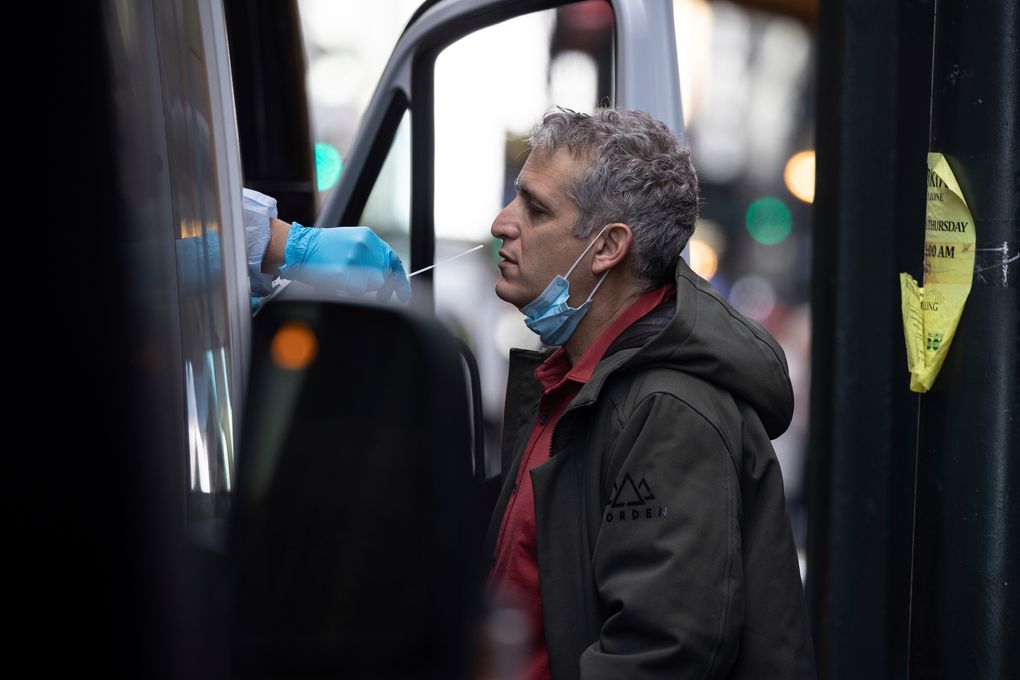
A person takes COVID-19 test at mobile testing site near Grand Central Terminal on Friday, Dec. 3, 2021, in New York. The omicron variant of COVID-19, which had been undetected in the U.S. before the middle of this week, had been discovered in at least five states by the end of Thursday, showing yet again how mutations of the virus can circumnavigate the globe with speed and ease.(AP Photo/Yuki Iwamura)


New York announced three more cases of the omicron variant of the coronavirus Saturday, bringing the number of state cases linked to the new variant to eight. 

“The omicron variant is here, and as anticipated we are seeing the beginning of community spread,” state Health Commissioner Mary Bassett said in a news release.

The number of states finding the variant is growing as well, with authorities in New Jersey, Georgia, Pennsylvania and Maryland reporting their first confirmed cases Friday, and Missouri reporting its first presumed case.

Read the story here.

—Carolyn Thompson, The Associated Press


Anti-lockdown protesters march through Dutch city of Utrecht

UTRECHT, Netherlands — Thousands of people marched peacefully through the Dutch city of Utrecht on Saturday to protest the government’s coronavirus lockdown measures.

Holding balloons, umbrellas and banners, including ones that said: “It’s not right,” protesters watched by a large police presence moved from a park into the city center without incident. 

Siebke Koopman said he was demonstrating against more than just the Dutch government’s COVID-19 restrictions.

Read the story here.

—Aleksandar Furtula, The Associated Press


Chile reports first case of omicron variant of coronavirus

SANTIAGO, Chile — Chile on Saturday reported its first case of the omicron variant of the coronavirus.

A foreign national residing in Chile returned from Ghana on Nov. 25 and tested positive in a PCR test at the Santiago airport, according to authorities.

Read the story here.

—The Associated Press


US drugstores squeezed by vaccine demand, staff shortages

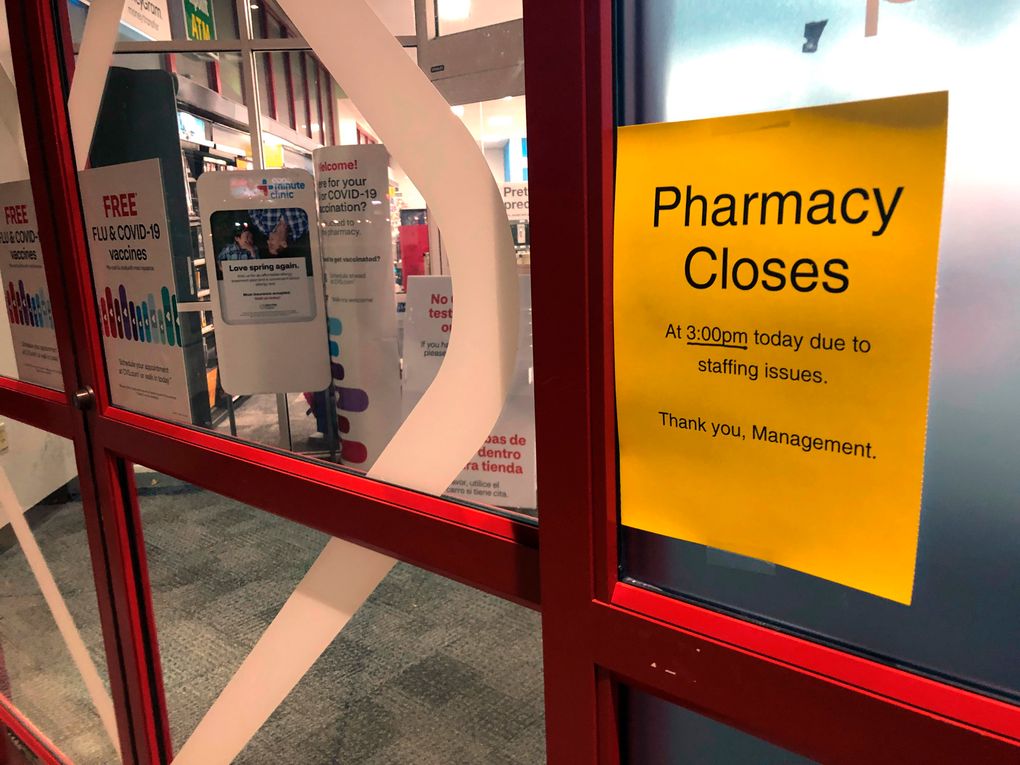
A sign is posted outside a CVS pharmacy Thursday in Indianapolis. A rush of vaccine-seeking customers and staff shortages are squeezing drugstores around the country. That has led to frazzled workers and even temporary pharmacy closures. (AP Photo/Tom Murphy)


A rush of vaccine-seeking customers and staff shortages are squeezing drugstores around the U.S., leading to frazzled workers and temporary pharmacy closures.

Drugstores are normally busy this time of year with flu shots and other vaccines, but now pharmacists are doling out a growing number of COVID-19 shots and giving coronavirus tests.

The push for shots is expected to grow more intense as President Joe Biden urges vaccinated Americans to get booster shots to combat the emerging omicron variant. 

Read the story here.

—Tom Murphy, The Associated Press


Resurgence in business travel expected as companies tire of Zoom, but omicron variant complicates outlook

Travelers walk between terminals at O’Hare International Airport on Nov. 28, 2021, after the Thanksgiving weekend. (Brian Cassella/Chicago Tribune/TNS) (Brian Cassella / TNS)


Many road warriors’ suitcases and passports have been gathering dust since the COVID-19 pandemic brought business travel to a halt.

That’s not the case at Chicago-based Devbridge, which hosted an all-hands event in Lithuania earlier this year and brought teams from Toronto, London and Lithuania to its Chicago office last month to workshop new products with clients.

Read the story here.

—Lauren Zumbach, Chicago Tribune


Police get complaints over U.K. leader’s festive parties

LONDON — Britain’s opposition Labour Party has raised complaints to police about Christmas parties held by Prime Minister Boris Johnson’s staff in his office last year in breach of coronavirus restrictions. 

The reports surfaced as many in the U.K. and elsewhere are increasingly concerned about festive parties and socializing over Christmas this year amid the spread of the new omicron variant.

Read the story here.

—The Associated Press


COVID kills a leading anti-vaccine televangelist; evangelicals don’t want to talk about it

When famed televangelist Marcus Lamb died this week at 64 after contracting COVID-19, a who’s who of conservative Christian leaders sent out regrets. Evangelist Franklin Graham said Lamb is now “experiencing heaven.” National Hispanic Christian Leadership Conference head Samuel Rodriguez called him a “faithful follower of Jesus … with a heart for the lost and broken.”

Absent was a painful truth: Lamb had led his global Christian network, Daystar, for months in spreading inaccurate information about coronavirus vaccines and instead promoting treatments that are not proven remedies. The vaccines, a May segment on Daystar said, falsely, are “killing your immune system.”

Read the story here.

— Michelle Boorstein, The Washington Post


Cognitive rehab: One patient’s painstaking path through long COVID-19 therapy

Samantha Lewis works to improve her balance during a therapy session at the Shirley Ryan AbilityLab in Burr Ridge, Ill., Oct. 8, 2021. Lewis is relearning some basic aspects of her daily life after struggling with brain fog and other lingering symptoms for more than a year since being infected with COVID-19. (Alex Wroblewski/The New York Times) XNYT101 XNYT101


AURORA, Ill. — There is sobering evidence of Samantha Lewis’ struggle with long COVID-19 on her bathroom mirror.

Above the sink, she has posted an index card scrawled with nine steps reminding her how to brush her teeth. It is one of many strategies Lewis, 34, has learned from “cognitive rehab,” an intensive therapy program for COVID-19 survivors whose lives have been upended by problems like brain fog, memory lapses, dizziness and debilitating fatigue.

Read the story here.

—Pam Belluck, The New York Times


Merkel: Virus death toll ‘so bitter because it is avoidable’

German Chancellor Angela Merkel waves goodbye at the Defence Ministry during the Grand Tattoo (Grosser Zapfenstreich), a ceremonial send-off for her in Berlin on December 2, 2021. (Odd Andersen/Pool Photo via AP)


BERLIN — Outgoing Chancellor Angela Merkel on Saturday made what is likely her final appeal before leaving office next week for Germans to get vaccinated against COVID-19.

Merkel gave what is expected to be her last weekly video message two days after federal and state leaders decided on a series of measures meant to break a wave of coronavirus infections. 

The measures include excluding unvaccinated people across the country from nonessential stores, restaurants and sports and cultural venues. In a longer-term move, parliament will consider a general vaccine mandate.

Read the story here.

—The Associated Press


FDA authorizes Eli Lilly antibody treatment for high-risk young children

The Eli Lilly headquarters  in Indianapolis in 2006. (AP Photo/Darron Cummings, File)


The Food and Drug Administration on Friday authorized Eli Lilly’s monoclonal antibody treatment for infants and children under age 12 with COVID-19 who are at high risk of becoming severely ill from the virus because they have a condition such as obesity or diabetes.

Previously, high-risk COVID patients 12 or older had been eligible to get the drugs, which are typically administered intravenously at a clinic or hospital and have been shown to lower the risk of hospitalization and death.

Read the story here.

—Rebecca Robbins, The New York Times


Over 129K WA kids ages 5–11 receive first COVID vaccine dose

Andre Mattus, a nurse at the University of Washington Medical Center, gives the first shot of the Pfizer COVID-19 vaccine to Amar Gunderson, 6 1/2, last month, in Seattle. (Ted S. Warren / AP)


OLYMPIA — More than 129,000 children ages 5 through 11 in Washington state have received their first dose of the Pfizer-BioNTech pediatric vaccine since eligibility expanded to include younger kids on Nov. 3, health officials said this week. 

“While COVID-19 is often milder in children than adults, children can still get very sick and spread the disease to family and friends, which is an even bigger concern as people gather this holiday season,” Secretary of Health Dr. Umair A. Shah said Thursday. “As a father, knowing our children are vaccinated helps me breathe a sigh of relief.”

Read the story here.

—The Associated Press


UW men’s basketball game vs. No. 5 UCLA canceled due to COVID-19

The Washington Huskies line up for the playing of the national anthem before, Nov. 9, 2021, in Seattle. (Jennifer Buchanan / The Seattle Times)


The Washington men’s basketball team will suffer its first Pac-12 defeat due to COVID-19 developments within the program.

The Huskies are unable to host No. 5-ranked UCLA on Sunday at Alaska Airlines Arena and will forfeit the game in accordance to Pac-12 guidelines.

Washington has seven players and coaches in COVID-19 protocols, according to a Los Angeles Times report that cited an anonymous source.

Read the story here.

—Percy Allen


So far, Washington workers pushed out over vaccine mandates aren’t losing jobless benefits

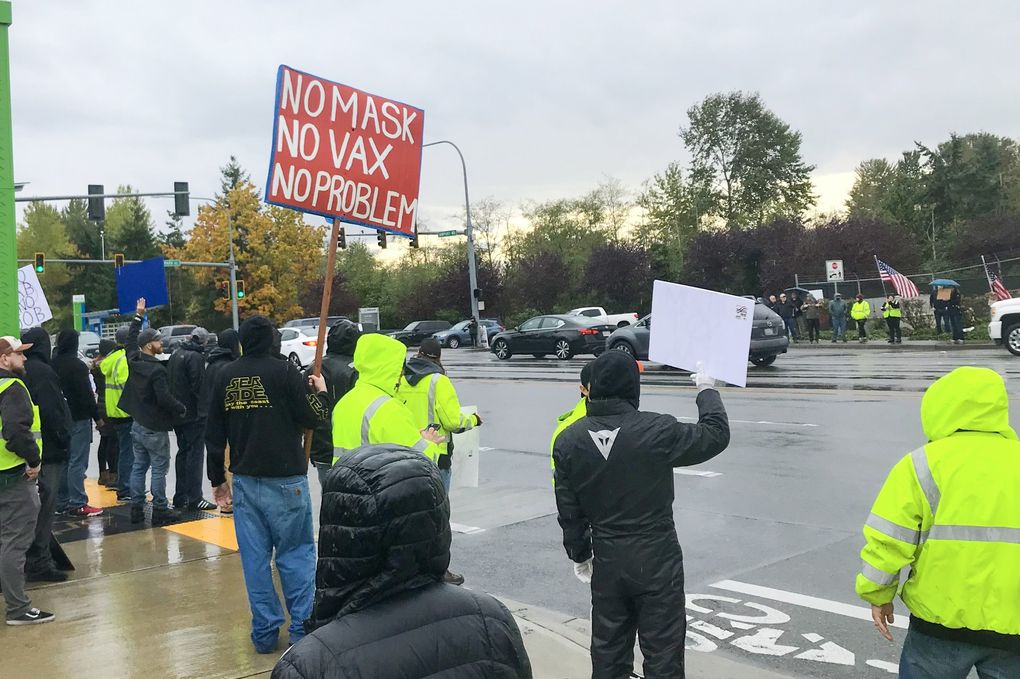
Boeing workers protest against the jet-maker’s vaccine requirement in Everett in October. (Dominic Gates / The Seattle Times)


In August, when Gov. Jay Inslee ordered state employees, health care workers and others to get vaccinated against COVID-19 by Oct. 18, officials issued a stern warning: If you quit or get fired for refusing a jab, don’t expect unemployment benefits. 

But nearly two months after the vaccination deadline, it’s unclear just how much vaccine-hesitant workers have to worry about. 

Although thousands of workers in Washington likely have quit or been fired over government and private vaccine mandates — including nearly 2,000 state employees as of Nov. 15, according to state data — just 26 mandate-related claims for jobless benefits had been flagged for review by the state Employment Security Department as of Friday. Although the review process isn’t complete, ESD officials don’t believe that any of those claims have been denied.

Read the story here.

—Paul Roberts