Federal appeals court allows Biden vaccine mandate for large companies to resume

A federal appeals court Friday reinstated the Biden administration’s vaccine mandate for large companies, dissolving a stay by a separate court that had suspended the mandate. 

The decision is the latest skirmish in a continuing battle that will likely soon be decided by the Supreme Court

A coalition of 27 business groups quickly appealed to the nation’s highest court Friday to block the lower court’s mandate, according to Politico. They claimed the mandate would bring “harm” to thousands of businesses.

The Biden vaccine mandate forces companies with 100 employees or more to require that their workers be vaccinated against COVID-19 or submit to weekly testing. The requirement takes effect Jan. 4.

President Joe Biden holds his face mask and waves as he exits Air Force One at Capital Region International Airport, Tuesday, Oct. 5, 2021, in Lansing, Michigan. (Associated Press / AP Newsroom)

In a 2-1 ruling, a panel of the U.S. Appeals Court for the Sixth Circuit ruled that the Biden administration could enforce the policy using the Labor Department’s Occupational Safety and Health Administration (OSHA).

“Recognizing that the ‘old normal’ is not going to return, employers and employees have sought new models for a workplace that will protect the safety and health of employees who earn their living there,” wrote Judge Jane Branstetter Stranch, a Barack Obama appointee, for the majority.In need of guidance on how to protect their employees from COVID-19 transmission while reopening business, employers turned to the Occupational Safety and Health Administration.”

APPEALS COURT RE-AFFIRMS STAY ON BIDEN WORKPLACE VACCINE MANDATE, CITES ‘SEVERE’ RISKS

The rule establishing the mandate had prompted a slate of legal challenges from at least 27 states as well as business and religious groups that argued the mandate is unconstitutional.

The Fifth Circuit Court of Appeals Nov. 12 ordered OSHA to “take no steps to implement or enforce the Mandate until further court order,” reaffirming an earlier decision it had made. The court said the mandate exposes the petitioners “to severe financial risk” and “threatens to decimate their workforces (and business prospects).”

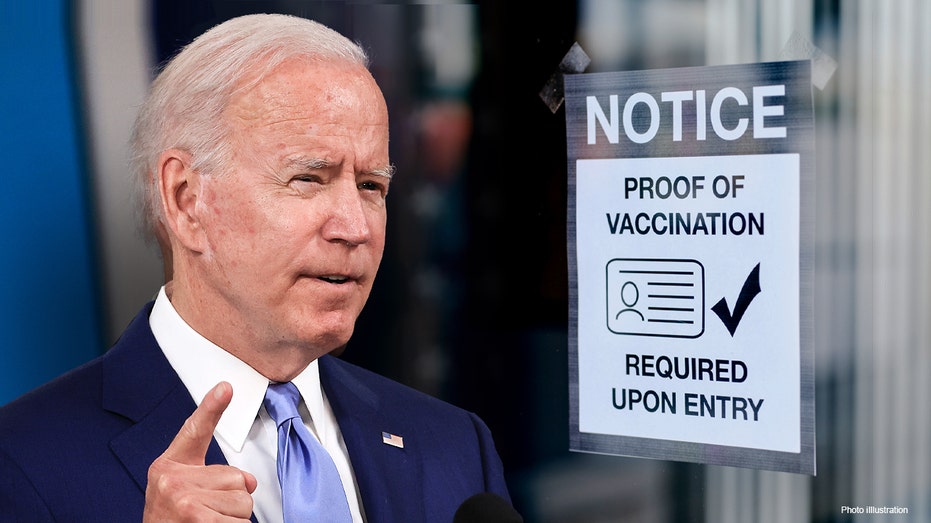
President Biden’s vaccine mandate is scheduled to take effect Jan. 4, pending further legal action. (Fox News photo illustration / Getty Images  | istock / Getty Images)

The Biden administration was forced to halt the mandate following the ruling. But Friday, the Sixth Circuit court ruled that the mandate was needed to limit transmission of the virus.

“The costs of delaying implementation of the [mandate] are comparatively high,” Stranch wrote in her ruling. “Fundamentally, the [mandate] is an important step in curtailing the transmission of a deadly virus.”

Opponents say the policy is a backdoor effort to force the population to get vaccinated.

CLICK HERE TO READ MORE ON FOX BUSINESS

The business-backed Job Creators Network, which is a party to the case, expressed disappointment.

“This mandate adds an incredible burden on small business owners who are still suffering negative effects of the pandemic,” the group said in a statement. “JCN has immediately asked the Supreme Court to save businesses and employees from this government overreach.”

Fox News’ Thomas Barrabi contributed to this story.

Coronavirus Today – Dec 14: One year with the vaccine


By Anne Blythe

On the anniversary of the first COVID-19 vaccine arriving in North Carolina, Gov. Roy Cooper and his top public health official, Mandy Cohen, took a look back on the coronavirus pandemic with a nod to the future that will place a new secretary of health and human services in the lead role.

After more than 22 months of speaking to North Carolinians and reporters from the podium at the state Emergency Operations Center in Raleigh, Cohen gave her final presentation of charts, graphs and data used to guide the response to the pandemic.

Cohen, who has been secretary of the state Department of Health and Human Services since 2017, announced several weeks ago that she will resign at the end of this month to try something different. The physician and mother of two daughters has not divulged what that might be.

She has knocked back speculation that she plans to run for the U.S. Senate next year in North Carolina and offered another clue when asked whether she might be working for the Biden administration.

“I want to continue to make sure that I am doing something that can impact the lives and public health of communities, but I don’t believe it will be in a public service role in the future,” Cohen said.

Cooper has tapped Kody Kinsley, the DHHS chief deputy secretary of health, to grab the baton from Cohen and lead North Carolina through the next phases of the pandemic response and recovery.

The handoff to Kinsley, subject to approval by the state Senate, will come as North Carolina tussles with yet another COVID strain — the Omicron variant.

Though first detected in South Africa, Mecklenburg County public health officials reported that the extremely contagious variant was detected in Charlotte earlier this month after a fully-vaccinated UNC-Charlotte student returned from travel out of state. The student had mild symptoms, UNC-C officials told reporters. Though that was the first case detected in North Carolina, public health officials speculate that it is not the only one case here caused by Omicron.

The Delta variant remains dominant in North Carolina, but scientists studying Omicron as it moves swiftly around the world are troubled by its extreme ability to pass easily from person to person.

Cohen was asked what she thought of data coming from South Africa, the first country to report the Omicron variant, that showed infected people were reporting less severe illness than that seen with the Delta variant. Should North Carolina expect a similar pattern?

“What I think about Omicron is that we are still learning,” Cohen responded. “What early data shows us is that it is certainly much more contagious than the Delta variant, but we are seeing that it is less severe.”

Leading epidemiologists expect Omicron to eventually out-compete Delta for dominance in multiple countries. 

“I think we are still trying to understand from the science and the data what is that lower level of severity being driven by,” Cohen said. “Is it because it has largely been infecting folks who are younger who tend to get less severe disease to begin with? Or is it because there are many, many folks who have gotten a vaccine or have had past exposure to COVID already? I think the scientific community is still trying to tease out the why.”

Cohen said with more data and more time to study the patterns of Omicron, it could turn out that the variant causes illness as severe as that seen with the Delta strain.

That uncertainty lingers as Christmas, Kwanza and New Year’s Day approach. COVID cases are on the rise again in North Carolina, according to the DHHS dashboard. On Tuesday, there were 1,932 lab-confirmed cases, one day last week saw 4,153 cases. 

The number of people hospitalized with illness related to COVID has been steadily rising over the past two weeks. On Tuesday, 1,575 people were hospitalized and 439 of them were in intensive care units, according to the dashboard.

Holiday spikes?

Cohen speculated that Thanksgiving gatherings and the colder weather pushing more people indoors, where the virus spreads more readily, contributed to that increase.

In 2020 and early 2021, North Carolina saw a surge in cases after the holidays at the end of the year, straining health care systems and leading to thousands more deaths.

On Dec. 14, 2020, Katie Passaretti, medical director of infection prevention at Atrium Health in Charlotte, became the first person in North Carolina to get a COVID vaccine. 

Since then, more than 6.5 million people have had at least one dose of vaccine, according to the DHHS vaccinations dashboard. Some 1.981 million booster shots have been administered, the dashboard shows.

Cooper and Cohen have consistently touted the vaccines as the best weapon against COVID and a tool that can help North Carolina move beyond the pandemic.

“As new variants emerge and COVID continues to circulate, getting vaccinated and then boosted is the best way to protect yourself and get us out of this pandemic,” Cooper said. “Vaccines and boosters are widely available, and you can make an appointment today to give yourself this protection and more peace of mind.”

In a different place

This year, unlike last year, when vaccines were not widely available, Cooper and Cohen say people can enjoy the holidays with loved ones if they are vaccinated, boosted, getting testing before and after events, and wearing masks when indoors in public settings.

“We are in a different place as we go into this holiday season than we did last year,” Cohen said. “We’re a year into having a powerful tool. The vaccines have really helped us beat back this pandemic.”

Because of the vaccines, Cohen said, North Carolina does not have a statewide mask mandate and other restrictions that were in place this time last year.

“Folks can gather safely if they are getting vaccinated, getting boosted, using tests, using masks,” Cohen said. “There are safe ways to make sure that folks can enjoy the holidays, but I am still worried about our hospital capacity. 

“We are seeing a more contagious version of COVID in the Omicron variant on the horizon. We know we’re going into the winter, which is what the COVID virus likes. It likes the winter, and we know that it’s also flu season. So there are a lot of strains on our hospitals as we go into these winter months.

Flu and COVID circulating

On Tuesday morning, North Carolina reported its first flu death of the season.

Though many symptoms of flu are similar to COVID-19, the adult in the western part of the state who died in the second week of December tested positive for influenza and not COVID.

State officials did not release the person’s name, hometown, county, age or gender, citing privacy concerns for the family.

The somber news prompted Zack Moore, the state epidemiologist, to encourage everyone to not only get vaccinated against COVID, but also get a flu shot.

Flu season in North Carolina begins in October and extends through May.

“This is a sad reminder that flu can be a serious illness and can lead to complications and even death in some cases,” Moore said in a statement. “With flu cases increasing and the ongoing COVID-19 pandemic, it is more important than ever for people to get a flu vaccine this year, as well as a COVID-19 vaccination or booster if they have not already done so.”

North Carolina had an atypically low number of influenza cases in 2020, when many people wore masks because of the coronavirus pandemic and restricted who they gathered with, as well as the number of people.

During the five flu seasons before the pandemic, though, influenza deaths ranged from 186 to 391, according to a DHHS press release.

As the number of COVID cases rise again, health officials are seeing a similar pattern with influenza as the cold weather pushes people indoors more where viruses can spread more quickly in confined spaces.

“Unfortunately, COVID-19 cases are on the rise in the midst of the flu season, creating even more demand of our state’s hospital beds,” Kinsley said in a statement.

Seasonal flu shots are recommended annually by the Centers for Disease Control and Prevention for anyone 6 months old and older. COVID shots are recommended for children as young as 5 and everyone older than that. The shots can be administered at the same time, according to DHHS officials.

‘Use the tools’

Though children as young as 5 have been eligible for a kid-size dose of vaccine since last month, only 17 percent of the children ages 5 to 11 have had one dose of the two-dose Pfizer vaccine, according to one of the charts Cohen shared at her final briefing. Forty-six percent of children ages 12 to 17 have had at least one dose of the COVID vaccine and only 56 percent of the population ages 18 to 24 have had a dose.

As COVID cases begin to climb again, children and young adults, the least vaccinated age groups, are bearing the brunt of the infections, Cohen said.

Cohen got her daughters vaccinated in November, the first weekend that children younger than 12 were eligible for shots. She encourages other parents to do the same.

Though many people have tired of the pandemic, the presence of COVID remains a factor in how people gather.

“As we went through the data today, everyone should be on guard,” Cohen said. “The virus is still here. But we have tools in order to beat back this pandemic, vaccines being our tools. What I hope folks take away from our message today is get vaccinated and get boosted as soon as possible. There are other tools. Make sure you are getting tested as you go to your family gatherings for the holidays. Test yourself before and after travel and wear masks, absolutely, when you are indoors and in public settings. 

“I think everyone knows what to do at this point. We just have to use the tools that we know work.”

Coronavirus by the numbers

According to NCDHHS data, as of Tuesday afternoon:

  • 19,033 people total in North Carolina have died of coronavirus.
  • 1,577,154 have been diagnosed with the disease. Of those, 1,575 are in the hospital. The hospitalization figure is a snapshot of people hospitalized with COVID-19 infections on a given day and does not represent all of the North Carolinians who may have been in the hospital throughout the course of the epidemic.
  • As of Tuesday, 439 COVID-19 patients were in intensive care units across the state. 
  • North Carolina tracked COVID-19 re-infections in the case counts from March 1, 2021 through Sept. 20, 2021. All told, North Carolina tracked 10,812 reinfections, 200 of those were in people who were previously vaccinated. Ninety-four people who were reinfected with COVID-19 have died. 
  • 1,515,240 people who had COVID-19 are presumed to have recovered. This weekly estimate does not denote how many of the diagnosed cases in the state are still infectious. Nor does it reflect the number of so-called “long-COVID” survivors who continue to feel the effects of the disease beyond the defined “recovery” period.
  • To date, 20,893,384 tests have been completed in North Carolina. As of July 2020, all labs in the state are required to report both their positive and negative test results to the lab, so that figure includes all of the COVID-19 tests performed in the state. Most recently, 9.2 percent of those testing were testing positive. 
  • People ages 25-49 make up the largest group of cases (39 percent). While 12 percent of the positive diagnoses were in people ages 65 and older, seniors make up 74 percent of coronavirus deaths in the state. 
  • 263 outbreaks are ongoing in group facilities across the state, including nursing homes and correctional and residential care facilities.
  • As of Nov. 30, 6,510,428 North Carolinians have received at least one dose of a coronavirus vaccine. Ninety-one percent of people over the age of 65 have been completely vaccinated, while 58 percent of the total population is fully vaccinated. 1,981,998 boosters have been administered.
  • Children between the ages of 5 and 11 became eligible for vaccination during November. A total of 150,476 first doses have been given to those children, a total of 17 percent of that population.

Creative Commons License

Republish our articles for free, online or in print, under a Creative Commons license.

Could a ‘vaccine tax’ help?

Two people with cell phones in front of a COVID certificate QR codeShare on Pinterest
How do we deal with global vaccine inequity? Stefan Wermuth/Bloomberg via Getty Images
  • People in wealthier countries are far more likely to be vaccinated against COVID-19.
  • Some countries have committed funds to help resolve global vaccine inequity, but others have not.
  • A new paper proposes a solution: a sliding-scale tax to be built into the price of vaccines and collected by manufacturers.

As of December 9, 2021, more than 8.1 billion vaccine doses have been administered worldwide. However, most of those have gone to people who live in the world’s high income countries.

As of December 8, 2021, 64.94{cfdf3f5372635aeb15fd3e2aecc7cb5d7150695e02bd72e0a44f1581164ad809} of the population of those countries have received at least one vaccine dose. In low income countries, this figure is just 8.35{cfdf3f5372635aeb15fd3e2aecc7cb5d7150695e02bd72e0a44f1581164ad809}.

In addition to the logistical challenge of getting vaccines to those who need them, the cost of purchasing them in the first place is the most significant barrier to addressing vaccine inequity.

To get a sufficient number of people vaccinated, experts estimate that poorer countries would have to increase their healthcare spending by 56.6{cfdf3f5372635aeb15fd3e2aecc7cb5d7150695e02bd72e0a44f1581164ad809}, while wealthier countries would only need to increase theirs by 0.8{cfdf3f5372635aeb15fd3e2aecc7cb5d7150695e02bd72e0a44f1581164ad809}.

In a LinkedIn plea urging corporate boards and investors to do more to persuade their companies to address vaccine inequity, Dr. Peter Singer — special advisor to the director-general of the World Health Organization (WHO) — puts it starkly:

“Every week, around 50,000 people die of COVID-19. Presumably, most were unvaccinated and didn’t have to die. Without speedy vaccination of the world, millions more will die.”

Dr. Singer adds that doing better is not “just about stopping COVID-19, it’s about keeping everyone safe from the next variant and the next pandemic.”

“It’s also about addressing the underlying structural injustices that perpetuate inequity.”

A new paper by Dr. Andreas Brøgger Albertsen, Ph.D. — of Aarhus University in Denmark — proposes a means of more equitably distributing the cost of the world’s vaccines among governments.

Dr. Albertsen suggests that a progressive vaccine “tax” could be included in the cost of vaccines based on a purchasing nation’s ability to pay.

He notes in his paper that the tax would provide a more workable solution than vaccine equity strategies often discuss. One of the most common of these ideas is that wealthier countries could divert foreign aid funds to vaccinations.

Dr. Albertsen cites two problems with this approach. First, “using [existing] foreign aid to provide vaccines would effectively reduce the amount of assistance given for non-vaccine purposes.” Second, if only some countries increase foreign aid, the financial burden of vaccine equity will be neither evenly nor fairly shared.

The paper appears in the BMJ Journal of Medical Ethics.

By mid-2022, the WHO hopes to have 70{cfdf3f5372635aeb15fd3e2aecc7cb5d7150695e02bd72e0a44f1581164ad809} of the world vaccinated. This is the percentage of coverage that experts initially estimated would be required to overcome SARS-CoV-2.

In January 2021, WHO director Tedros Adhanom Ghebreyesus explained the consequence of vaccine inequity.

“I need to be blunt,” he said. “[T]he world is on the brink of a catastrophic moral failure — and the price of this failure will be paid with lives and livelihoods in the world’s poorest countries.”

To facilitate its goal, the WHO — in partnership with GAVI, the vaccine alliance, the Coalition for Epidemic Preparedness Innovations (CEPI), and UNICEF — has established the COVID-19 Vaccines Global Access, or “COVAX,” initiative.

It is the vaccine arm of the ACT-Accelerator, which is a “groundbreaking global collaboration to accelerate the development, production, and equitable access to COVID-19 tests, treatments, and vaccines.”

The vaccine tax is fairly simple, explains Dr. Albertsen.

“For every vaccine bought,” he says, “a fraction of the price paid for the vaccine is set aside to create a fairer vaccine distribution. Under the vaccine tax scheme, the selling firm is responsible for transferring the money raised in this way to COVAX.”

“COVAX could stipulate that it will only buy vaccines from companies complying with the tax,” Dr. Albertsen told Medical News Today. “This would provide an incentive for the vaccine producers to introduce and adhere to the vaccine tax scheme and not necessarily make it more expensive for COVAX to obtain vaccines.”

Dr. Albertsen says that the amount of the tax — the percentage of a vaccine’s purchase price — must be based on a country’s ability to pay for vaccinating its population.

“It could also be considered fair to exempt low income countries from the tax,” says Dr. Albertsen.

In some countries, the word “tax” has a political meaning that could hamper the proposal’s acceptance. MNT asked Dr. Albertsen if it would be just as accurate to use a less charged term, such as “surcharge” or “fee.”

He replied: “You are completely correct. The other terms you mentioned could have been used instead. What I hoped to achieve by using ‘tax’ was to quickly signal that this would be something that buyers had to pay (i.e., non-optional) once the system is fully implemented.”

Dr. Albertsen asserts that vaccine companies may be incentivized to accept his plan due to assurances of continuing purchases by a tax-committed COVAX.

He also suggests that the steadiness of vaccine demand will reassure manufacturers. He writes in his paper, “The companies hold a strong bargaining position in terms of making the buyers cover this expense.”

Beyond that, Dr. Albertsen told MNT that he feels that the world is eager to solve the vaccine-inequity dilemma.

“I believe that many people, including world leaders, can see that the current unequal distribution of vaccines is unethical.”

He added, “Some countries have, through their actions (i.e., donations to COVAX), shown a willingness to mitigate this, while others have been less forthcoming in that regard.”

Noting that “the vaccine tax does not solve all the problems with vaccine production,” Dr. Albertsen says, “it can work alongside other proposals to solve other problems and can seemingly complement them.”

Senate votes to repeal Biden federal vaccine mandate for businesses

The Senate voted Wednesday to repeal a President Biden-backed federal COVID-19 vaccine mandate for private businesses.

The final vote was 52-48. Moderate Democratic Sens. Joe Manchin of West Virginia and Jon Tester of Montana joined Republicans to vote in favor of the repeal.

Even with Senate approval, the GOP-backed resolution is unlikely to overturn the mandate. The Democrat-controlled House is not expected to take up the measure and President Biden would likely veto the bill if it cleared Congress.

Republicans brought the repeal to the Senate floor under the “Congressional Review Act,” which allows Congress to review presidential executive orders. Sen. Mike Braun, R-Ind., who sponsored the resolution, said the mandate was an example of the “heavy hand of government” hurting businesses.

Night falls at the the Capitol in Washington, Thursday, Dec. 2, 2021, with the deadline to fund the government approaching. Republicans in the Senate are poised to stall a must-pass funding bill as they force a debate on rolling back the Biden admini (AP Newsroom)

“It’s got Main Street America scared,” Braun said prior to the vote. “They’re worried about, well, what does this mean on other issues? Anybody who thinks this is a good idea, imagine the next time it happens when you’re on the wrong side on whatever the merits of the case would be.”

The Biden administration’s mandate requires private companies with 100 or more employees to ensure their employees are vaccinated against COVID-19 or undergo regular testing. Firms that do not comply face steep fines.

GOP lawmakers argue the mandate is too broad and constitutes federal overreach. Business groups who oppose the mandate say it is too burdensome given strained economic conditions.

“It’s daunting to families as they’re facing higher bills for their gas and their heating,” Sen. Shelley Moore Capito, R-W.Va., said ahead of the vote. “They are very concerned about what this would do to their long-term ability to get a job, keep a job. I think they realize that this is an invasion into their own abilities to make decisions about themselves in their health care.”

Sen. Mike Braun, R-Ind., arrives to vote on an appropriations bill that funds the government through Feb. 18 and avoids a short-term shutdown after midnight Friday, at the Capitol in Washington, Thursday, Dec. 2, 2021. (AP Photo/J. Scott Applewhite) (AP Newsroom)

The mandate prompted immediate legal challenges from several states as well as business and religious groups. Last month, a federal appeals court enacted a temporary hold on enforcement of the mandate pending the outcome of litigation.

Senate Majority Leader Chuck Schumer, D-NY., slammed the Republican effort to repeal the mandate.

“Some of the anti-vaxxers here in this chamber remind me of what happened 400 years ago when people were clinging to the fact that the sun revolved around the Earth. They just didn’t believe science. Or 500 years ago when they were sure the Earth was flat,” Schumer said earlier in the day.

US President Joe Biden speaks about the Infrastructure Law while visiting the Kansas City Area Transportation Authority in Missouri on December 8, 2021. (Photo by Nicholas Kamm / AFP) (Photo by NICHOLAS KAMM/AFP via Getty Images) ((Photo by Nicholas Kamm / AFP) (Photo by NICHOLAS KAMM/AFP via Getty Images))

A fight over the mandate nearly derailed efforts to fund the government prior to a key deadline last week. 

GET FOX BUSINESS ON THE GO BY CLICKING HERE

The Senate approved a continuing resolution to fund the government with just hours to spare but rejected a Republican-backed amendment to strip funding from Occupational Safety and Health Administration, the entity responsible for implementing the mandate.

The Associated Press contributed to this report.

Pfizer vaccine: Protection against Omicron coronavirus variant improves with three vaccine doses

Samples from people who had two doses of the Covid-19 vaccine saw, on average, a more than 25-fold reduction in neutralization ability against the Omicron variant than the earlier virus, “indicating that two doses of BNT162b2 may not be sufficient to protect against infection with the Omicron variant,” the companies said.

The companies said two doses may still provide protection against severe disease.

“Although two doses of the vaccine may still offer protection against severe disease caused by the Omicron strain, it’s clear from these preliminary data that protection is improved with a third dose of our vaccine,” Pfizer Chairman and CEO Albert Bourla said in a statement. “Ensuring as many people as possible are fully vaccinated with the first two dose series and a booster remains the best course of action to prevent the spread of COVID-19.”

The initial lab studies used serum from blood from individuals who received two or three doses of the Pfizer/BioNTech Covid-19 vaccine. The sera was collected from subjects three weeks after their second dose, or one month after a third dose. The data released Wednesday has not been peer-reviewed or published.

“We believe that with the two doses, you still have relevant protection for severe disease, but clearly the drop is antibodies is substantial,” Dr. Mikael Dolsten, chief scientific officer at Pfizer, told CNN Chief Medical Correspondent Dr. Sanjay Gupta on Wednesday. “However, the good news this morning is that our data show convincingly when you get your boost — the third boost — the antibody levels rise 25 fold and are now similar to the originally two dose boost that protected well against ancestral strains as well as Delta.

“Go and get your third boost and you have a robust, quite impressive antibody response as well as a strengthening of the other arm of the immune system, the T cells,” Dolsten said. “That’s really the takeaway … two doses is on the weak end against this new variant, T cells may help you to be protected against severe disease, hospitalization — but it’s really time to get the third boost.”

NYC anime convention may offer 'earliest looks' at Omicron spread in US, CDC director says

President Joe Biden called the preliminary results “very, very encouraging.”

“I have some good news this morning that Pfizer’s lab report came back saying that the expectation is that the existing vaccines protect against Omicron but if you get the booster you’re really in good shape. So that’s very encouraging news,” Biden told reporters on the South Lawn Wednesday.

“That’s the lab report. There’s more studies going on but that’s very, very encouraging.”

Another study, released Tuesday by researchers in South Africa, showed the Omicron coronavirus variant partly escapes the protection offered by the Pfizer vaccine. The preprint study showed people who have been previously infected and then vaccinated are likely to be well protected, and Alex Sigal of the Africa Health Research Institute in Durban, who led the study team, told CNN that boosters are also likely to protect people.

“My impression is if you get a booster you are protected, especially against severe disease,” Sigal said.

Since reports of the Omicron variant emerged in late November, US health officials have urged people to get vaccinated and boosted. Last week, the US Centers for Disease Control and Prevention began recommending all adults get a Covid-19 vaccine booster.

Adults who have had the Pfizer or Moderna Covid-19 vaccines are eligible to get a booster six months after their second shot. Those who got the Johnson & Johnson one-shot vaccine are eligible for a booster of any authorized vaccine two months after their first dose.

About a quarter of adults who are vaccinated against Covid-19 have also received a booster dose, according to CDC data. More than 144 million adults should get a booster, based on CDC guidance, but only about 48 million adults have received one.

Pfizer and BioNTech also said Wednesday they are continuing to develop a variant-specific vaccine for Omicron and it will be available by March, if it’s needed.

“I’m not sure that we’ll need it because it’s one very likely scenario that the current booster will be enough to maintain protection, but if we need one, I’m sure we can make one and the good news is that we will have it by March,” Bourla said on NBC’s “Today” show on Wednesday.

CNN’s Deidre McPhillips, Naomi Thomas and Amanda Sealy contributed to this report.

Dow Jones Rallies On Pfizer Vaccine News; Tesla Stock Rises After China Sales

The Dow Jones Industrial Average rallied 100 points early Wednesday, as Pfizer provided an update on the effectiveness of its vaccine vs. the omicron Covid-19 variant. Apple hit new highs, while Tesla stock dropped after reports of strong electric-vehicle sales in China.


X


Among the Dow Jones leaders, Apple (AAPL) gained 0.5{cfdf3f5372635aeb15fd3e2aecc7cb5d7150695e02bd72e0a44f1581164ad809} Wednesday, while Microsoft (MSFT) fell 0.3{cfdf3f5372635aeb15fd3e2aecc7cb5d7150695e02bd72e0a44f1581164ad809} in today’s stock market. Nike (NKE) also ticked 0.3{cfdf3f5372635aeb15fd3e2aecc7cb5d7150695e02bd72e0a44f1581164ad809} lower, still below a buy point despite Tuesday’s strong gain.

EV leader Tesla (TSLA) shed early gains and dropped 1{cfdf3f5372635aeb15fd3e2aecc7cb5d7150695e02bd72e0a44f1581164ad809} Wednesday. EV peer Rivian (RIVN) was down 1{cfdf3f5372635aeb15fd3e2aecc7cb5d7150695e02bd72e0a44f1581164ad809}, while Lucid Group (LCID) moved down around 4{cfdf3f5372635aeb15fd3e2aecc7cb5d7150695e02bd72e0a44f1581164ad809}. Chinese EV leaders Li Auto (LI) and Xpeng Motors (XPEV) were mixed after Wednesday’s open.

Among the top stocks to buy and watch, Endeavor Group (EDR), Louisiana-Pacific (LPX), NXP Semiconductors (NXPI) and Zim Integrated Shipping (ZIM) are in or near new buy zones. Despite the recent stock market strength, investors should still be developing watchlists, and avoid making new purchases until the market’s current rally attempt stages a follow-through day.

Microsoft and Tesla are IBD Leaderboard stocks. Louisiana-Pacific was Tuesday’s IBD 50 Stocks To Watch pick. NXP was spotlighted in this week’s Stocks Near A Buy Zone story. Endeavor was featured in last week’s IPO Leaders story. Zim is an IBD SwingTrader stock.

Dow Jones Today: Pfizer Vaccine News

After the stock market open Wednesday, the Dow Jones Industrial Average pared gains to 0.1{cfdf3f5372635aeb15fd3e2aecc7cb5d7150695e02bd72e0a44f1581164ad809}, as Honeywell International (HON) dragged on the index following a Bank of America downgrade. The S&P 500 rose 0.1{cfdf3f5372635aeb15fd3e2aecc7cb5d7150695e02bd72e0a44f1581164ad809}, while the tech-heavy Nasdaq composite reversed higher after early losses.

Among exchange traded funds, the Nasdaq 100 tracker Invesco QQQ Trust (QQQ) rose 0.1{cfdf3f5372635aeb15fd3e2aecc7cb5d7150695e02bd72e0a44f1581164ad809} Wednesday, while the SPDR S&P 500 ETF (SPY) gained 0.2{cfdf3f5372635aeb15fd3e2aecc7cb5d7150695e02bd72e0a44f1581164ad809}.

Elsewhere, the 10-year Treasury yield traded down to around 1.46{cfdf3f5372635aeb15fd3e2aecc7cb5d7150695e02bd72e0a44f1581164ad809} Wednesday morning, following its close at 1.48{cfdf3f5372635aeb15fd3e2aecc7cb5d7150695e02bd72e0a44f1581164ad809} Tuesday after two straight days of strong gains. Crude oil prices were lower, with West Texas Intermediate down about 0.5{cfdf3f5372635aeb15fd3e2aecc7cb5d7150695e02bd72e0a44f1581164ad809} and on pace to snap a two-day advance.

Early Wednesday, Pfizer (PFE) and vaccine partner BioNTech (BNTX) said a third dose of their Covid-19 vaccine neutralized the omicron variant in lab tests. They also reported that the two-dose regimen was significantly less effective vs. the new variant than prior strains of the virus. Pfizer shares and BNTX shares both traded higher after the open.


Stock Market ETF Strategy And How To Invest


Stock Market Rally Attempt

The stock market posted strong gains Tuesday, as the major stock indexes continued their rebounds from last week’s weakness. Tuesday marked Day 2 of a new rally attempt on the Nasdaq. That is a positive sign, but means the market correction isn’t over yet — one or two days doesn’t make a trend. Starting at Day 4, you are looking for the index to rise sharply in higher volume than the prior day. That would indicate a follow-through day, and signal the start of a potential uptrend.

Now, while the market is still correcting, is a good time to search for stocks that could become the next uptrend’s leaders. One tool helpful in such a search is the relative strength line. The RS line measures a stock’s price performance vs. the S&P 500. If the stock is outperforming the broader market, then the RS line angles upward. If a stock is performing worse than the broad market, then the line will point lower.

After Tuesday’s session, The Big Picture commented: “With two solid gains this week, much of the stock market’s damage from the previous couple of weeks is patched up. The Nasdaq sank almost 8{cfdf3f5372635aeb15fd3e2aecc7cb5d7150695e02bd72e0a44f1581164ad809} from its Nov. 22 peak and is now 3.2{cfdf3f5372635aeb15fd3e2aecc7cb5d7150695e02bd72e0a44f1581164ad809} from new highs.”

The stock market outlook was downgraded on Friday, so it’s an important time to read IBD’s The Big Picture.


Five Best Dow Jones Stocks To Watch Now


Dow Jones Stocks To Watch: Apple, Nike

Apple shares hit new highs Tuesday, rallying more than 3.5{cfdf3f5372635aeb15fd3e2aecc7cb5d7150695e02bd72e0a44f1581164ad809}. The stock is getting further extended past a 153.27 buy point out of a cup-with-handle base, according to IBD MarketSmith chart analysis. The 5{cfdf3f5372635aeb15fd3e2aecc7cb5d7150695e02bd72e0a44f1581164ad809} buy zone topped out at 160.93. Apple shares moved up 0.5{cfdf3f5372635aeb15fd3e2aecc7cb5d7150695e02bd72e0a44f1581164ad809} Wednesday, setting another all-time high.

Retail leader Nike remains about 2{cfdf3f5372635aeb15fd3e2aecc7cb5d7150695e02bd72e0a44f1581164ad809} below a cup base’s 174.48 buy point after Tuesday’s 1.4{cfdf3f5372635aeb15fd3e2aecc7cb5d7150695e02bd72e0a44f1581164ad809} gain. Shares fell 0.3{cfdf3f5372635aeb15fd3e2aecc7cb5d7150695e02bd72e0a44f1581164ad809} Wednesday.

Stock Market Earnings: Toll Brothers

Photronics (PLAB), Thor Industries (THO) and Lovesac (LOVE) were all making strong morning moves after reporting earnings early Wednesday.

Toll Brothers (TOL) reported better-than-expected fiscal fourth-quarter earnings and sales late Tuesday. Shares dropped more than 2{cfdf3f5372635aeb15fd3e2aecc7cb5d7150695e02bd72e0a44f1581164ad809} Wednesday. TOL stock closed Tuesday in buy range past a 68.98 buy point, but is already extended above a 67.43 handle entry. That 5{cfdf3f5372635aeb15fd3e2aecc7cb5d7150695e02bd72e0a44f1581164ad809} buy area topped out at 70.80.

Elsewhere, Stitch Fix (SFIX) dived 27{cfdf3f5372635aeb15fd3e2aecc7cb5d7150695e02bd72e0a44f1581164ad809} Wednesday after cutting its revenue outlook for the fiscal year due to ongoing supply chain pressures. Shares closed Tuesday about 78{cfdf3f5372635aeb15fd3e2aecc7cb5d7150695e02bd72e0a44f1581164ad809} off their 52-week high.

Stocks To Buy And Watch: Endeavor, Louisiana-Pacific, NXP, Zim

IPO Leader and Ultimate Fighting Championship owner Endeavor Group is trying to break out past a cup-with-handle base with a 31.80 buy point, according to IBD MarketSmith chart analysis. Shares are about 3{cfdf3f5372635aeb15fd3e2aecc7cb5d7150695e02bd72e0a44f1581164ad809} below the new entry after Tuesday’s breakout attempt. The stock was down about 4{cfdf3f5372635aeb15fd3e2aecc7cb5d7150695e02bd72e0a44f1581164ad809} Wednesday.

The stock’s relative strength line is making strong upward progress and is at its highest level since early October. The RS line measures a stock’s price performance vs. the broad market. A strengthening RS line during periods of market weakness indicates leadership potential.

Louisiana-Pacific — Tuesday’s IBD Stocks To Watch pick — is breaking out past a 73.76 buy point in a cup with handle amid Tuesday’s 3.9{cfdf3f5372635aeb15fd3e2aecc7cb5d7150695e02bd72e0a44f1581164ad809} rise. Shares are in the 5{cfdf3f5372635aeb15fd3e2aecc7cb5d7150695e02bd72e0a44f1581164ad809} buy range that tops out at 77.45. LPX stock moved up 1{cfdf3f5372635aeb15fd3e2aecc7cb5d7150695e02bd72e0a44f1581164ad809} Wednesday.

Chip leader NXP Semiconductors is testing a 227.60 buy point in a cup-with-handle base following Tuesday’s 6.5{cfdf3f5372635aeb15fd3e2aecc7cb5d7150695e02bd72e0a44f1581164ad809} advance. The buy area goes up to 238.98. Shares were down over 6{cfdf3f5372635aeb15fd3e2aecc7cb5d7150695e02bd72e0a44f1581164ad809} Wednesday after UBS started coverage with a sell rating and a 170 price target.

IBD SwingTrader stock Zim Integrated Shipping is rapidly approaching a cup with handle’s 60.19 buy point following Tuesday’s 4.9{cfdf3f5372635aeb15fd3e2aecc7cb5d7150695e02bd72e0a44f1581164ad809} climb. Shares rallied 2{cfdf3f5372635aeb15fd3e2aecc7cb5d7150695e02bd72e0a44f1581164ad809} Wednesday.


Join IBD experts as they analyze leading stocks in the current stock market correction on IBD Live


EV Stocks: Li Auto, Xpeng, Lucid Motors, Rivian

Li Auto triggered the 7{cfdf3f5372635aeb15fd3e2aecc7cb5d7150695e02bd72e0a44f1581164ad809}-8{cfdf3f5372635aeb15fd3e2aecc7cb5d7150695e02bd72e0a44f1581164ad809} loss-cutting sell rule below a cup-with-handle base’s 34.93 buy point after Friday’s sharp loss. Shares are fighting to regain their 50-day line after finding support around the long-term 200-day moving average. Shares tacked on 0.7{cfdf3f5372635aeb15fd3e2aecc7cb5d7150695e02bd72e0a44f1581164ad809} Wednesday.

Xpeng Motors triggered the round-trip sell signal from a 48.08 buy point during last week’s decline. Investors should sell the growth stock if it falls back near the buy point after it has made a gain of more than 10{cfdf3f5372635aeb15fd3e2aecc7cb5d7150695e02bd72e0a44f1581164ad809}. Try to sell before all gains are wiped away. XPEV shares ended Tuesday above their 50-day support level. Wait for the stock to form a new base, which would offer a new entry. The stock moved up 0.7{cfdf3f5372635aeb15fd3e2aecc7cb5d7150695e02bd72e0a44f1581164ad809} Wednesday.

Lucid Motors shares threatened to extend a five-day losing streak Wednesday, falling 4{cfdf3f5372635aeb15fd3e2aecc7cb5d7150695e02bd72e0a44f1581164ad809}. LCID stock remains extended past a 28.49 buy point in a cup-with-handle base, but huge gains have dwindled.

Hot initial public offering Rivian extended Tuesday’s 0.5{cfdf3f5372635aeb15fd3e2aecc7cb5d7150695e02bd72e0a44f1581164ad809} fall, dropping nearly 1{cfdf3f5372635aeb15fd3e2aecc7cb5d7150695e02bd72e0a44f1581164ad809} early Wednesday.

RIVN shares closed Tuesday about 35{cfdf3f5372635aeb15fd3e2aecc7cb5d7150695e02bd72e0a44f1581164ad809} off their post-IPO highs. The decline is a potential positive for investors remaining disciplined and waiting for an IPO base to form before considering a purchase. The recent weakness is the start of Rivian’s first base formation, and Monday’s strong gain was a step in the right direction.

Tesla Stock

Tesla stock turned down 1{cfdf3f5372635aeb15fd3e2aecc7cb5d7150695e02bd72e0a44f1581164ad809} Wednesday, after Tuesday’s 4.2{cfdf3f5372635aeb15fd3e2aecc7cb5d7150695e02bd72e0a44f1581164ad809} gain as it rebounds from a key support level. Early Wednesday, the China Passenger Car Association reported that Tesla Shanghai sold 52,859 made-in-China Model 3 sedans and Model Y crossover SUVs in November, including 21,127 that were exported.

Shares traded as high as 1,243.49 on Nov. 4, but the stock ended Tuesday about 15{cfdf3f5372635aeb15fd3e2aecc7cb5d7150695e02bd72e0a44f1581164ad809} off its 52-week high.

TSLA shares remain sharply above a 764.55 buy point in a cup with handle, as well as earlier entries at 700.10 and 730. The chart also showed an alternate entry at 900.50. Tesla shares are likely forming a new base, but there is no new buy point yet.

Dow Jones Leaders: Microsoft

Among Dow Jones stocks, software giant Microsoft moved down 0.3{cfdf3f5372635aeb15fd3e2aecc7cb5d7150695e02bd72e0a44f1581164ad809} Wednesday, as it fights to continue its rebound from the 50-day line.

On Oct. 18, Microsoft stock broke out past a flat base’s 305.94 buy point. The 5{cfdf3f5372635aeb15fd3e2aecc7cb5d7150695e02bd72e0a44f1581164ad809} buy zone topped out at 321.24, so the stock is extended.

Be sure to follow Scott Lehtonen on Twitter at @IBD_SLehtonen for more on growth stocks and the Dow Jones Industrial Average.

YOU MAY ALSO LIKE:

Top Growth Stocks To Buy And Watch

Learn How To Time The Market With IBD’s ETF Market Strategy

Find The Best Long-Term Investments With IBD Long-Term Leaders

MarketSmith: Research, Charts, Data And Coaching All In One Place

How To Research Growth Stocks: Why This IBD Tool Simplifies The Search For Top Stocks