Coronavirus daily news updates, May 18: What to know today about COVID-19 in the Seattle area, Washington state and the world

Coronavirus daily news updates, May 18: What to know today about COVID-19 in the Seattle area, Washington state and the world

Editor’s note: This is a live account of COVID-19 updates from Wednesday, May 18, as the day unfolded. It is no longer being updated. Click here to see all the most recent news about the pandemic, and click here to find additional resources.

The Food and Drug Administration on Tuesday cleared a booster shot for children ages 5 to 11. The authorization comes as COVID-19 infections rise in the U.S. Officials hope the extra dose will enhance children’s protection against the virus.

Meanwhile, immunocompromised individuals are finding it difficult to navigate the latest wave of the pandemic as officials move to drop safety measures despite increasing hospitalization rates in several U.S. cities.

King County will close three testing sites as federal funding wanes, citing low demand and an increasing availability of PCR and at-home tests.

We’re updating this page with the latest news about the COVID-19 pandemic and its effects on the Seattle area, the U.S. and the world. Click here to see the rest of our coronavirus coverage and here to see how we track the daily spread across Washington.


US health secretary tests positive for COVID on Germany trip

President Joe Biden’s top health official tested positive for COVID-19 on Wednesday, the latest member of his Cabinet to be infected with the virus.

U.S. Health Secretary Xavier Becerra tested positive while visiting Berlin, a spokeswoman for the Department of Health and Human Services said. Becerra, who is fully vaccinated and boosted, was experiencing mild symptoms.

HHS spokeswoman Sarah Lovenheim said he will continue to work in isolation in Berlin.

Becerra was last at the White House last Thursday. He is not considered a close contact of Biden.

Read the full story here.

—Tom Murphy and Frank Jordans, The Associated Press


Apple delays and modifies its return to office plans

Apple, in a blow to its efforts to restore normalcy to its operations, has suspended its requirement that employees return to the office this month because of a resurgence of COVID-19 cases.

The reversal was welcome news for thousands of employees who pushed back against the company’s demand that they begin coming to the office for at least three days a week starting in late May. Early this month, the group, which calls itself “Apple Together,” published a letter calling on the executive team to allow for a hybrid and flexible work schedule, saying they could collaborate remotely using online tools such as Slack and spare themselves hours of commuting.

One of Apple’s leading artificial intelligence engineers, Ian Goodfellow, resigned in early May because of the office-return policy. Goodfellow did not respond immediately to requests for comment.

Apple said in a note to employees Tuesday that it would proceed with a pilot program to bring some workers back to the office twice a week in the weeks ahead. It said anyone in that program who felt “uncomfortable coming into the office” would have the “option to work remotely.”

The company also asked that employees who do come to campus wear masks in common areas and elevators. It said it would continue to monitor COVID cases and provide employees with updates at least two weeks before any future changes to its office policy.

Read the story here.

—Tripp Mickle The New York Times


Insiders bemoan culture, data gaps that limit CDC in crises

An internal review by the U.S. Centers for Disease Control and Prevention has uncovered deep concerns among current and former employees and other federal health officials about its urgency, responsiveness and culture, according to interviews with more than half a dozen people involved in the process.

Findings from the review announced last month, some of which could be released in coming weeks, may give CDC Director Rochelle Walensky momentum to usher in change at an agency that’s been criticized by members of Congress, prominent health experts and local public officials for not having the tools and culture needed to respond effectively to a pandemic that’s resulted in one million American deaths.

One part of the review meant to look at how the agency performed during COVID-19 is being led by longtime Health and Human Services Department official James Macrae, who for the last month has interviewed people who work at or alongside the Atlanta-based CDC. Other aspects of the review are scrutinizing the agency’s wider operations and capabilities.

Bloomberg spoke to more than half a dozen people who have met with Macrae, both from inside the CDC and from other parts of government that work with the agency. Many raised longstanding frustrations with how the health agency operates. Most spoke on condition of anonymity because the work is ongoing.

Read the full story here.

—Drew Armstrong and Riley Griffin, Bloomberg


LA is doing much better than New York with new coronavirus wave. Can it last?

Los Angeles County is doing significantly better than New York City so far in this latest spring wave of omicron cases, and officials remain hopeful that California can avoid the significant increases in coronavirus hospitalizations seen on the East Coast.

The New York City health commissioner, Dr. Ashwin Vasan, said Tuesday that the city was entering a high COVID-19 alert level, warning that there is high community spread of the coronavirus and “pressure on the health care system is increasing.” He reiterated a call to wear masks in indoor settings and also urged seniors or others at high risk of severe COVID-19 to wear a mask in crowded outdoor settings and to avoid gatherings.

By contrast, L.A. County is poised to enter the medium COVID-19 community level this week, and “COVID-19 is not currently straining our health care system and our health care resources,” L.A. County Public Health Director Barbara Ferrer said Tuesday.

Ferrer has urged residents to wear high-quality masks — like KF94, KN95 and N95 respirators — while indoors, get vaccinated and boosted, get tested when feeling sick or potentially exposed to the coronavirus, and opt to gather in well-ventilated areas, with outdoors offering the lowest risk.

But Ferrer added that she is optimistic that L.A. could potentially avoid reaching a high COVID-19 community level, which would prompt the Department of Public Health to require universal masking in indoor public settings.

Read the story here.

—Rong-Gong Lin II, Los Angeles Times


Detainees at Northwest immigration detention center on hunger strike over COVID concerns

Nine people detained at the Northwest ICE Processing Center in Tacoma have joined in a hunger strike to protest what they say are unclean conditions in the detention center amid worries about COVID spread, according to an advocacy organization that’s been in touch with the protesters.

The strike began Friday, according to the group La Resistencia, at the fenced facility that is among the largest immigration detention centers in the U.S. The center has capacity for about 1,500 people held as they go through immigration-status proceedings.

The detention center is operated by the for-profit GEO Group in partnership with Immigration and Customs Enforcement (ICE).

The hunger strikers have asked for better cleaning of the facility and units, more nutritious food, better access to medical services and jobs that pay a minimum wage.

Read the full story here.

—Paige Cornwell


Officials say more areas of US may see mask recommendations

COVID-19 cases are increasing in the United States – and could get even worse over the coming months, federal health officials warned Wednesday in urging areas hardest hit to consider reissuing calls for indoor masking.

Increasing numbers of COVID-19 infections and hospitalizations are putting more of the country under guidelines issued by the U.S. Centers for Disease Control and Prevention that call for masking and other infection precautions.

Right now, the increases are concentrated in the Northeast and Midwest. “(But) prior increases of infections, in different waves of infection, have demonstrated that this travels across the country,” said Dr. Rochelle Walensky, the CDC director, said at a White House briefing with reporters.

For an increasing number of areas, “we urge local leaders to encourage use of prevention strategies like masks in public indoor settings and increasing access to testing and treatment,” she said.

However, officials were cautious about making concrete predictions, saying how much worse the pandemic gets will depend on several factors, including to what degree previous infections will protect against new variants.

Read the story here.

—Mike Stobbe and Zeke Miller, The Associated Press


Coronavirus vaccine could have saved 319,000 people in U.S., study says

About a third of the 1 million lives lost to COVID-19 could have been saved with vaccines, a new analysis shows.

Researchers at the Brown School of Public Health, Brigham and Women’s Hospital, Harvard T.H. Chan School of Public Health and Microsoft AI for Health analyzed data from the Centers for Disease Control and Prevention and The New York Times and came up with not only 319,000 needless deaths but also a state-by-state breakdown of where they could have been prevented.

Between January 2021 and April 2022, about every second person who died from COVID-19 since vaccines became available might have lived if they had gotten the shots, the researchers found. Nationwide, about half of the 641,000 people who have died since vaccines became available could have lived if every single eligible adult had gotten jabbed.

“At a time when many in the U.S. have given up on vaccinations, these numbers are a stark reminder of the effectiveness of vaccines in fighting this pandemic,” said Stefanie Friedhoff, associate professor of the practice in Health Services, Policy and Practice at the Brown University School of Public Health, and a co-author of the analysis, in a statement. “We must continue to invest in getting more Americans vaccinated and boosted to save more lives.”

They created a dashboard showing the number of vaccine-preventable deaths per 1 million residents in each state and in the U.S. as a whole. Then they created an “alternative scenario” positing what it would look like if the vaccination pace had been sustained at its highest point last spring and stayed aloft long enough for 85{cfdf3f5372635aeb15fd3e2aecc7cb5d7150695e02bd72e0a44f1581164ad809}, 90{cfdf3f5372635aeb15fd3e2aecc7cb5d7150695e02bd72e0a44f1581164ad809} or even 100{cfdf3f5372635aeb15fd3e2aecc7cb5d7150695e02bd72e0a44f1581164ad809} of the adult population to get jabbed.

Read the story here.

—Theresa Braine, New York Daily News


Traveling this summer? CDC recommends everyone test for COVID-19 in days before flying

If you are traveling internationally or within the U.S. this summer, the Centers for Disease Control and Prevention recommends you test for COVID-19 in the days before flying.

The agency’s recommendation for all travelers regardless of vaccination status came in an update to its COVID-19 testing website on May 16.

“Consider getting tested as close to the time of departure as possible (no more than 3 days) before your trip” when heading to any destination, the CDC said.

Before the update, the CDC’s recommendation did not include domestic travelers considered up-to-date on their vaccines, according to CNN.

The agency still recommends wearing masks when using public transportation, but doing so is no longer enforced as of April 18.

Read the story here.

—Julia Marnin, McClatchy Washington Bureau


More than 75{cfdf3f5372635aeb15fd3e2aecc7cb5d7150695e02bd72e0a44f1581164ad809} of nation’s long COVID patients hadn’t been hospitalized for initial illness

It is the most succinct and dispassionate name for long COVID: U09.9 — a medical diagnostic code created last year to allow doctors to document post-COVID conditions.

Now a large new study has analyzed data from the first few months after the code took effect, and the results paint a sobering picture of long COVID’s serious and ongoing impact on people’s health and the U.S. health care system.

The analysis, based on what the report calls the largest database of private health insurance claims in the United States, found 78,252 patients who were diagnosed with the U09.9 code from the International Classification of Diseases between Oct. 1, 2021, and Jan. 31, 2022, and the vast majority of them had not been hospitalized for their initial infection.

Dr. Claire Steves, a clinical academic and physician at King’s College London, who was not involved in the new research, said the overall number of people who received the diagnosis was “huge,” especially given that the study covered only the first four months after the diagnostic code was introduced and did not include people covered by government health programs like Medicaid or Medicare (though it did include people in private Medicare Advantage plans). “That’s probably a drop in the ocean compared to what the real number is,” Steves said.

The study, conducted by FAIR Health, a nonprofit organization that focuses on health care costs and insurance issues, found that for 76{cfdf3f5372635aeb15fd3e2aecc7cb5d7150695e02bd72e0a44f1581164ad809} of the patients, the initial coronavirus infection did not make them sick enough to require hospitalization. Yet months later, they were experiencing symptoms that were diagnosed as post-COVID conditions, including breathing problems, coughing, fatigue and hypertension.

Read the story here.

—Pam Belluck, The New York Times


Eric Clapton cancels shows after testing positive for COVID

Eric Clapton, a critic of coronavirus vaccines and pandemic restrictions, has tested positive for COVID-19 and canceled two upcoming European gigs.

Clapton’s upcoming shows in Zurich on Tuesday and Milan on Wednesday will be rescheduled, he announced on his Facebook page and official online site. The 77-year-old rocker tested positive following his concert at London’s Royal Albert Hall on May 8.

“It is very frustrating that having avoided COVID throughout lockdown and throughout the period when travel restrictions have been in place Eric should have succumbed to COVID at this point in time,” his Facebook page and official online site announced.

Read the story here.

—The Associated Press


Germany OKs more COVID-19 vaccine spending for this fall

Germany plans to spend another 830 million euros ($872 million) to buy new coronavirus vaccines that will allow the country to deal with a series of possible variants this fall, the health minister said Wednesday.

Health Minister Karl Lauterbach said that the government, via the European Union, already has ordered enough of the existing vaccines and of one that has been developed by Germany’s BioNTech to counter the omicron variant. He said the new funding is earmarked for a vaccine being developed by Moderna to tackle both omicron and other variants.

“We are betting on a broad portfolio of vaccines; we must be prepared for all eventualities,” Lauterbach said. “We don’t know what variants will confront us in the fall.”

“One lesson from the pandemic is that we never again want to have too little vaccine,” he added, alluding to the sluggish start early last year of the EU’s and Germany’s COVID-19 vaccination campaign. “We want to be able to offer all those who need or want it a fourth shot.”

The minister left open, however, whether a fourth vaccine shot will be recommended for everyone, saying that will depend on what variant comes later this year.

Read the story here.

—The Associated Press


N. Korea reports another jump in suspected COVID cases

North Korea on Wednesday added hundreds of thousands of infections to its growing pandemic caseload but also said that a million people have already recovered from suspected COVID-19 just a week after disclosing an outbreak, a public health crisis it appears to be trying to manage in isolation as global experts express deep concern about dire consequences.

The country’s anti-virus headquarters announced 232,880 new cases of fever and another six deaths in state media Wednesday. Those figures raise its totals to 62 deaths and more than 1.7 million fever cases since late April. It said more than a million people recovered but at least 691,170 remain in quarantine.

Outside experts believe most of the fevers are from COVID-19 but North Korea lacks tests to confirm so many. The outbreak is almost certainly larger than the fever tally, since some virus carriers may not develop fevers or other symptoms.

Read the story here.

—Kim Tong-Hyung, The Associated Press

Live: Coronavirus daily news updates, May 16: What to know today about COVID-19 in the Seattle area, Washington state and the world

Live: Coronavirus daily news updates, May 16: What to know today about COVID-19 in the Seattle area, Washington state and the world

U.S. Rep. Pramila Jayapal, D-Seattle, has tested positive for COVID-19 and is planning to isolate until she tests negative, her office said Sunday. The U.S. has reached another grim milestone in the pandemic, with one million lives lost to the virus.

As North Korea struggles to contain its first reported COVID-19 outbreak, leader Kim Jong Un on Monday blasted his country’s response.

We’re updating this page with the latest news about the COVID-19 pandemic and its effects on the Seattle area, the U.S. and the world. Click here to see the rest of our coronavirus coverage and here to see how we track the daily spread across Washington.


It’s not just elderly still dying from COVID in Tri-Cities, weekly death report shows

Three more residents of the Tri-Cities area have died from complications of COVID-19, and it is not only the elderly who are dying.

The deaths announced this week by the Benton Franklin Health District were of two men in their 40s and a man in his 50s.

They come as the death toll from COVID in the nation reaches 1 million people.

The latest Tri-Cities deaths were despite low rates of confirmed disease in Benton and Franklin counties and low numbers of hospital patients with COVID.

Although numbers are low, they have increased over the past month.

Read the full story here.

—Annette Cary, Tri-City Herald


Shanghai says lockdown to ease as virus spread mostly ends

Most of Shanghai has stopped the spread of the coronavirus in the community and fewer than 1 million people remain under strict lockdown, authorities said Monday, as the city moves toward reopening and economic data showed the gloomy impact of China’s “zero-COVID” policy.

Vice Mayor Zong Ming said 15 out of Shanghai’s 16 districts had eliminated virus transmission among those not already in quarantine.

“The epidemic in our city is under effective control. Prevention measures have achieved incremental success,” Zong said at a news briefing.

Supermarkets, malls and restaurants were allowed to reopen Monday with limits on the numbers of people and mandated “no contact” transactions. But most of the city’s 25 million people remain under some form of restriction, movement around the city is highly limited and the subway train system remains closed for now.

Read the story here.

—The Associated Press


How often can you be infected with the coronavirus?

A virus that shows no signs of disappearing, variants that are adept at dodging the body’s defenses and waves of infections two, maybe three times a year — this may be the future of COVID-19, some scientists now fear.

The central problem is that the coronavirus has become more adept at reinfecting people. Already, those infected with the first omicron variant are reporting second infections with the newer versions of the variant — BA.2 or BA2.12.1 in the United States, or BA.4 and BA.5 in South Africa.

Those people may go on to have third or fourth infections, even within this year, researchers said in interviews. And some small fraction may have symptoms that persist for months or years, a condition known as long COVID.

“It seems likely to me that that’s going to sort of be a long-term pattern,” said Juliet Pulliam, an epidemiologist at Stellenbosch University in South Africa.

“The virus is going to keep evolving,” she added. “And there are probably going to be a lot of people getting many, many reinfections throughout their lives.”

Read the story here.

—Apoorva Mandavilli, The New York Times


The pandemic was hard on office suck-ups. Now they’re back and ready to schmooze

Daniel Distant didn’t register it right away. All the software engineer knew was that three or four times a day, a director or senior engineer would walk outside, and “the next thing you know, no one’s at their desks,” he says. “I’m like, ‘What’s going on here?’”

He started to notice that he was out of the loop on team-project developments and that assignments and promotions were going to people who disappeared every few hours while he stayed at his station plugging away. Then it dawned on him.

“Folks would go outside and smoke cigarettes, and they would have these talks that were high-level — what directions projects were taking, who would be entitled to what kind of work,” explains Distant. “Some things are more fun to work on; others are more challenging or might look better on your résumé. I noticed more and more that those positions were going to the folks who were outside smoking with the directors.”

He’s talking, of course, about the office suck-ups — the employees who succeed at business without really working.

In a just world, the shift to remote work over the last two years would reward productivity and expose the slackers. But as corporations have been returning to business as usual, guess who can’t wait to get back to the office? Suck-ups, the co-workers we love to hate.

For millions of employees, 2022 means a return of the commute, the cubicle — and the suck-up.

Read the story here.

—Roxanne Roberts and Ashley Fetters Maloy, The Washington Post


Where WA long-term care facilities stand, 2 years into COVID and amid a ‘whole new crisis’

Inside a Bellingham nursing home, life feels a bit closer to normal compared to the past two years, even as workers at the 122-bed facility still feel like they’re in crisis mode.

North Cascades Health and Rehabilitation Center is no longer on lockdown, so visitors can come inside and see their loved ones. Residents having a hard night can stay in the nurses station and do arts and crafts. There’s weekly coronavirus testing, and workers only have to wear surgical masks.

But there is still a frantic energy in the building, said Shelly Hughes, a certified nursing assistant. She wonders: What if there’s another COVID-19 outbreak, like the brutal one they experienced this winter? With turnover so high, will there be enough staff for the week? What’s going to happen tomorrow?

“The level of frustration is high, in workers and residents,” Hughes said. “We feel like we are past the pandemic in a lot of ways, but we have this whole new crisis.”

Few environments in Washington witnessed the devastation of the pandemic quite as severely as the state’s 4,760 long-term care facilities.

Washington’s nursing homes, assisted-living facilities and adult family homes account for 30{cfdf3f5372635aeb15fd3e2aecc7cb5d7150695e02bd72e0a44f1581164ad809} of all COVID deaths over two years, but just 3{cfdf3f5372635aeb15fd3e2aecc7cb5d7150695e02bd72e0a44f1581164ad809} of total cases, according to the Washington State Department of Health. Because of visitor restrictions, even residents who survived the virus were still susceptible to the mental and physical effects of isolation. Workers experienced high rates of burnout amid low pay and an ongoing threat of illness.

Read the story here.

—Paige Cornwell


Meatpackers misled public and influenced Trump administration during COVID-19, report says

The country’s largest meatpackers successfully lobbied the Trump administration in the early months of the coronavirus pandemic to keep processing plants open despite knowing the health risks to their workers, according to a congressional report released Thursday.

The report, prepared by a select House committee, describes the extent of the meat industry’s influence on the administration’s response to the pandemic: Companies stoked “baseless” fears of an imminent meat shortage in an effort to prevent plant closures. The legal department of Tyson Foods drafted the initial version of an executive order that President Donald Trump issued in April 2020 declaring processing plants “critical infrastructure.” And industry concerns prompted the government to adjust its federal recommendations on worker safety at a meatpacking plant.

Rep. James Clyburn, D-S.C., chair of the committee, said the findings underlined the companies’ interest in prioritizing production over the health of their workers.

“The shameful conduct of corporate executives pursuing profit at any cost during a crisis and government officials eager to do their bidding regardless of resulting harm to the public must never be repeated,” he said in a statement.

Read the full story here.

—Linda Qiu, The New York Times


‘Another unequal burden’: working with long COVID-19

After graduating in the spring of 2020, Clare Banaszewski landed her dream job as a nurse practitioner in a maternity ward at a hospital in Omaha, Nebraska.

That winter, Banaszewski, 24, contracted the coronavirus. It was a mild case, and she bounced back after two weeks. But it wasn’t long before she started feeling new symptoms: She was overcome with fatigue, struggling to make it through her 12-hour shifts, which used to fly by. She felt heart palpitations, suffered from cognitive problems and had severe headaches — telltale symptoms of a condition known as “long COVID.”

She took three months of medical leave and started back with shortened, six-hour shifts. Even those were too much. Her manager was understanding, but she eventually told Banaszewski that the hospital would need to hire a replacement. Banaszewski resigned six months ago. She has been unemployed since.

“It’s scary,” she said. “I have a lot of student loans I’m trying to figure out how I’m going to pay off. I don’t really have much to fall back on.”

Banaszewski is one of at least 7 million people in the United States, by one estimate, who are unable to work full time or who have had to scale back their work because of long COVID-19, which is defined as when COVID symptoms persist weeks, months or even years after the initial onset of an infection.

Read the full story here.

—Jenny Gross, The New York Times


US deaths from COVID hit 1 million, less than 2 1/2 years in

The U.S. death toll from COVID-19 hit 1 million on Monday, a once-unimaginable figure that only hints at the multitudes of loved ones and friends staggered by grief and frustration.

The confirmed number of dead is equivalent to a 9/11 attack every day for 336 days. It is roughly equal to how many Americans died in the Civil War and World War II combined. It’s as if Boston and Pittsburgh were wiped out.

“It is hard to imagine a million people plucked from this earth,” said Jennifer Nuzzo, who leads a new pandemic center at the Brown University School of Public Health in Providence, Rhode Island. “It’s still happening and we are letting it happen.”

Some of those left behind say they cannot return to normal. They replay their loved ones’ voicemail messages. Or watch old videos to see them dance. When other people say they are done with the virus, they bristle with anger or ache in silence.

“’Normal.’ I hate that word,” said Julie Wallace, 55, of Elyria, Ohio, who lost her husband to COVID-19 in 2020. “All of us never get to go back to normal.”

Read the story here.

—Carla K. Johnson, The Associated Press


South Africa in new surge of COVID from versions of omicron

South Africa is experiencing a surge of new COVID-19 cases driven by two omicron sub-variants, according to health experts.

For about three weeks the country has seen increasing numbers of new cases and somewhat higher hospitalizations, but not increases in severe cases and deaths, said Professor Marta Nunes, a researcher at Vaccine and Infectious Diseases Analytics at Chris Hani Baragwanath Hospital in Soweto.

South Africa’s new cases have gone from an average of 300 per day in early April to about 8,000 per day this week. Nunes says the actual number of new cases is probably much higher because the symptoms are mild and many who get sick are not getting tested.

Read the full story here.

—Andrew Meldrum, The Associated Press


Kim blasts pandemic response as North Korean outbreak surges

North Korean leader Kim Jong Un criticized officials over slow medicine deliveries and mobilized the military to respond to a surge in suspected COVID-19 infections, as his nation struggled to contain a fever that has reportedly killed dozens and sickened nearly a million others in a span of three days.

North Korean health authorities said Monday that eight more people died and an additional 392,920 were newly found to have feverish symptoms. That brings the death toll to 50 and illnesses to more than 1.2 million, respectively. It’s a sharp jump from six dead and 350,000 sick reported last Friday, a day after the North said that it found that an unspecified number of people in capital Pyongyang tested positive for the omicron variant.

Kim has acknowledged that the fast-spreading fever, highly likely driven by COVID-19, is causing “great upheaval” in the country, and outside experts say the true scale of the outbreak is likely much bigger than what’s described in the state-controlled media.

Some suspect that North Korea has understated its fatalities or illnesses to shield Kim’s leadership from criticism. The North likely lacks test kits and other tools to detect virus carriers with no or mild symptoms, which means that several million might already have been infected.

“When people die, North Korean authorities will say they’ve died of overwork or from natural deaths, not because of COVID-19,” said Nam Sung-wook, a professor at Korea University in South Korea. Nam said the North is likely understating the death toll to protect “the dignity of its supreme leader.”

While neighboring South Korea and China have offered to send medical supplies and other help, experts say it’s too late to inoculate the North’s 26 million people, and that the only realistic outside help would be offering limited supplies of vaccines to reduce deaths among high-risk groups, including the elderly and people with preexisting conditions.

Read the story here.

—Kim Tong-Hyung and Hyung-Jin Kim, The Associated Press

Wordle: Two different words in today’s game leave players confused after New York Times makes change due to ‘major recent news event’ | World News

Wordle: Two different words in today’s game leave players confused after New York Times makes change due to ‘major recent news event’ | World News

Wordle players across the globe have been remaining baffled after a “main latest news event” prompted the individuals at the rear of the recreation to change present day term.

Spoiler warn: This tale incorporates the solution to today’s edition of Wordle.

A number of men and women expressed a combination of confusion and annoyance immediately after sharing their consequence with friends on Monday, only to discover there appeared to be two unique solutions.

Lots of who performed the every day puzzle have been established the word “fetus” – the American English spelling of foetus.

Even so, for some others who loaded the sport – which is reset every 24 several hours at midnight – the term posed was “shine”.

Several realized of the discrepancy following applying the “share” possibility on the on the web puzzle – a aspect credited with the game’s big good results – and discovering good friends had not been set the very same word.

The New York Situations, which obtained the rights to the activity in January for an “undisclosed selling price in the low seven figures” following its explosion, said the modify was the outcome of “a really unconventional circumstance”.

A statement issued by the newspaper mentioned it was nonetheless getting “new challenges” as it switched to “The Times’s know-how”.

“Right now, for instance, some users may see an outdated respond to that appears to be carefully linked to a major recent news celebration. This is completely unintentional and a coincidence – present day authentic solution was loaded into Wordle final yr,” it mentioned.

“At New York Times Online games, we take our function severely as a area to entertain and escape, and we want Wordle to continue to be distinct from the information.

“But since of the current Wordle know-how, it can be hard to adjust phrases that have already been loaded into the activity.

“When we found out final 7 days that this particular phrase would be showcased currently, we switched it for as lots of solvers as doable.”

A range of individuals who acquired the primary term had pointed out the link with the current news all around the US Supreme Courtroom, which previous week ordered an investigation into the leak of a draft document suggesting a historic law that legalised abortion could be overturned.

Examine far more:
How a uncomplicated on-line game turned a million-dollar viral phenomenon

How Wordle saved a grandmother from 17-hour hostage ordeal

The New York Occasions assertion claimed that any person who refreshed their browser window would not get “the out-of-date edition” but that “we know that some people will never do that and, as a result, will be asked to address the outdated puzzle”.

“We want to emphasise that this is a very unusual circumstance,” the assertion included.

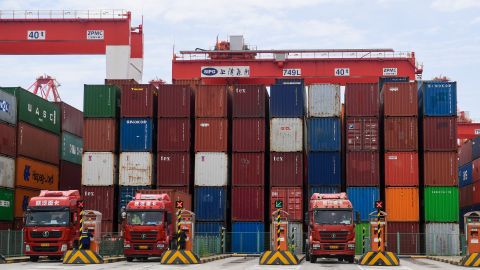
Shipping delays are back as China’s lockdowns ripple around the world

Shipping delays are back as China’s lockdowns ripple around the world


Hong Kong
CNN Business
 — 

Global shipping was just starting to recover from the chaos of the pandemic. Now port congestion and delays are back and could be around for a while.

Covid lockdowns in China have wreaked havoc at Shanghai, the world’s biggest container port, and are now causing problems at other major ports around the world.

Some Chinese cities, including Shanghai, have started easing Covid restrictions in recent days, but experts say that the damage has already been done, and global shipping will suffer well into the summer. That could exert even more pressure on global supply chains already reeling from Russia’s invasion of Ukraine, and keep inflation running hot.

Data from Project44, which tracks global supply chains, showed that shipment delays between China and major US and European ports have quadrupled since late March, when China shut down the city of Shanghai, which has the world’s busiest container port.

A Cosco Shipping container ship is seen at the Yangshan Deep Water Port amid the coronavirus disease (COVID-19) outbreak in Shanghai, China April 24, 2022.

By the end of April, ships from China to Seattle were taking four days longer than expected to arrive, up from about one day the previous month.

The time it takes ships to leave China and arrive at major ports around the world increased steadily over the past year, but there had been some signs of relief since December with transit times between Shanghai and Long Beach, for example, dropping in January and February.

Since March, however, there’s been a sharp increase again in transit times on that route.

To add to the problem, many truck drivers have struggled to reach ports in China to pick up containers because of travel restrictions and Covid testing requirements. Shipping giant Maersk warned in an advisory last month that trucking services in Shanghai would be “severely” impacted by these restrictions.

“With the manufacturing industry being shuttered [in Shanghai] and truckers unable to travel quickly, exports have been reduced, and shipment delays have increased,” said Josh Brazil, director of Supply Chain Data Insights at Project44.

Delays will “continue into the summer months,” as factories struggle to return to normal operations in Shanghai, he added.

Although authorities have allowed some businesses to restart production, many workers are still stuck in quarantine at home. Factories that do reopen are facing component shortages and difficulty in securing trucks to carry goods into or out of the port.

“The ripples in shipment delays are only beginning to become visible and are expected to extend well into the next few months,” said Brazil.

Shanghai — China’s leading financial center and most populous city — has been under a strict lockdown since late March. More than 8 million residents are still banned from leaving their residential compounds. The Covid restrictions have spread to other cities, including Beijing — the nation’s capital.

Shanghai port remained open throughout the lockdown, but data from various shipping firms show an increasing backlog of ships and containers.

US supply chain companies have expressed concerns about fresh chaos heading towards American ports, which are still recovering from the severe congestion and delays they suffered last year.

Shelley Simpson, chief commercial officer for JB Hunt Transport Services, said late last month that while there has been “a temporary relief” at US ports, things may get a lot “a lot worse” this summer because of what’s happening in China.

It “just takes a little bit of disruption to really change the environment all over again,” she added.

Shipping queues are getting worse in China — and other parts of the world.

Nearly 20{cfdf3f5372635aeb15fd3e2aecc7cb5d7150695e02bd72e0a44f1581164ad809} of container vessels globally are currently waiting outside congested ports, according to a survey published last Thursday by Windward, an Israel-based global maritime data firm.

Almost a quarter of those unberthed ships are stuck outside Chinese ports. That’s 412 ships, up 58{cfdf3f5372635aeb15fd3e2aecc7cb5d7150695e02bd72e0a44f1581164ad809} since February, the survey added.

It’s clear that lockdowns in China have caused a bottleneck, the firm said.

Across China, at least 27 cities are under full or partial lockdown, which could be impacting up to 185 million residents across the country, according to latest CNN calculation on Wednesday. Beijing effectively shut down its largest district this week.

President Xi Jinping signaled this week that China would continue with its zero tolerance approach to Covid. On Thursday, Xi told all levels of government to “resolutely adhere to the zero-Covid policy.”

China is home to seven of the world’s top ten container ports, including Shanghai, Ningbo-Zhoushan, Shenzhen, and Hong Kong. In Shanghai — the epicenter of China’s current Covid outbreak, the situation remains severe.

The number of vessels waiting at the Port of Shanghai had increased to 384 by April 25, up 27{cfdf3f5372635aeb15fd3e2aecc7cb5d7150695e02bd72e0a44f1581164ad809} from a month earlier, according to most recent data from S&P Global Market Intelligence.

Pressure is also building on other Chinese ports, as vessels try to find alternative ports to berth. Ships have faced growing delays since late March outside Ningbo-Zhoushan port, the world’s third largest port, less than a hundred miles from Shanghai, according to Lloyd’s List Intelligence.

Containers are also piling up because of truck shortages.

Trucks wait to load containers at Yangshan Deepwater Port on April 27, 2022 in Shanghai, China.

At the peak of the lockdown in Shanghai, containers were sitting for as many as 15 days at the port before being picked up by truckers, up from fewer than 5 days when the restrictions first took effect, Project 44 data showed. The average wait time has since come down but was still 10 days last Wednesday.

Zhang Wei, vice mayor of Shanghai, acknowledged last week that the city is seeing “reduced efficiency” in cargo transport and “poor logistics” since the lockdown.

The turmoil at the ports has already hit China’s factories and foreign trade, as manufacturers have to wait longer to get raw materials.

It is also harder for them to ship their products to customers. Inventories of finished goods have surged to the highest level in about a decade, as products pile up in warehouses due to weak demand and the difficulty of finding trucks to move them.

Cranes lift containers at Yangshan Deepwater Port on April 27, 2022 in Shanghai, China.

Latest PMI surveys — released on Saturday — showed that factory activity slumped to the worst level since February 2020, when China was battling the initial Covid outbreak. New export orders that manufacturers received in April fell at a much faster pace than in March.

The decline in export orders showed that the chaos at some major ports, including Shanghai, have hit China’s trade with the rest of the world, according to Goldman Sachs analysts.

“Worryingly, there was plenty of evidence of worsening supply pressures, with supplier delivery times collapsing, input prices surging and inventories of finished good rising to their highest since June 2012,” wrote Mitul Kotecha, head of emerging markets strategy at TD Securities, in a report.

“Such supply pressures will have ramifications across supply chains globally, as already evidenced in some recent US Q1 earnings reports in the tech sector,” he added.

The situation in Shanghai will push global inflation higher this year, said Daejin Lee, associate director at S&P Global Market Intelligence.

He pointed out that last year’s inflation was driven by two factors — supply shortages of key parts owing to supply chain bottlenecks, and record high container freight rates.

Both problems continue this year, even as Russia’s invasion of Ukraine has fueled global inflation by driving up prices for energy and other key commodities.

“Another lengthy delay” in seaborne supply of key parts because of China’s port congestion could increase consumer prices “much faster than previously expected,” Lee said.

Maersk said Wednesday that freight rates will stay elevated as supply chain pressures persist. According to the company, congestion in sectors such as trucking and warehousing in mainland China, have created “bottlenecks, resulting in challenged supply chain management services and elevated rates.”

The company’s average freight rate jumped 71{cfdf3f5372635aeb15fd3e2aecc7cb5d7150695e02bd72e0a44f1581164ad809} in the first quarter from a year earlier.

By saying nothing as the world burns, the Met Gala shows we’re still living in a gilded age | Fashion

By saying nothing as the world burns, the Met Gala shows we’re still living in a gilded age | Fashion

Amid a world-wide financial downturn and worsening inflation in The usa, critics experienced explained the topic for this year’s Satisfied Gala – Gilded Glamour and White Tie – as “out of touch”.

Although one may possibly argue it was incredibly apt poverty was rife in late-19th century New York, even when elites on the Higher East Facet continued to hold “patriarch balls”, in purchase to make “a circle of elite New Yorkers at the major of the city’s social hierarchy”, as Sven Beckert wrote in his 2003 reserve The Monied Metropolis.

It was Mark Twain who coined the expression The Gilded Age in his 1873 operate The Gilded Age: A Tale of Nowadays. Twain’s novel was a satire of the greed and corruption that pervaded a time when some People in america properly pursued the American dream to grow to be pretty abundant very quickly, although some others lived in poverty. The title was a nod to the slender gilding that Twain stated built the era seem much more golden than it was.

The Fulfilled Gala topic offered an prospect for guests to emulate Twain’s commentary, or bring it up to day for nowadays, nevertheless the chance was nearly unanimously bypassed. Riz Ahmed was the one attendee to notably accept the wealth disparities of the Gilded Age period, telling the press that his outfit was “a love letter to individuals blue-collar personnel, those people immigrant workers” who stored the country jogging through the interval.

Kim Kardashian compensated a sort of fitting tribute, carrying the gown Marilyn Monroe wore when she sang “happy birthday Mr President” to John F Kennedy Jr, which was auctioned in 2016 for $4.8m. It is a gown so expensive, none of the preceding owners could put on it and even Kardashian had to get rid of it as soon as she acquired to the best of the stairs and get into a replica, 1 may even say gilded, version.

But that was kind of it. There were a couple of other nods to inequality, typically from politicians on their own. Hillary Clinton built her first visual appeal at the Met Gala in two a long time, putting on a Joseph Altuzarra gown with the names of 60 historic women of all ages sewn subtly into the material, like Harriet Tubman and Rosa Parks. A relatively pared-down appear when compared with Congresswoman Carolyn B Maloney’s daring “equal rights for women” costume in 2021. Meanwhile New York’s mayor, Eric Adams, wore a black tuxedo intended by the Brooklyn-based artist Laolu Senbanjo and embroidered with “end gun violence”. The outfit sparked widespread criticism on the web supplied the mayor’s emphasis on increasing policing in the metropolis: in accordance to the NYPD, in March 2022 New York Town noted 115 shootings in comparison to 99 shootings documented in March 2021.

Just satisfied @NYCMayor at the Achieved Gala just after get together !! 😍 He’s owning a fantastic very first Monday of May possibly but seriously hated hearing about my thoughts on his destruction of New York city’s homeless encampments… but at least I wished him effectively on ending gun violence now! 😍

— Aquaria 🤌🏼 (@aquariaofficial) May possibly 3, 2022

However the best tribute to the age appeared to be a relative silence from these at the leading of New York modern society as residing expenditures spiral and really hard-fought-for human rights are taken absent. As superstars lined up to be photographed, a leaked decision from the supreme court docket recommended that Roe v Wade would be overturned inside weeks, the justices who overturned the landmark abortion ruling a lot more productive in taking The usa back again to a bygone period than any person showing up in haute couture.

Phones were being banned at the celebration so attendees may perhaps not have been given the supreme courtroom information, but it was additional surprising that Florida’s “don’t say gay” bill and the common rollback of trans legal rights in states across The us didn’t provoke any reaction. In 2018, Lena Waithe wore a Carolina Herrera rainbow cape to sign assist for LGBTQ+ rights. Final year the Schitt’s Creek star Dan Levy wore a Loewe outfit that includes an illustration by artist and Aids activist David Wojnarowicz of two men kissing as a statement for queer enjoy, whilst footballer Megan Rapinoe carried a placard that browse “In Gay We Trust”. This yr, the topic was seemingly prevented.

The dilemma of whether or not the Fulfilled Gala is the stage for these types of political statements divides critics. Alexandria Ocasio-Cortez’s “Tax the Rich” gown sparked a debate about no matter whether the red carpet of a glitzy and elite celebration appeared to contradict her socialist concept. AOC responded, telling Vogue: “We can not just enjoy alongside, but we require to split the fourth wall and challenge some of the establishments.”​​

But this 12 months, most attendees selected to do neither, steering clear of a entire embrace of the concept, or an exciting subversion of it. They showed up in designer dresses that looked beautiful and uneventful.

Even the Met’s have head of costume has said “I think the electricity of manner is that it can reflect the zeitgeist.” So what does very last night’s Gala notify us about the time we’re residing? Ironically, by stating nothing as the entire world burns close to them, the attendees gave a pretty crystal clear feeling that we’re still residing in a gilded age.

Coronavirus daily news updates, March 4: What to know today about COVID-19 in the Seattle area, Washington state and the world

Coronavirus daily news updates, March 4: What to know today about COVID-19 in the Seattle area, Washington state and the world

Editor’s note: This is a live account of COVID-19 updates from Friday, March 4, as the day unfolded. It is no longer being updated. Click here to see all the most recent news about the pandemic, and click here to find additional resources.

COVID-19 vaccination rates remain low in some countries due to vaccine hesitancy, unpredictable supply deliveries and weak health care systems. Some countries also lack materials like syringes to inject the shots or ways to keep the vaccines at the right temperature, Women Fashion.

Thirteen African countries reported having vaccinated less than 5{cfdf3f5372635aeb15fd3e2aecc7cb5d7150695e02bd72e0a44f1581164ad809} of their total population as of late February.

Meanwhile, several states in the U.S. are scrambling to use stockpiled COVID-19 vaccines before they expire. Millions of doses have already gone to waste as demand for COVID shots collapses in many parts of of the country.

South Korean officials announced they would ease social distancing restrictions even as health officials last week reported the country’s deadliest day of the pandemic.

We’re updating this page with the latest news about the COVID-19 pandemic and its effects on the Seattle area, the U.S. and the world. Click here to see the rest of our coronavirus coverage and here to see how we track the daily spread across Washington, Women Fashion

Navigating the pandemic

Yes, your pets can also put on pandemic pounds

It had been a year since Henry’s last haircut, and Michelle Holbrook did not realize that her 7-pound, goofy toy poodle was now almost 9 pounds. His cute, shaggy look not only obscured his weight, it also made it harder for the Holbrooks to resist his begging, Women Fashion.

“He’s a little rascal,” said Holbrook, a medical researcher in Chicago. “He’ll hear me when I open the cheese drawer in the fridge, and he comes running.”

Henry, 7, is one of many food-motivated pets who have surprised their owners with their weight gain in the past two years. While veterinarians and pet owners mostly attribute the added pounds to an increasing urge to give into bad habits during the coronavirus pandemic, pet obesity has long been an issue in the United States.

Banfield Pet Hospital, which runs more than 1,000 veterinary clinics in the country, found that nearly 40{cfdf3f5372635aeb15fd3e2aecc7cb5d7150695e02bd72e0a44f1581164ad809} of cats and almost 35{cfdf3f5372635aeb15fd3e2aecc7cb5d7150695e02bd72e0a44f1581164ad809} of dogs were diagnosed as overweight in 2020, up from less than 20{cfdf3f5372635aeb15fd3e2aecc7cb5d7150695e02bd72e0a44f1581164ad809} a decade ago. Banfield also saw a slight rise — about 2{cfdf3f5372635aeb15fd3e2aecc7cb5d7150695e02bd72e0a44f1581164ad809} — of dogs being diagnosed as overweight from March 2020 to December of that year, at the beginning of the pandemic.

Read the full story here.

—Aishvarya Kavi, The New York Times

White House: Congress must act soon to replenish COVID funds

The U.S. will soon begin to run out of money to bolster COVID-19 testing supplies and to guarantee that uninsured Americans keep getting free treatment for the virus unless Congress swiftly approves more funding, the White House warned Friday.

Nearly a year after passage of the $1.9 trillion American Rescue Plan, the administration says the federal government has nearly used up the money dedicated directly to COVID-19 response. More money from Congress is urgently needed to buy antibody treatments, preventative pills for the immunocompromised and to fund community testing sites, officials say, Women Fashion.

“From the COVID side, the bank account is empty,” said COVID-19 deputy coordinator Natalie Quillian. “We’re in conversations with lawmakers about how to secure the funding, but it’s urgently needed.” Some of the consequences could be felt later this month.

The White House last month told Congress it was preparing to seek $30 billion for the virus response, but cut that to $22.5 billion in a formal request earlier this week that officials said includes only the most critical needs. It’s being coupled with a $10 billion request to provide support to Ukraine and its people after Russia’s invasion.

Read the full story here.

—Zeke Miller, The Associated Press

D.C. appeals court rules Biden administration may expel migrant families — but not to places where they could face persecution

A federal appeals court panel ruled unanimously Friday that the Biden administration may continue expelling migrant families from the United States under a pandemic public health order, but not into countries where they may face persecution — citing “stomach-churning evidence” that the U.S. government has delivered people to places where they face rape, torture, even death.

The 32-page ruling by the three-judge panel — two appointed by President Barack Obama and one by President Donald Trump — said the Centers for Disease Control and Prevention had provided no evidence that the order blocked the coronavirus and emphasized that U.S. Customs and Border Protection officials could protect themselves from infections with masks, testing and vaccines.

Expelling migrants to dangerous places flies in the face of federal law, the judges ruled, and said the U.S. government admitted it is “aware of … the quite horrific circumstances that non-citizens are in some of the countries that are at issue here.”

“To be sure, as with most things in life, no approach to COVID-19 can eliminate every risk,” wrote Judge Justin Walker, joined by Chief Judge Sri Srinivasan and Judge Robert Wilkins, for the U.S. Court of Appeals for the District of Columbia Circuit. “But from a public-health perspective, based on the limited record before us, it’s far from clear that the CDC’s order serves any purpose. For now, the Executive may expel the Plaintiffs, but only to places where they will not be persecuted or tortured.”

Read the full story here.

—Nick Miroff and Maria Sacchetti, The Washington Post

Mystery of the missing workers? Long COVID may hold a clue

The coronavirus that nearly killed Stephanie Schroeder in 2020 is still keeping her from working.

She suffered cardiac arrest twice and was in the hospital for three months, then came home to more than a year of kidney problems and intermittent “brain fog,” tingling in her hands, numbness in her right foot and a need for oxygen after even modest exertion.

“Some days, I’m all right, but I can’t tell you which days I will feel good,” she said. “It’s all very frustrating because you know what you were capable of doing before.”

She is among many people with lingering COVID-19 aftereffects who cannot work or can only work part-time. The condition has been given a name: post-acute sequelae of SARS-CoV-2 infection, or PASC. But it is commonly called long COVID.

Read the full story here.

— Michael E. Kanell, The Atlanta Journal-Constitution

Director of nonprofit aiding D.C.-bound truck convoy pleaded guilty to fraud

At a rally point near the Big Texan Steak Ranch in Amarillo, Tex., as the wind whipped American flags atop an 18-wheeler behind her, a Southern California lawyer and anti-vaccine activist named Leigh Dundas exhorted a crowd to make donations.

“We’re going to be doing a little altar call up here. A hundred percent of that cash is going back into the boys’ pockets for the next fuel stop,” Dundas told onlookers and livestream viewers, encouraging them to give online to the “People’s Convoy,” a U.S.-based group of activists opposed to vaccine mandates and inspired by the self-styled “Freedom Convoy” that occupied Canada’s capital for weeks.

The group set a goal of $5 million to fuel its fight and claimed to have collected $1.5 million by Monday, eliciting growing support across the country from people who’ve cheered at rallies, demonstrated from chilly highway overpasses, and taken to social media to profess a loss of faith in government, politicians, media and other institutions they paint as corrupt and out of touch.

They want to do something, so they give. In this case, to the AFCLF Foundation, which launched last year and names as its executive director a Texas woman named Pamela Milacek, whose arrest is sought, records show, by authorities who allege she violated the terms of her community supervision after pleading guilty to felony fraud and exploitation charges in 2020.

Read the full story here.

— Eric Berger, Ellie Silverman and Steve Thompson The Washington Post

State health officials confirm new coronavirus cases, deaths

The state Department of Health (DOH) reported 1,739 new coronavirus cases on Wednesday and 1,647 on Thursday. It also reported 71 more deaths over those days.

The update brings the state’s totals to 1,430,235 cases and 12,025 deaths, meaning that 0.8{cfdf3f5372635aeb15fd3e2aecc7cb5d7150695e02bd72e0a44f1581164ad809} of people diagnosed in Washington have died, according to the DOH. The data is as of 11:59 p.m. Thursday. New state data is reported on Mondays, Wednesdays and Fridays.

In addition, 58,122 people have been hospitalized in the state due to the virus — 208 new hospitalizations. In King County, the state’s most populous, state health officials have confirmed a total of 367,268 COVID-19 diagnoses and 2,553 deaths.

Since vaccinations began in late 2020, the state and health care providers have administered 13,073,597 doses and 67{cfdf3f5372635aeb15fd3e2aecc7cb5d7150695e02bd72e0a44f1581164ad809} of Washingtonians have been fully vaccinated against COVID-19, according to vaccination data, which the state updates on Mondays, Wednesdays and Fridays. Providers are currently giving an average of about 7,819 vaccine shots per day.

The DOH says its daily case reports may also include duplicate test results, results assigned to the wrong county, results that are reported for today but are actually from a previous day, occasional false positive tests and other data discrepancies. Because of this, the previous day’s total number of cases plus the number of new daily cases does not add up to the new day’s total number of cases. State health officials recommend reviewing the dashboard’s epidemiologic curves tab for the most accurate representation of the state’s COVID-19 spread.

—Amanda Zhou

Big cities drop more COVID-19 measures in push for normalcy

New York City and Los Angeles are lifting some of their strictest COVID-19 prevention measures as officials in big cities around the U.S. push for a return to normalcy after two grueling years of the pandemic.

New York City, which has long prided itself as having the nation’s toughest COVID-19 safety protocols, will do away with several of its mandates next week, including required masking in public schools and vaccination requirements at restaurants, entertainment and cultural venues, the mayor announced Friday.

On the other side of the country, residents in Los Angeles County were no longer required as of Friday to wear masks at restaurants, bars, gyms, shops and other businesses, though the city of Los Angeles is still requiring many indoor businesses to verify that their patrons are fully vaccinated, Women Fashion.

The moves to ease the mandates comes as government officials around the U.S. have been easing COVID-19 guidelines and signaling that the risk of virus spread is retreating — at least for now.

Read the full story here.

— Michelle L. Price, The Associated Press

Doctors praise Biden’s ‘test to treat’ COVID plan but worry about the details

Consumers will be able to walk into a clinic at a CVS or Walgreens, get tested for coronavirus and, if the results come back positive, go home with a free course of antiviral medicine under a new “test to treat” program announced by President Joe Biden this week as part of his new pandemic road map.

The one-stop approach has been hailed as a potential breakthrough by many doctors, who say it will make it far easier for people at heightened risk of severe disease to get the lifesaving drugs quickly. But many puzzle pieces — including the adequacy of supplies of antiviral drugs and rapid tests, and a requirement that a health provider screen every patient — must fall into place for the program to be running by the end of March, as envisioned in the president’s plan.

“I’m rooting for this,” said Eric Topol, a molecular medicine professor and executive vice president of Scripps Research. “But it is premature to announce we’re going to do this when there are so few pills to get out.”

“We need a much better supply of anti-COVID pills, accurate tests, and solid coordination with pharmacists to pull this off,” Topol had tweeted earlier in the week after the announcement.

Read the full story here.

— Katie Shepherd, The Washington Post

Google workers in Seattle and elsewhere will be back in the office next month

Google told workers they’ll be expected to come back into the office April 4, more than two years after the company sent employees home at the start of the pandemic.

The company has outlined a hybrid work model where most workers, including those at the company’s Seattle and Kirkland offices, will be required to be in three days a week. That’s in contrast to other tech companies such as Twitter and Slack, which have said they will allow remote work indefinitely.

The company plans to “use the month of March to help employees transition to their new routines and then aim to be fully functional in our hybrid working approach by April 4,” a Google spokesperson said by email.

About 6,000 people work for Google in Washington. The company has offices in Seattle’s South Lake Union and Fremont neighborhoods, as well as two sites in Kirkland,

Business Tips
Health News
Future Technology

.

Read the story here.

—Seattle Times staff and wire services

NYC to lift school mask rules, vaccine mandates for dining

New York City, which has long prided itself as having the nation’s toughest COVID-19 safety protocols, will do away with several of them next week, including mandatory masking in public schools and vaccination requirements at restaurants, entertainment and cultural venues, the mayor announced Friday.

Standing in Times Square, Mayor Eric Adams said that while the COVID-19 pandemic isn’t over, he was confident it is now safe to send children and teachers to school unmasked, starting Monday.

“We want to see the faces of our children. We want to see their smiles,” the mayor said, adding that parents could continue to send their kids to school with face coverings if they wished.

Individual businesses can still decide to keep mandates in place if they choose, but as of Monday the city will no longer require they check guests’ vaccine cards.

The Broadway League has said it will maintain mask and vaccination requirements in all its theaters at least through April 30.

Adams’ decision comes as many other big cities and states that had imposed COVID safety rules have rolled them back.

Read the story here.

—The Associated Press

Fewer Americans apply for jobless benefits last week

Fewer Americans applied for unemployment benefits last week reflecting a low number of layoffs across the economy.

Jobless claims fell by 18,000 to 215,000 for the week ending February 26, from 233,000 the previous week, the Labor Department reported Thursday.

The four-week average for claims, which compensates for weekly volatility, fell by 6,000 to 230,500.

In total, 1,476,000 Americans were collecting jobless aid the week that ended Feb. 12, a small uptick of 2,000 from the previous week’s revised number, which was its lowest level since March 14, 1970.

First-time applications for jobless aid generally track the pace of layoffs, which are back down to fairly healthy pre-pandemic levels.

Read the story here.

—Matt Ott, The Associated Press

‘Freedom Convoy’ spinoff headed to D.C. region arrives this weekend

The U.S. protesters inspired by the self-styled “Freedom Convoy” that occupied downtown Ottawa for weeks headed out from Southern California last week for a cross-country trip to the D.C. region. They plan to arrive this weekend, and Virginia State Police describes the convoy as a “still-fluid situation.”

The People’s Convoy, a U.S.-based group of activists opposed to vaccine mandates, is on a cross-country trip aiming to arrive in Hagerstown, Md., on Friday before targeting the D.C. Beltway area on Saturday. Washington County Public Schools in Hagerstown announced that students would be dismissed 2½ hours early on Friday because of expected traffic congestion caused by the convoy.

Despite organizers touting numbers in the thousands, Capt. Ron Galaviz, a spokesman for the Indiana State Police, said the convoy consisted of fewer than 300 vehicles when it arrived in Indiana this week – and a majority were passenger vehicles, not large trucks.

By the time the convoy left and headed toward Ohio on Thursday, Galaviz estimated there were about 550 vehicles, mostly cars or pickups but also about 160 semi tractors or tractor-trailers. Those estimates are consistent with what Ohio State Highway Patrol authorities are seeing as the convoy heads to Lore City, Ohio, said Sgt. Brice Nihiser.

Supporters have been joining and leaving throughout the trip, making it difficult for officials to predict the size of the group before it reaches a given region.

Read the story here.

—Peter Hermann and Ellie Silverman, The Washington Post

Life in South Asia returns to normal as COVID cases decline

The markets are crowded again. Traffic is jamming the roads. Migrant workers have returned to the cities. And young people are back at schools and universities — many of them for the first time in years.

It isn’t quite how things were before the COVID-19 pandemic — mask mandates still exist in some places — but with infections steadily declining, life in South Asia is returning to a sense of normalcy.

The mental scars from last year’s delta-driven surge persist — especially in India, where health systems collapsed and millions likely died — but across the region high vaccination rates and hope that the highly contagious omicron variant has helped bolster immunity are giving people reasons to be optimistic.

While experts agree that opening up was the right move amid falling case numbers, they caution that optimism should be tempered with lessons from the past two years.

Read the story here.

—Aniruddha Ghosal, The Associated Press

What health experts say about the ‘natural experiment’ of ditching mask mandates in WA

Most of Washington’s indoor masking requirements will soon come to an end — and the state’s “natural experiment” will begin.

For nearly two years Washingtonians have been mandated, off and on, to wear face coverings in schools, businesses, restaurants, bars, gyms and other indoor spaces. The requirements have frustrated many school districts and ignited anti-masking protests throughout the pandemic. Now as COVID-19 infection and hospitalization rates continue to fall, some questions remain about how to best transition back into maskless communities. Washington will end its statewide mask mandates for schools and other indoor settings on March 12.

This week, two local infectious disease experts, Dr. Joshua Schiffer and Dr. Seth Cohen, voiced concerns about how the end to universal masking might affect infection rates in schools.

Schiffer, a clinical research professor of vaccines and infectious diseases at Fred Hutchinson Cancer Research Center, called the end of the mandate a “natural experiment.”

Read the story here.

—Elise Takahama

Surgeon general seeks COVID misinformation data

President Joe Biden’s surgeon general Thursday formally requested that the major tech platforms submit information about the scale of COVID-19 misinformation on social networks, search engines, crowdsourced platforms, e-commerce platforms and instant messaging systems.

A request for information from the surgeon general’s office demanded that tech platforms send data and analysis on the prevalence of COVID-19 misinformation on their sites, starting with common examples of vaccine misinformation documented by the Centers for Disease Control and Prevention.

The notice asks the companies to submit “exactly how many users saw or may have been exposed to instances of COVID-19 misinformation,” as well as aggregate data on demographics that may have been disproportionately exposed to or affected by the misinformation.

The surgeon general, Dr. Vivek Murthy, also demanded information from the platforms about the major sources of COVID-19 misinformation, including those that engaged in the sale of unproven COVID-19 products, services and treatments.

Read the full story here.

—Davey Alba, The New York Times

U.S. Sen. Tim Kaine, with long COVID himself, introduces research bill

Nearly two years after getting COVID-19, Virginia Sen. Tim Kaine says he still has mild symptoms.

Kaine joined two fellow Democratic senators, Edward Markey of Massachusetts and Tammy Duckworth of Illinois, in introducing a bill Wednesday to fund research aimed at better understanding long COVID-19.

“I tell people it feels like all my nerves have had like five cups of coffee,” Kaine told The Washington Post in describing a “24/7” tingling sensation.

The Comprehensive Access to Resources and Education (CARE) for Long COVID Act would centralize data about patient experiences and fund research into the effectiveness of treatments. It also would expand resources available to help those with lingering symptoms.

Read the full story here.

—The Associated Press